
Sacred Geometries in Stone
2026
new work in progress
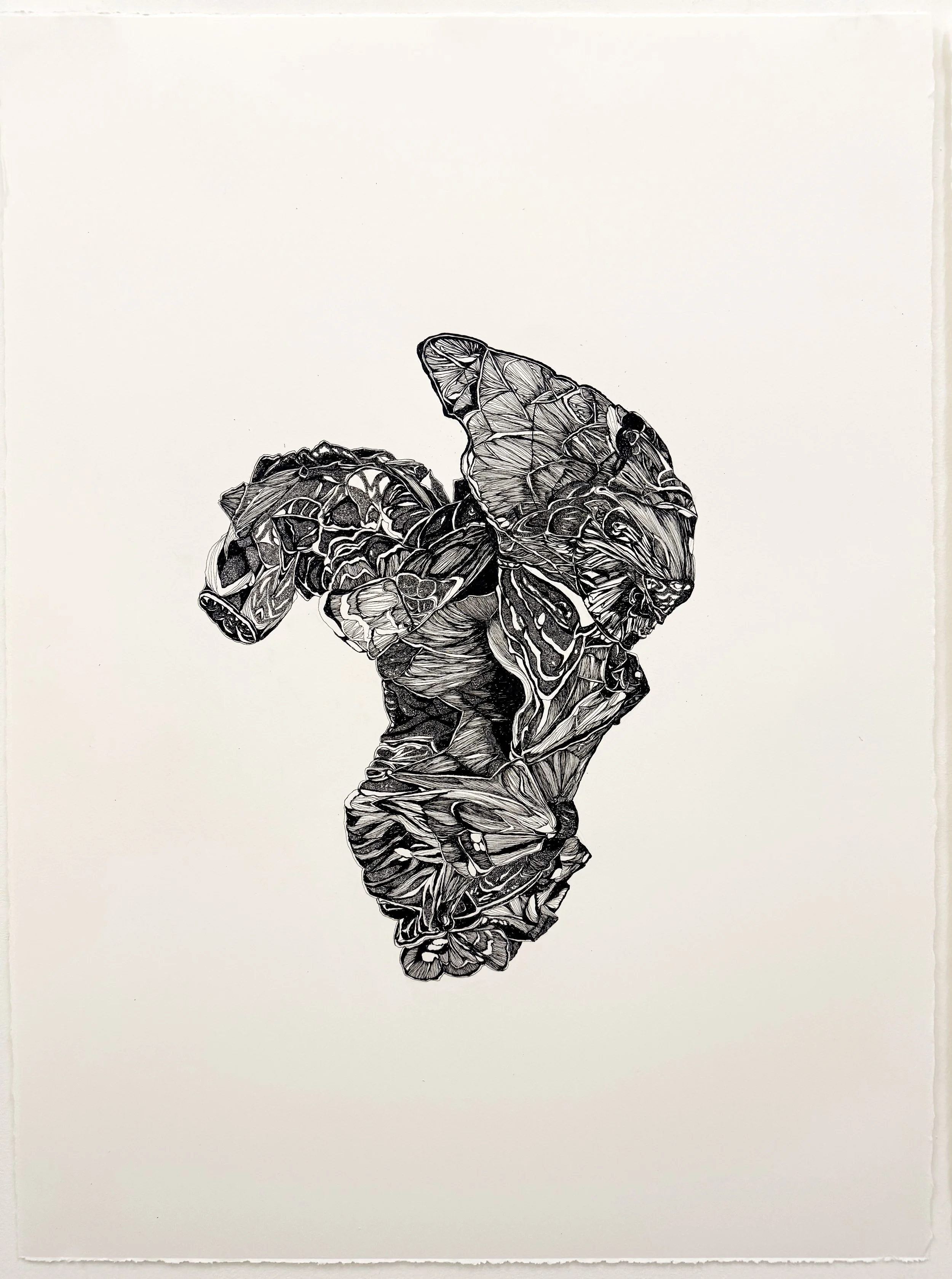
Ink pen drawing of a malachite on Hanhnemule water color paper, 22 x 30 inches.
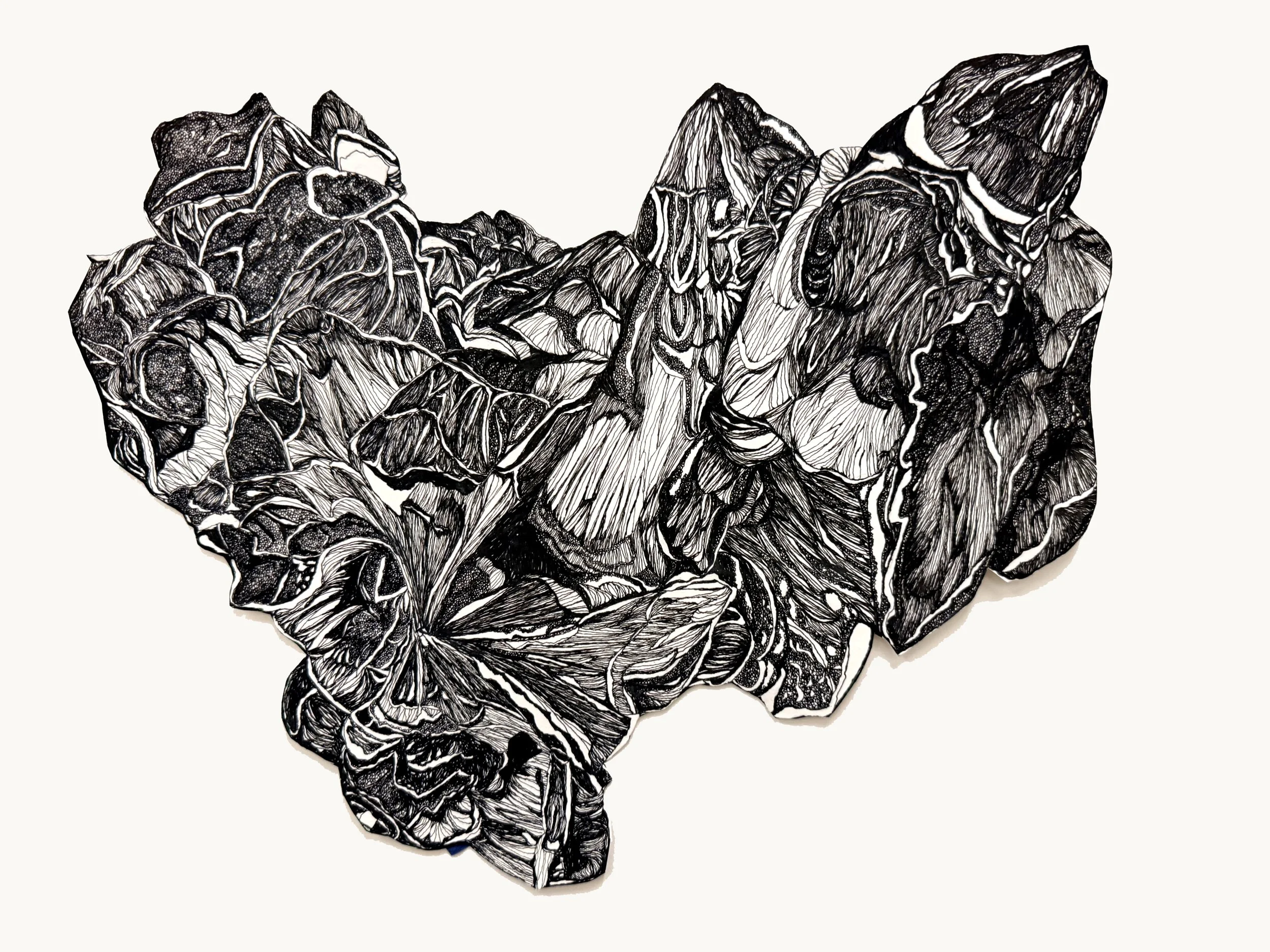
Detail of an ink pen drawing of a malachite on Hanhnemule water color paper, 22 x 30 inches.
Stones hold energy, a strength, a vitality. Anchored to the ground or scattered in heaps, rooted, belonging to the landscape completely. The are archives of deep time, carrying traces of the earth's ancient past, a witness to its ongoing story. Not inert matter but material memory, an active participant in the earth's continual transformation. In witnessing them, I feel my own bond to the ground that shapes me. In my compositions they are uprooted, displaced, then gathered into new wholes: scattered stardust gathering into patterns, matter scattered and gathered, a new belonging made from fragments, belonging everywhere and nowhere at once.
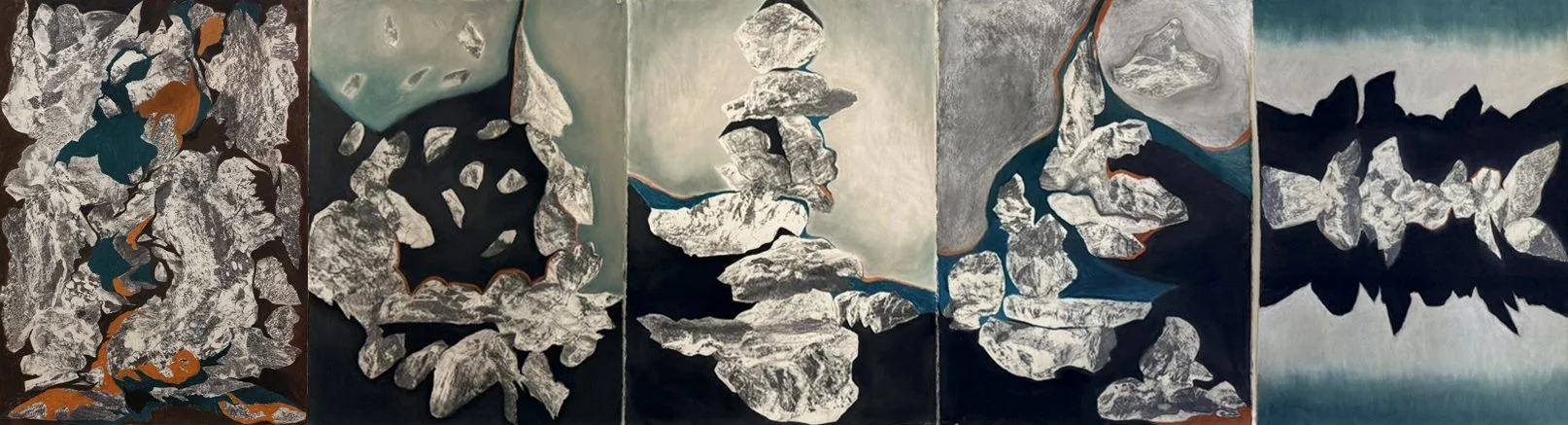
studio view |work in progress
Mixed media: graphite drawing, photo transfer, pastels; 22 x 30 inches each
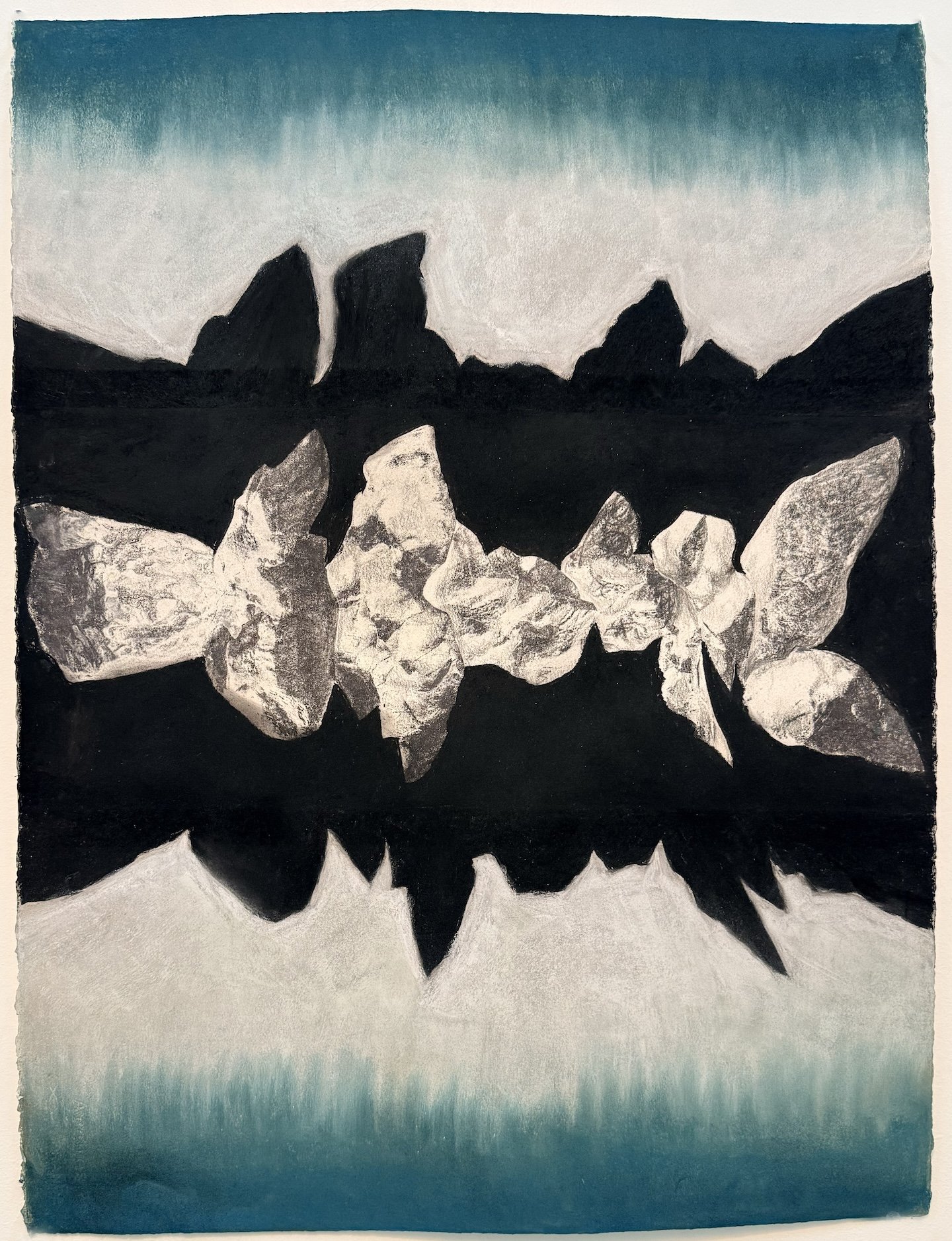
Mixed media: graphite drawing, photo transfer, pastels; 22 x 30 inches
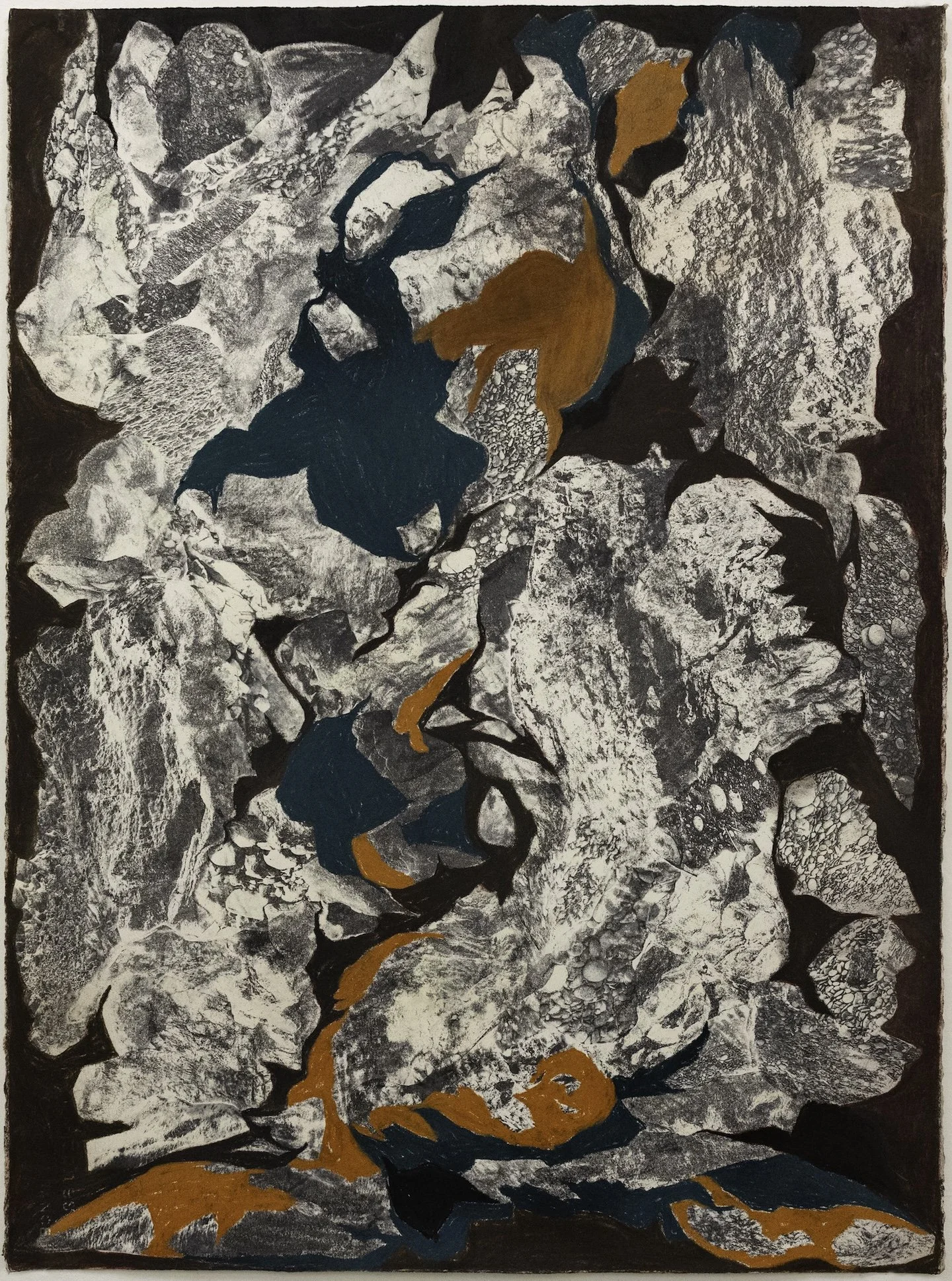
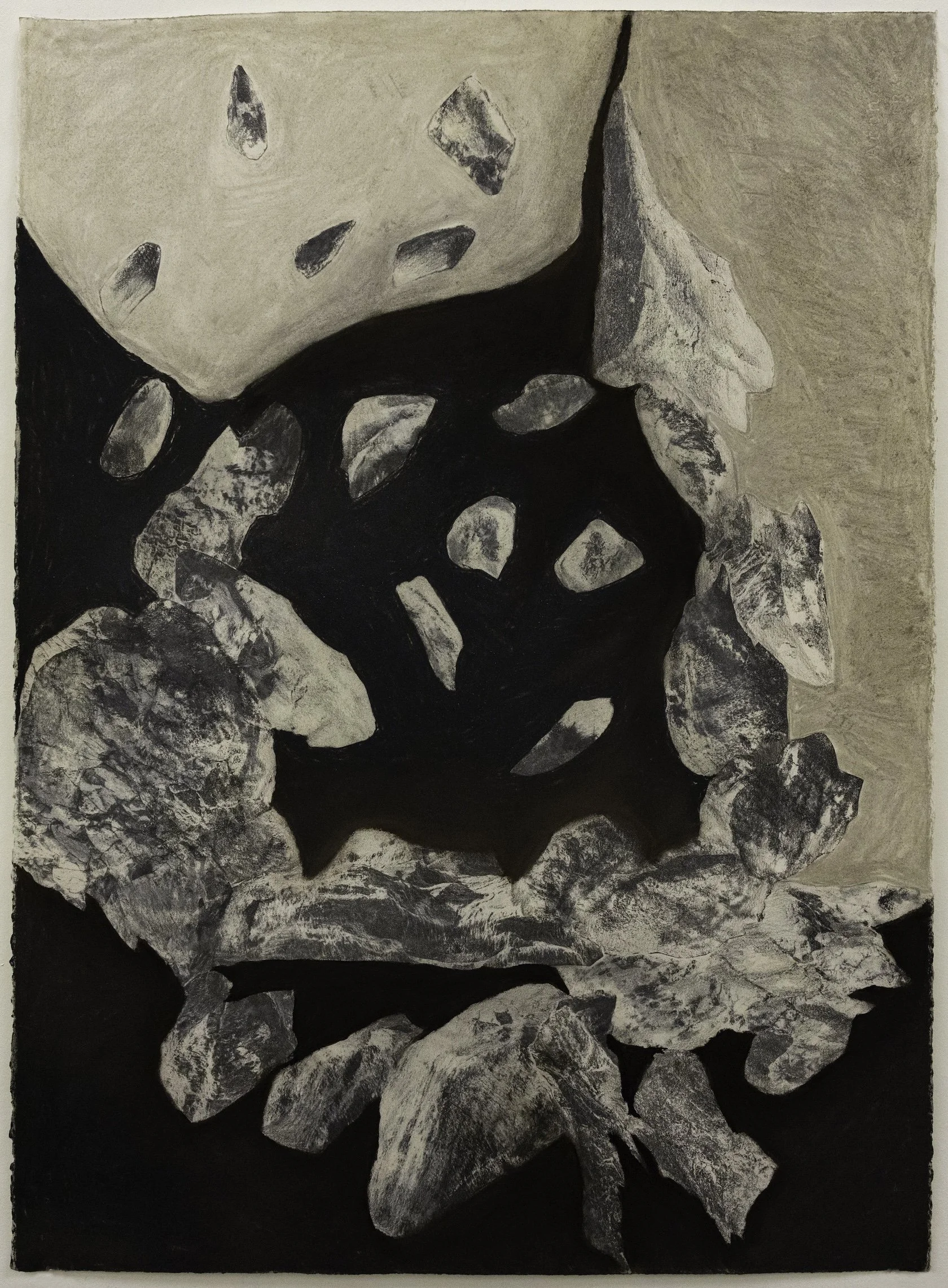
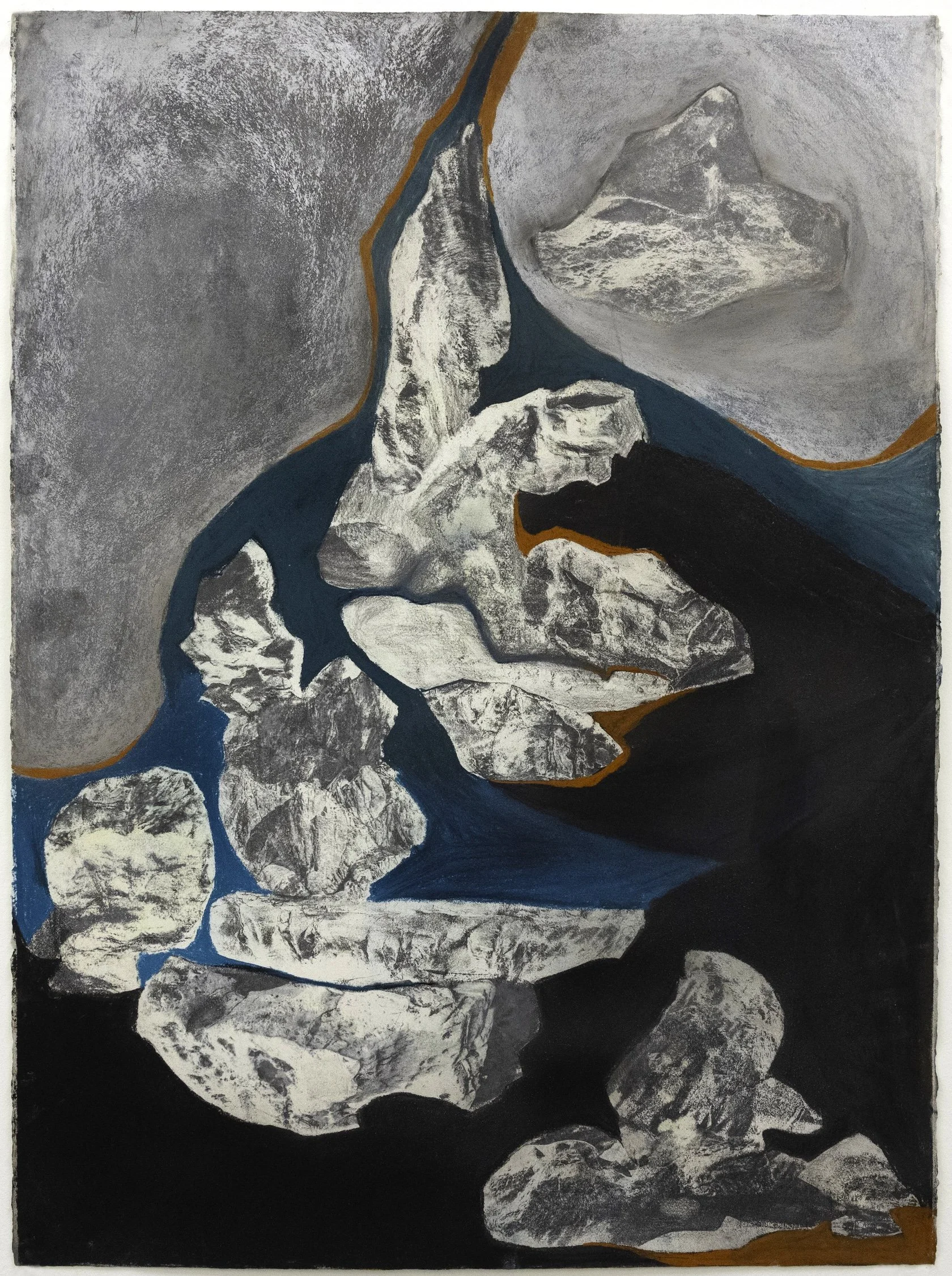
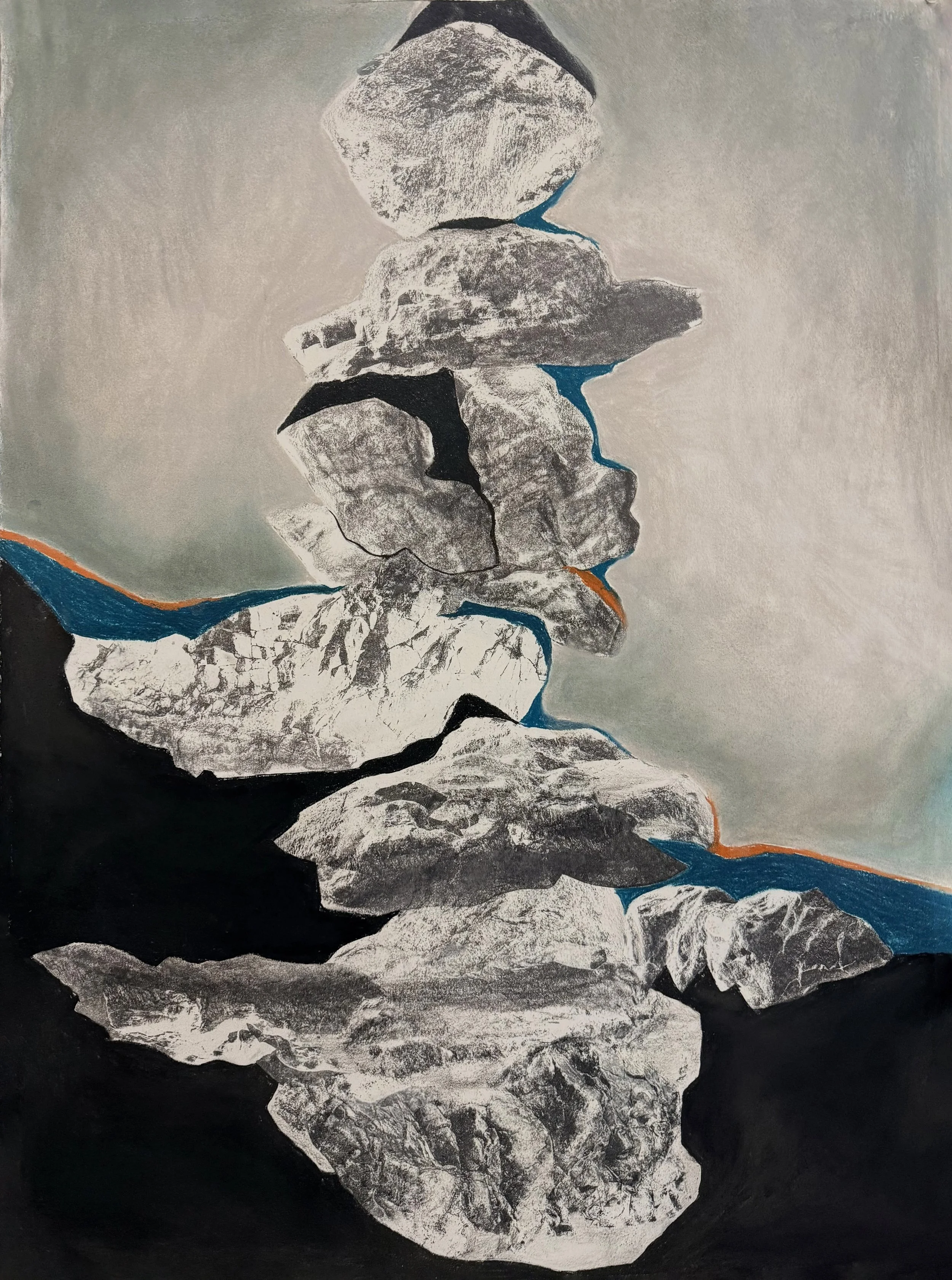
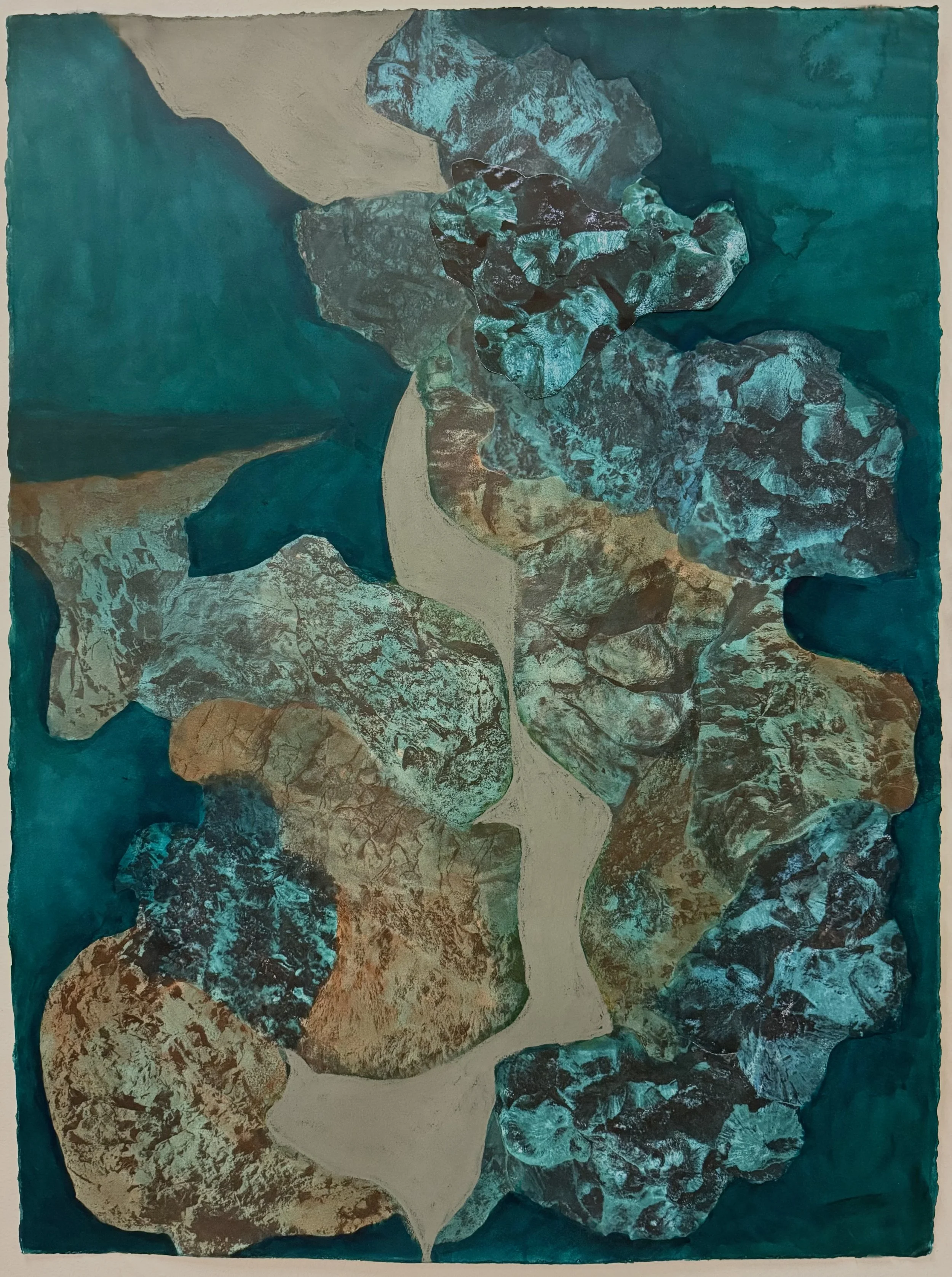
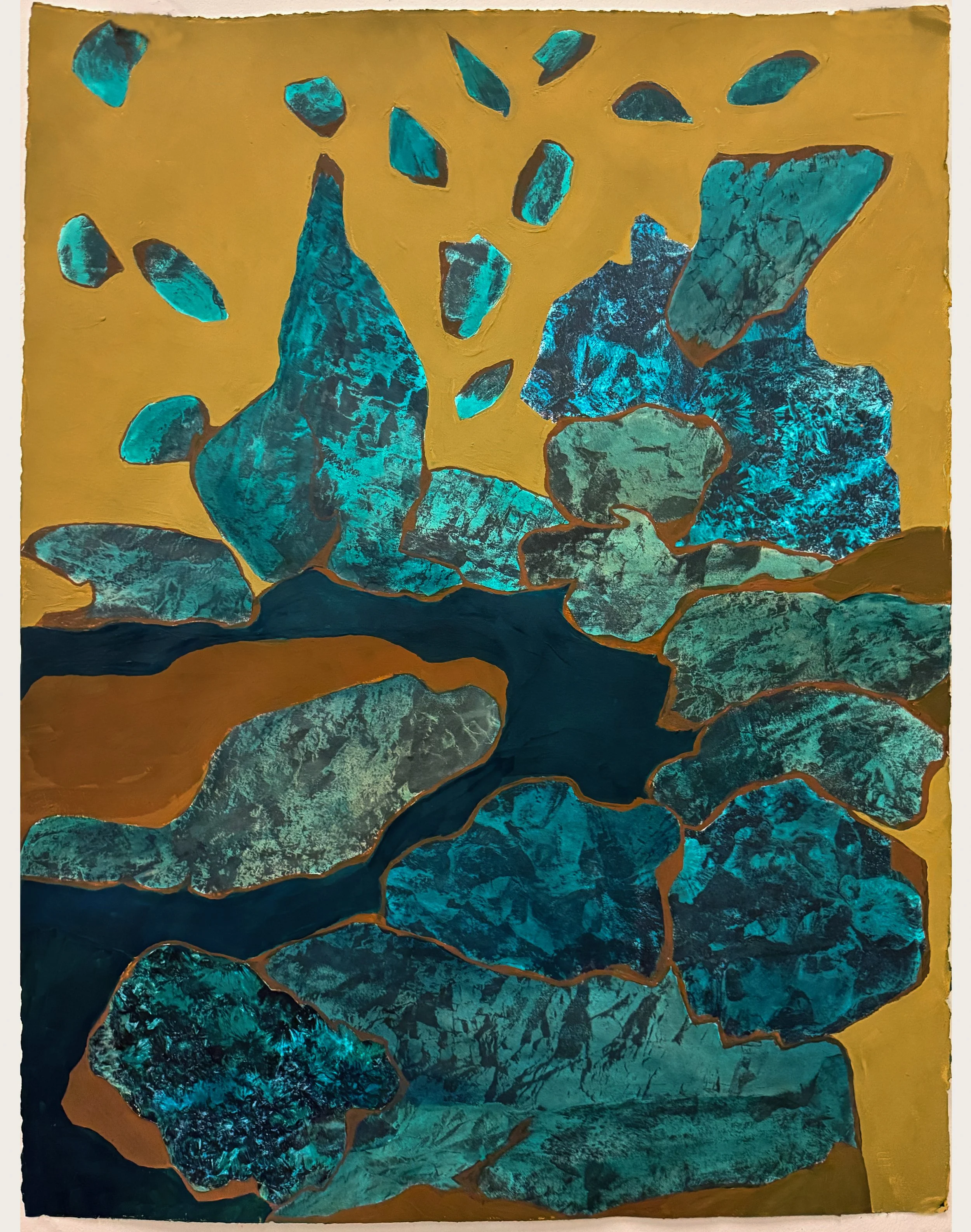
Mixed media: graphite drawing, photo transfer, pastels, inks, gouache; 22 x 30 inches each
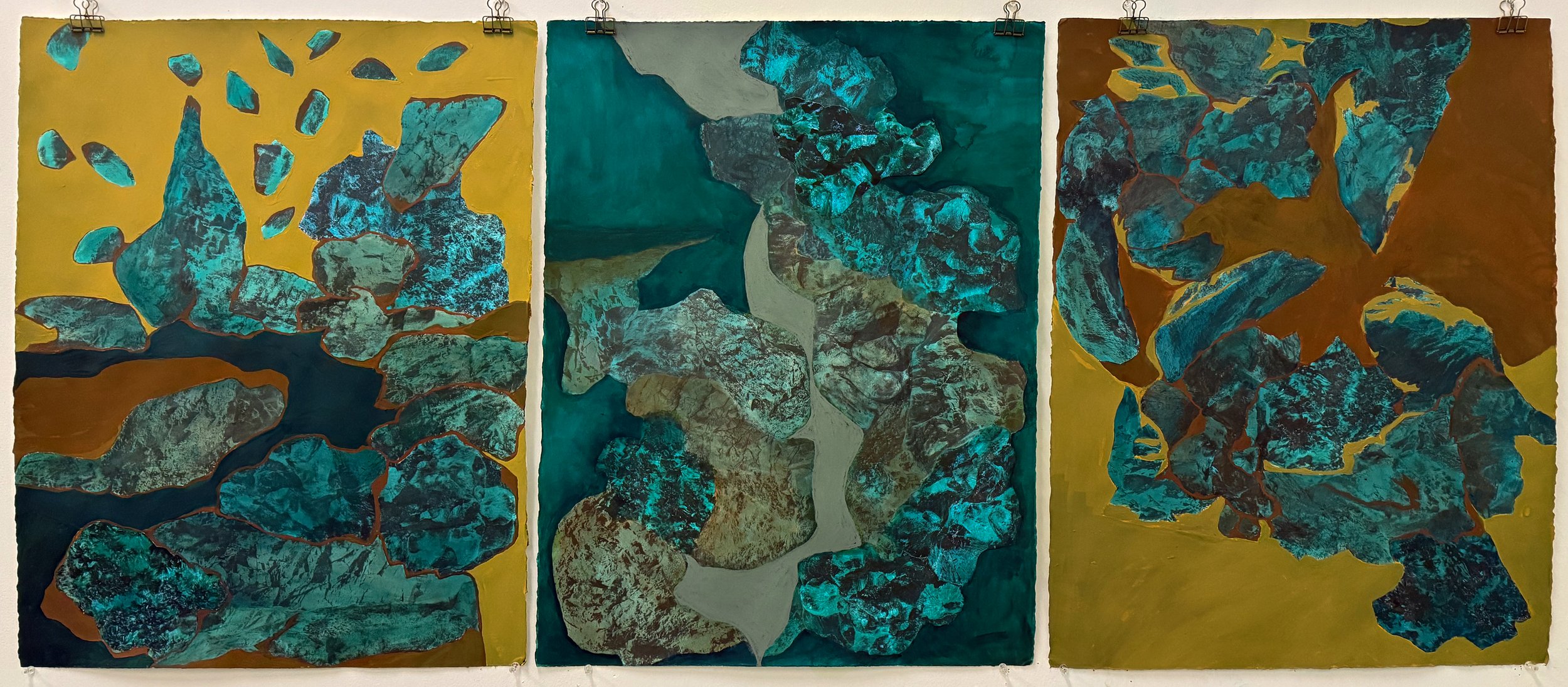
work in process, studio view
sketchbook studies
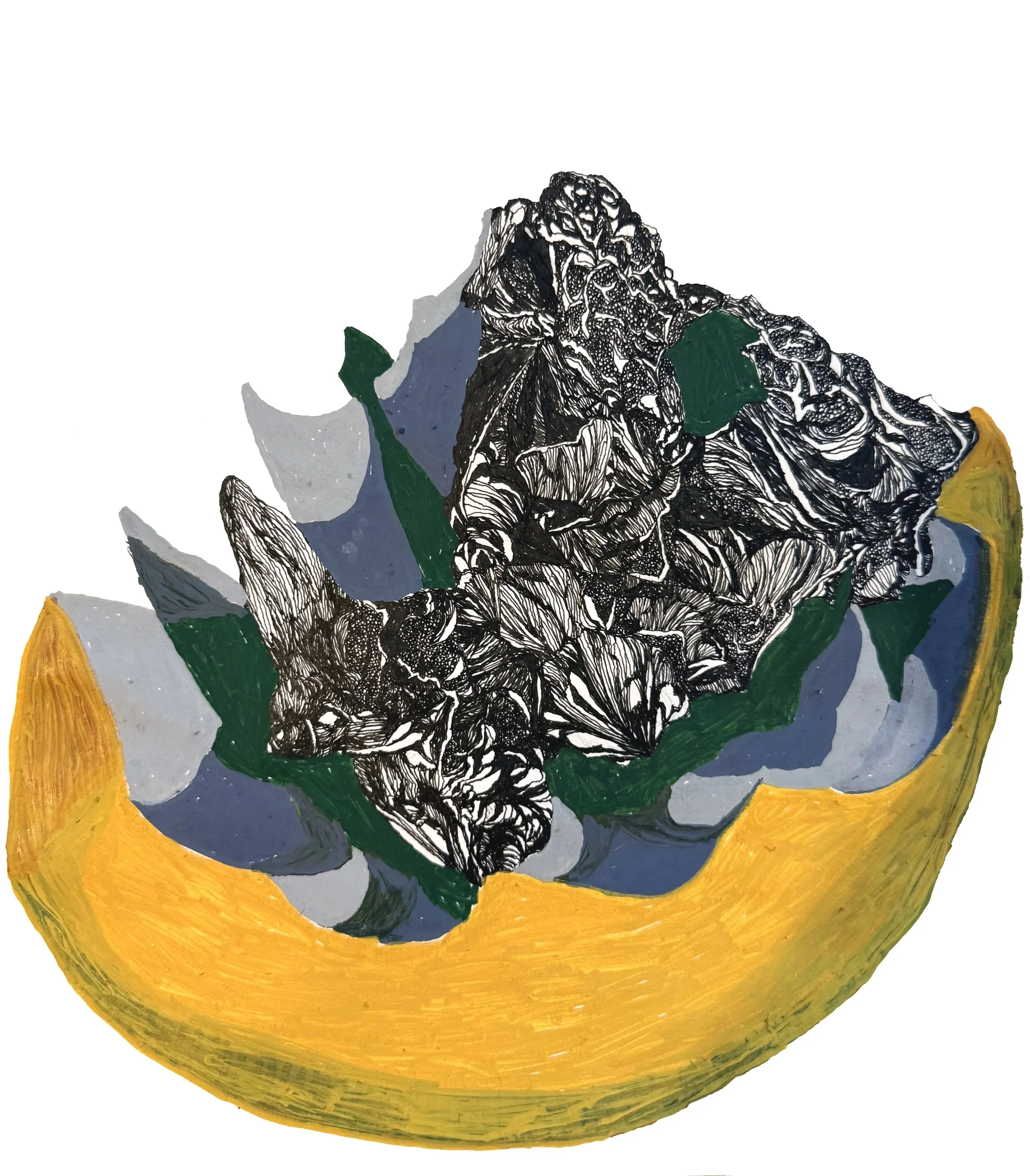
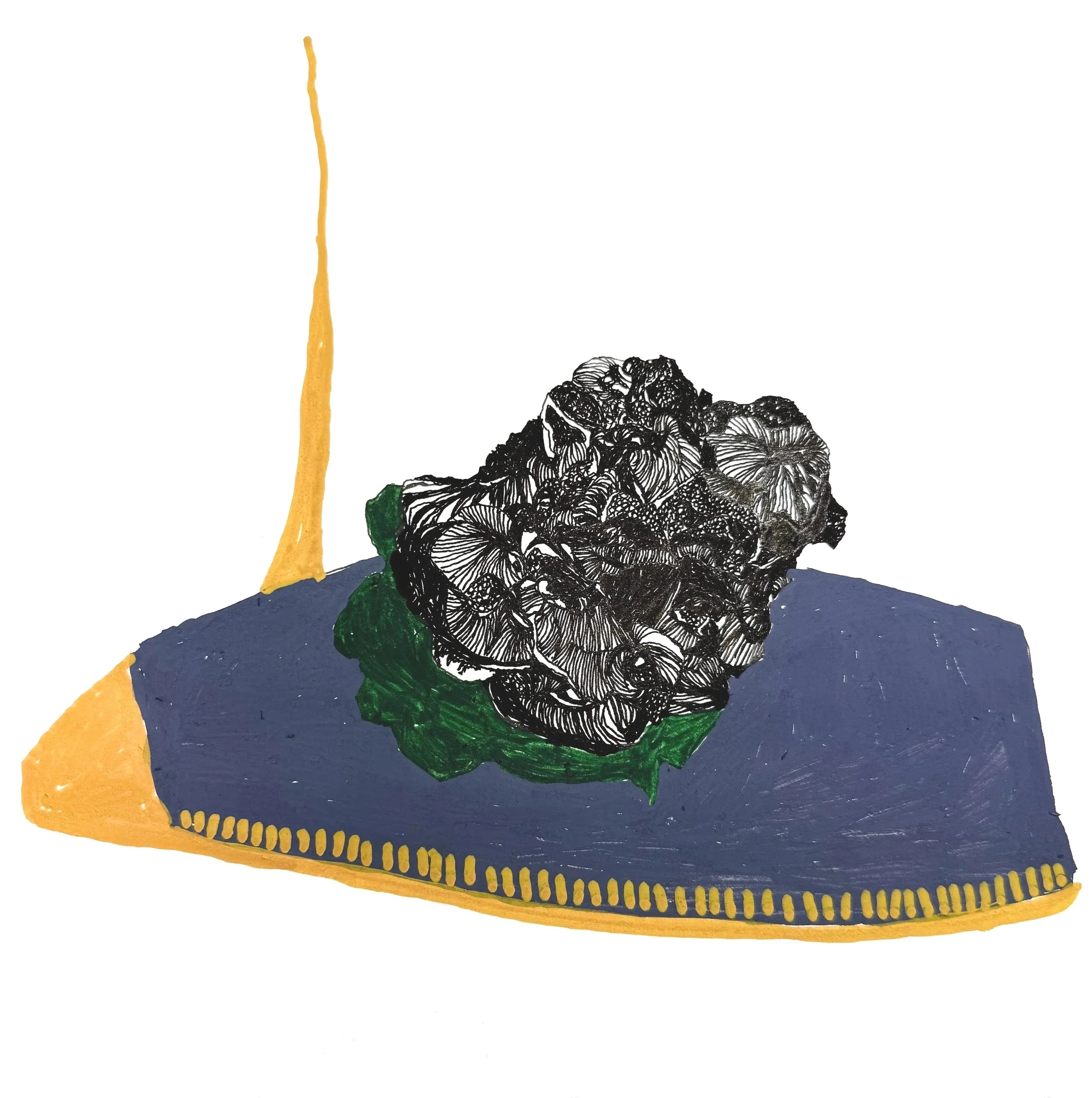
sketchbook studies
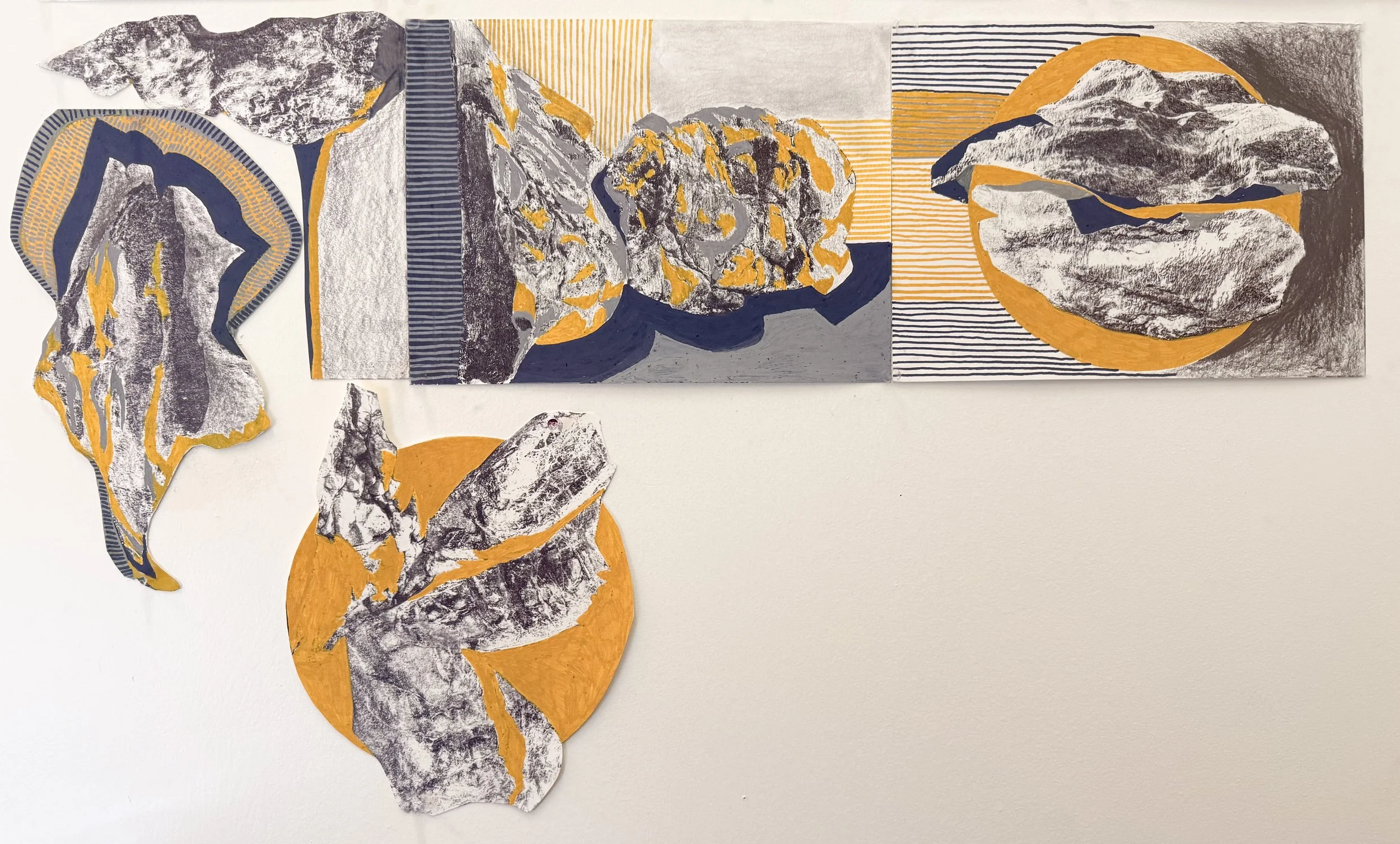
Mixed media: photo transfer, graphite pencil drawing, acrylic markers on Canson vellum paper
Malachites: Sacred Geometry and Patterns of Extraction (coming soon)
Copper changes color when it is exposed. Left to air and water it blooms at the surface, green and blue, malachite and azurite grown into each other, a stone still in the middle of becoming another stone. The stone takes millennia to form. Mining erases it in a season.
I am drawn to what gets discarded. These carbonates are the signifiers of copper, not the copper itself. In the mines at Chagai in western Balochistan in Pakistan, they are crushed out with the waste. They are the beautiful evidence of the copper, crushed to reach it.
The stone has been sacred for six thousand years. In Egypt malachite was ground into powder and worn on the eye, to guard the eye. Green is the color paradise takes in cultures across the world. It is the color of the garden, of ground that is alive. Azurite is aasmani patthar, the sky stone, a bridge between earth and the heavens. The rings in malachite look like an eye, and here an eye wards off nazar, the gaze of envy that harms what it looks at. When the two grow together, blue slowly altering into green, the pairing is read as the divine settling into the terrestrial.
Balochistan is the poorest province in Pakistan, and its ground has been read as somebody else's supply for as long as anyone has been drawing maps of it. The copper under Chagai is dug by a Canadian company and financed by the West. In February 2026 the United States named it the only holding outside its own borders in Project Vault, a strategic reserve of minerals for American manufacturing and American defense. The copper is spoken for before it is out of the ground. It will leave along a colonial railway to the sea, on the route the British laid to carry raw material out to their ports. The tracks were laid to take things away. They are being repaired to take more.
Sacred patterns radiate from a single point outward, spirals and concentric rings, one becoming many, the way malachite lays down band after band, each ring the record of a pause, an eye opening. Generative patterns that proliferate. The pit is that circle inverted: concentric benches descending, each the record of a season removed, an eye dug out of the earth and legible from orbit. Extractive patterns that deplete the land.
© 2026 Sarah Ahmad. All Rights Reserved.