Alchemy of Becoming
Koel Gallery, Karachi, Pakistan
2026
“The sense of inhabiting multiple terrains—physical, emotional, and cultural—runs throughout Sarah Ahmad’s exhibition.
Sarah Ahmad does not present catastrophe as spectacle; instead, she allows its effects to surface gradually through fractured forms, layered surfaces, and repeated acts of reconstruction.”— Rumana Husain, art critic.
“Rooted in Pakistan and shaped by distant terrains, Ahmad’s work inhabits the spaces between belonging and displacement.”— Naazish Ata Ullah, art curator, critic, educator, writer, arts leader, activist.
“Sarah Ahmad's work emerges from multiple responses to physical realities, to different kinds of terrain…She has inhabited multiple terrains, and her responses to each are distinct…It is an imagining, a kind of dreaming that incorporates the hopes of the communities.” — Salima Hashmi, art curator, critic, educator, writer, arts leader, activist.
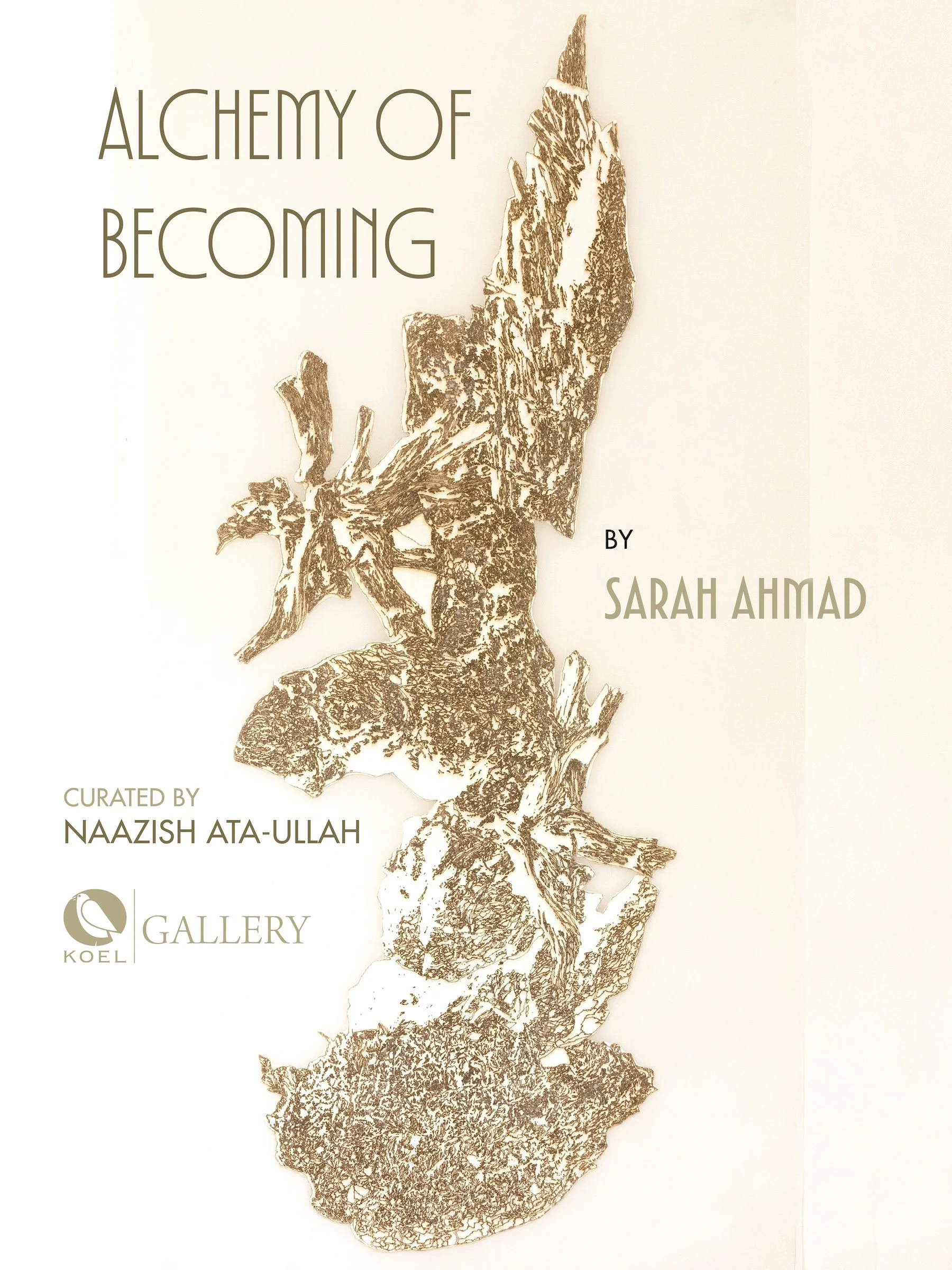
Alchemy of Becoming embraces a practice of "always becoming." Of transformation, evolution, renewal. As the earth seeks continually to heal itself—absorbing the trauma of the land and its inhabitants, regenerating from scars of ongoing destruction. Landscapes of displacement and erasure transmute into Landscapes of Imagining, hope embedded in transformation. Fragments of earlier works collage with new creations. Threatened glaciers transmute into soaring birds, landscapes into collaged abstractions, enshrined in gold. Women's embroidered caps mark sites of disappearance while reclaiming them, their presence persisting through their craft placed in the landscape where communities were displaced.
My practice centers on displacement and belonging, our relationship with land, pattern, and transformation. Working with displaced materials, threatened landscapes, and patterns both natural and human-made, I reveal the sacred geometries embedded within them. At the core of this work is transformation. Alchemy, from the Arabic word al-kimiya, refers to the transformation of base metals into gold, but also the purification of self through that process. My process follows alchemical stages: burning, cutting, dissolving, reassembling, gilding. The same material reforms into new configurations, the making as transformative personally as it is materially. The work is dynamic, evolving into new stages in each space. This is the alchemy of becoming: transformation as ongoing practice, where hope lives—the same material holding futures not yet imagined.
In Urdu, we use the same word—kul (کل)—to mean both yesterday and tomorrow. Past and future coalesce, opening the possibility of rebuilding new worlds from the wreckage of the old. In my work, gold leaf embraces the alchemist's quest: making the ordinary sacred. Fusing yesterday and tomorrow in an unforeseen futurity. A future of hope.
Fractured Cosmos III & Fractured Alchemy
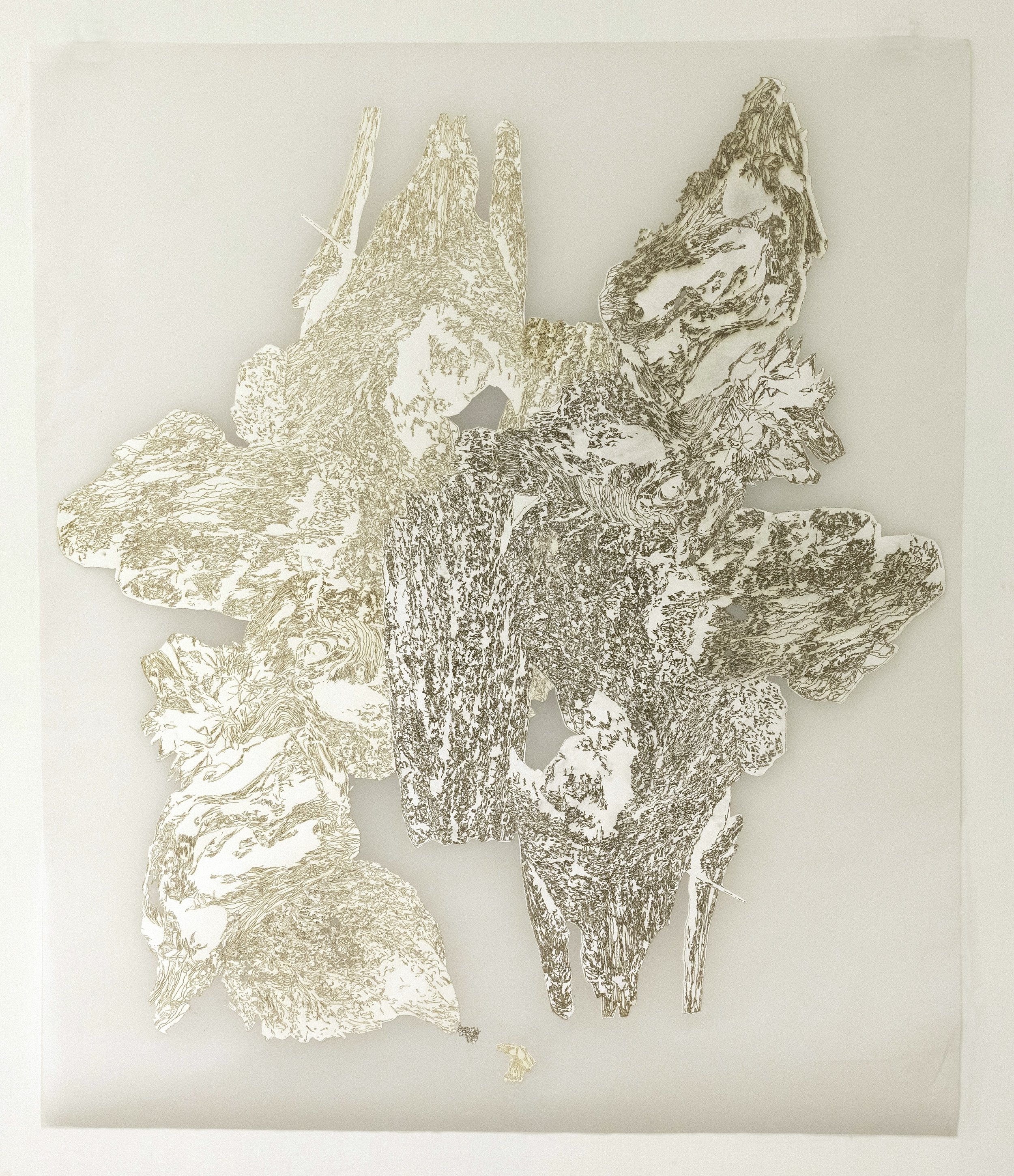
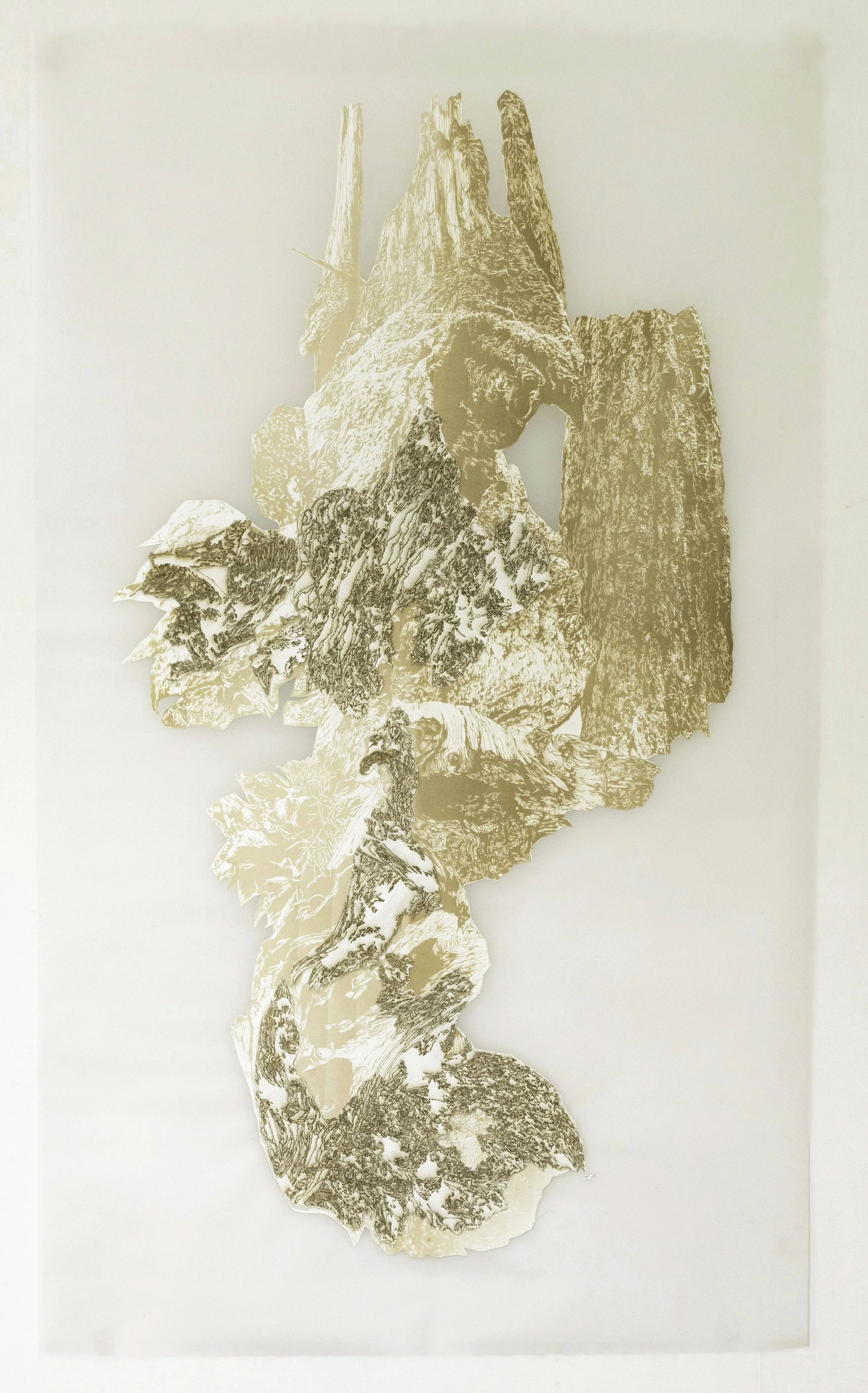
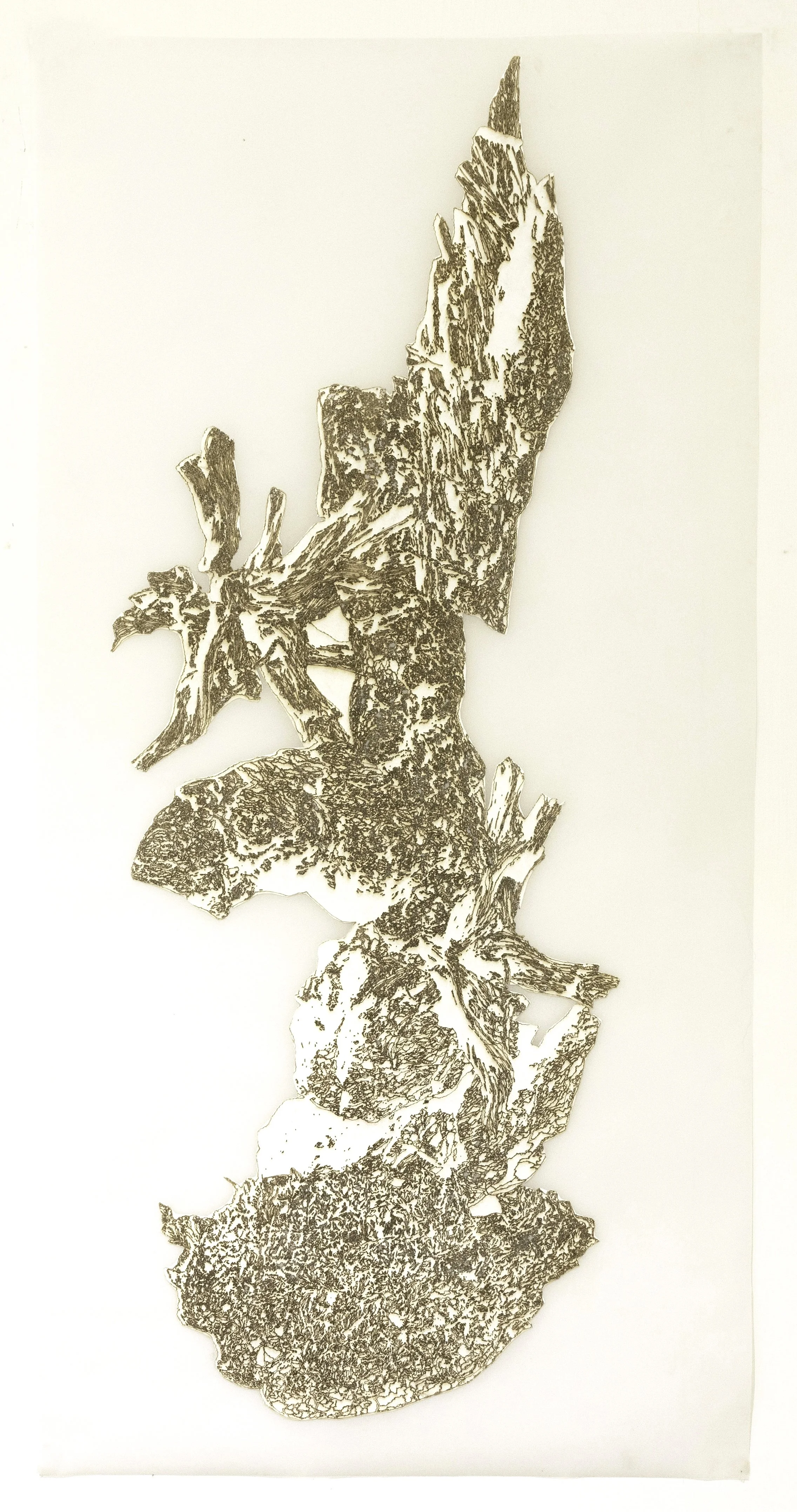
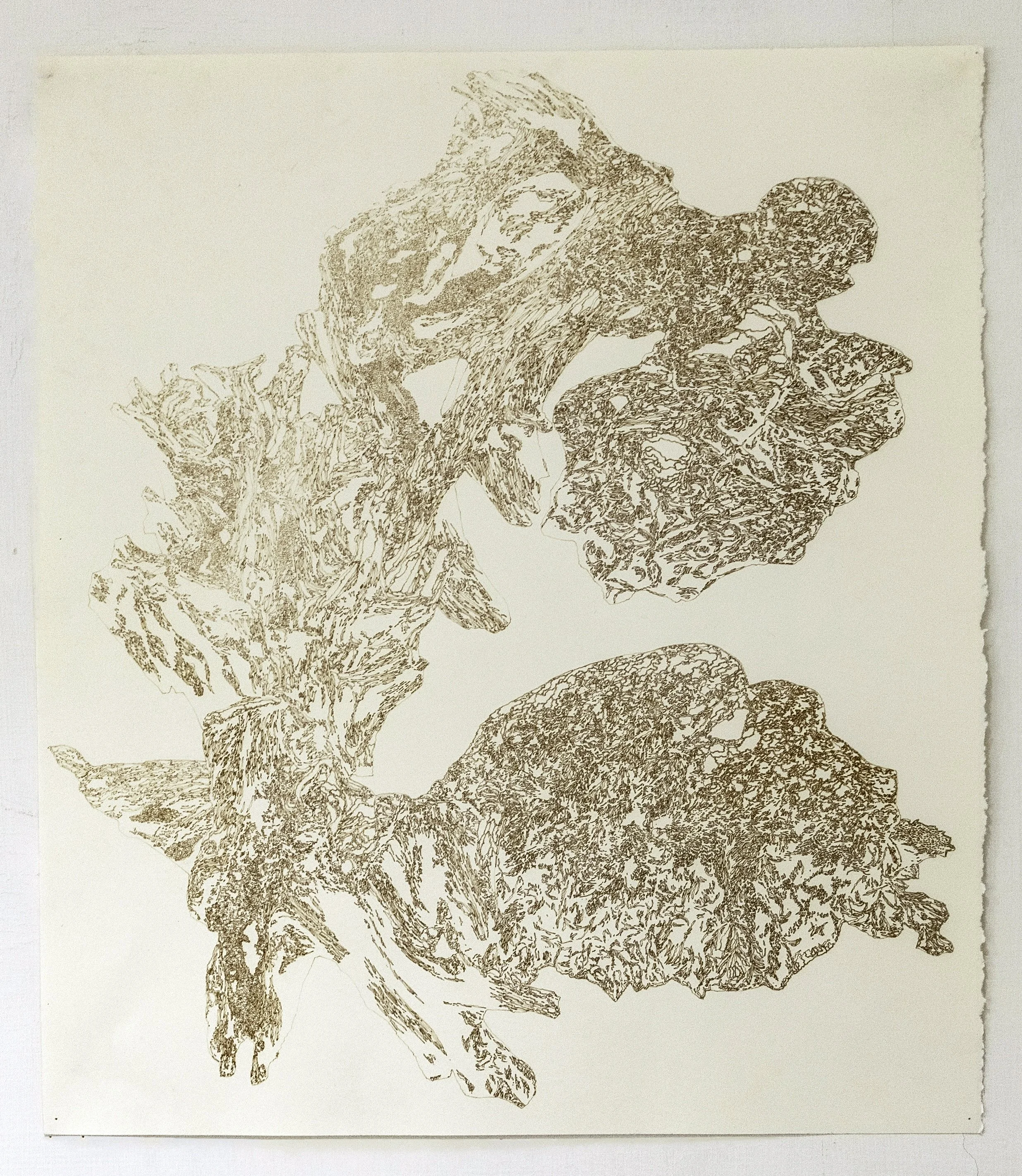
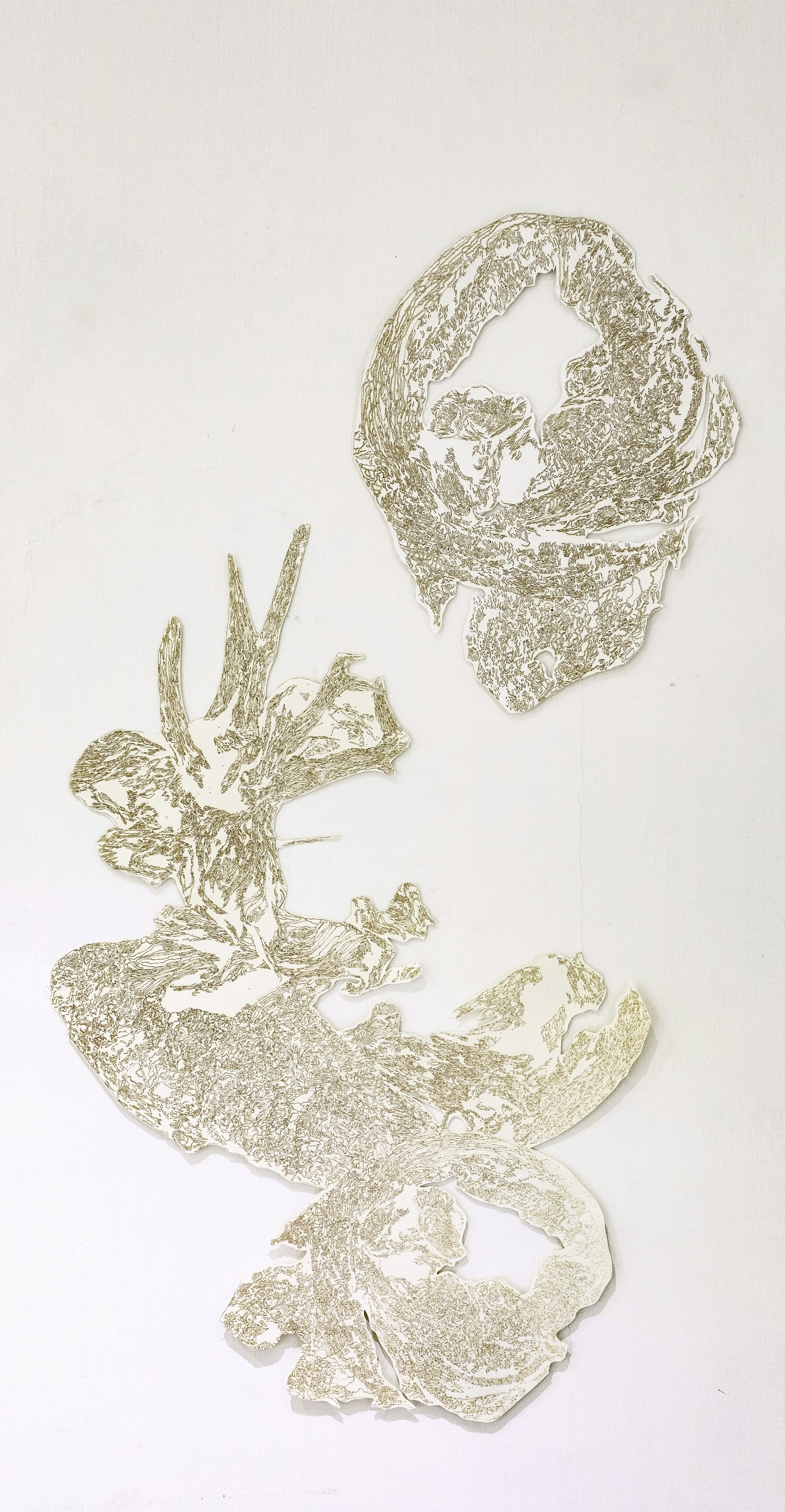
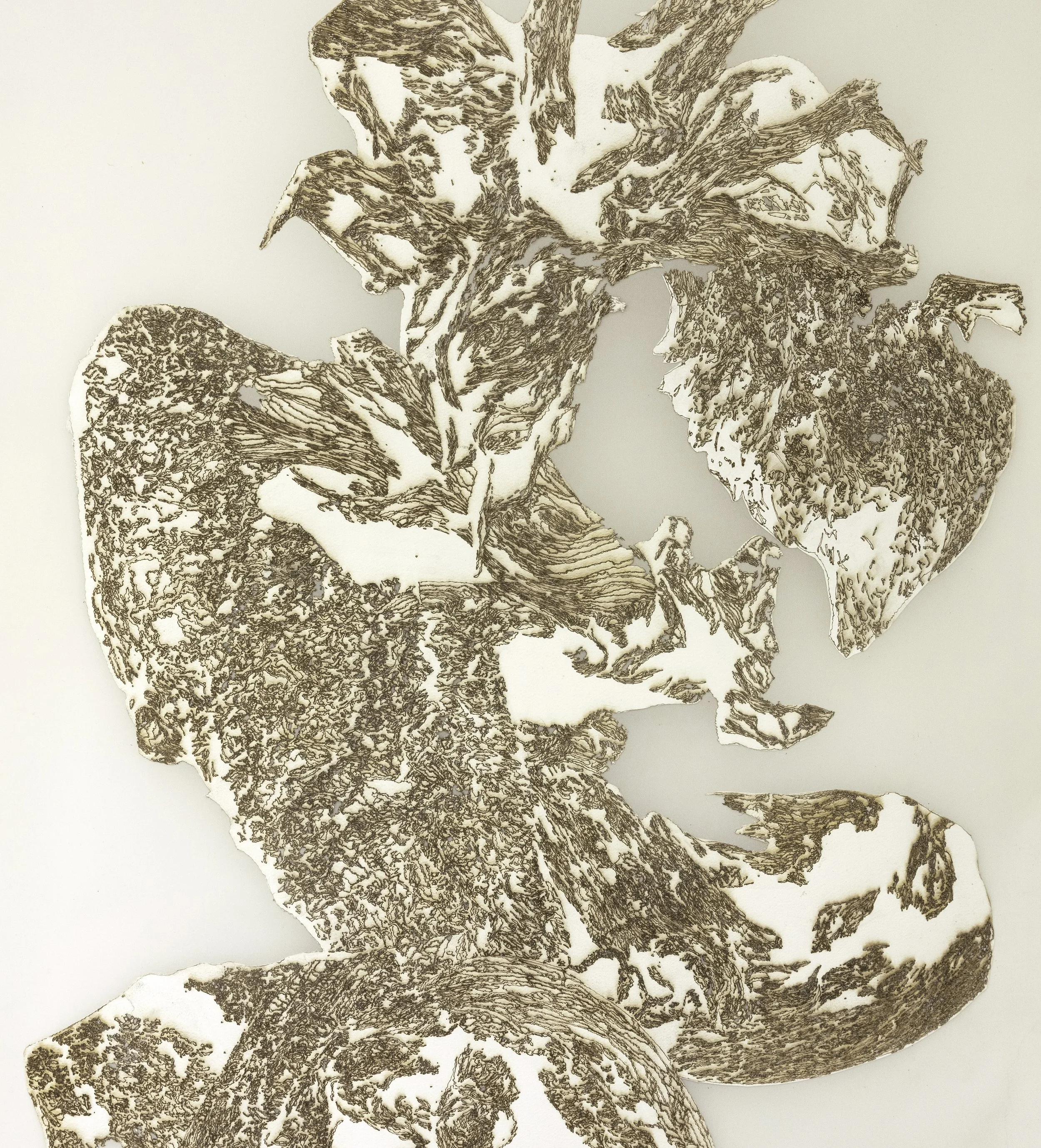
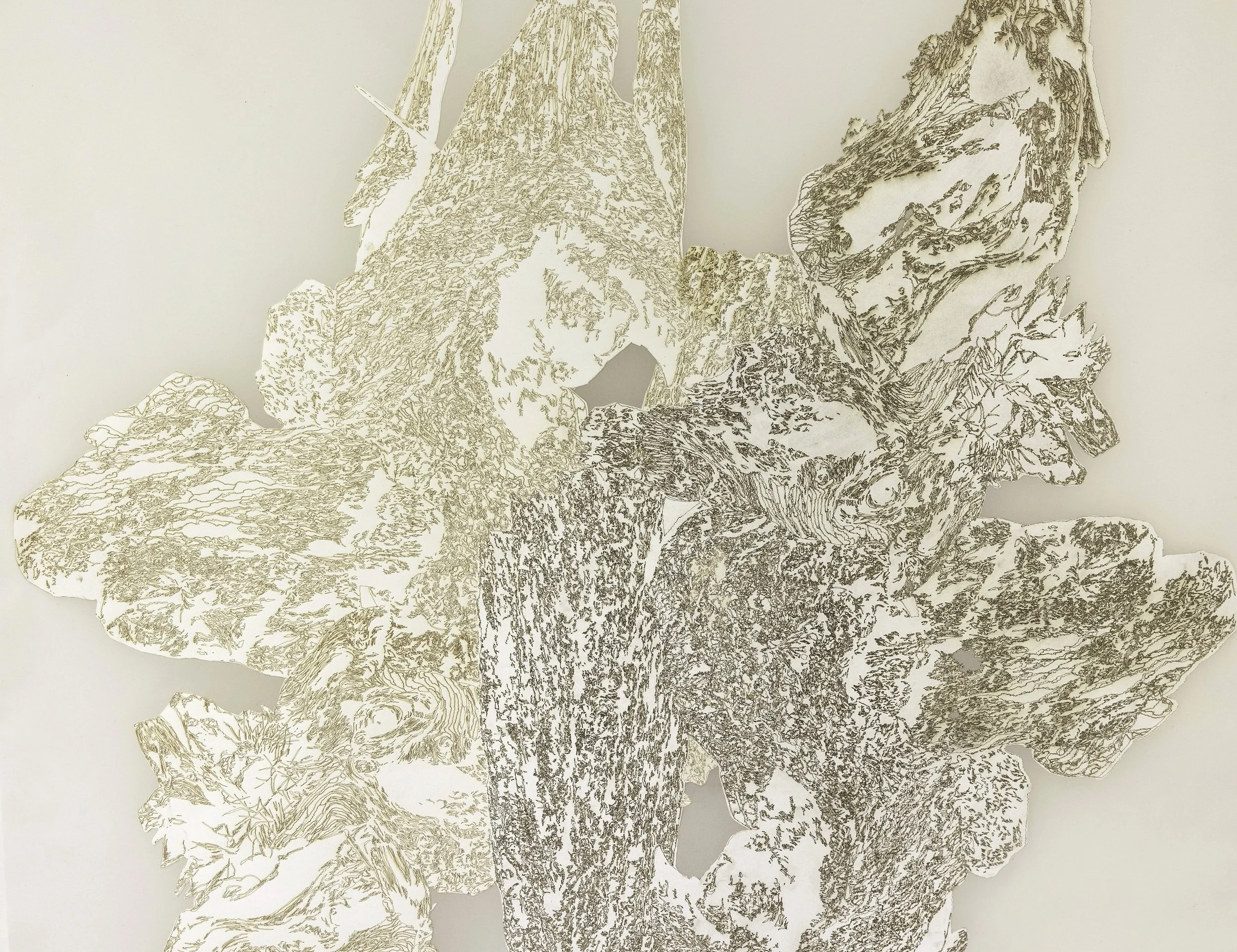
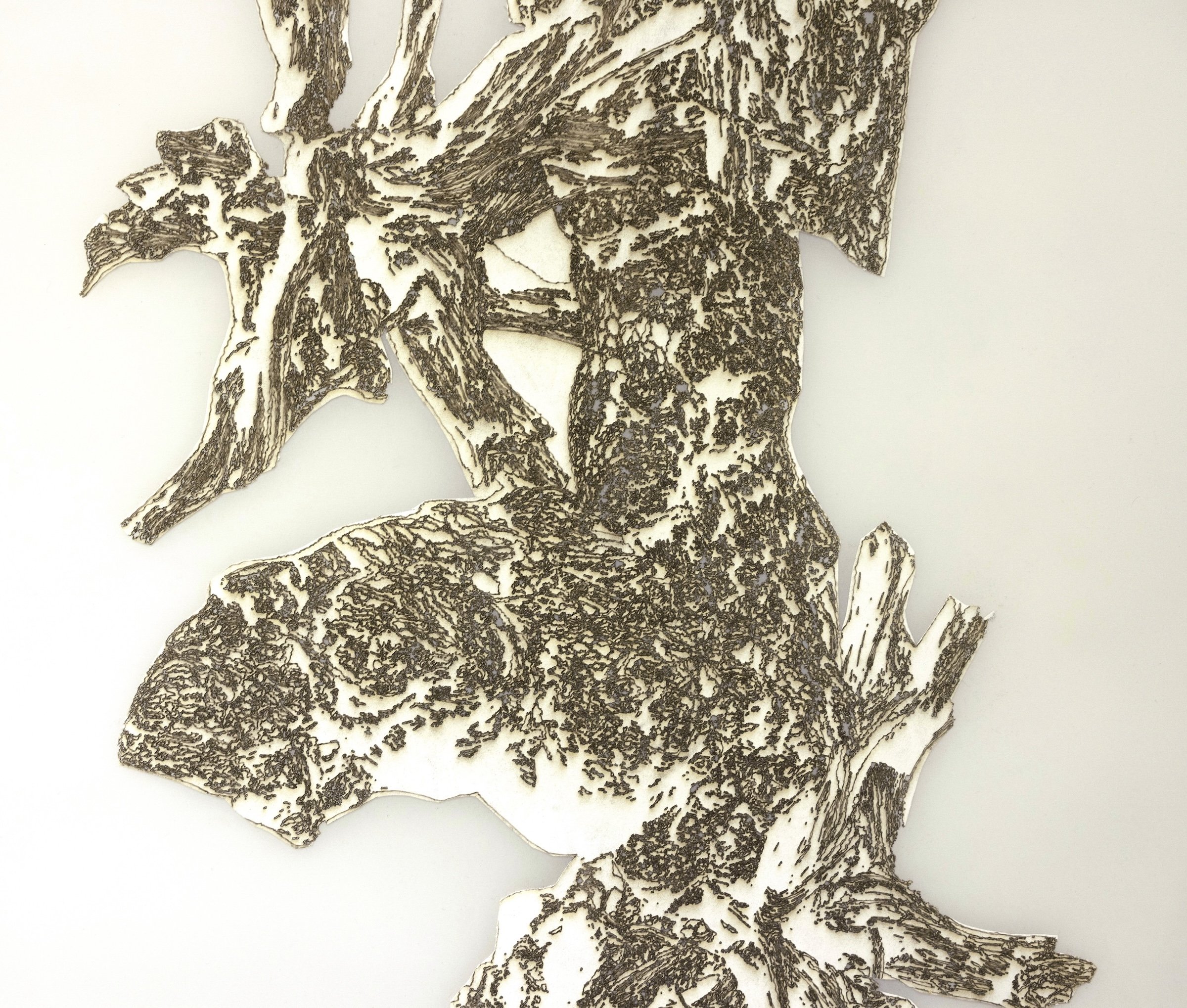
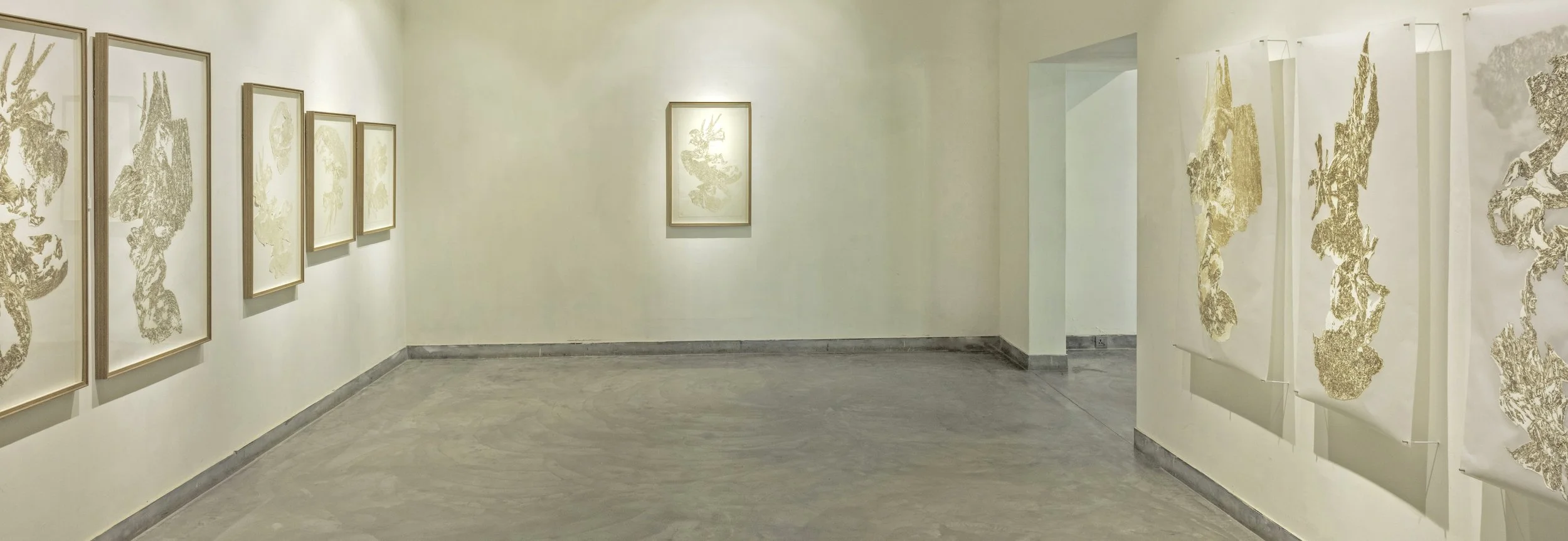
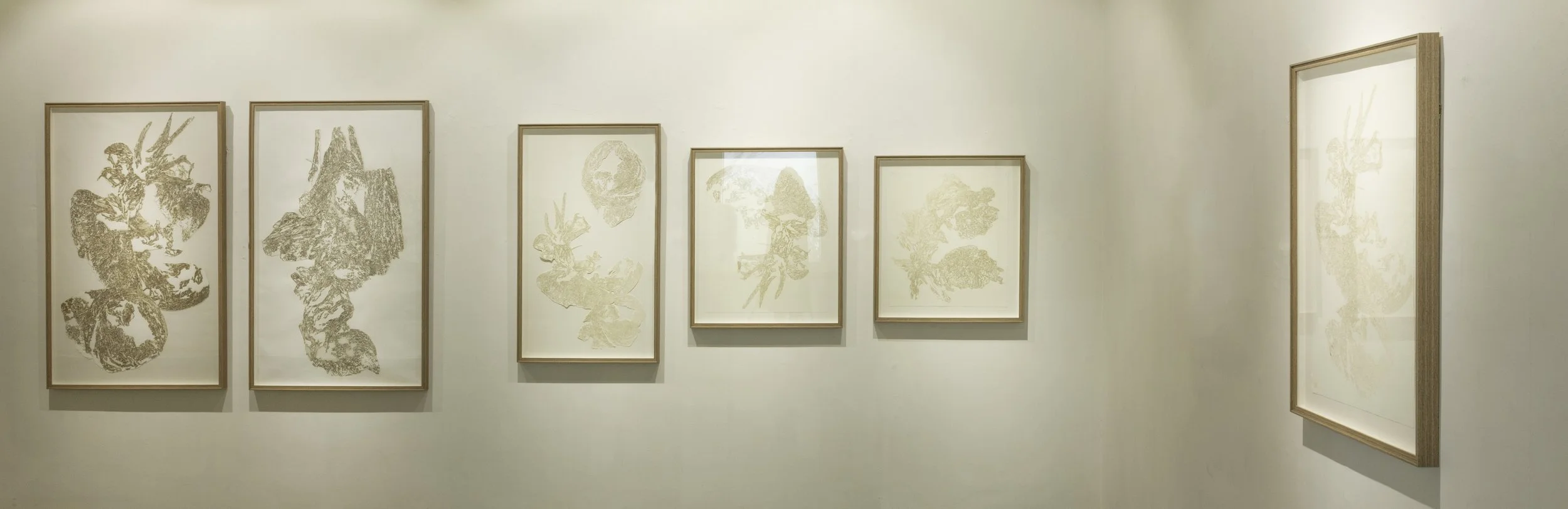
Fractured Cosmos III
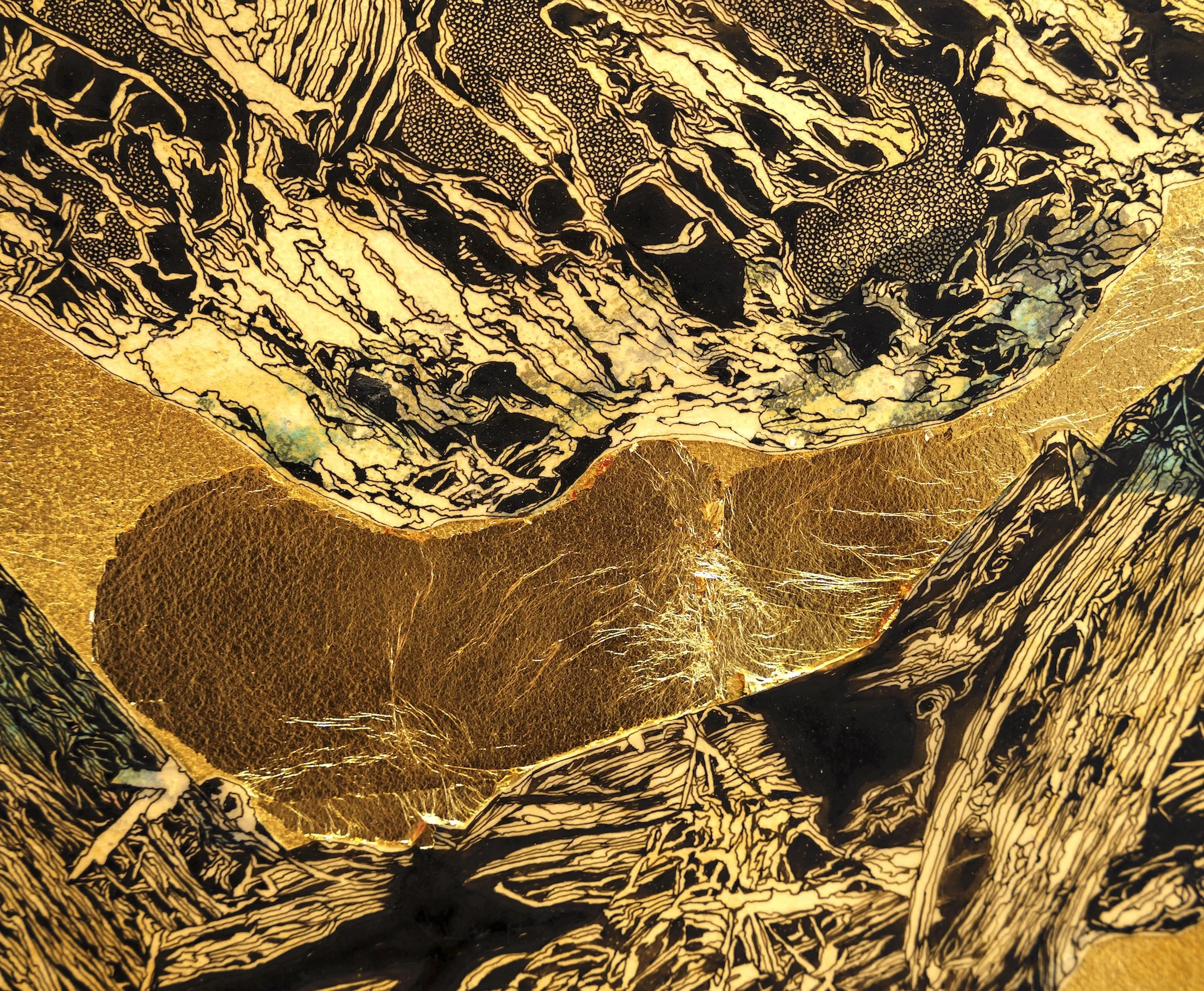
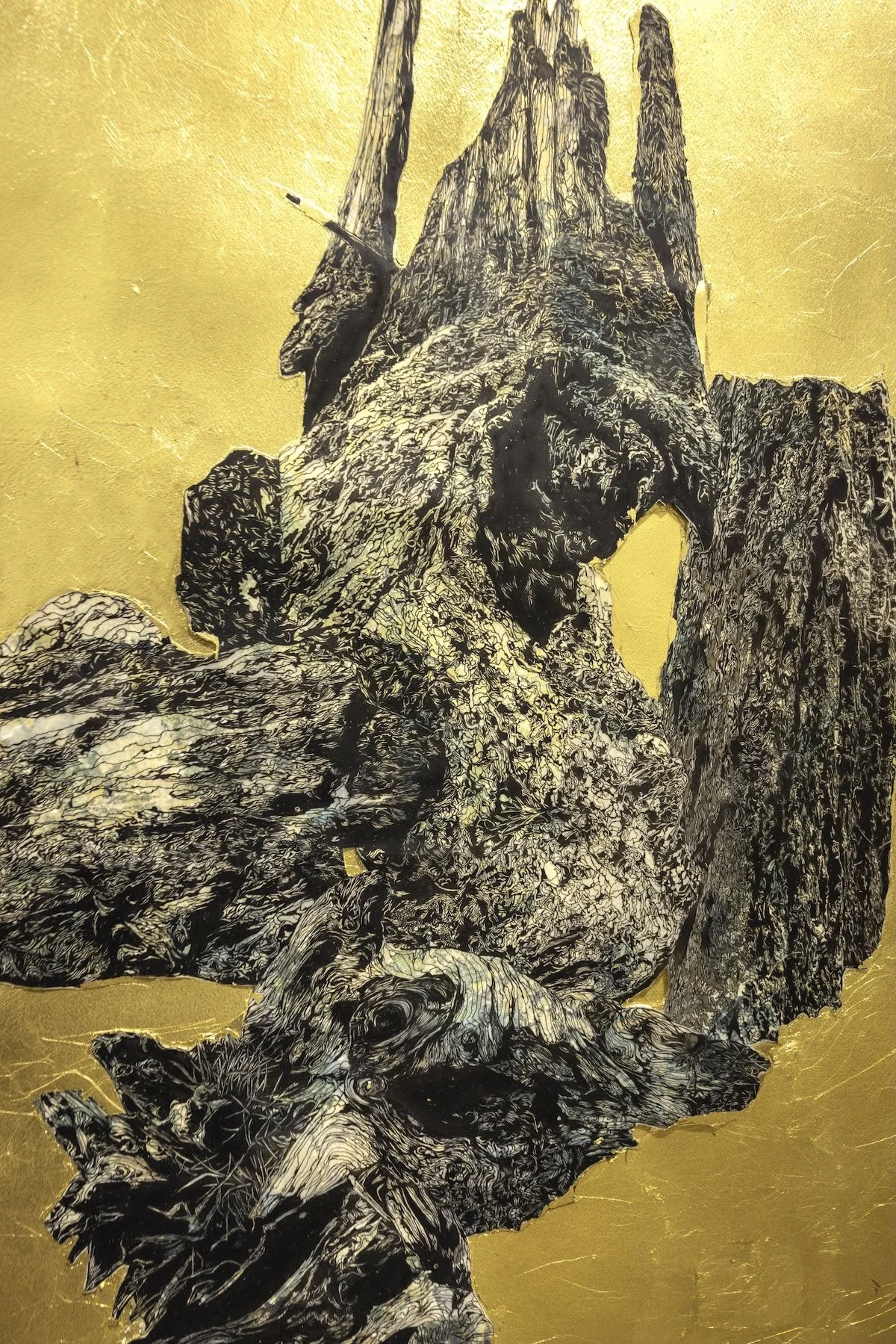
Laser etching on Arches watercolor paper collaged on tracing paper.
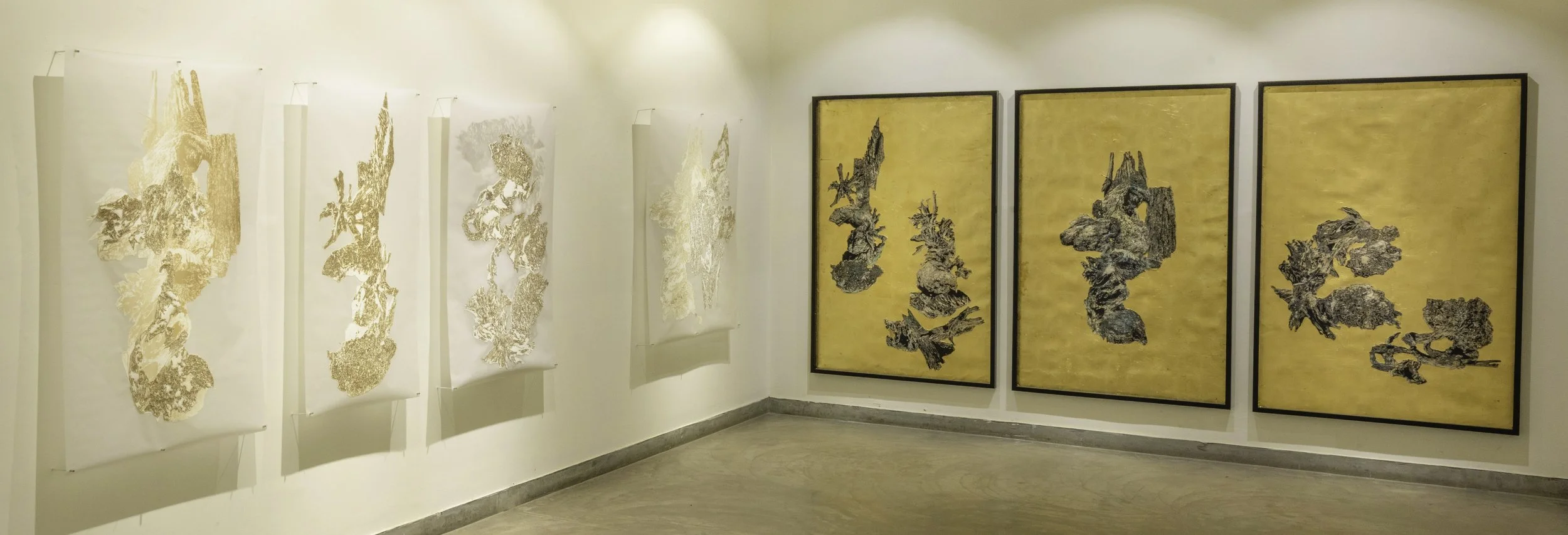
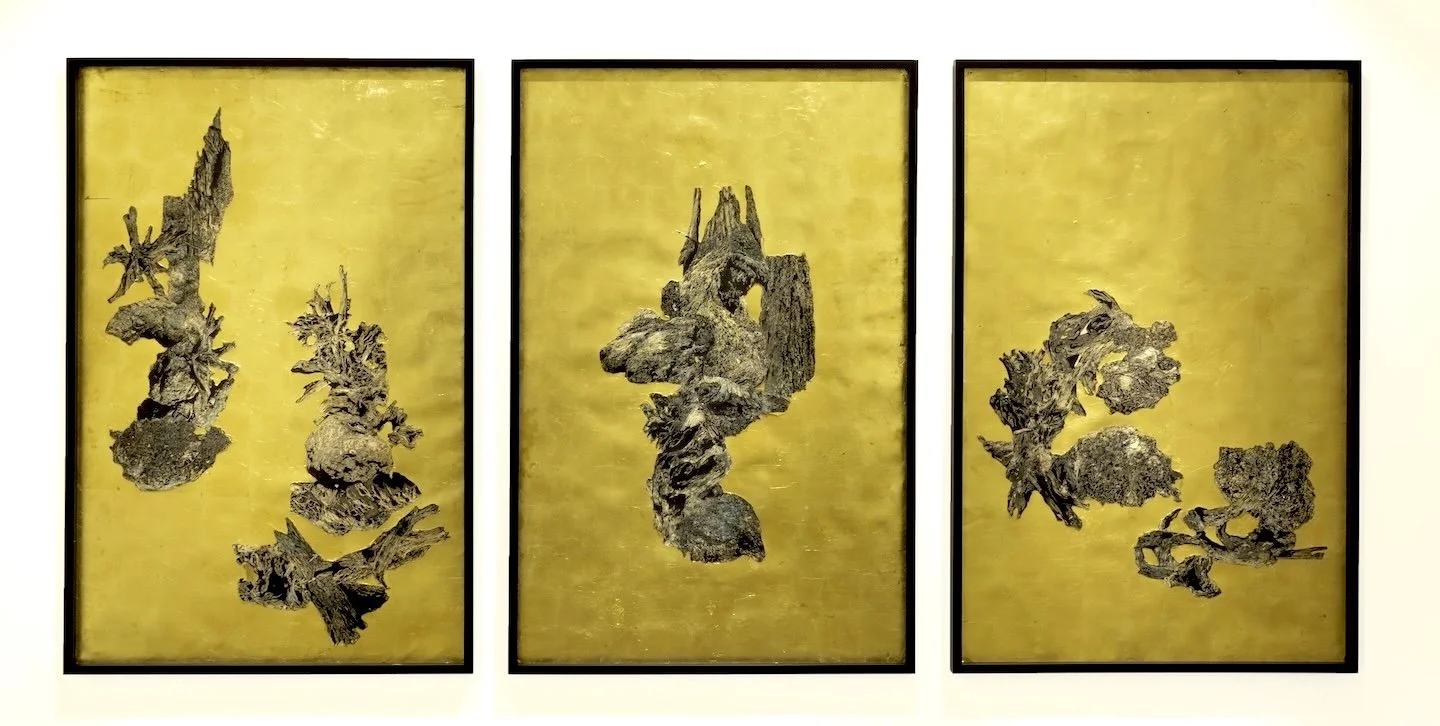
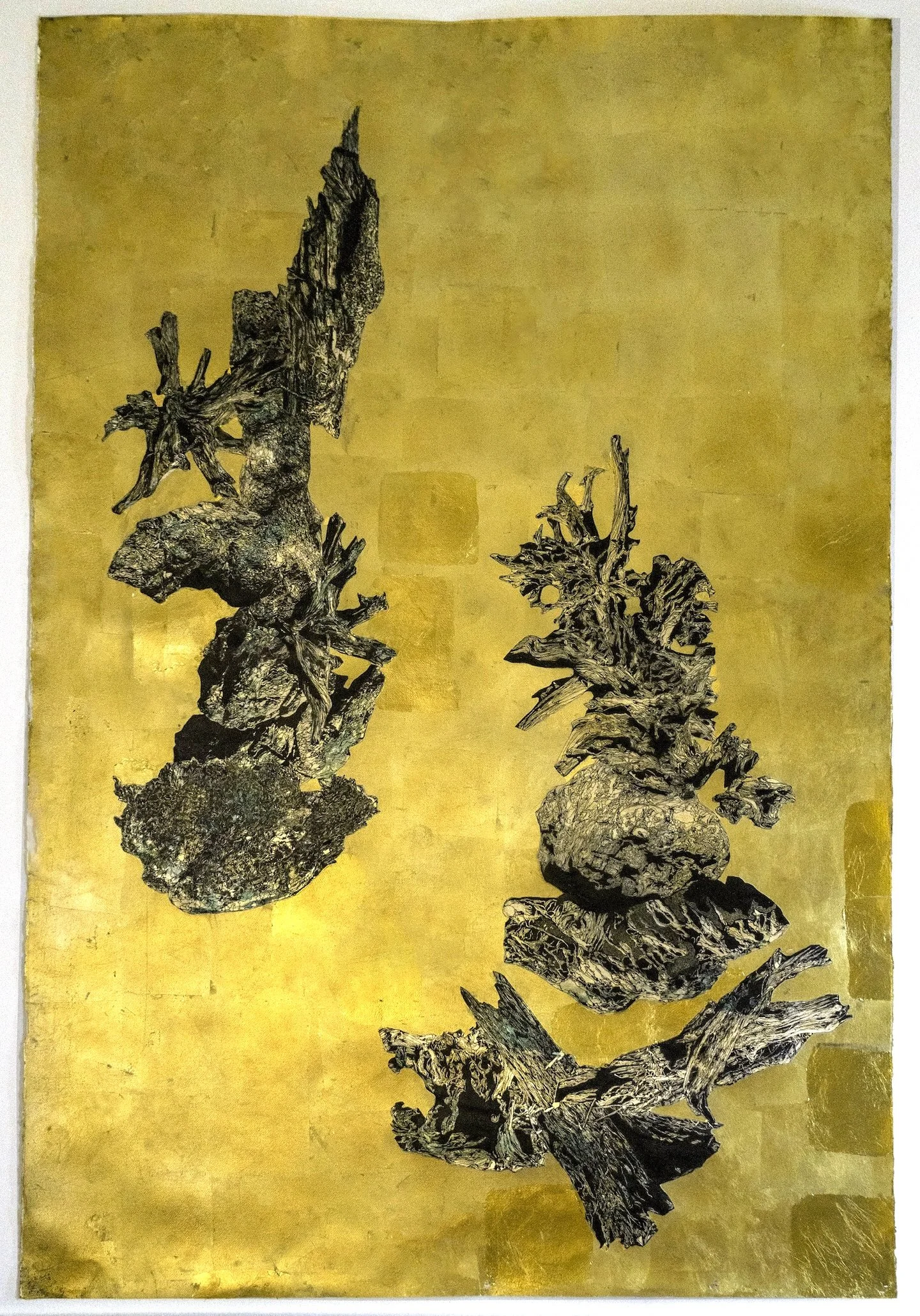
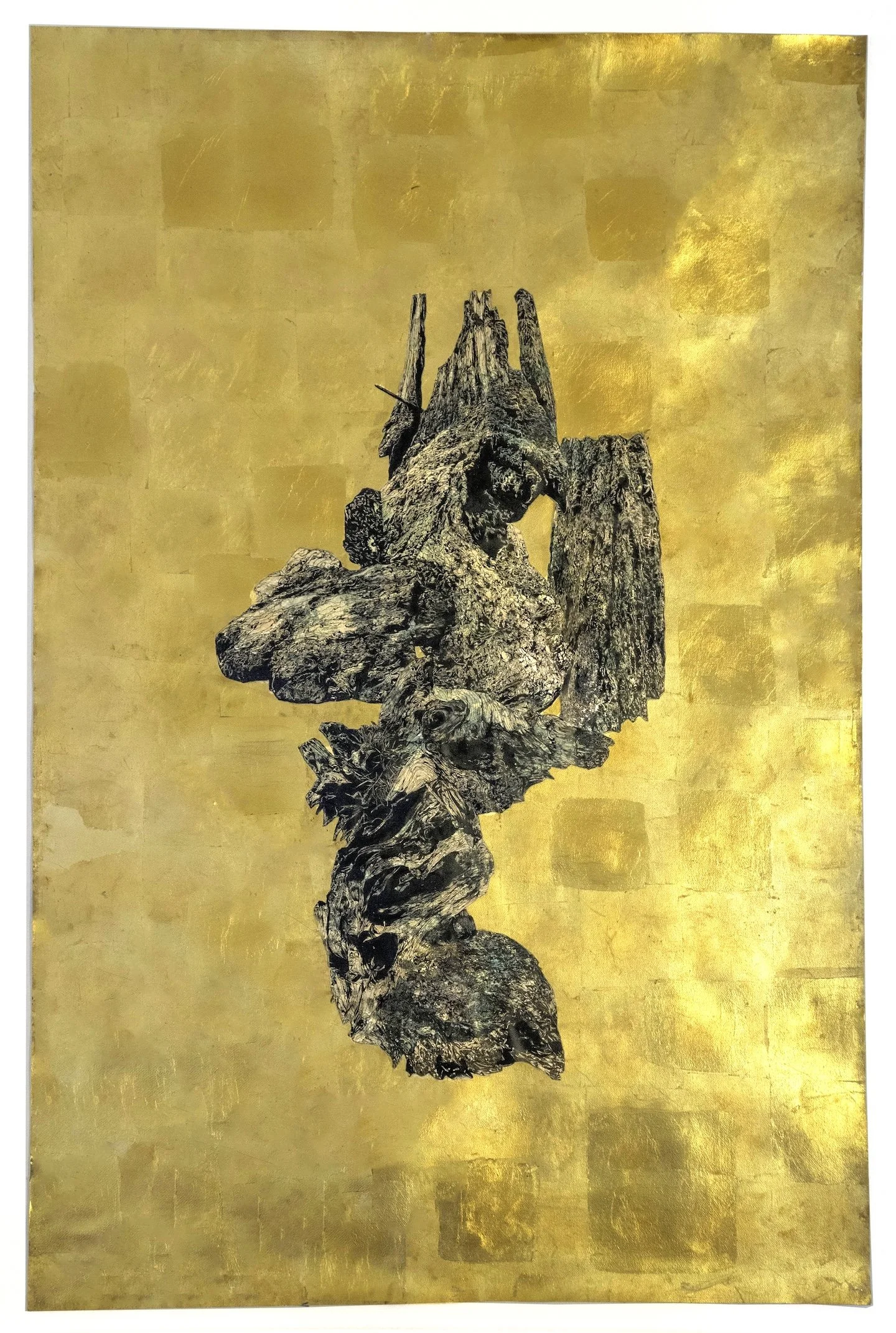
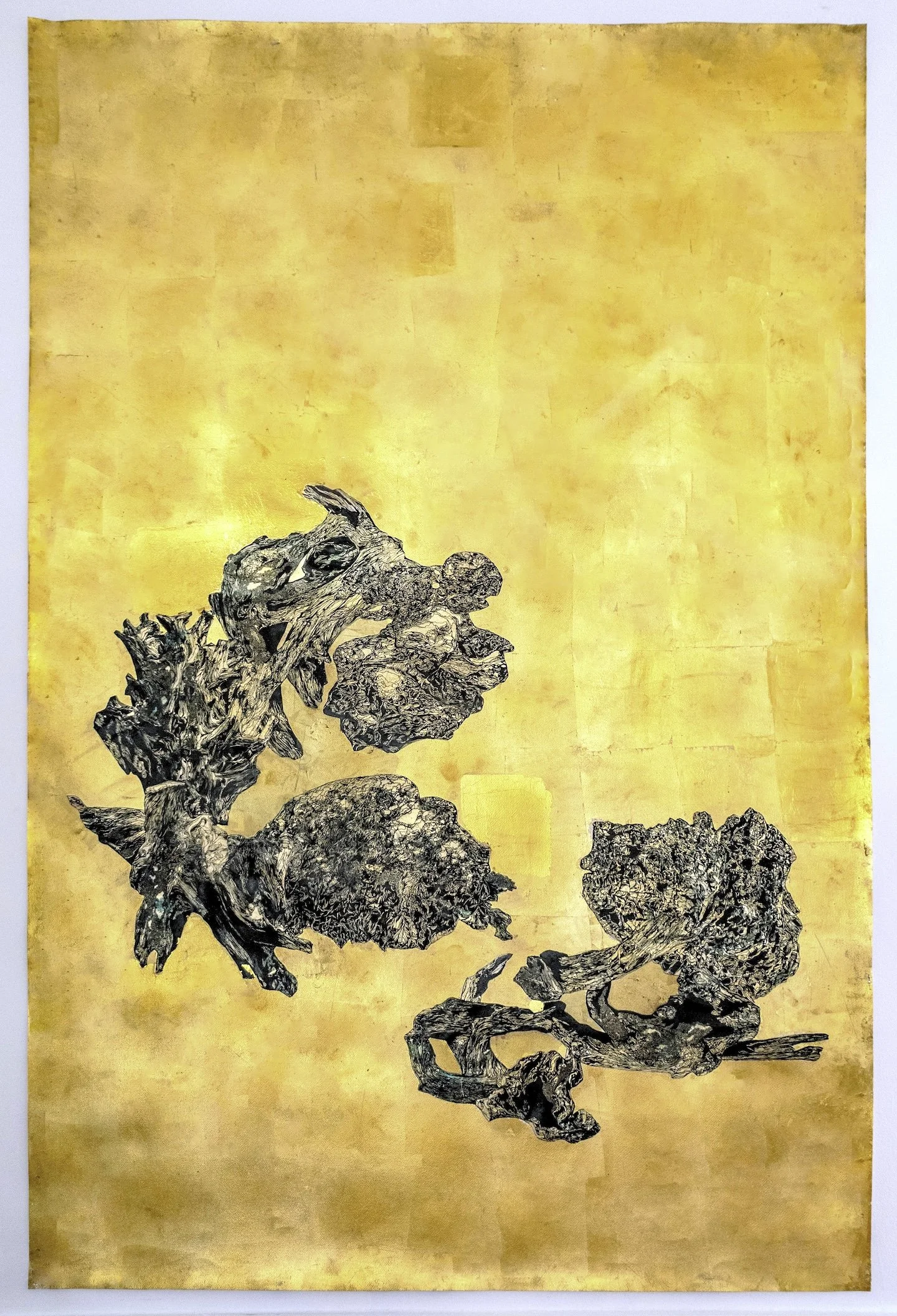
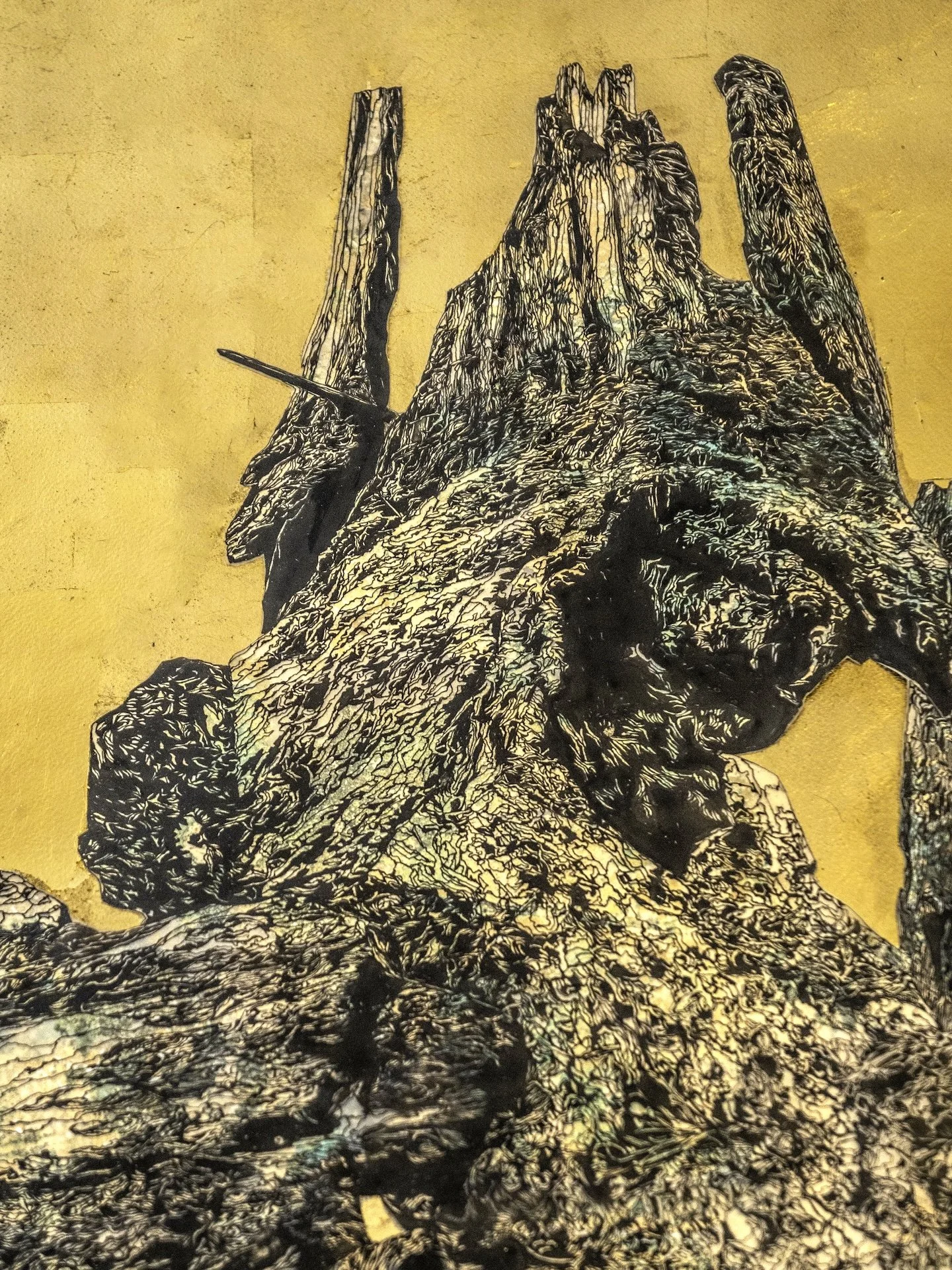
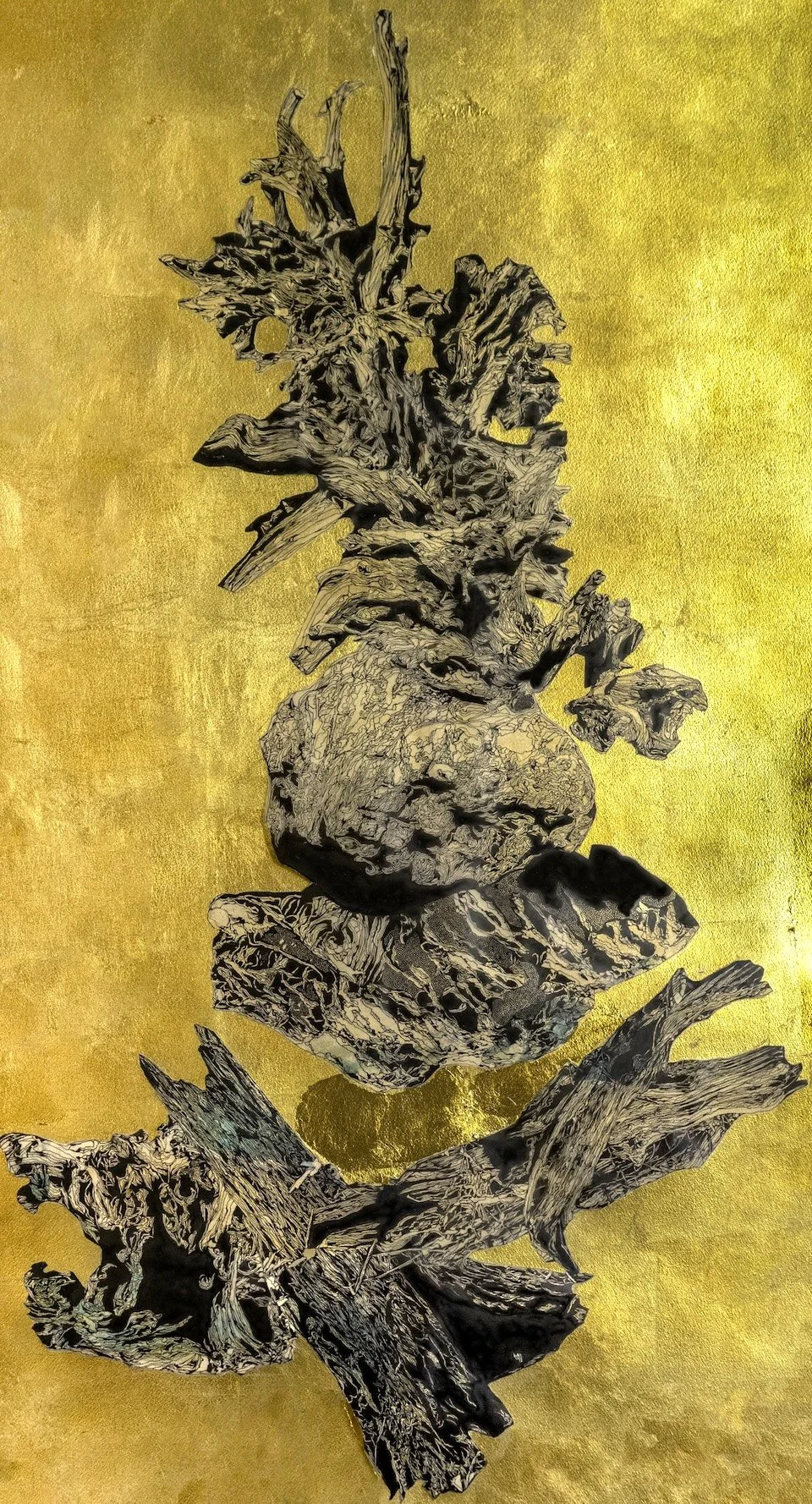
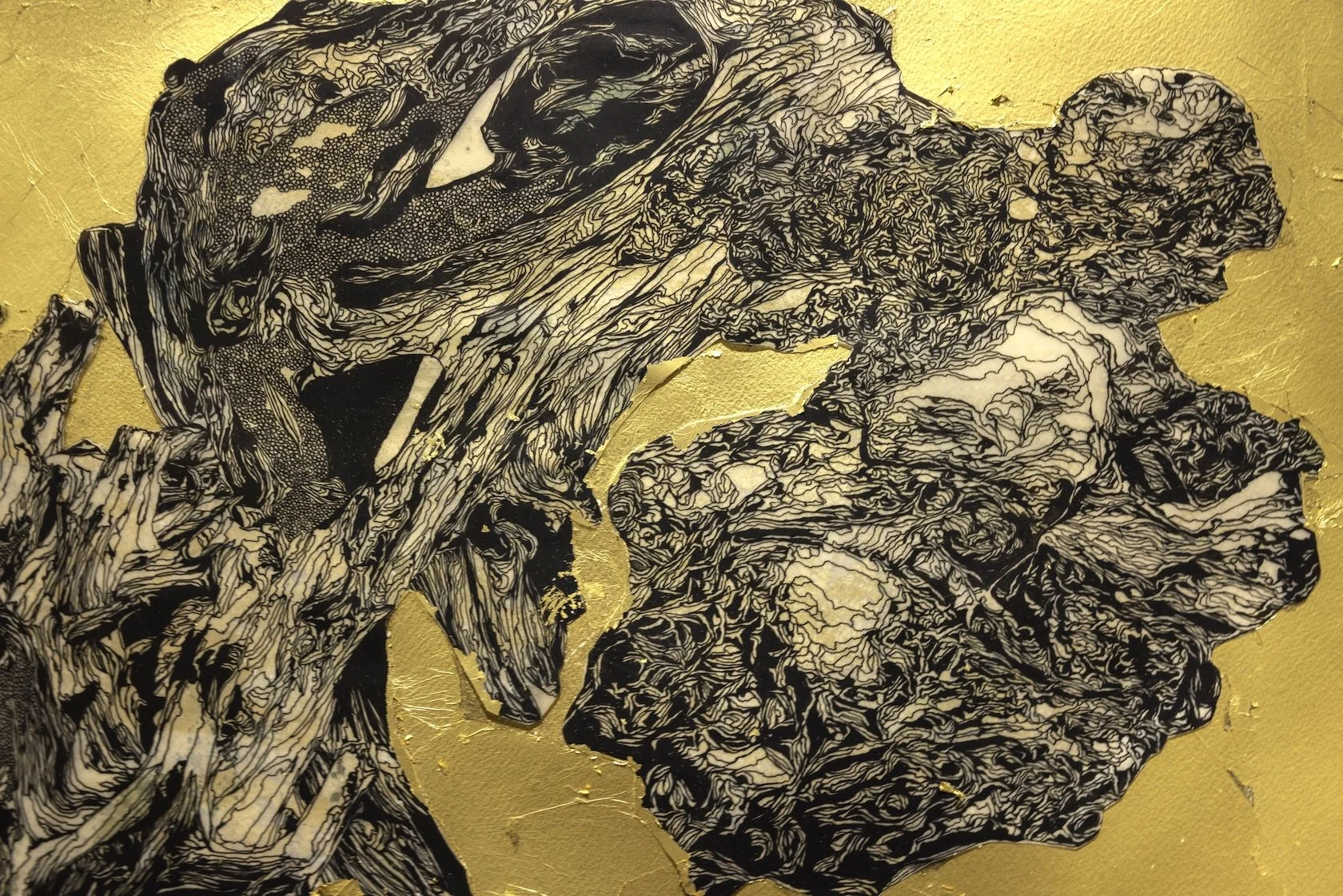
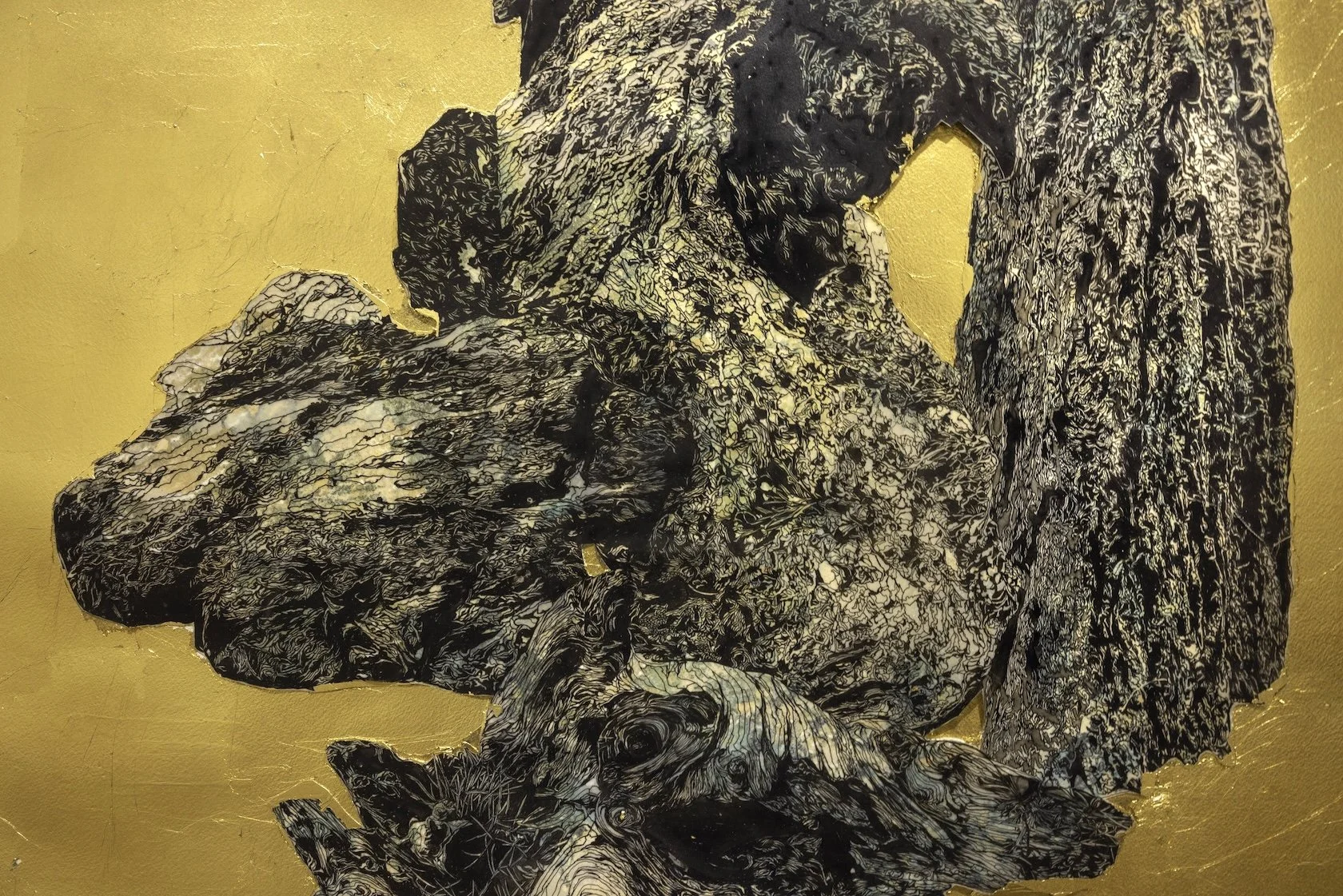
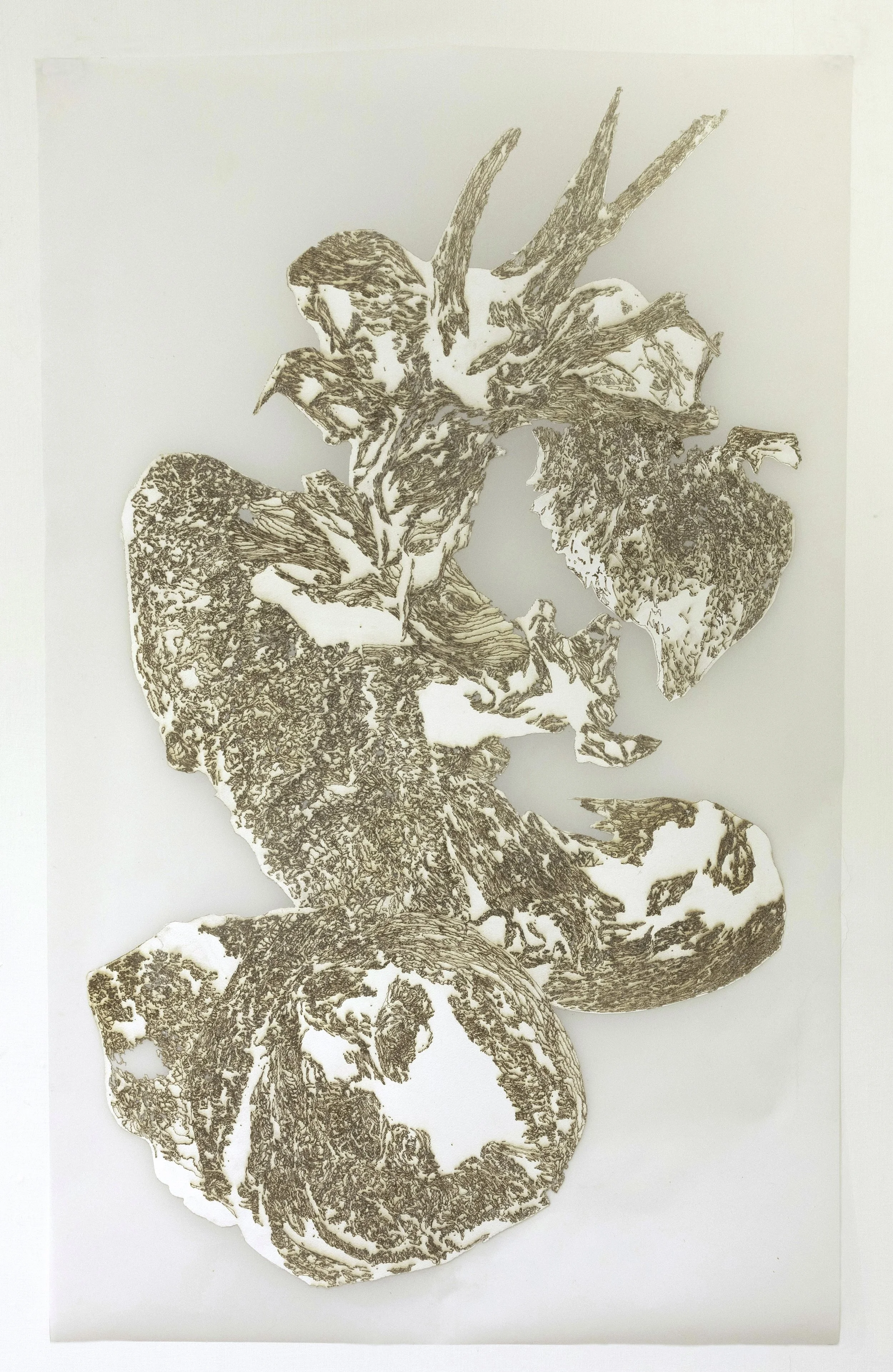
Fractured Alchemy
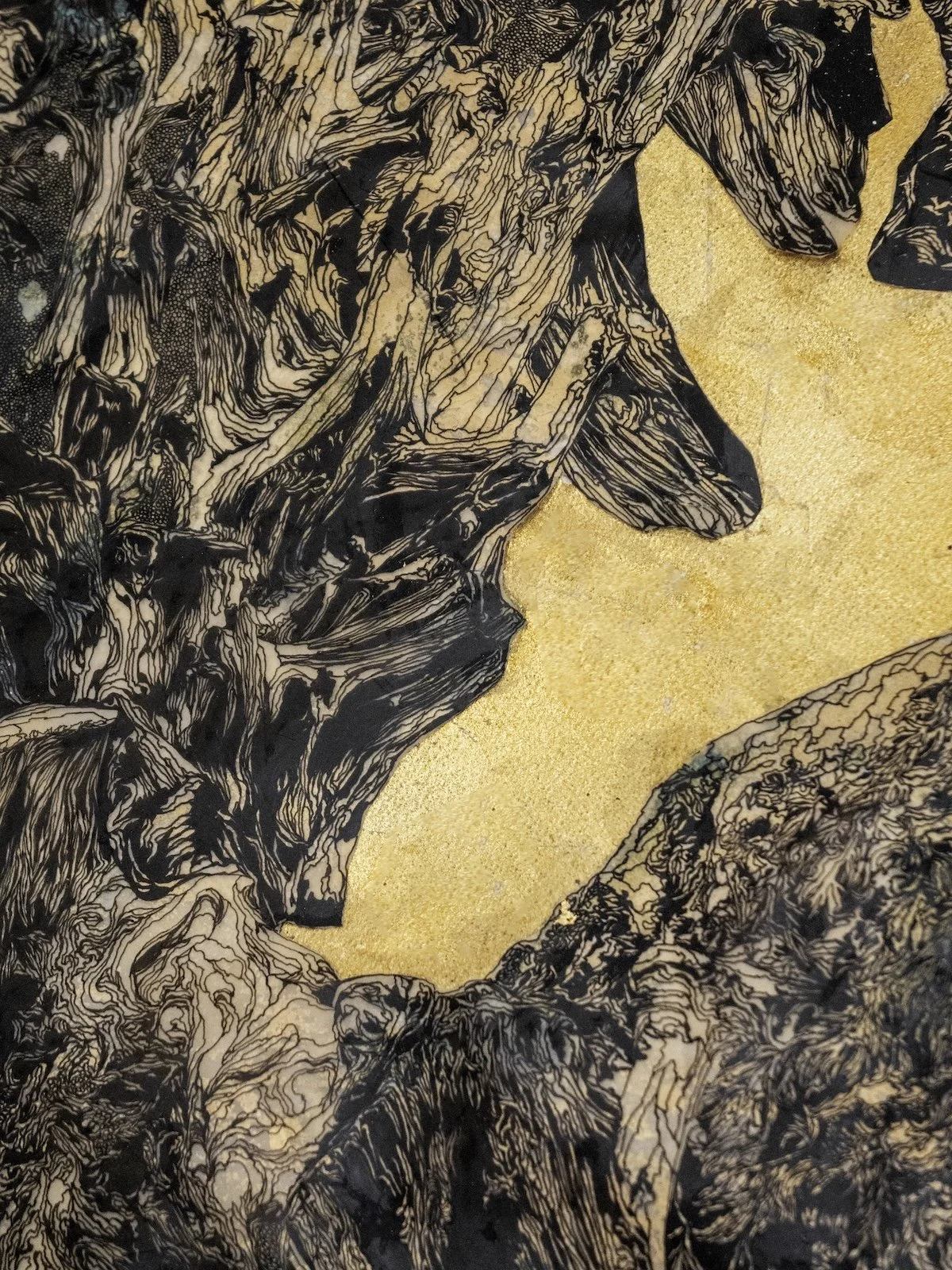
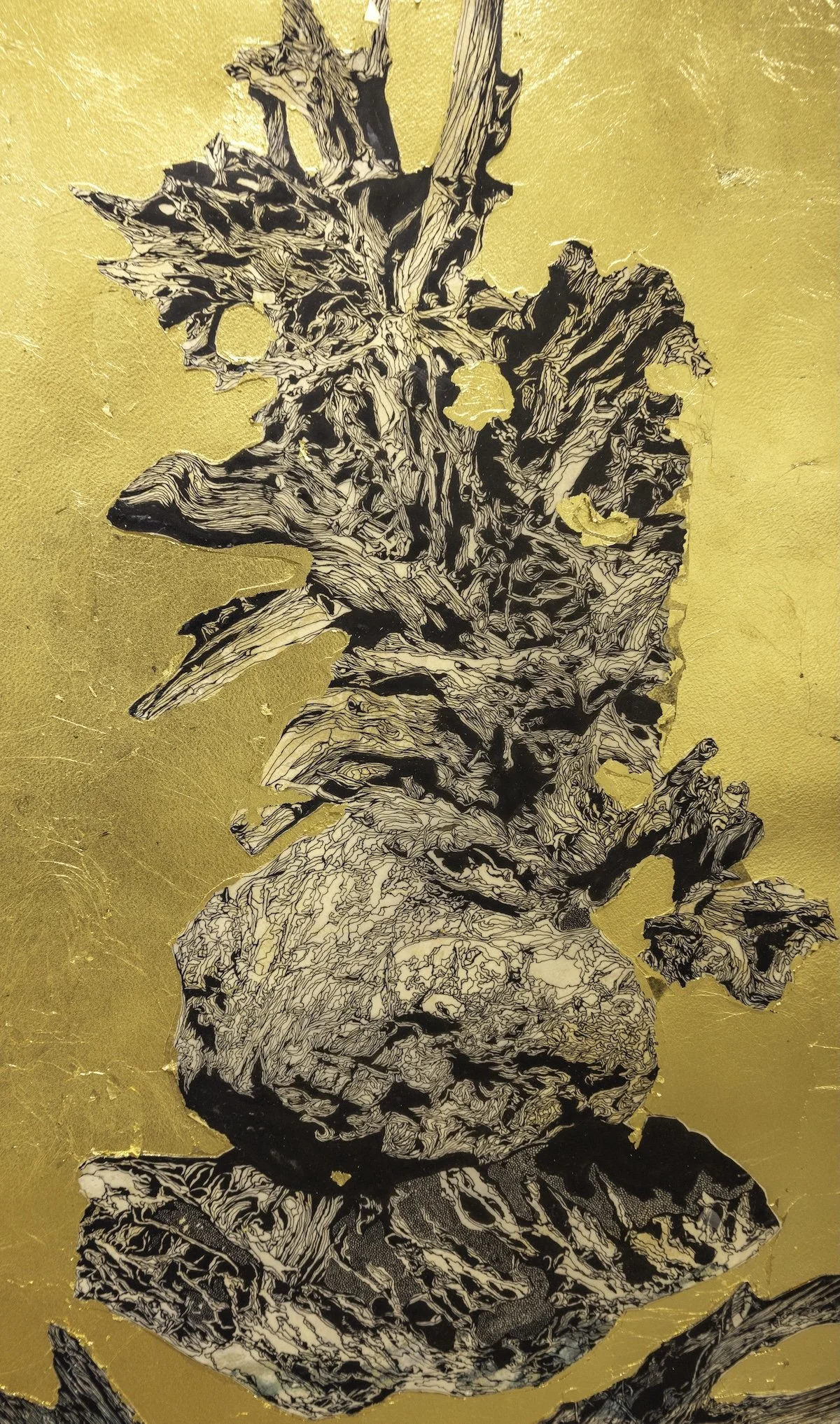
68 x 48 in. each; pen and ink drawings on vellum on gold leaf on Arches watercolor paper
Fractured Cosmos III and Fractured Alchemy enact alchemical stages side by side. In Fractured Alchemy, ink drawings on vellum are cut and collaged onto gold leaf, fragments of past works transfigured into new wholes. Arboreal remnants, porous rocks, and kelp unite on gilded ground. In Fractured Cosmos III, the same organic forms are laser-etched into paper, burning pattern into surface. The etchings recall landscapes scarred by human intervention, yet reveal nature's biomorphic patterns crawling across the page. Mounted on translucent surfaces, airy and suspended, the etchings float alongside their gilded counterparts. Burning and gilding, dissolution and reformation, the two bodies of work mirror alchemical transformation: from blackening to gold, the same material holding futures not yet imagined, destruction becoming possibility.
Alchemy of Becoming
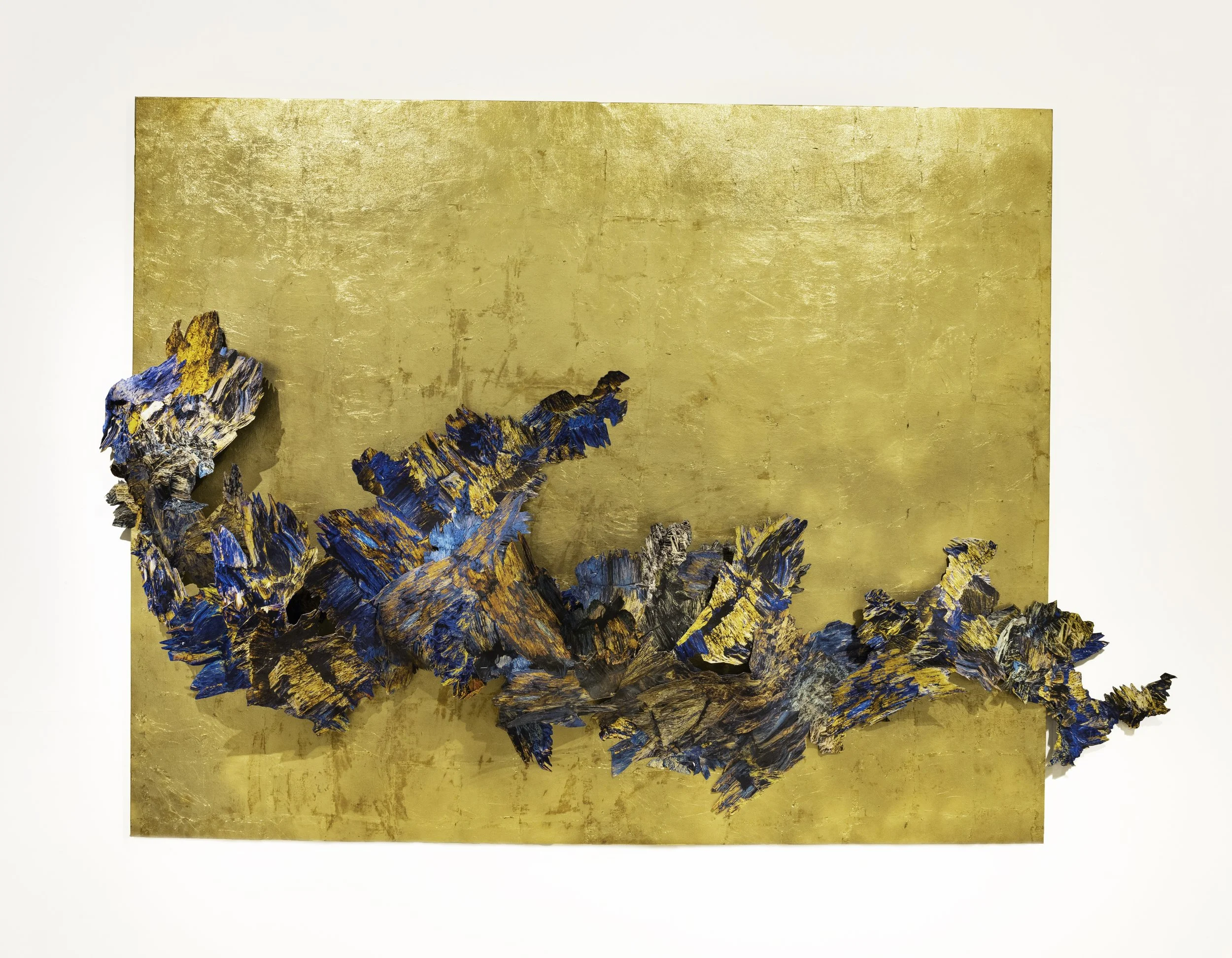
Alchemy of Becoming, 58 x 86 x 9.5 in.
Mixed media collage of digitally manipulated photos of rocks along the Passu glacier hike in Hunza, cnavas, and gold leaf.
Digitally manipulated photographs of rocks along the Passu glacier hike in Hunza morph into a floating form, enshrined in gold. An alchemy of becoming.
Landscapes of Imagining 1
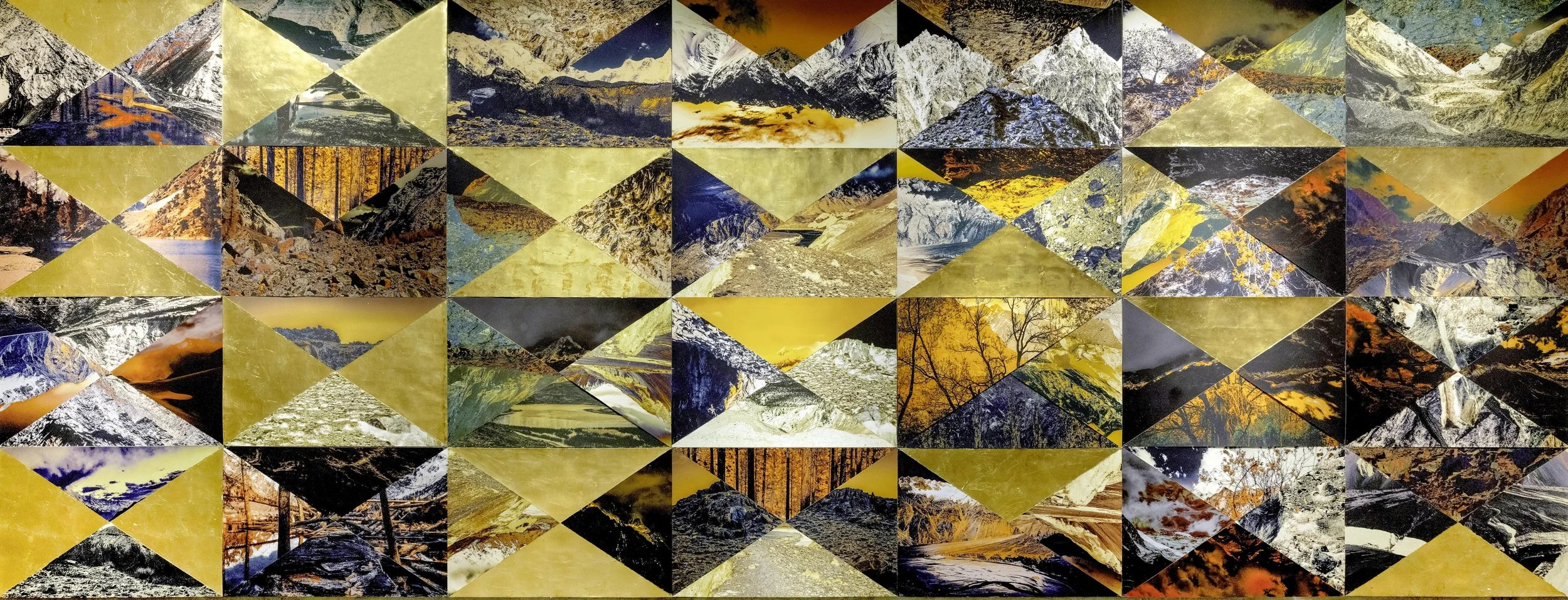
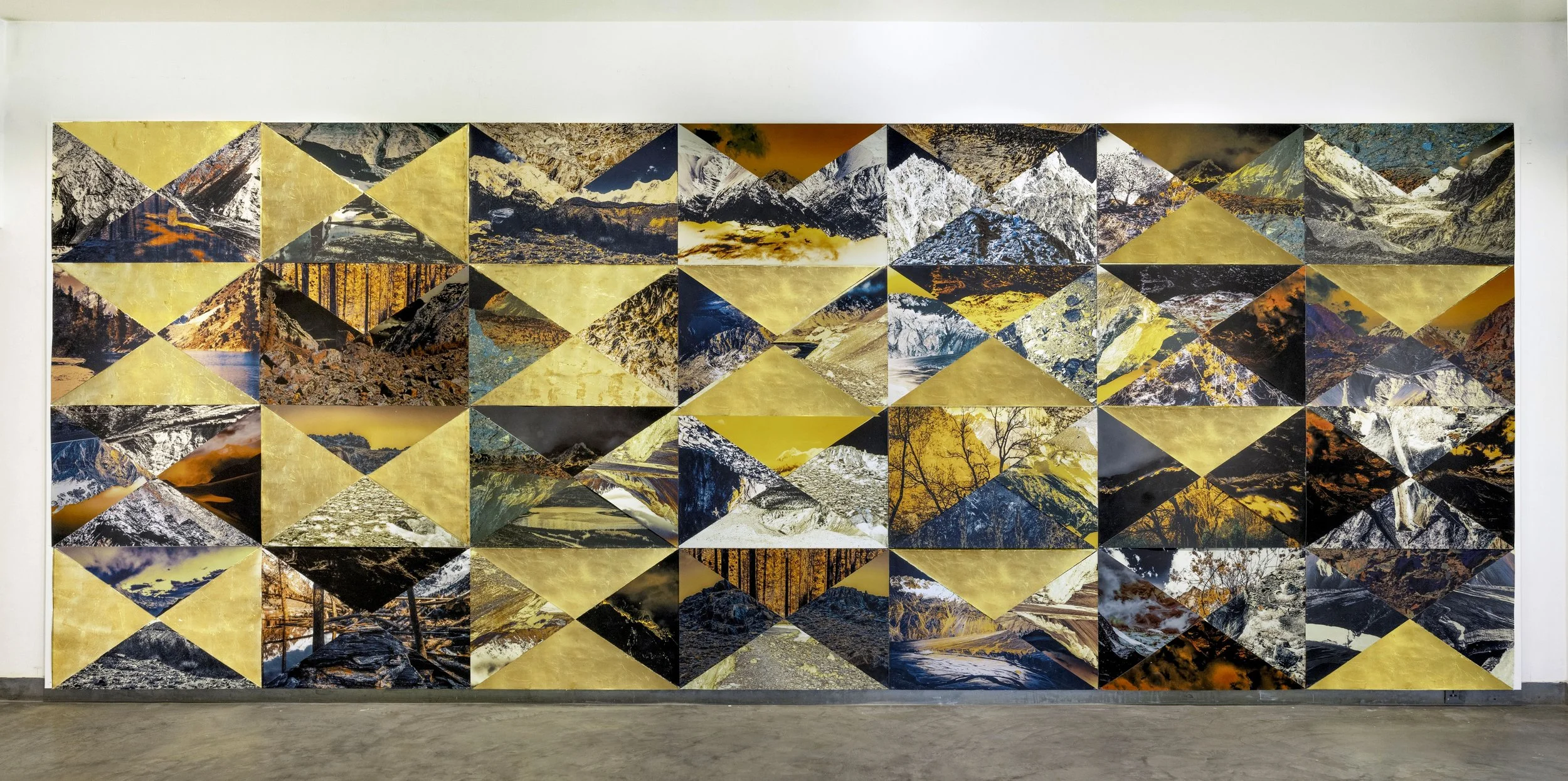
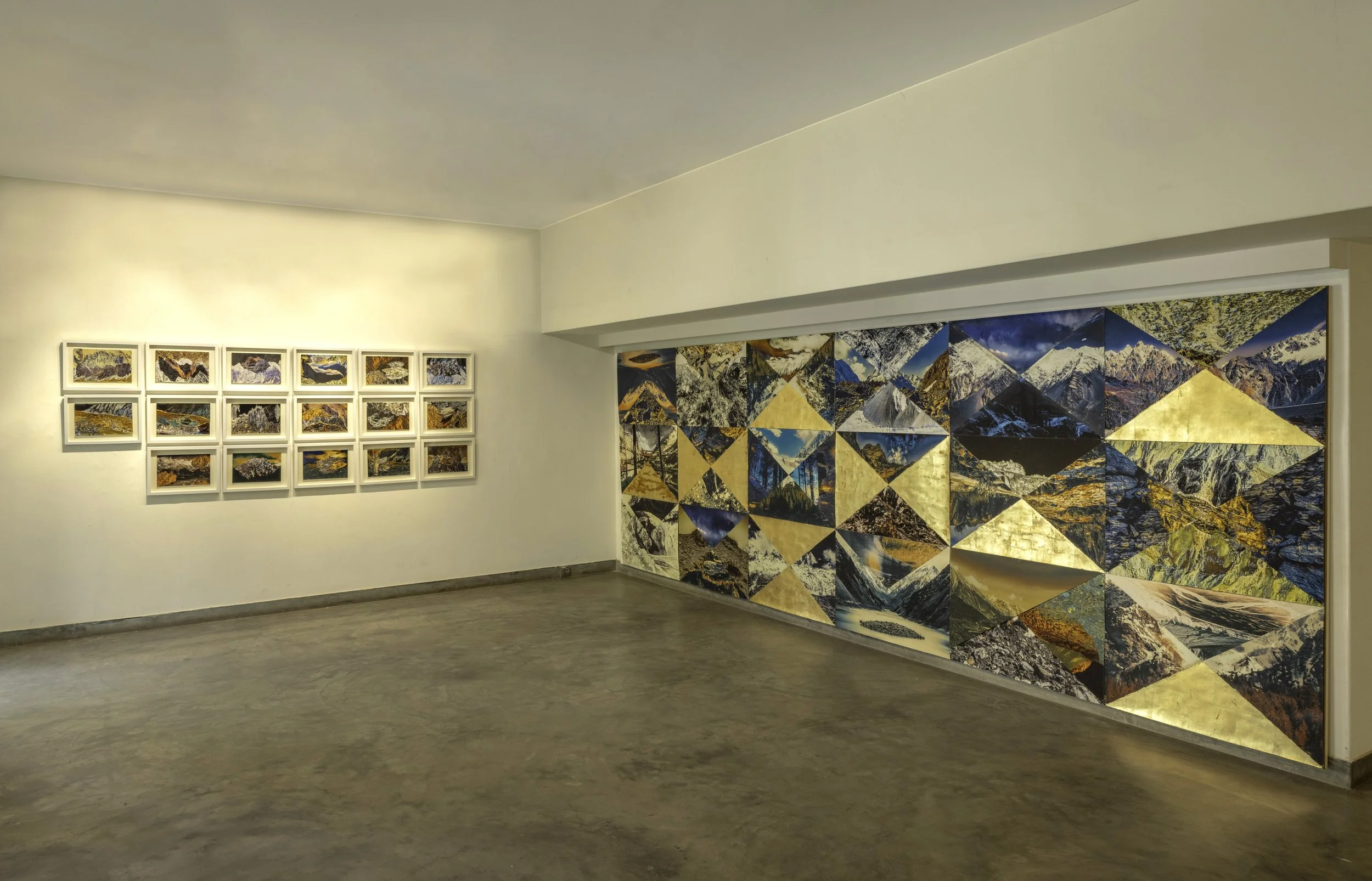
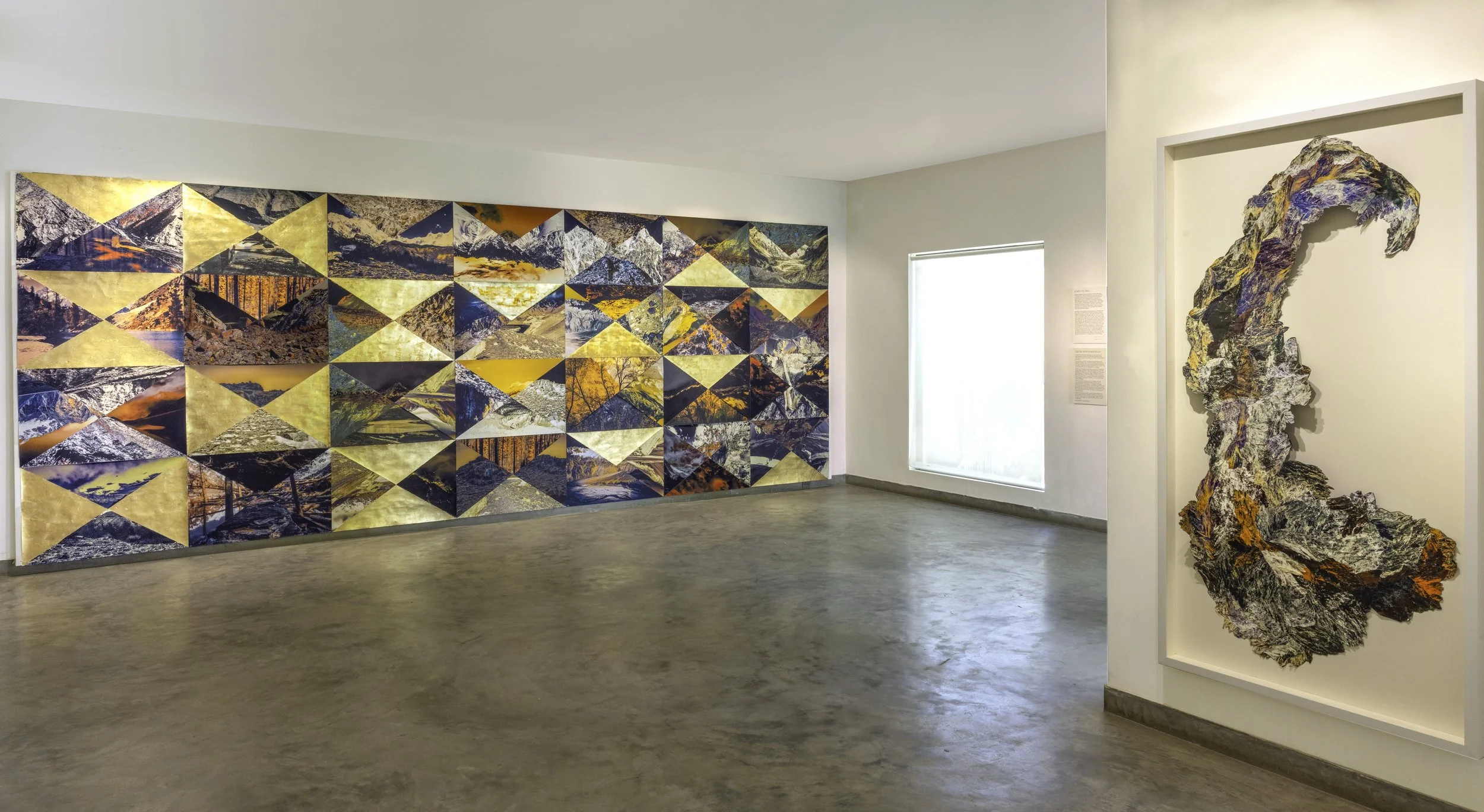
Prayer Rug 1, 96 x 252 in., each unit 24 x 36 in.; mixed media: digitally manipulated photos of landscapes of Gilgit-Baltistan printed with archival inks, collage, gold leaf, mounted on board.
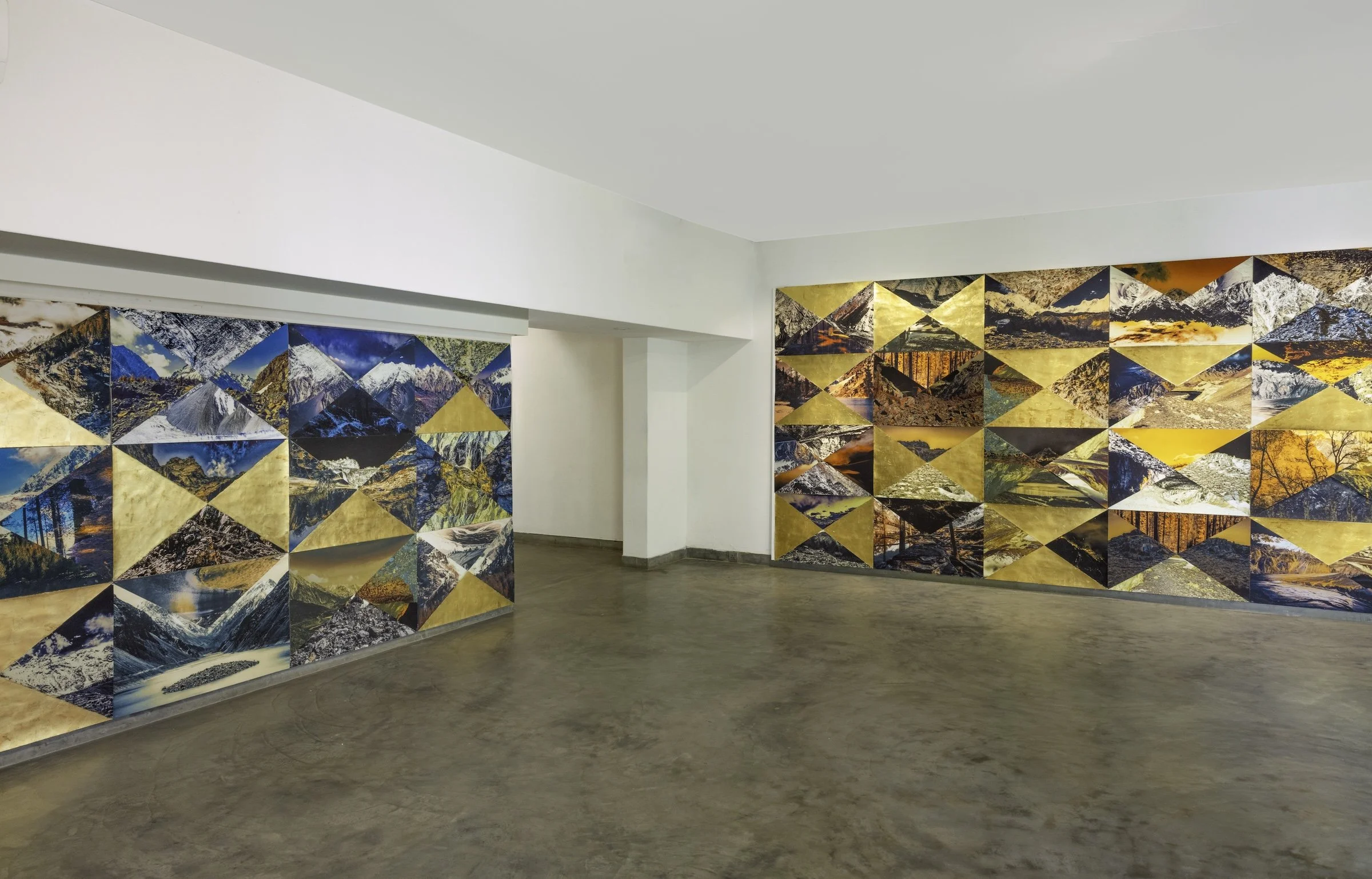
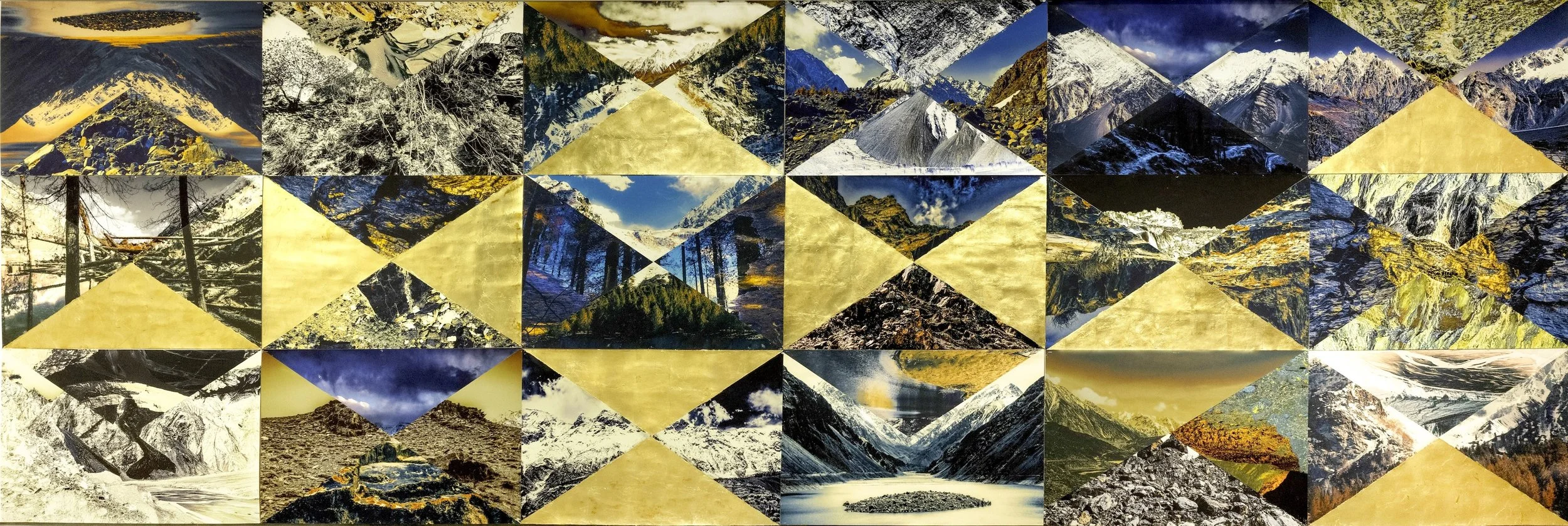
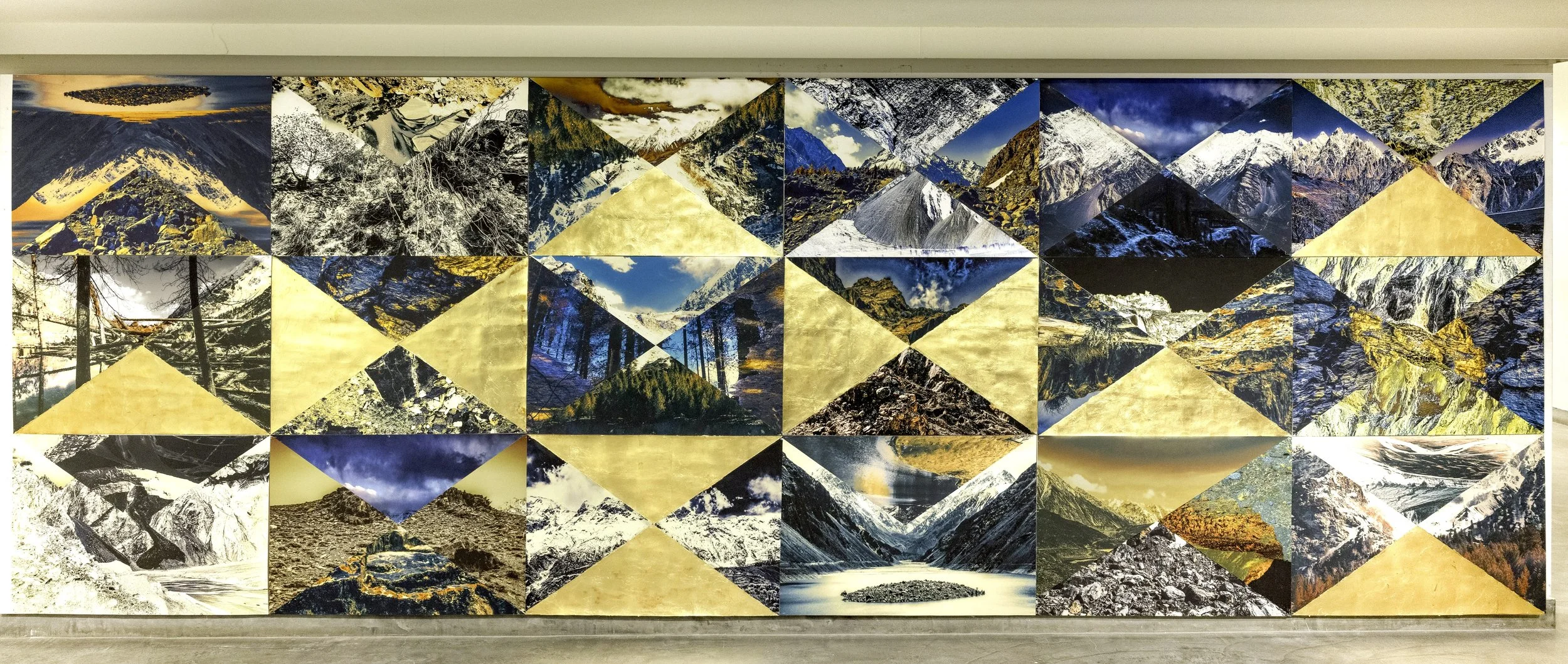
Prayer Rug 2, 2025, 72 x 216 in.; mixed media collage of digitally manipulated archival prints of Gilgit-Baltistan landsacpe on Matt Litho paper mounted on MDF fiberborad, gold leaf
Prayer Rugs—Sacred Geometries of the Land
Collaged images of ecologically threatened landscapes are set against gold ground. The triangular cuts follow the geometry the mountains already hold—peaks, fault lines, strata. Fragments from different parts of the landscape reconfigure into new wholes. Digitally manipulated colors transform the terrain into something fantastical, celebratory. Gold and image tessellate: the images reveal glimpses of the mountains, the gold reveals its sacred geometry. Islamic geometric tradition recognizes such patterns as the underlying order of creation, the infinite, the unity behind multiplicity. Gold transmutes the earthen into the sacred, carrying the pattern past the landscape images. These panels are an offering, a call to prayer to the earth, for mutual care and healing, a protest against environmental destruction, evoking the land's spiritual vitality.
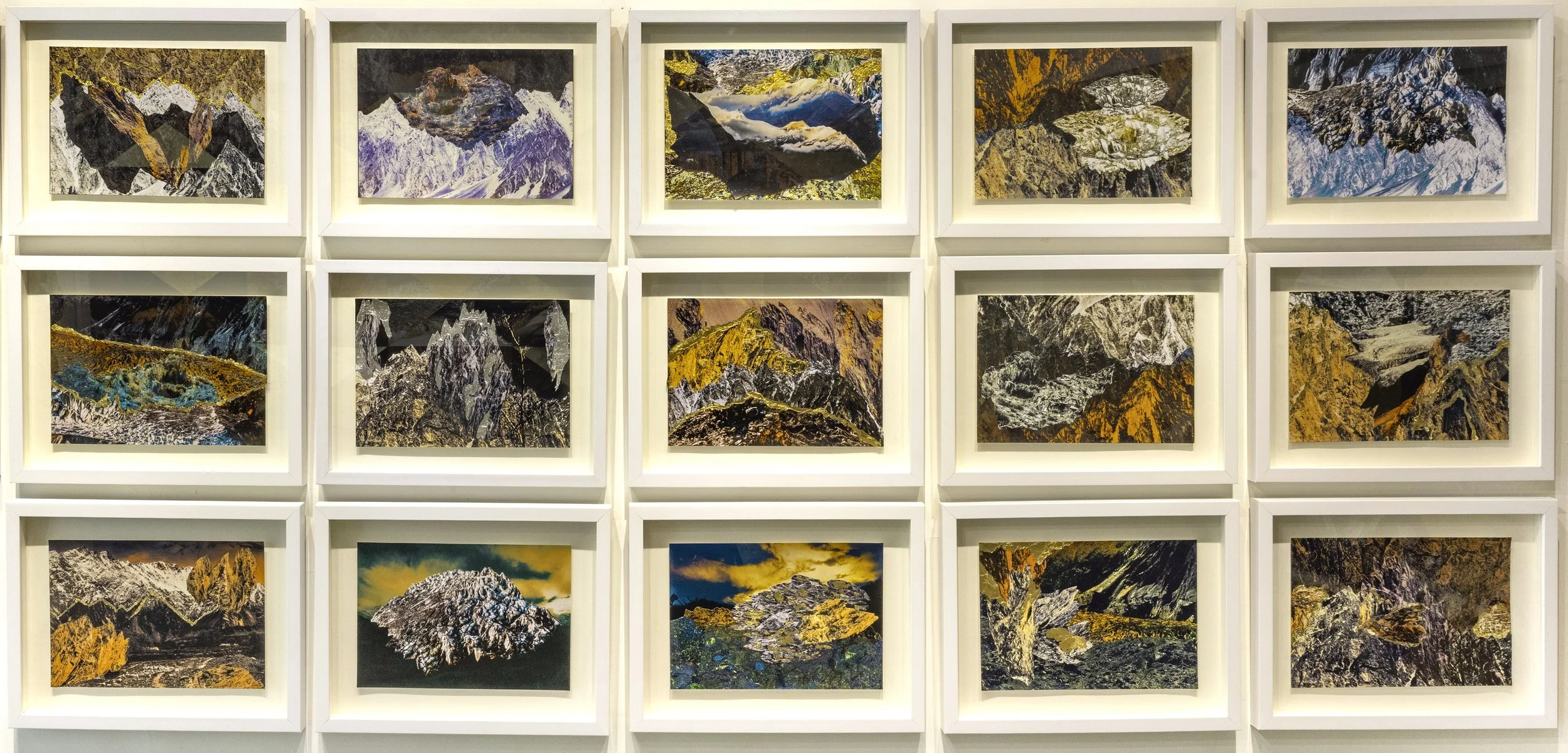
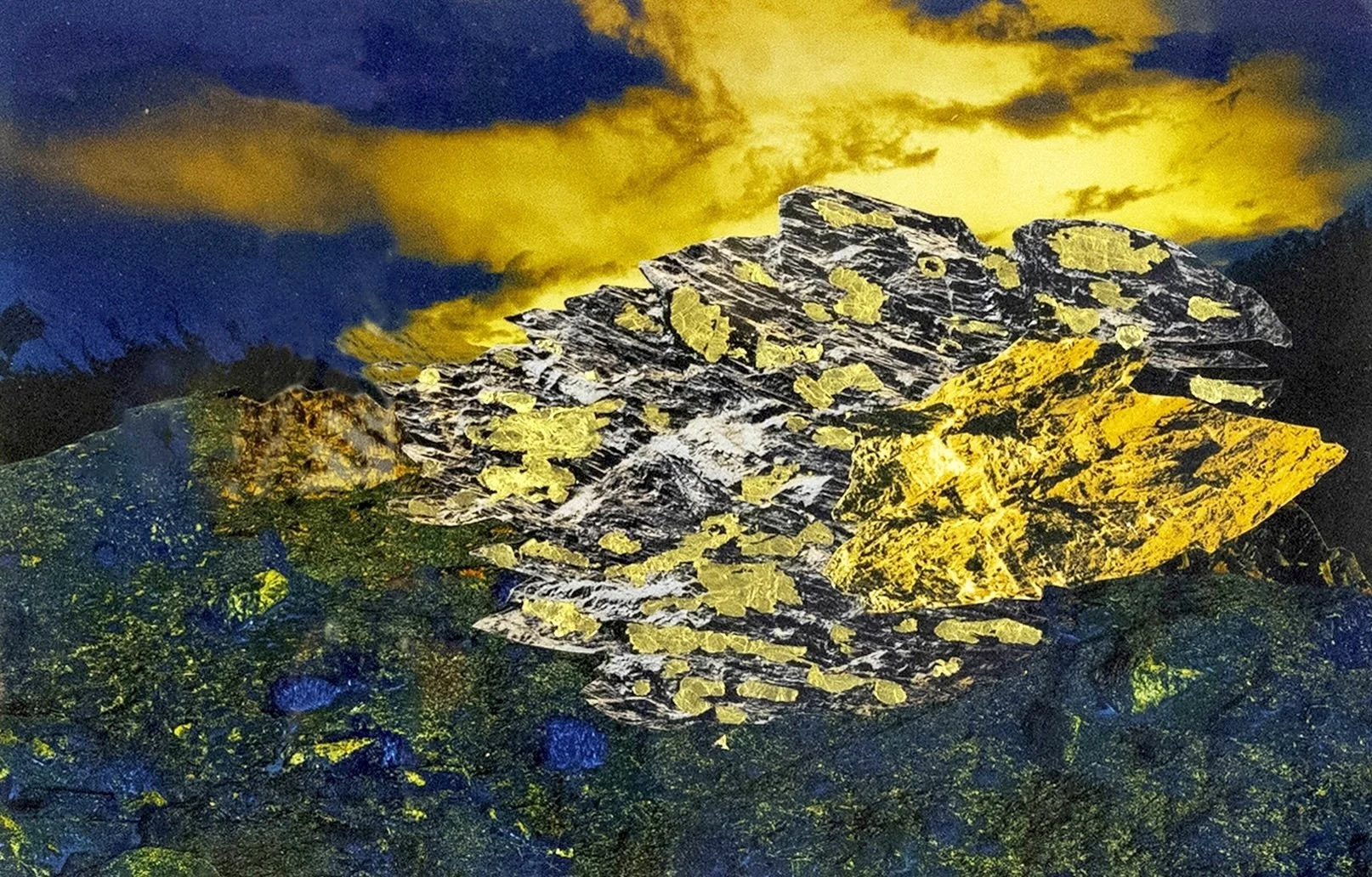
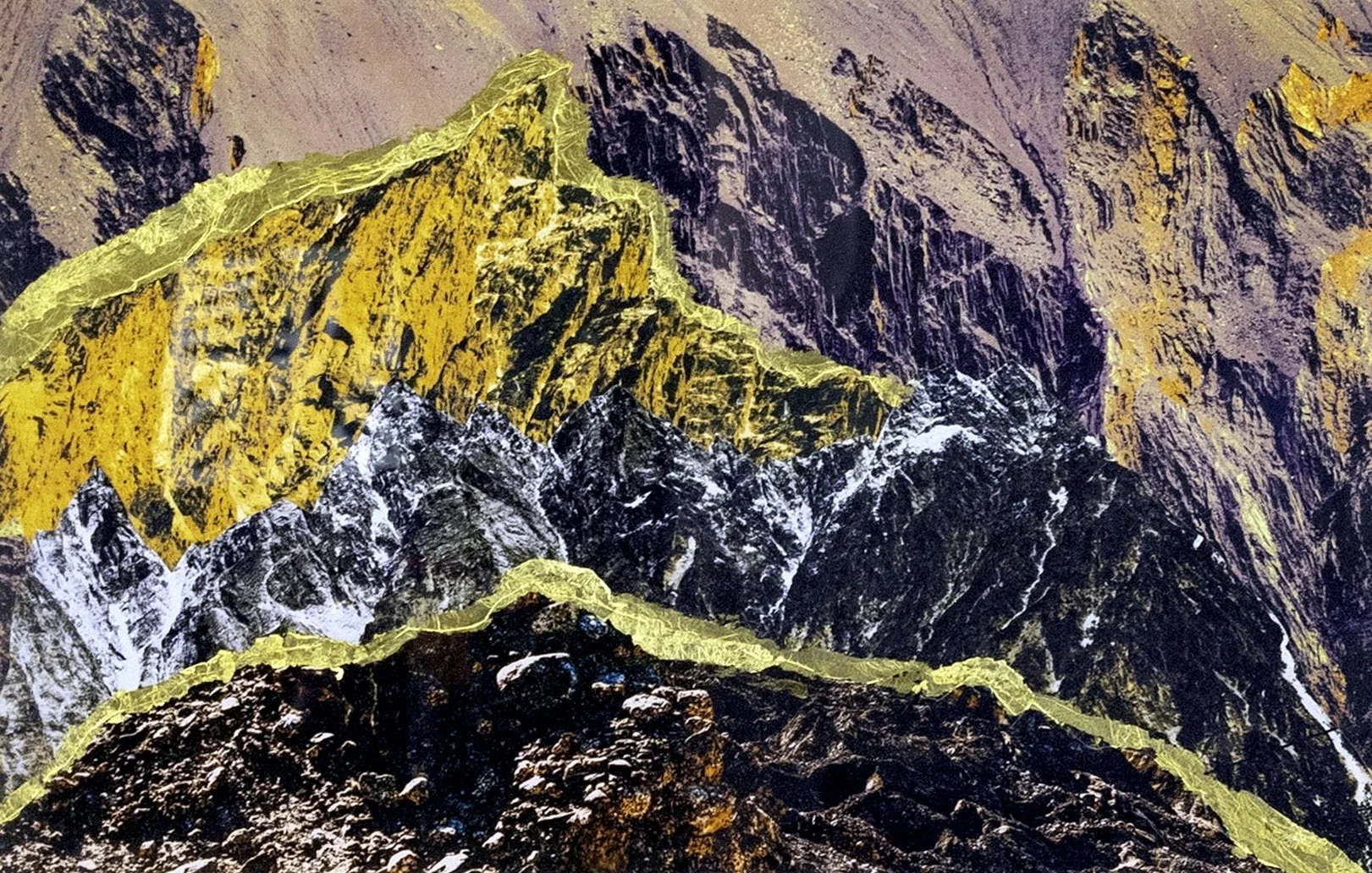
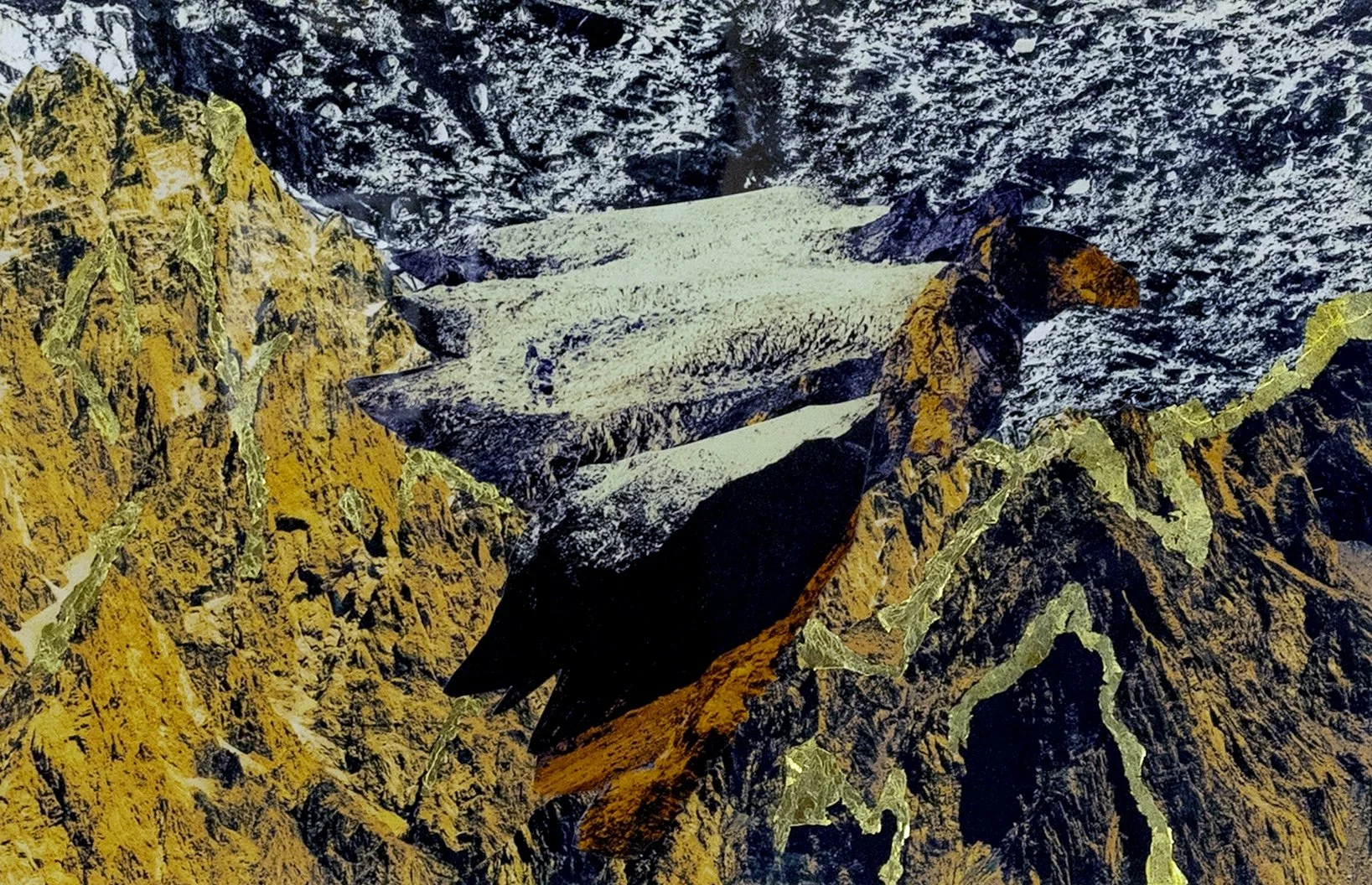
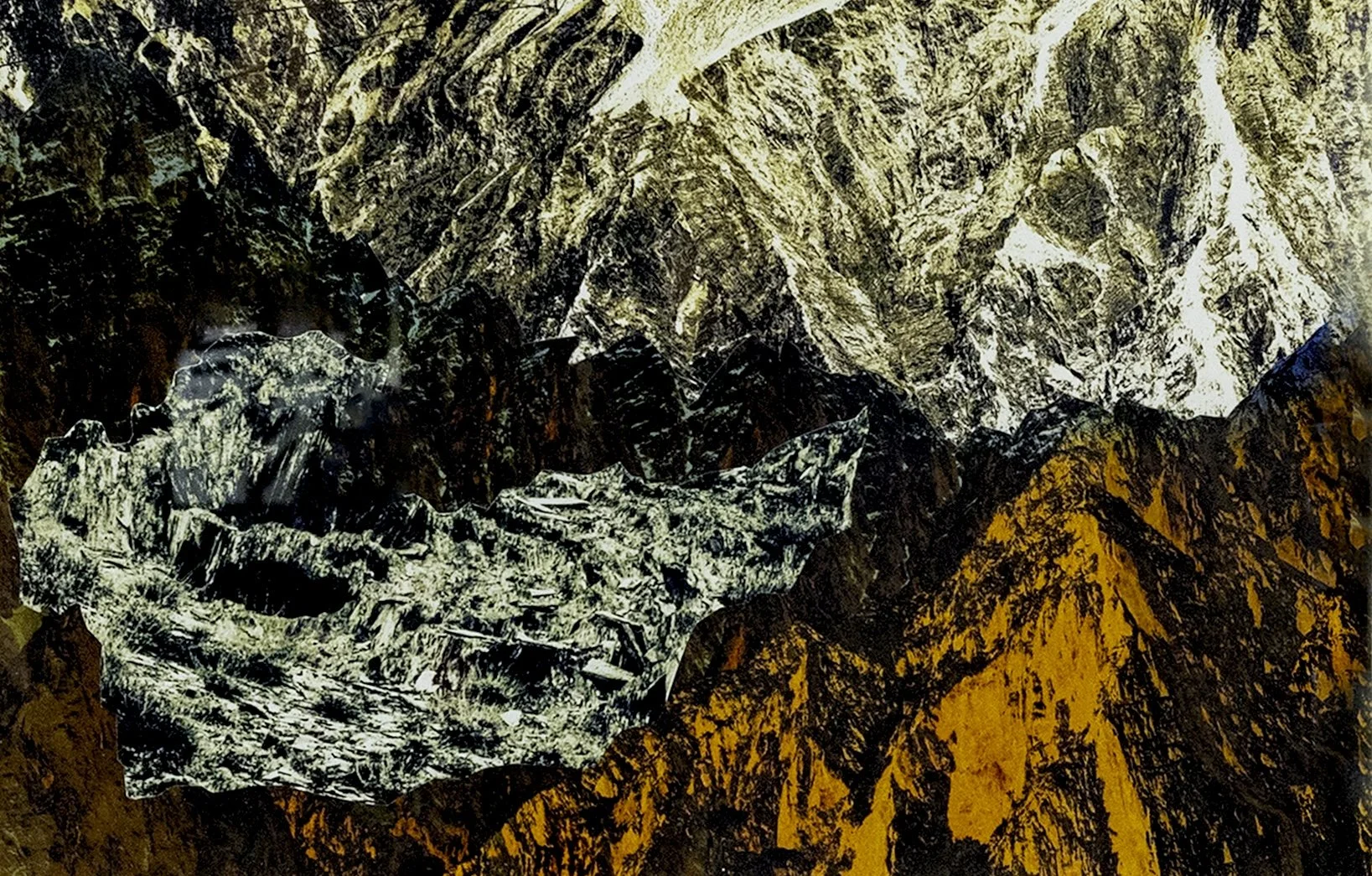
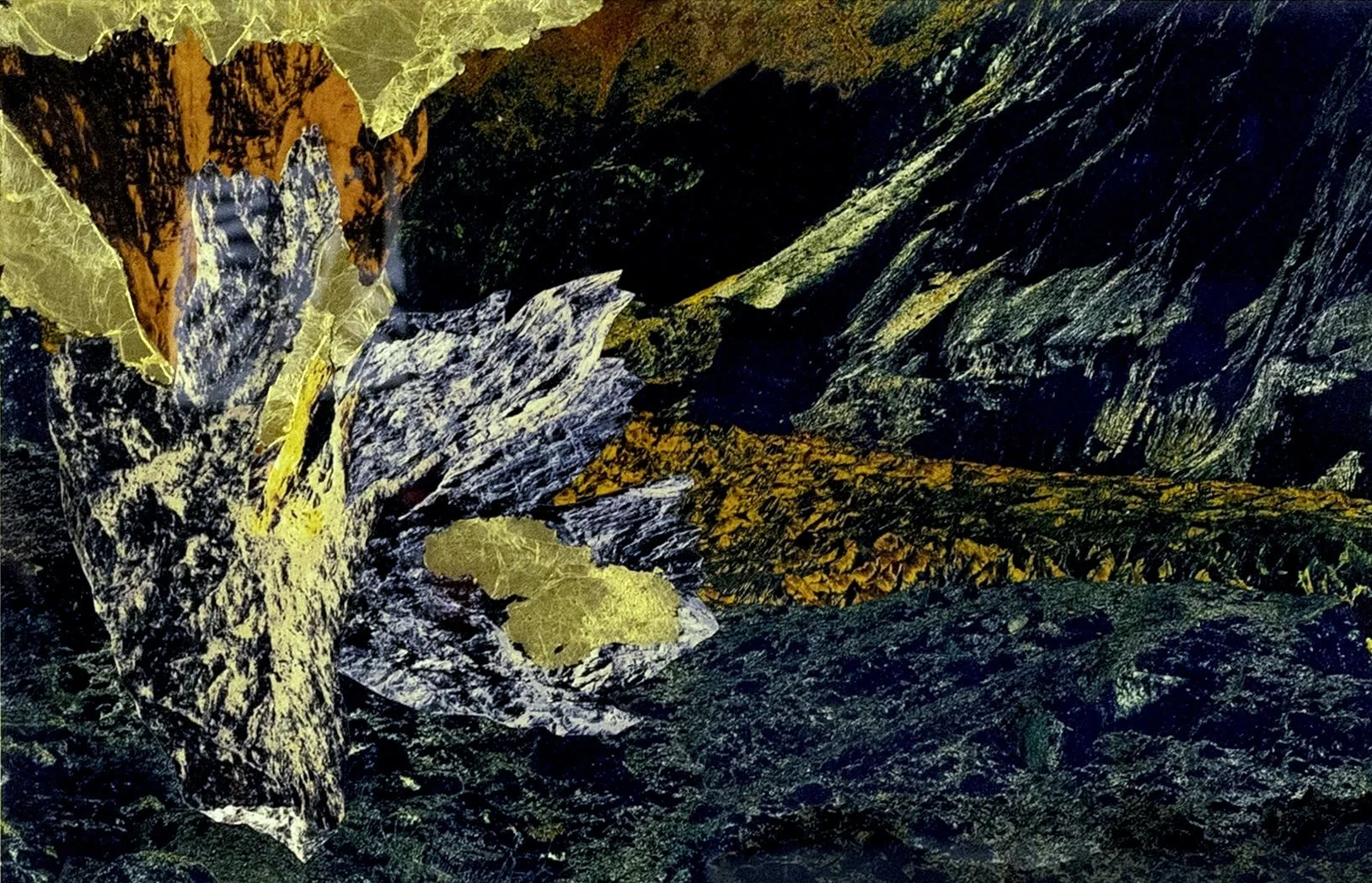
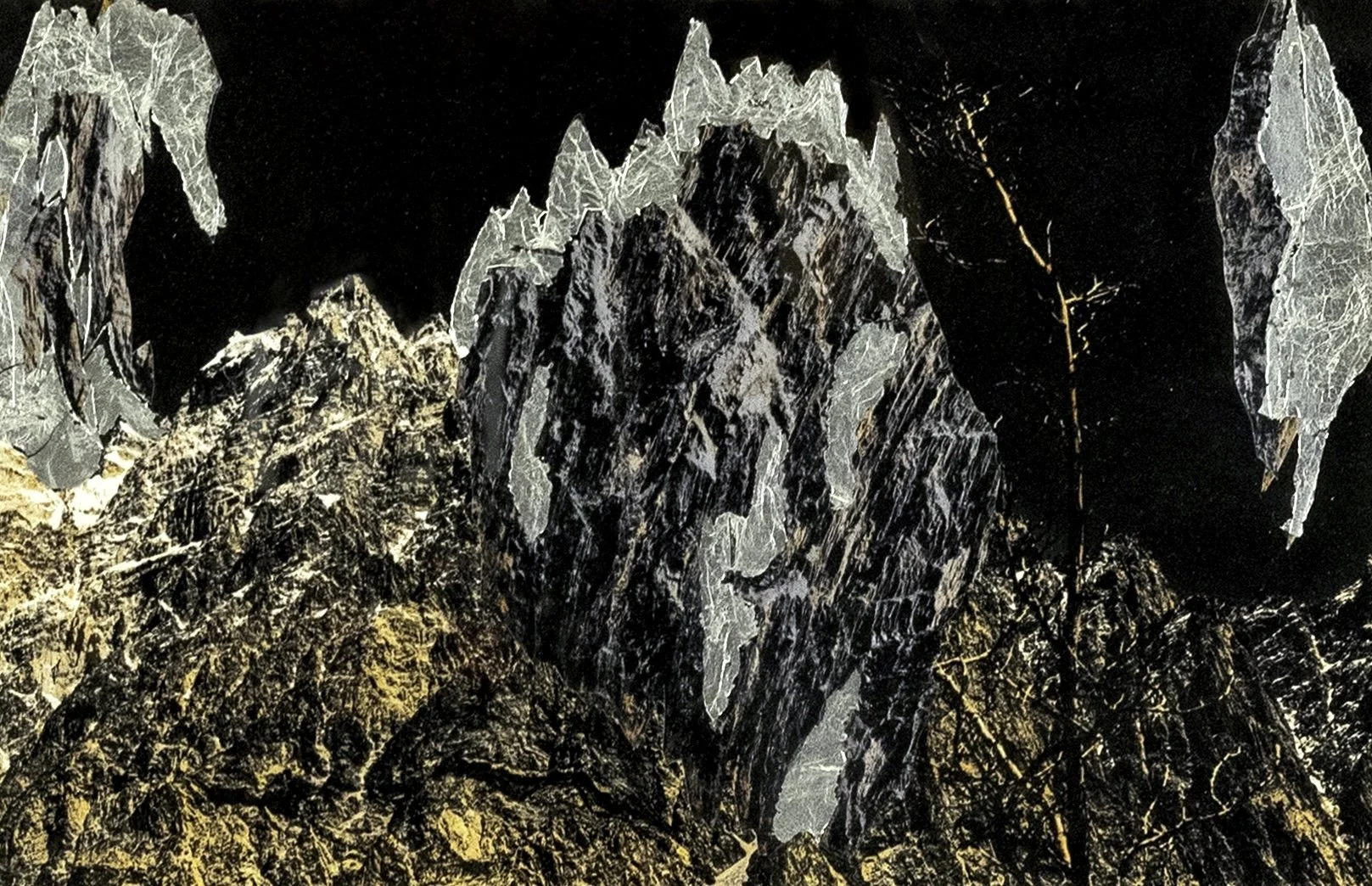
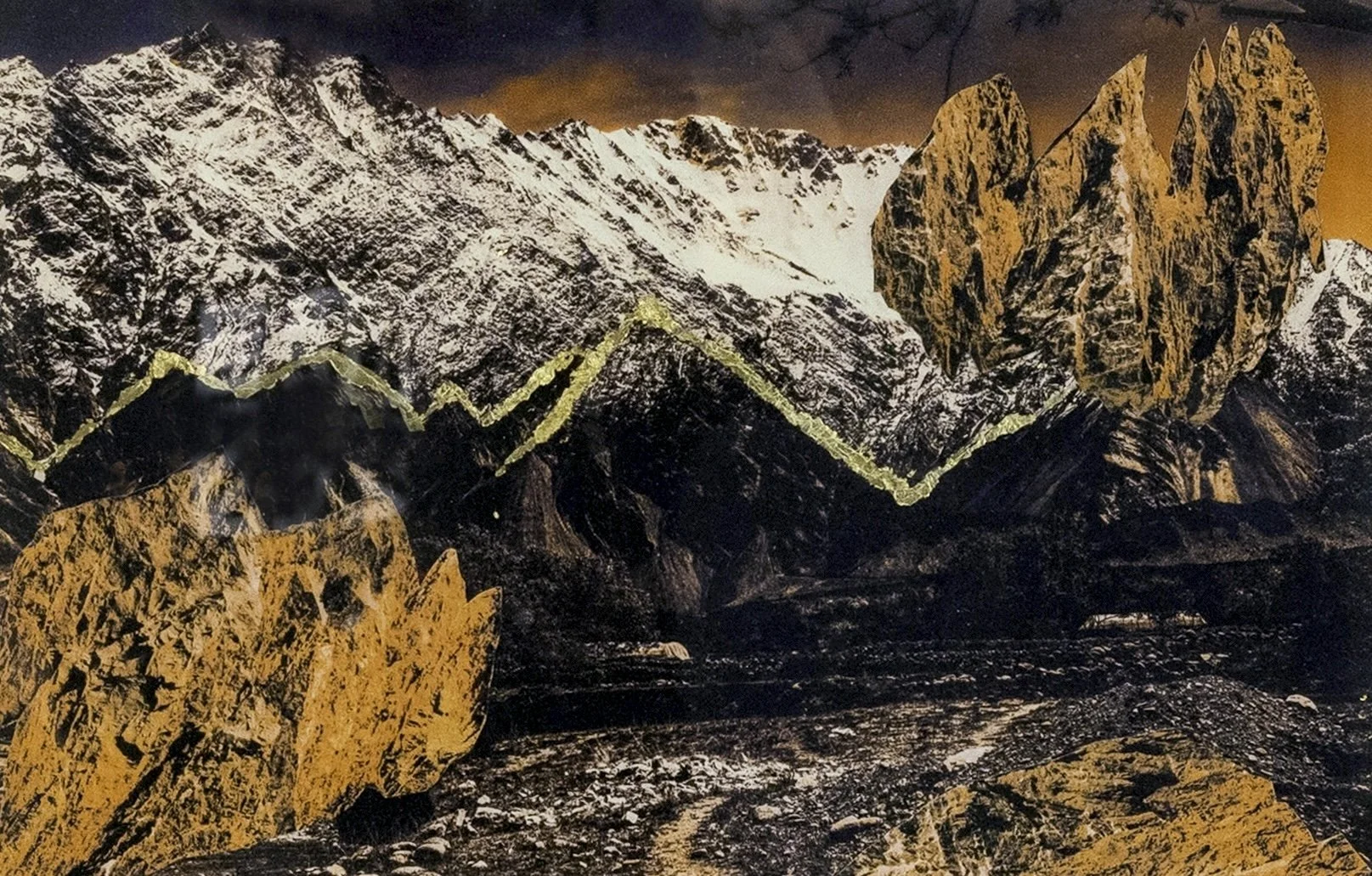
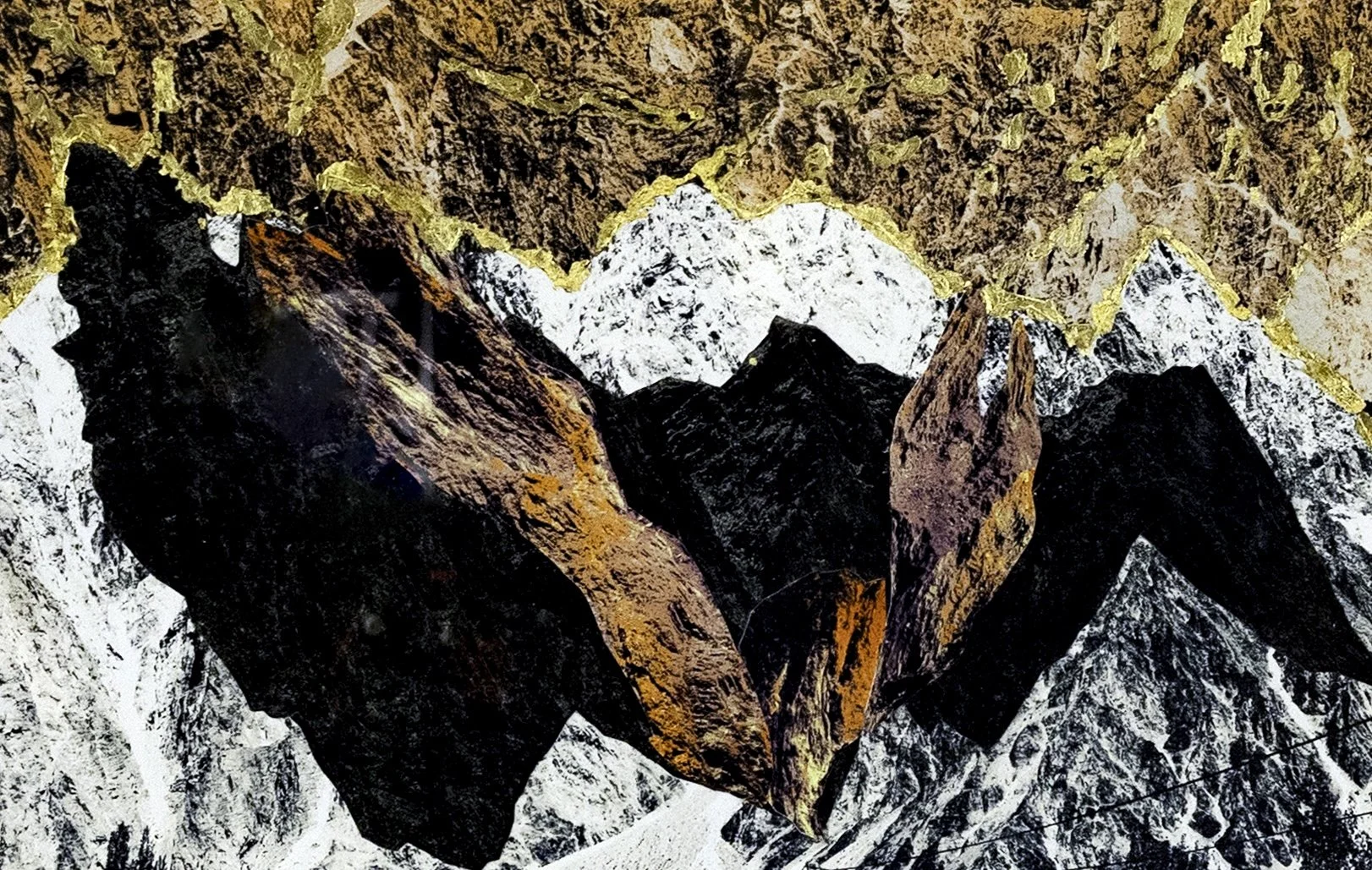
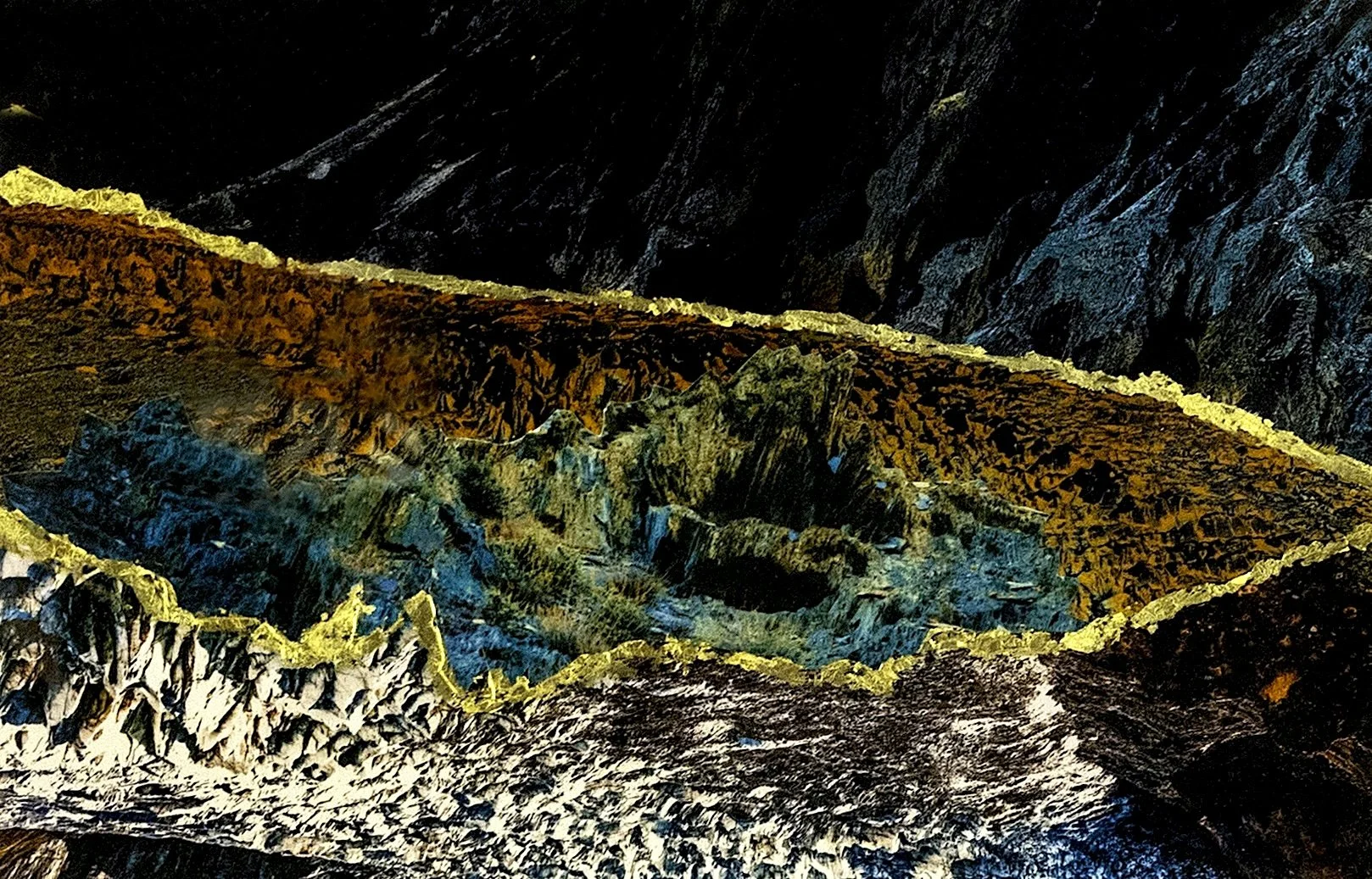
Landscapes of Imagining, 2025, 8.4 x12.4, mixed media collage of archival prints on photo paper
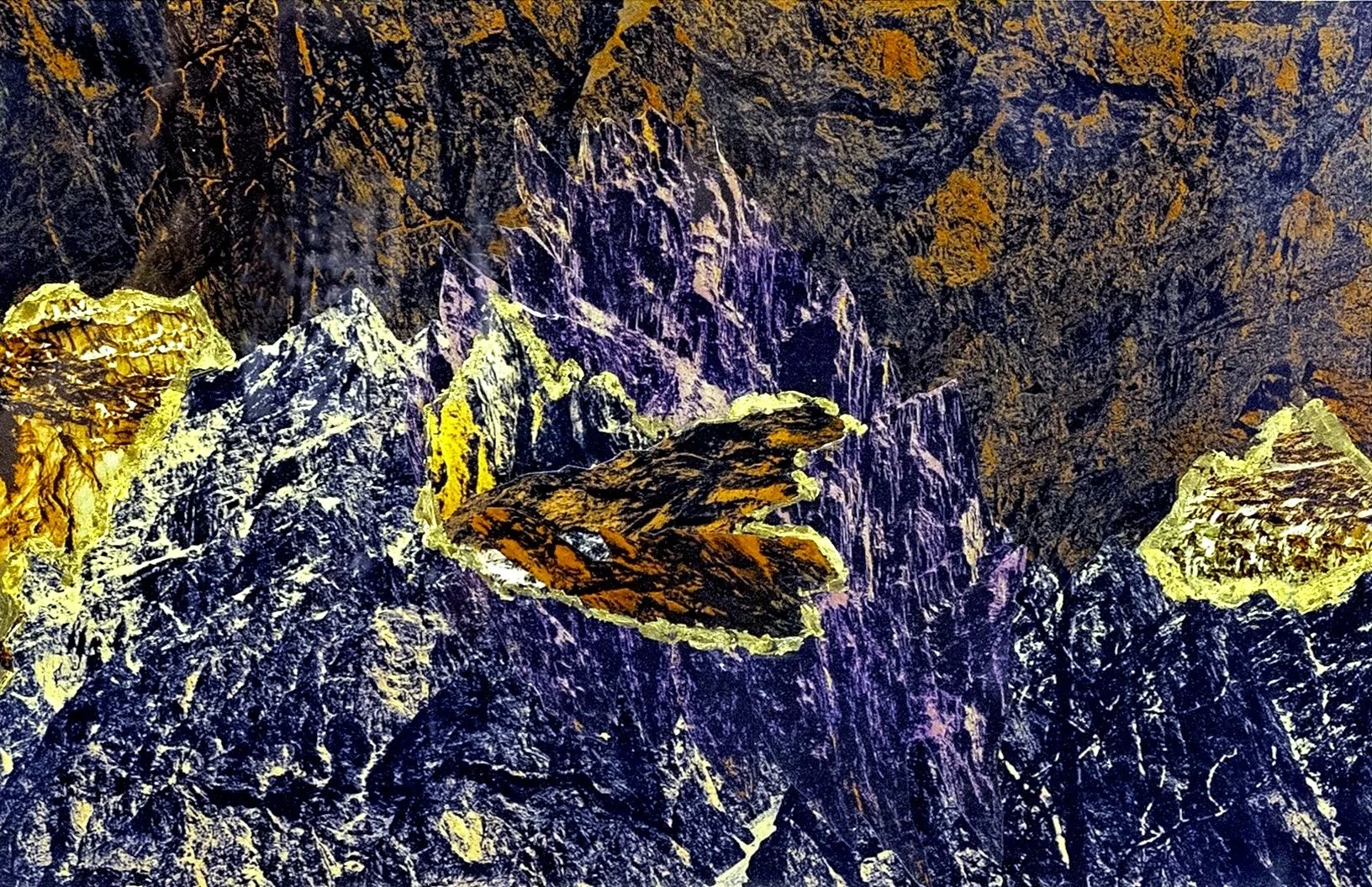
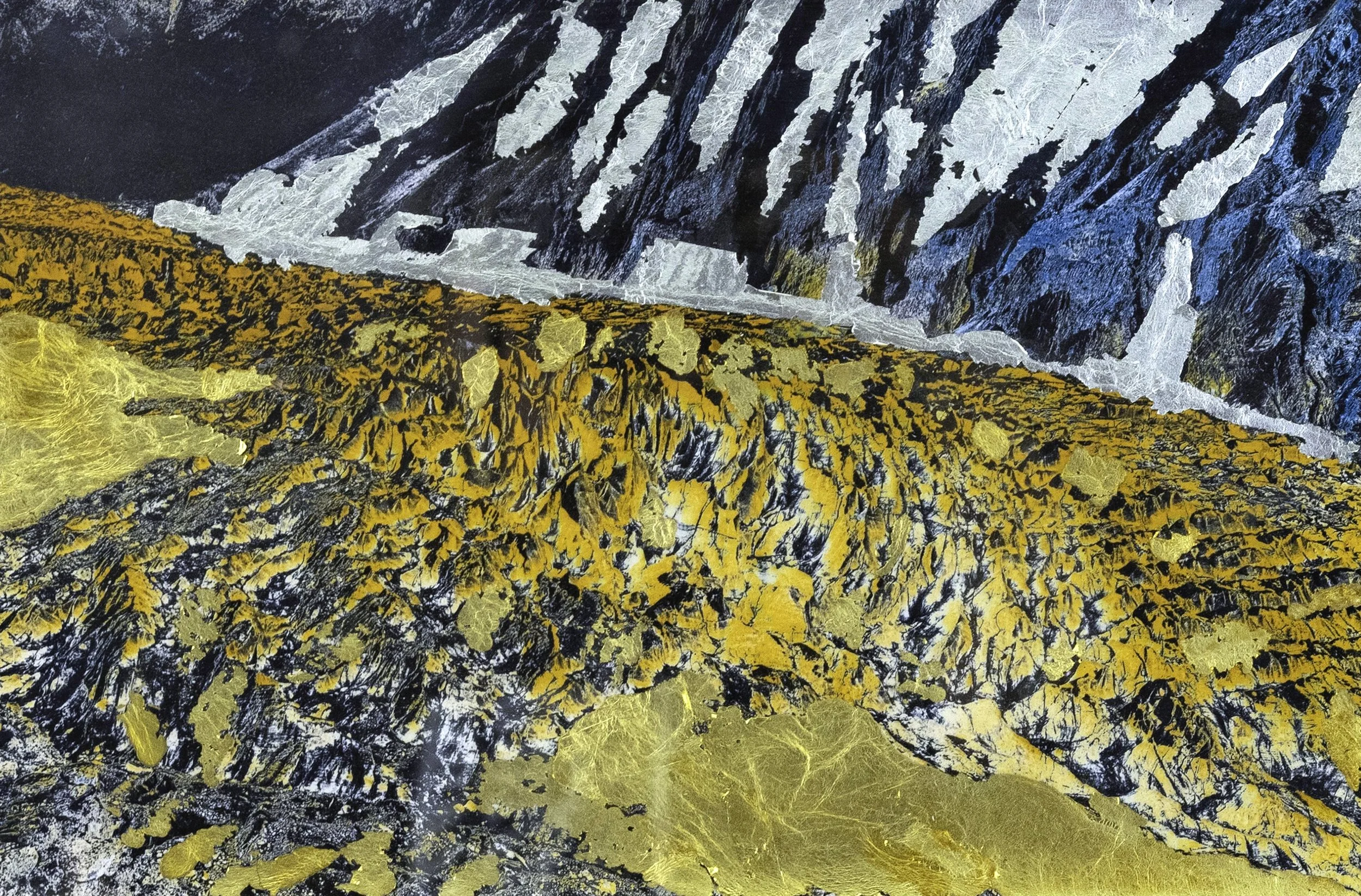
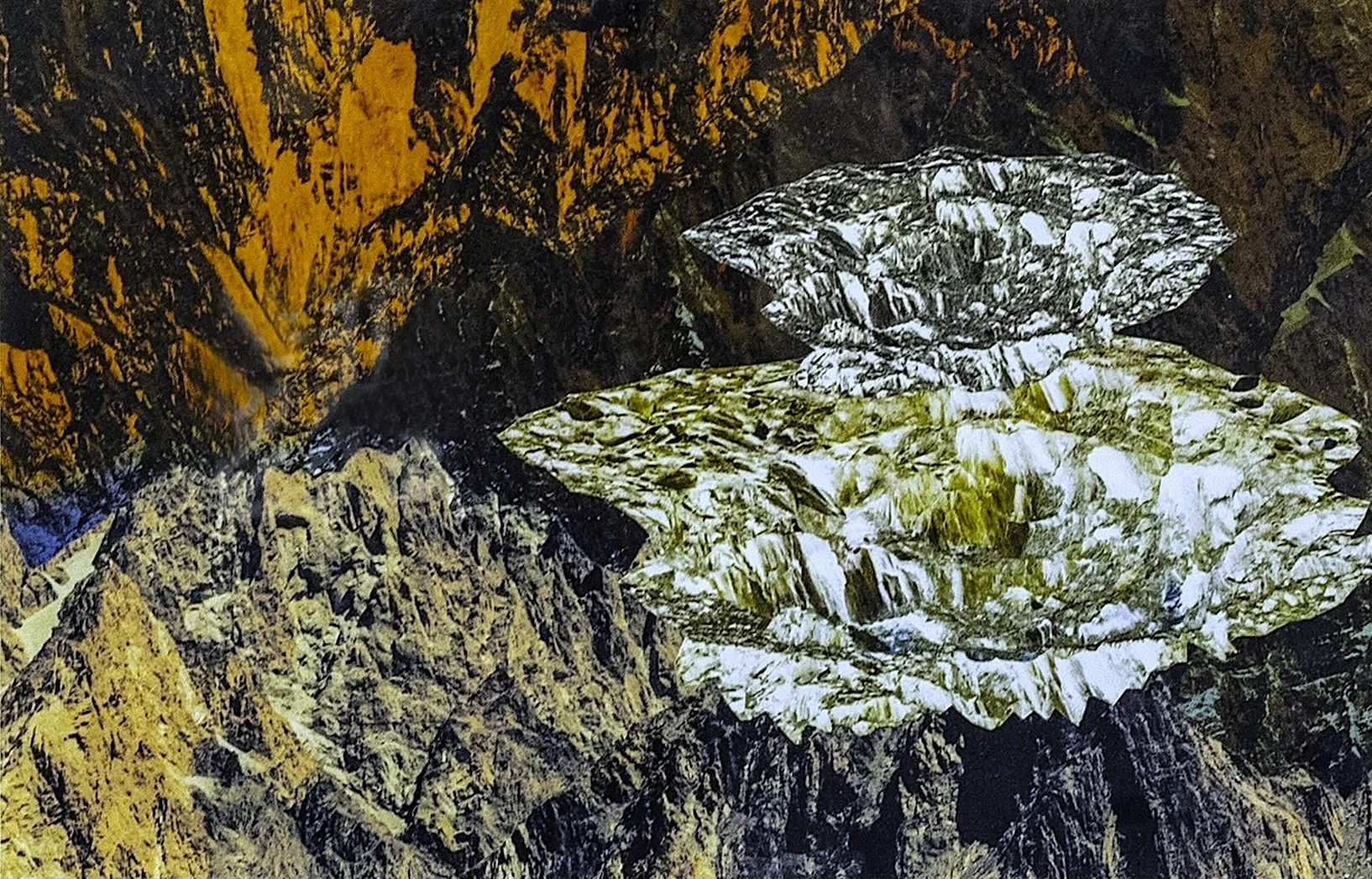
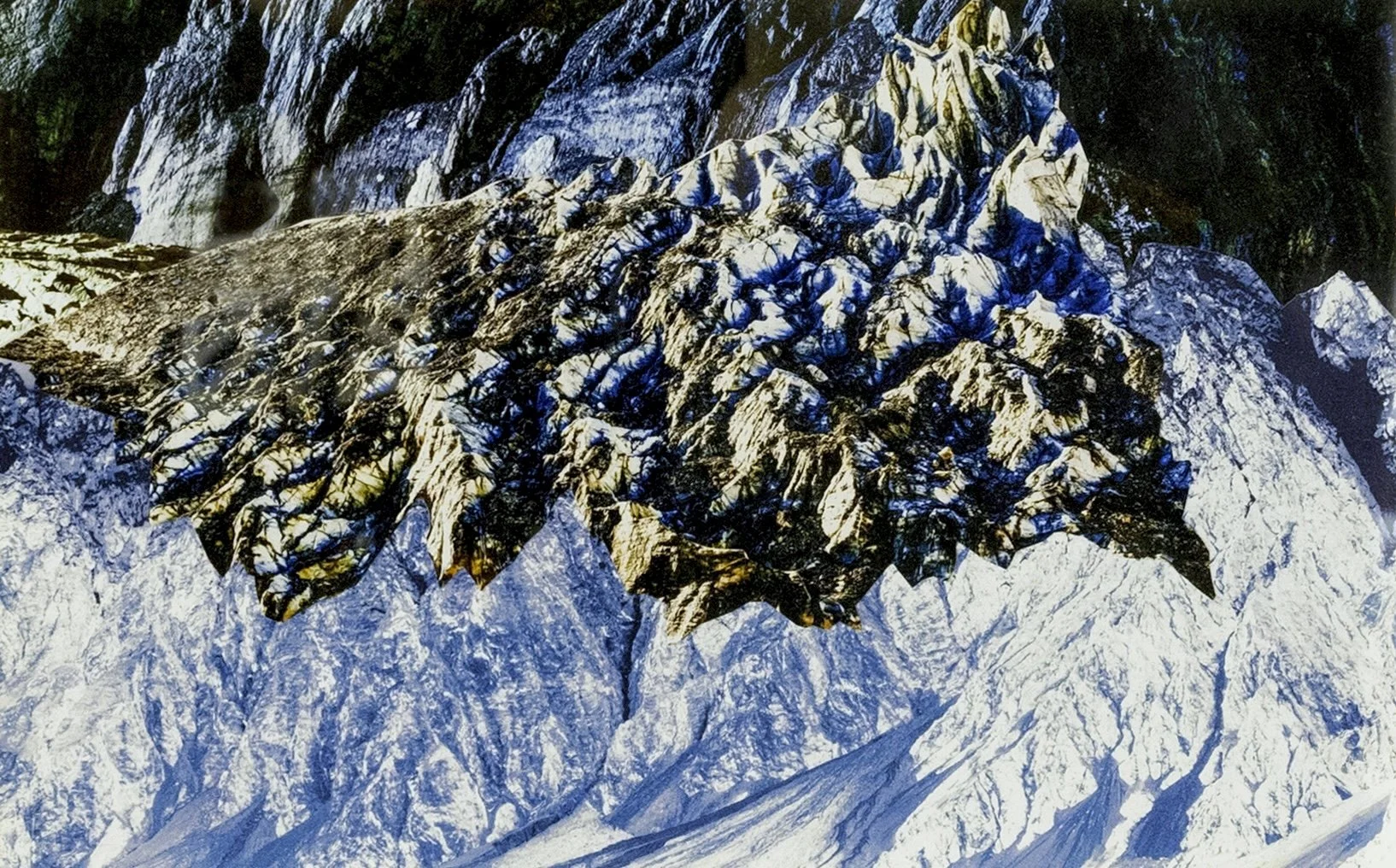
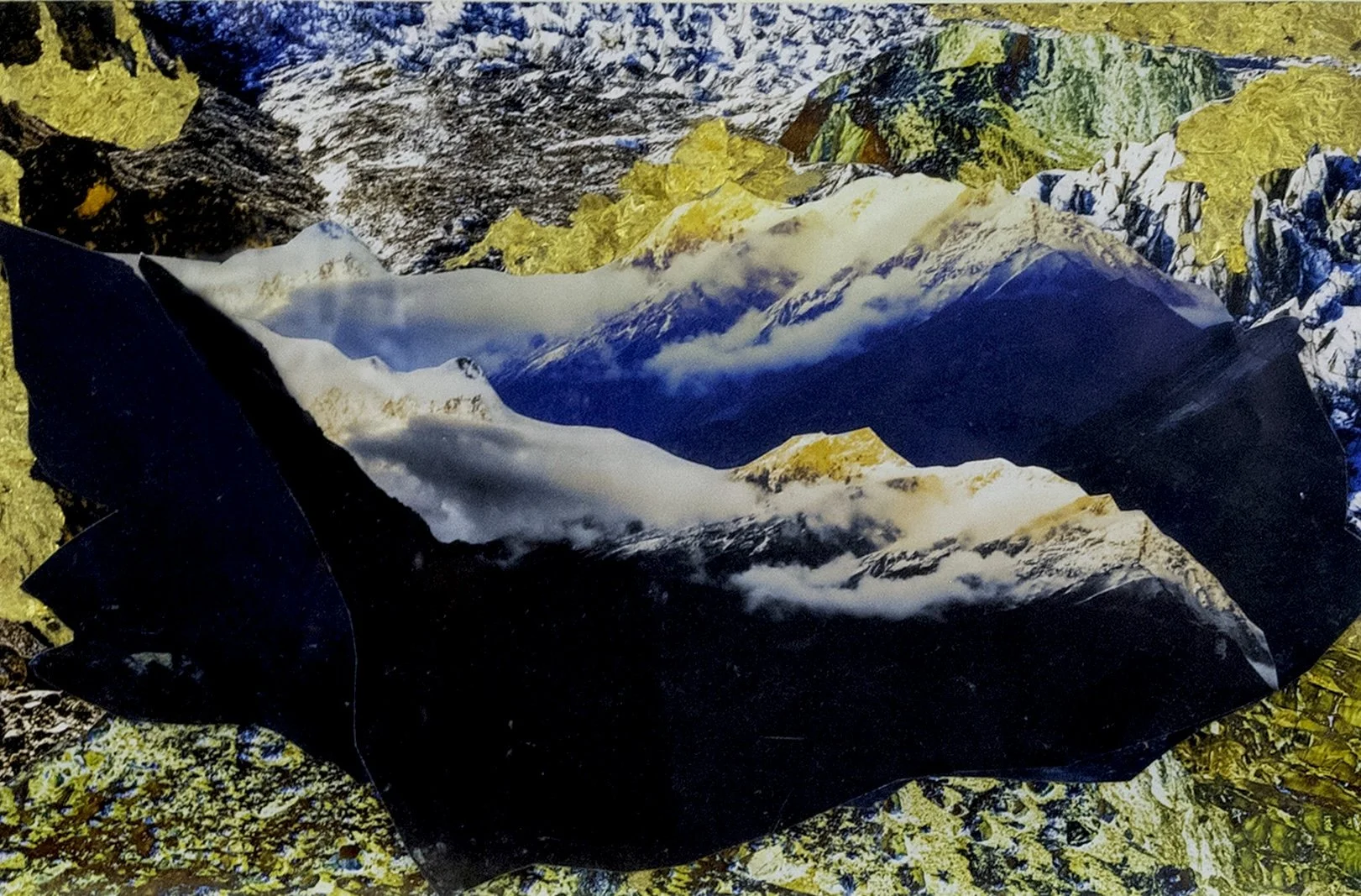
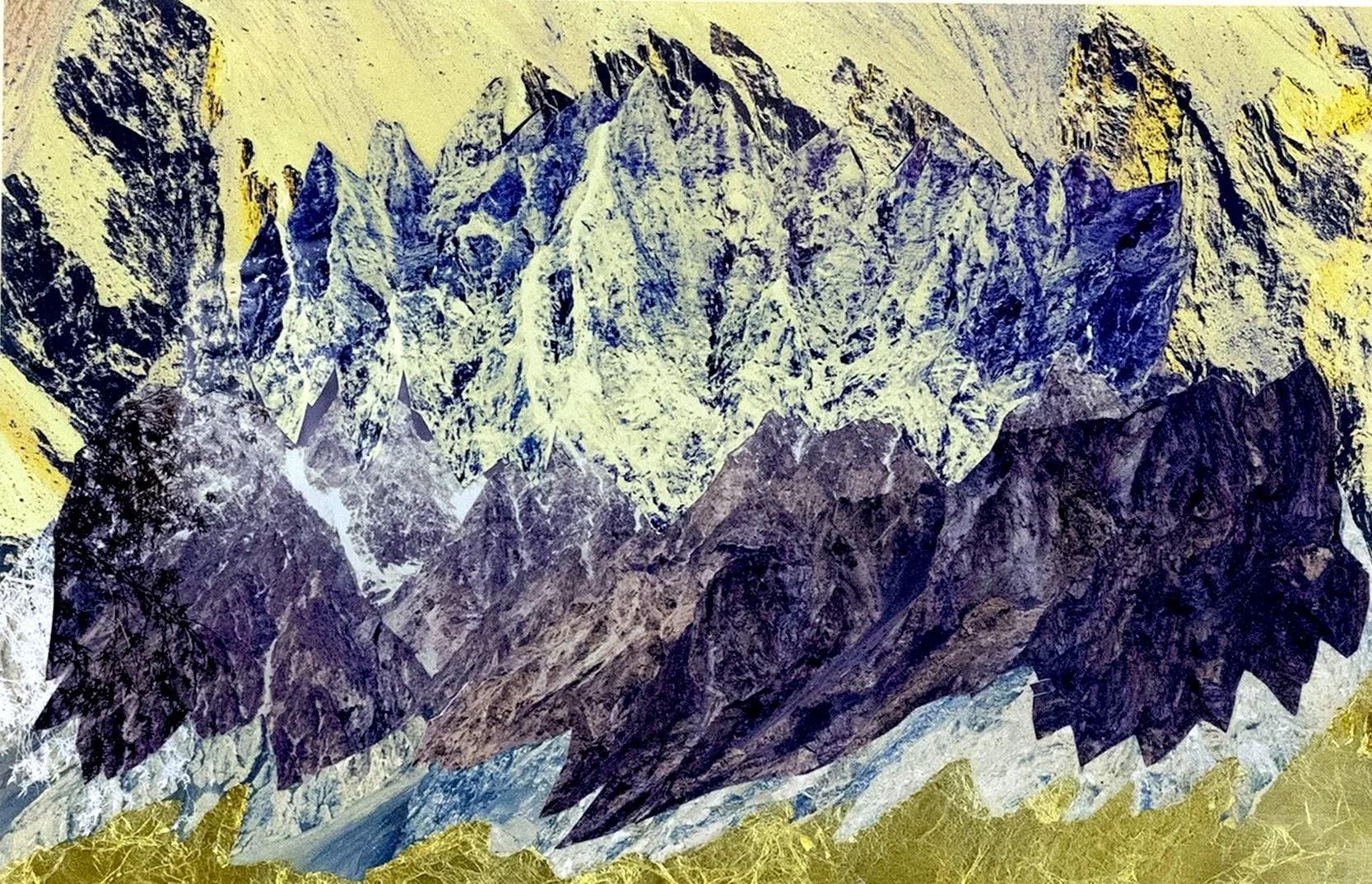
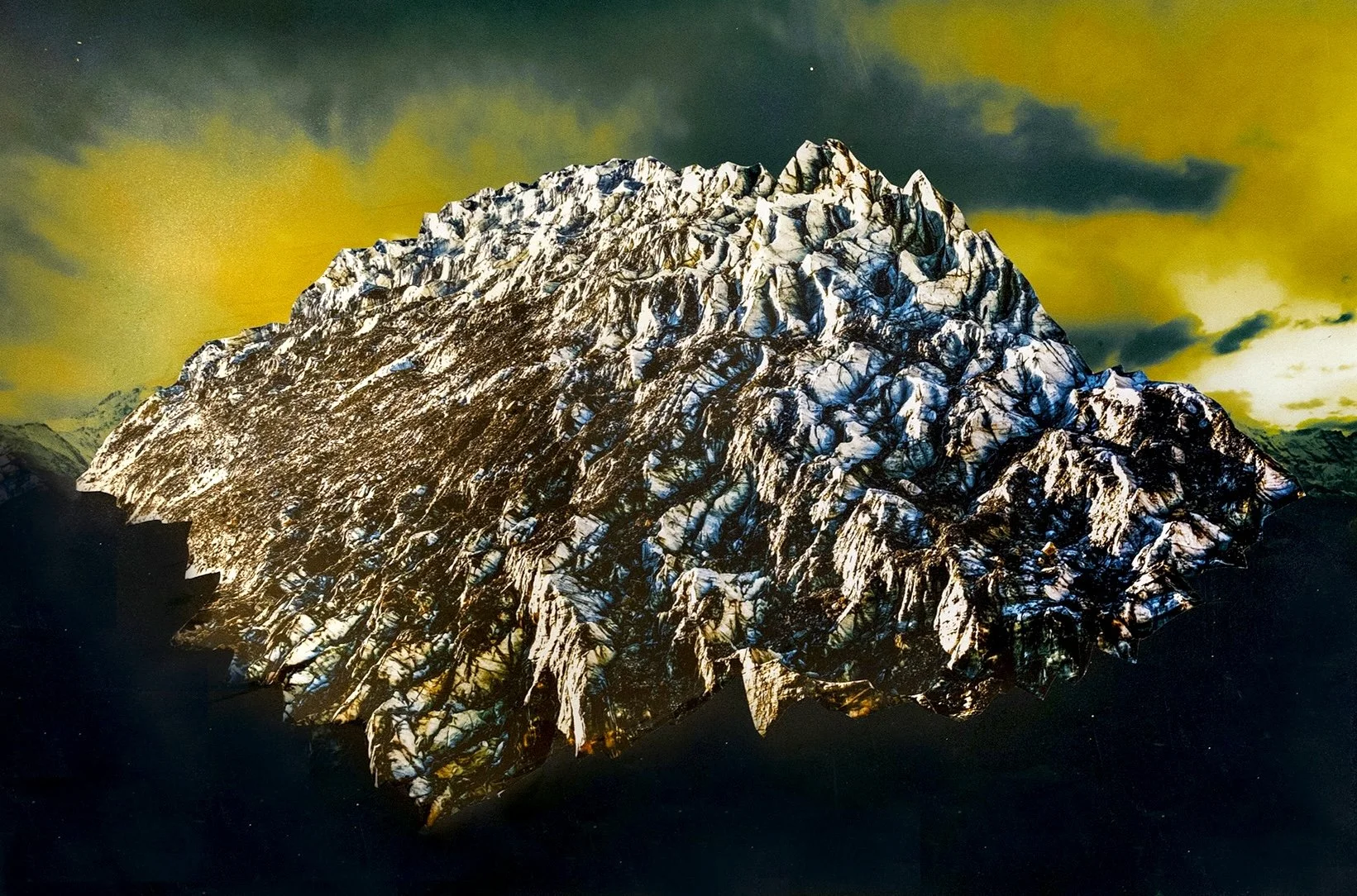
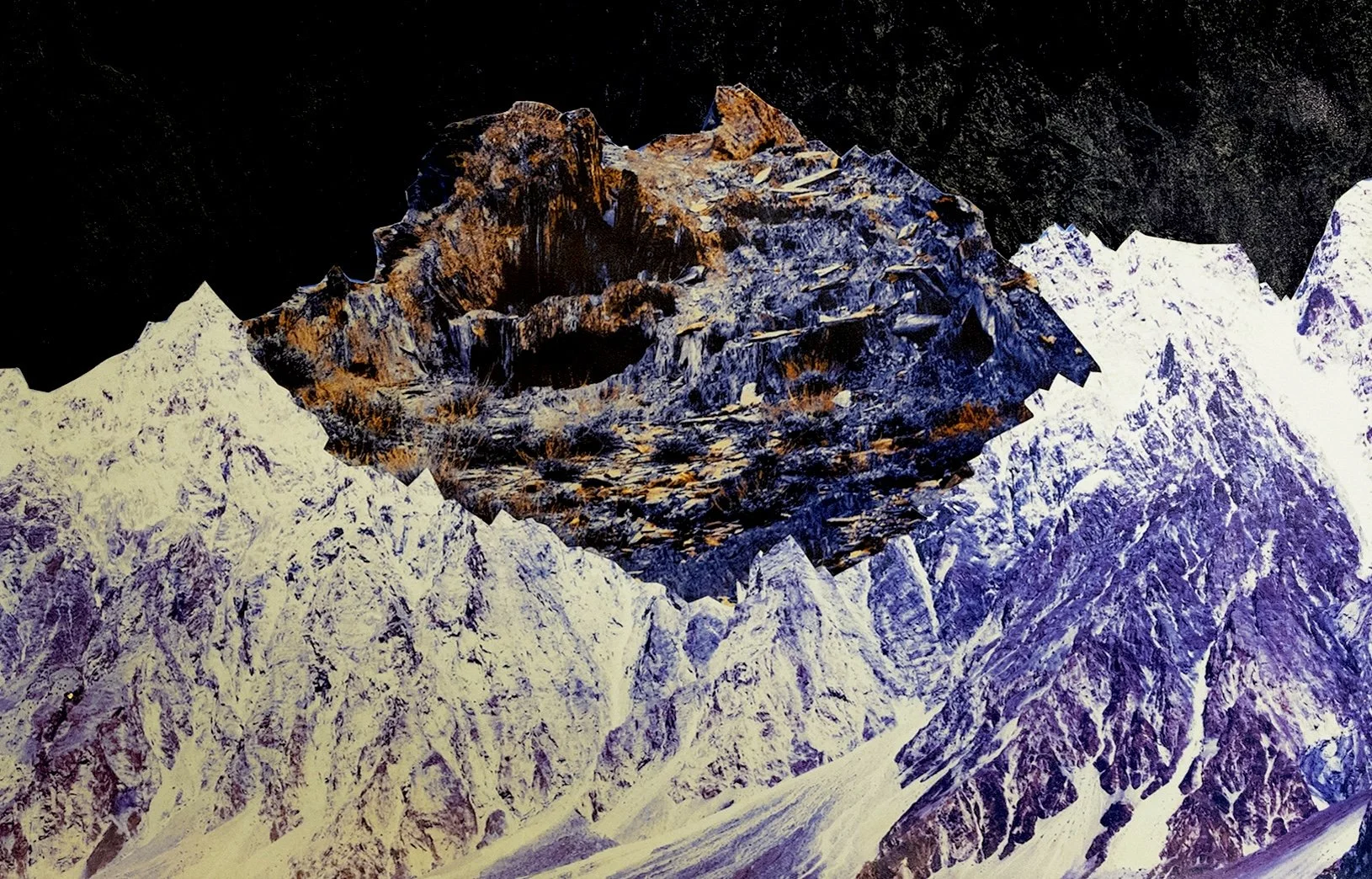
Landscapes of Imagining—Collages
8.4 x 12.4 in.; mixed media collage with gold leaf
These intimate collages reconfigure fragments of Hunza's glaciers, mountains, and valleys, their colors digitally shifted into something fantastical, gold leaf catching light. Each piece holds a landscape imagined: the familiar transformed, the vast made intimate.
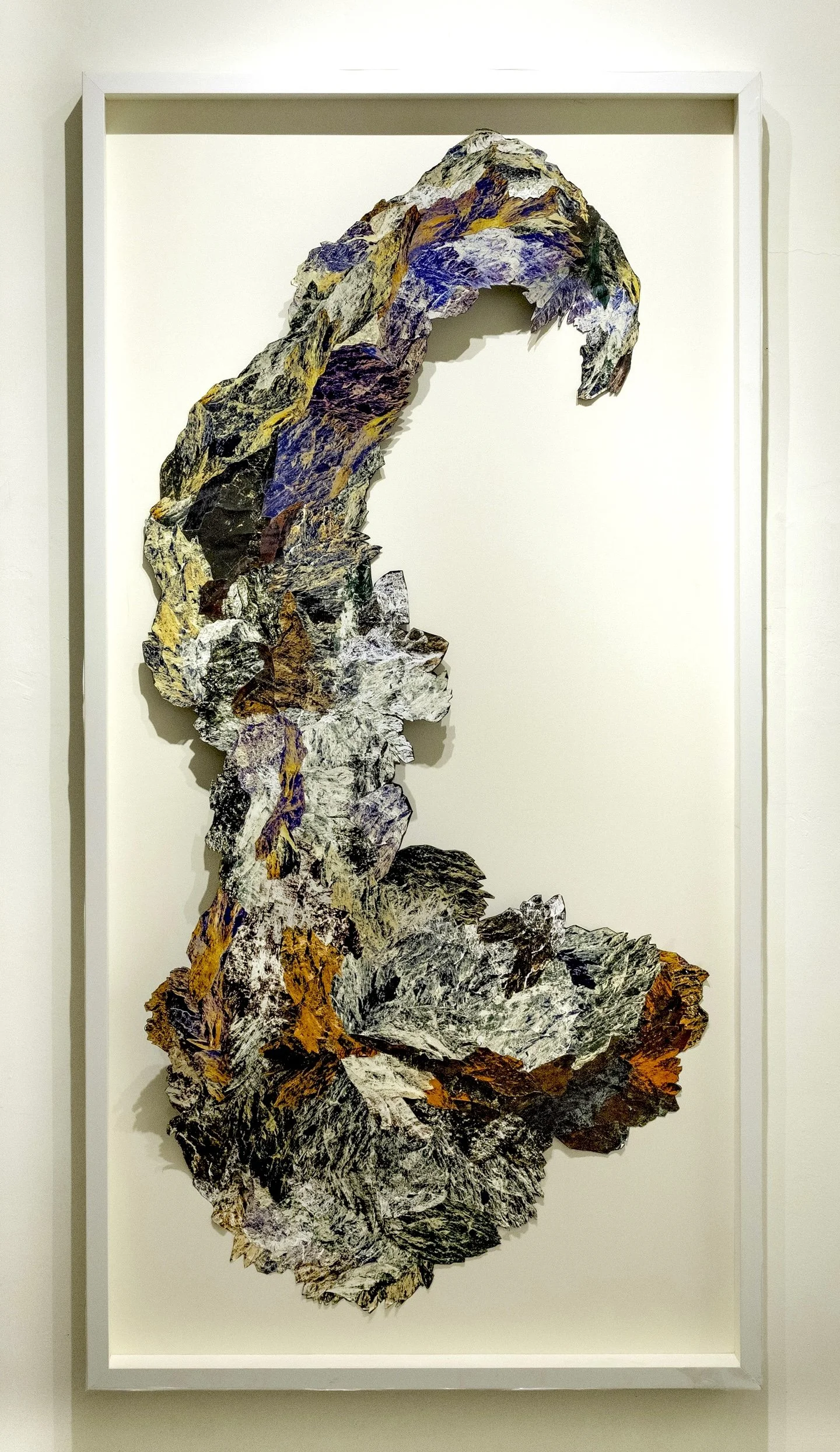
Elegy and Alchemy of Hope
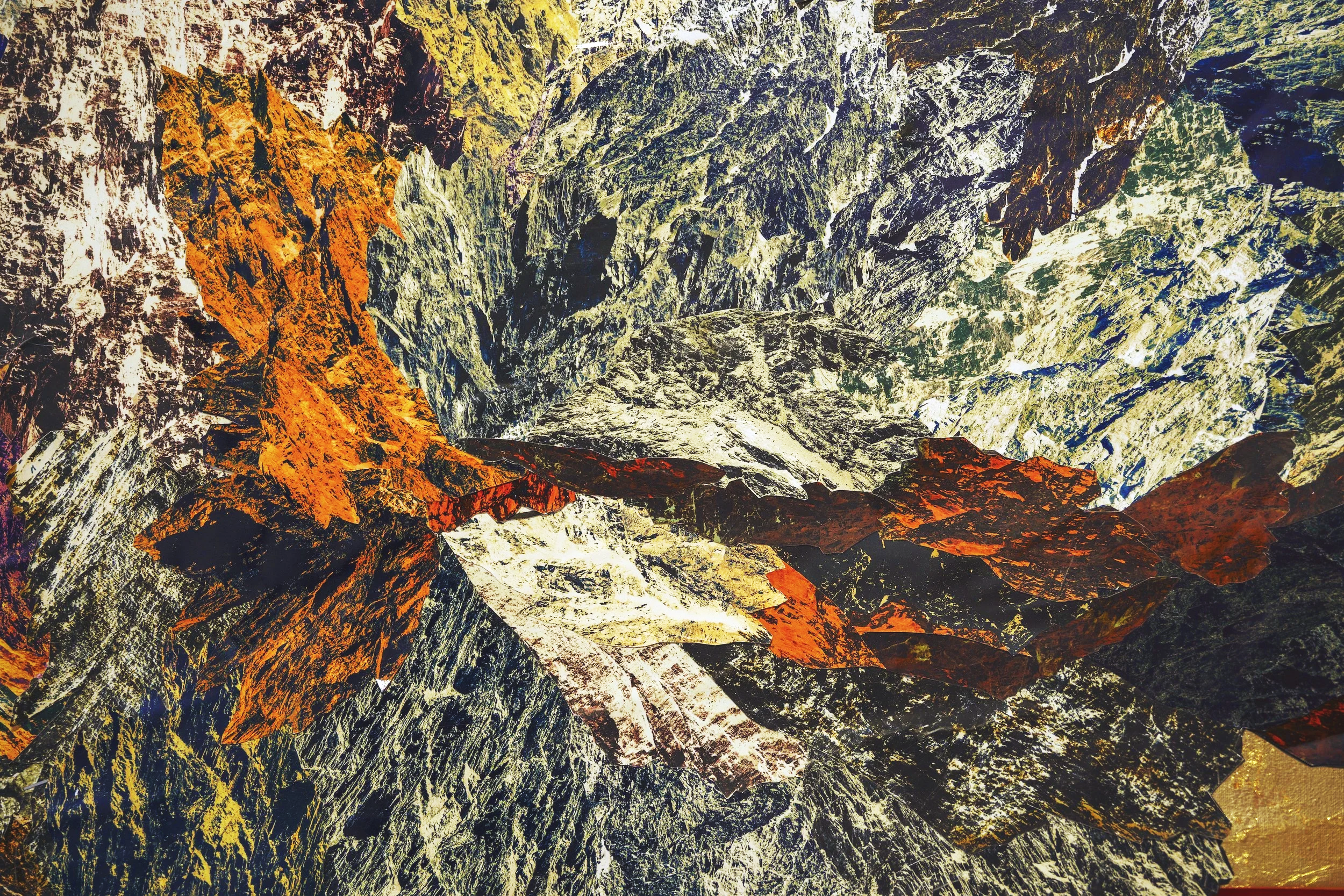
Alchemy of Hope 1 (detail)
Elegy and Alchemy of Hope 1, 75 x 39 x 7 in. (framed); mixed media collage with archival inks on photo paper
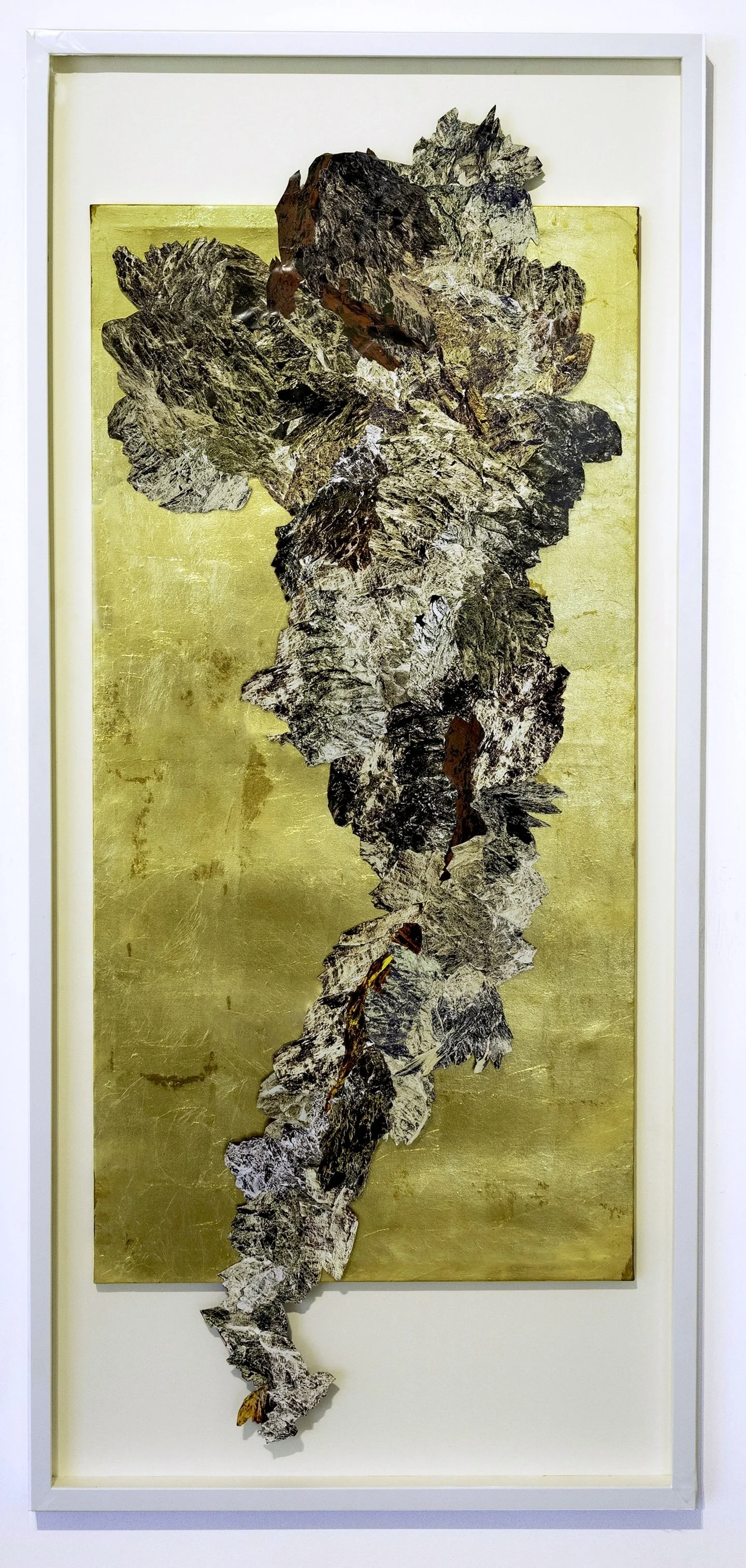
Elegy and Alcehmy of Hope 2, 60 x 34 in.; mixed media collage, canvas, gold leaf
Elegy and Alchemy of Hope
Triangular fragments of the Karakoram mountains reconfigure into a spine--vertical, rising. The cuts follow the geometry of the mountain peaks already. Colors shift into the fantastical. Between elegy and celebration—mourning landscapes threatened by climate destruction, honoring their majestic beauty—a form reaching toward hope.
Parwaaz—پرواز | "soar"
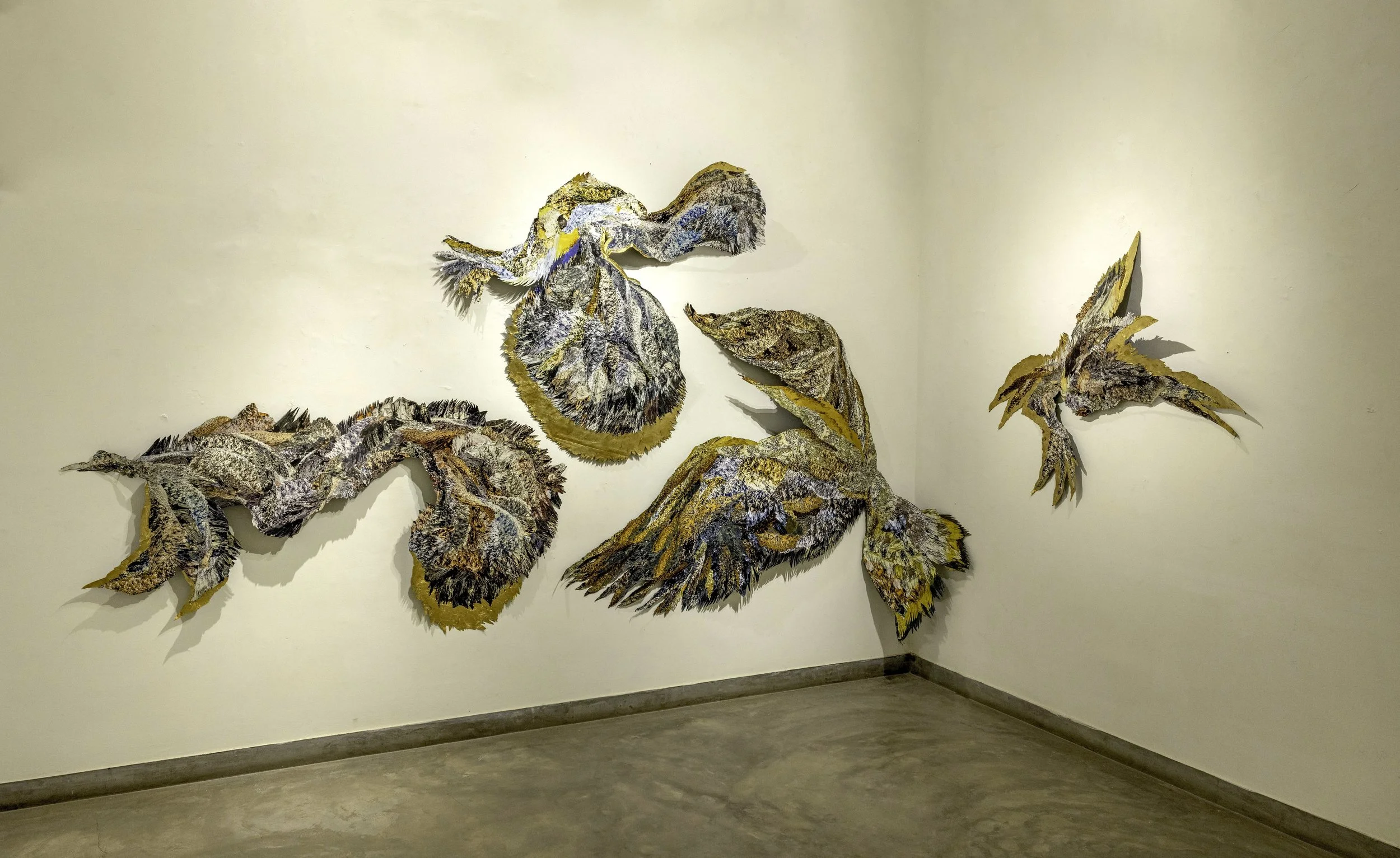
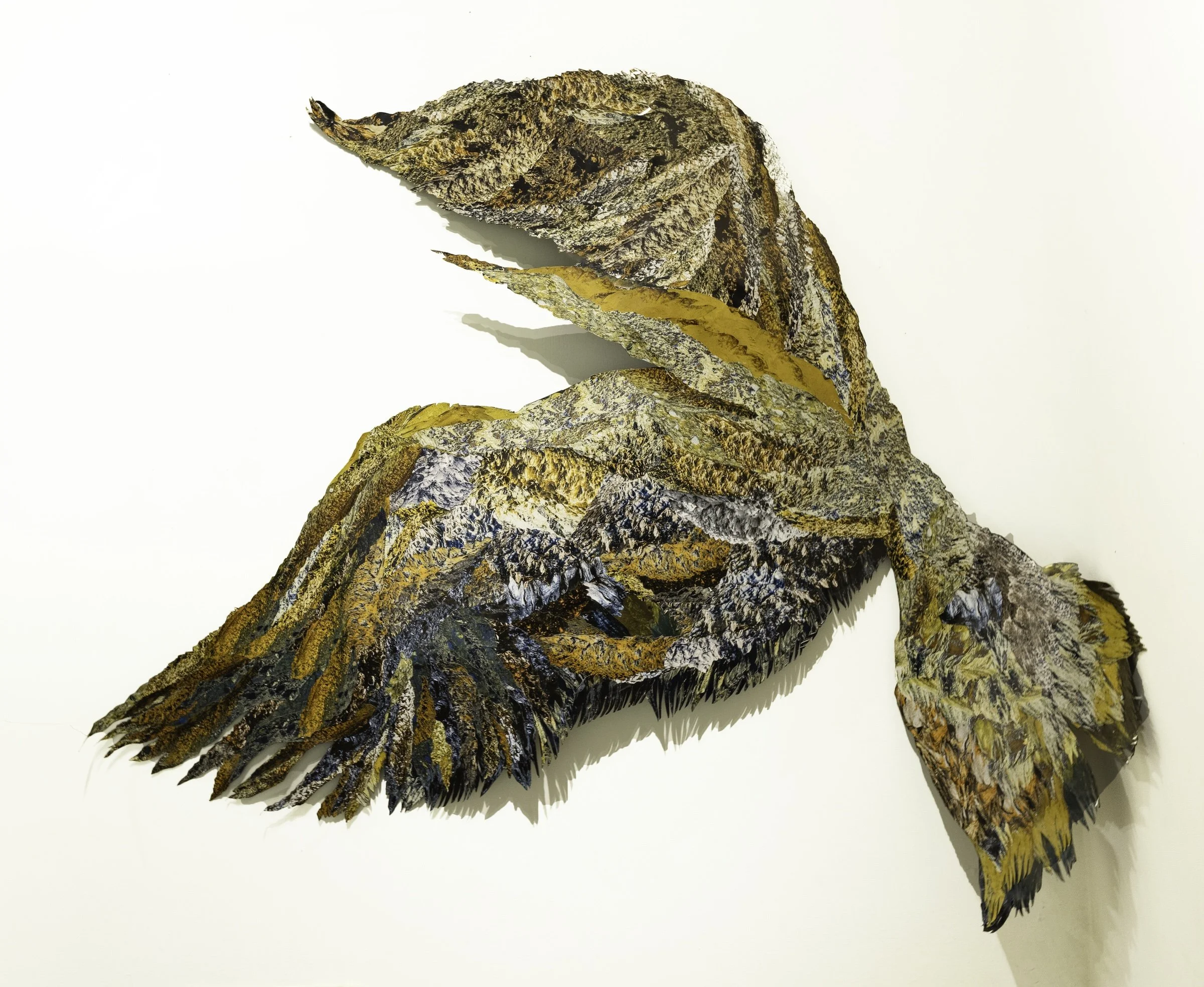
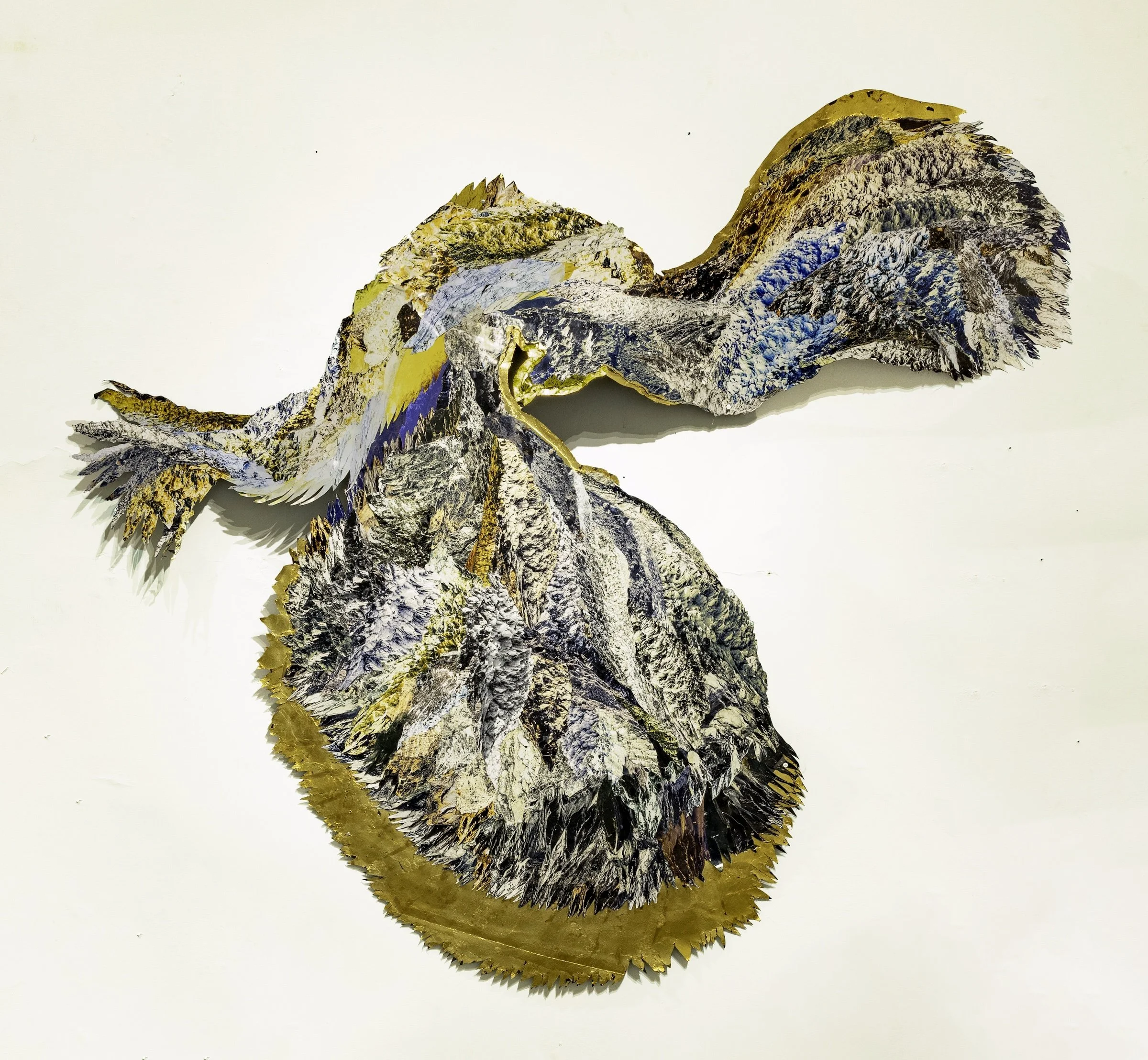
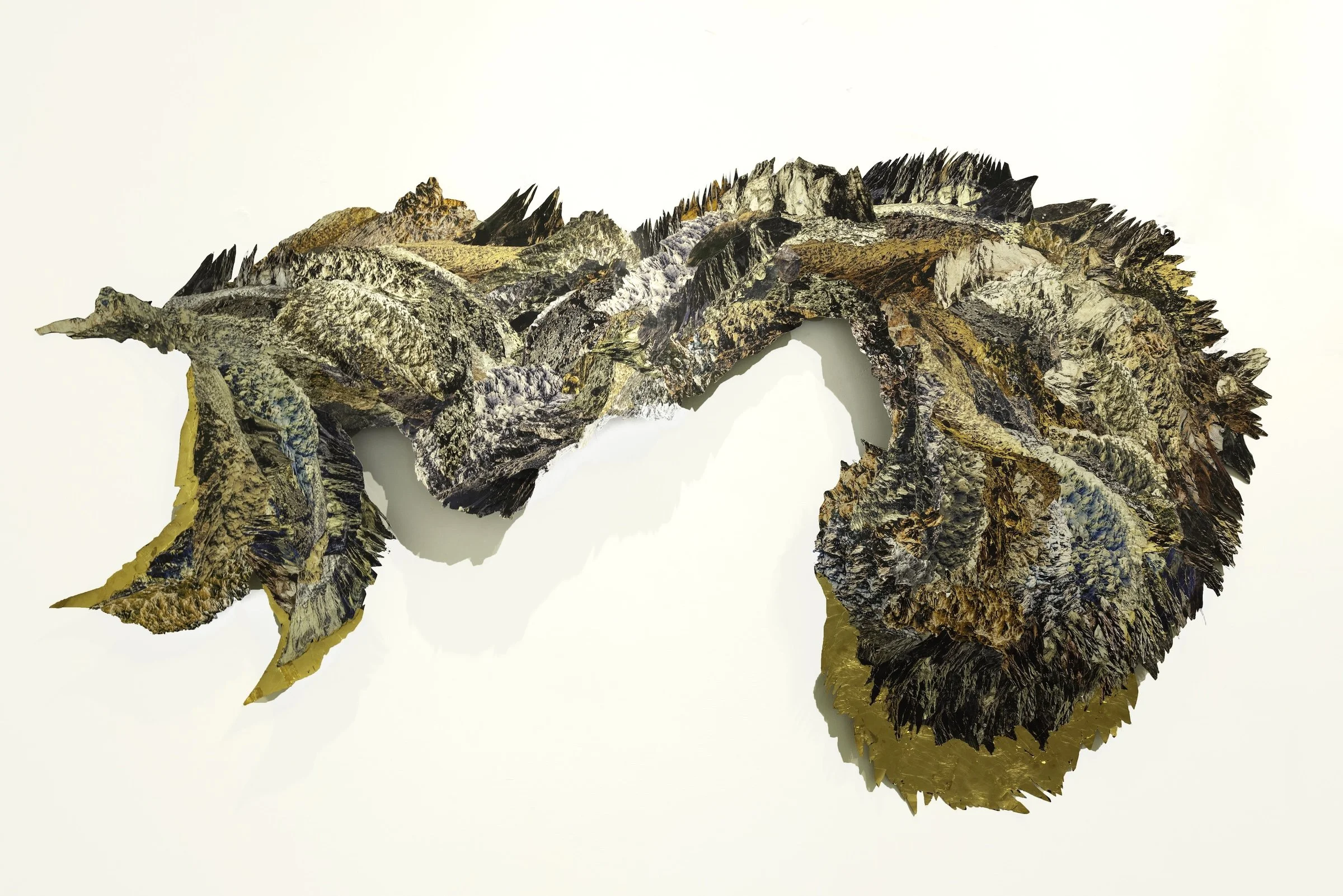
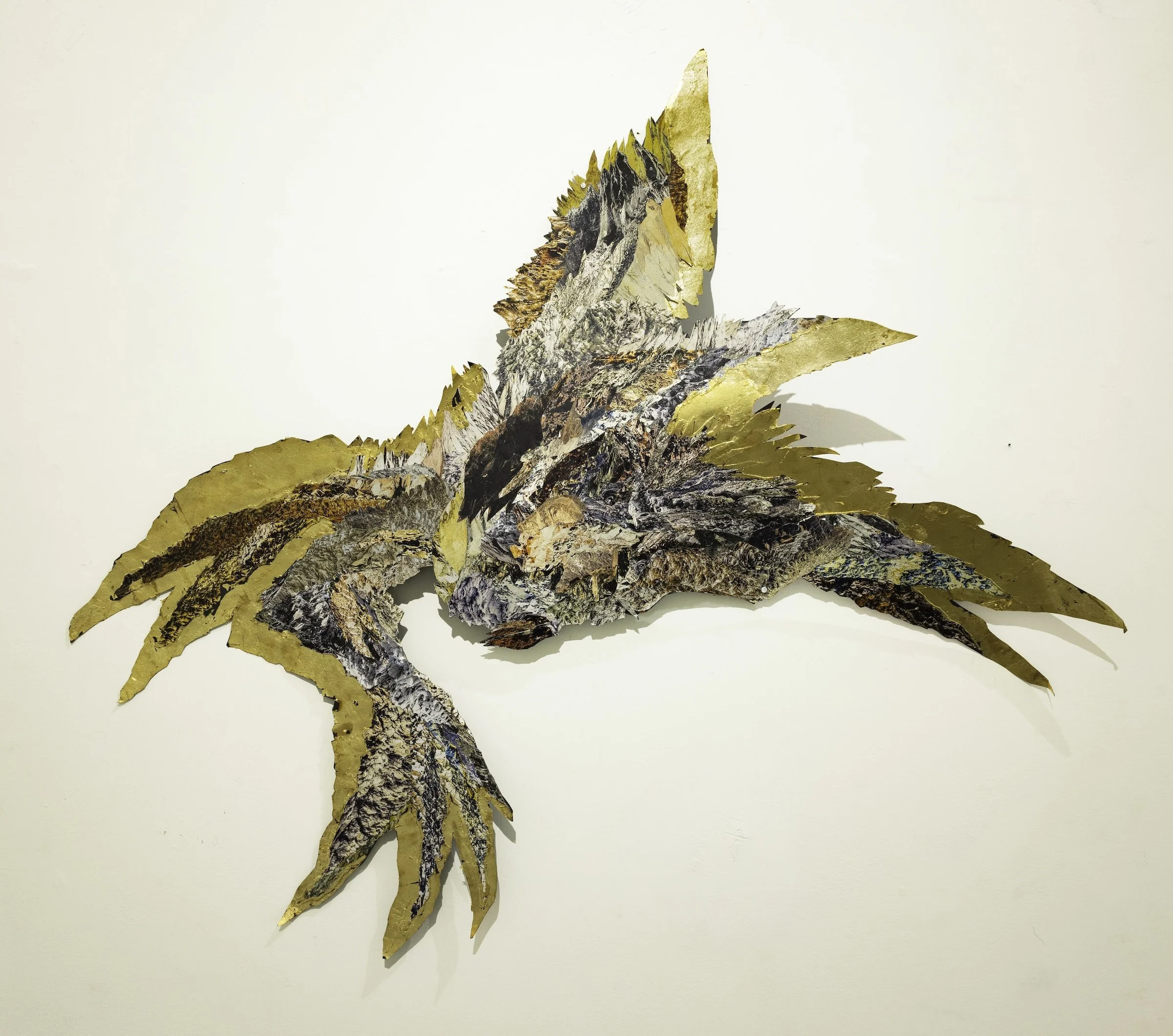
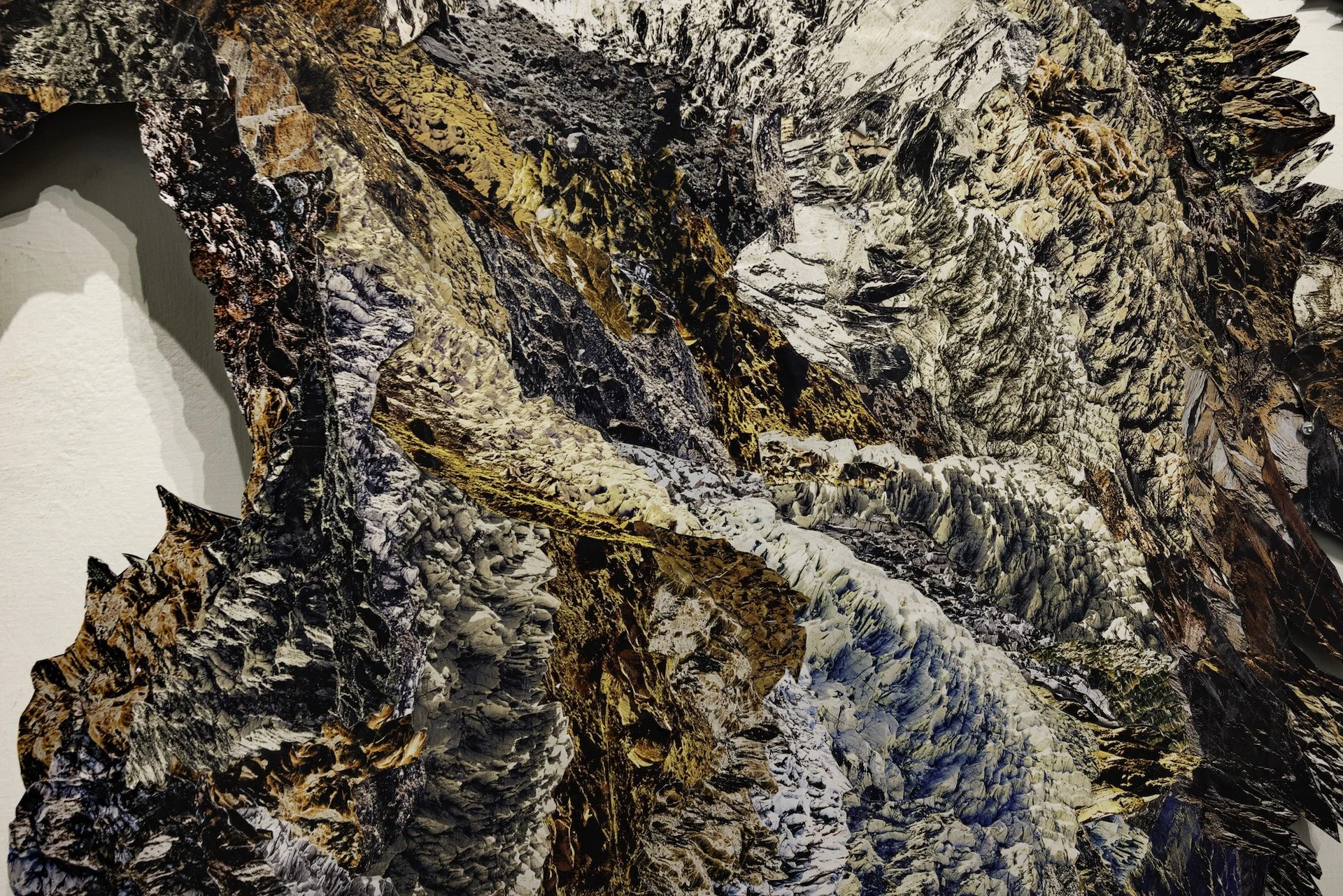
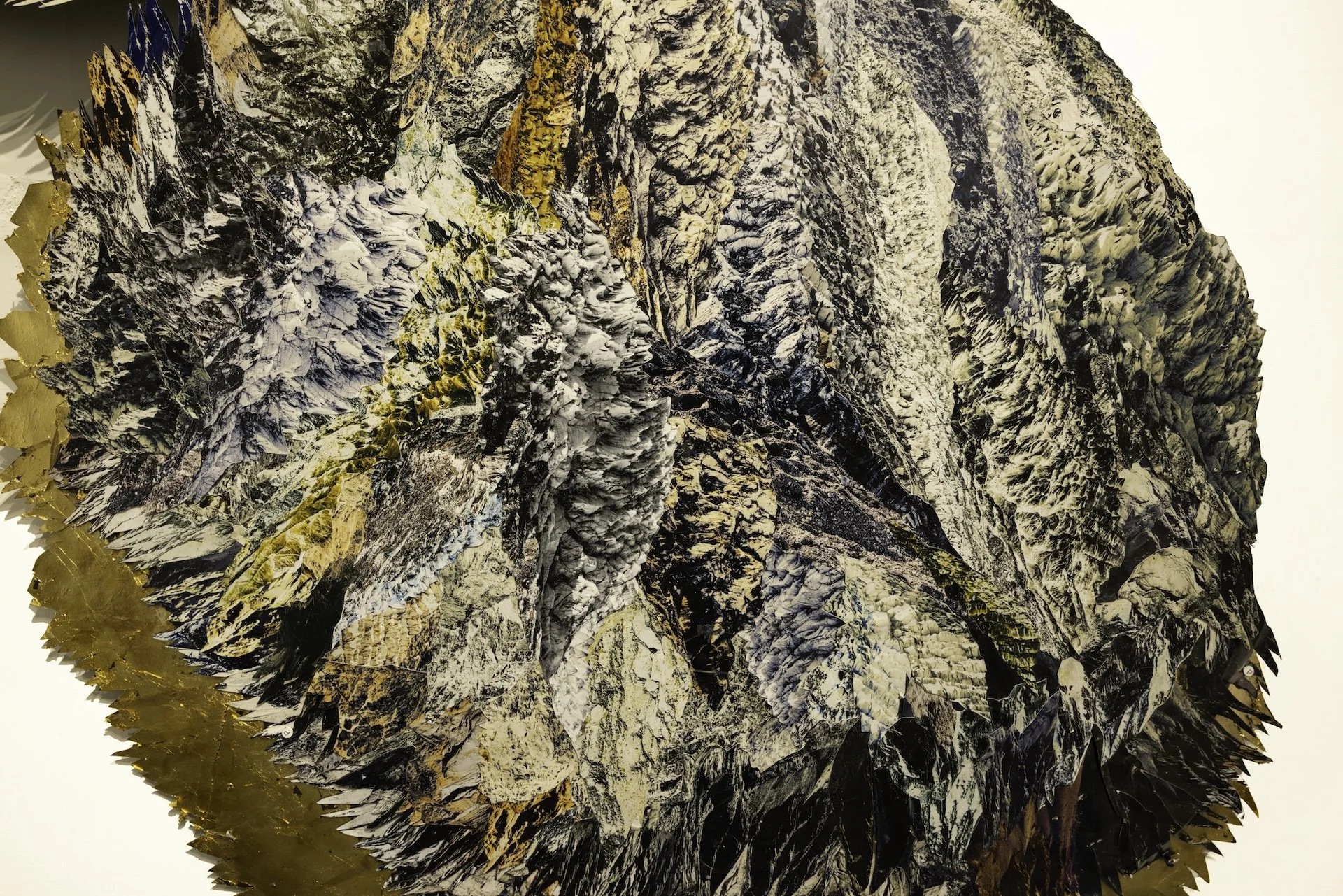
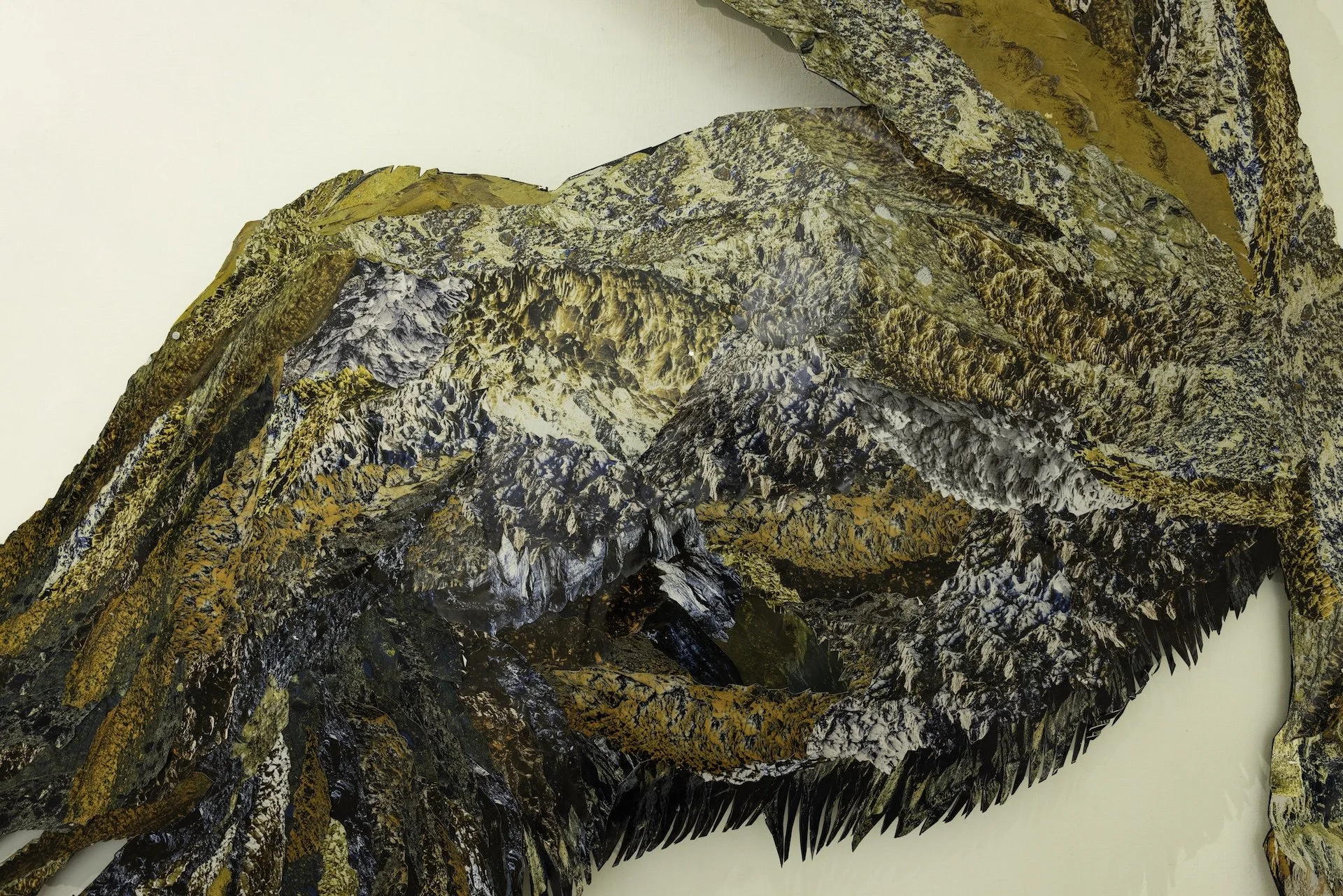
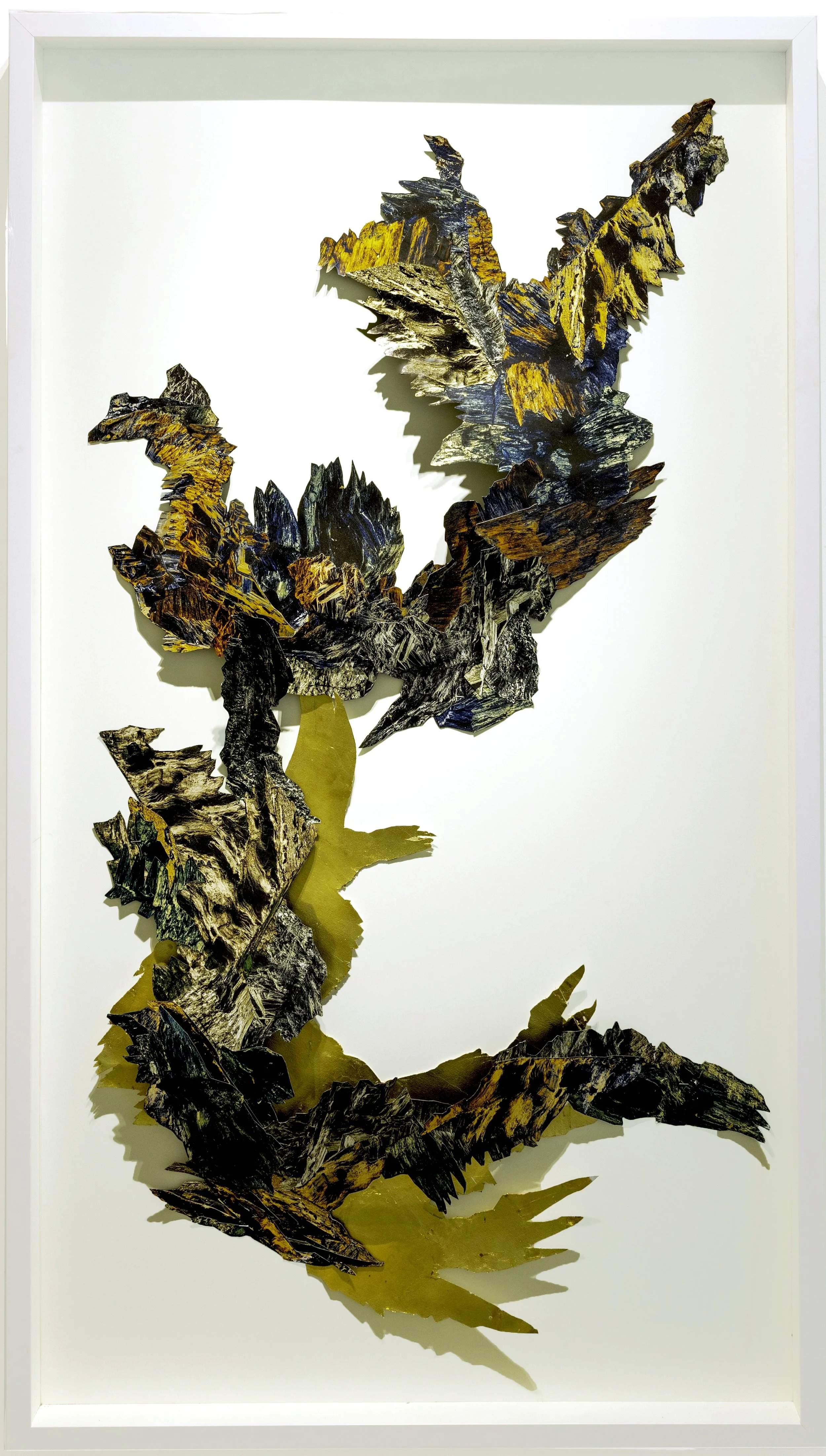
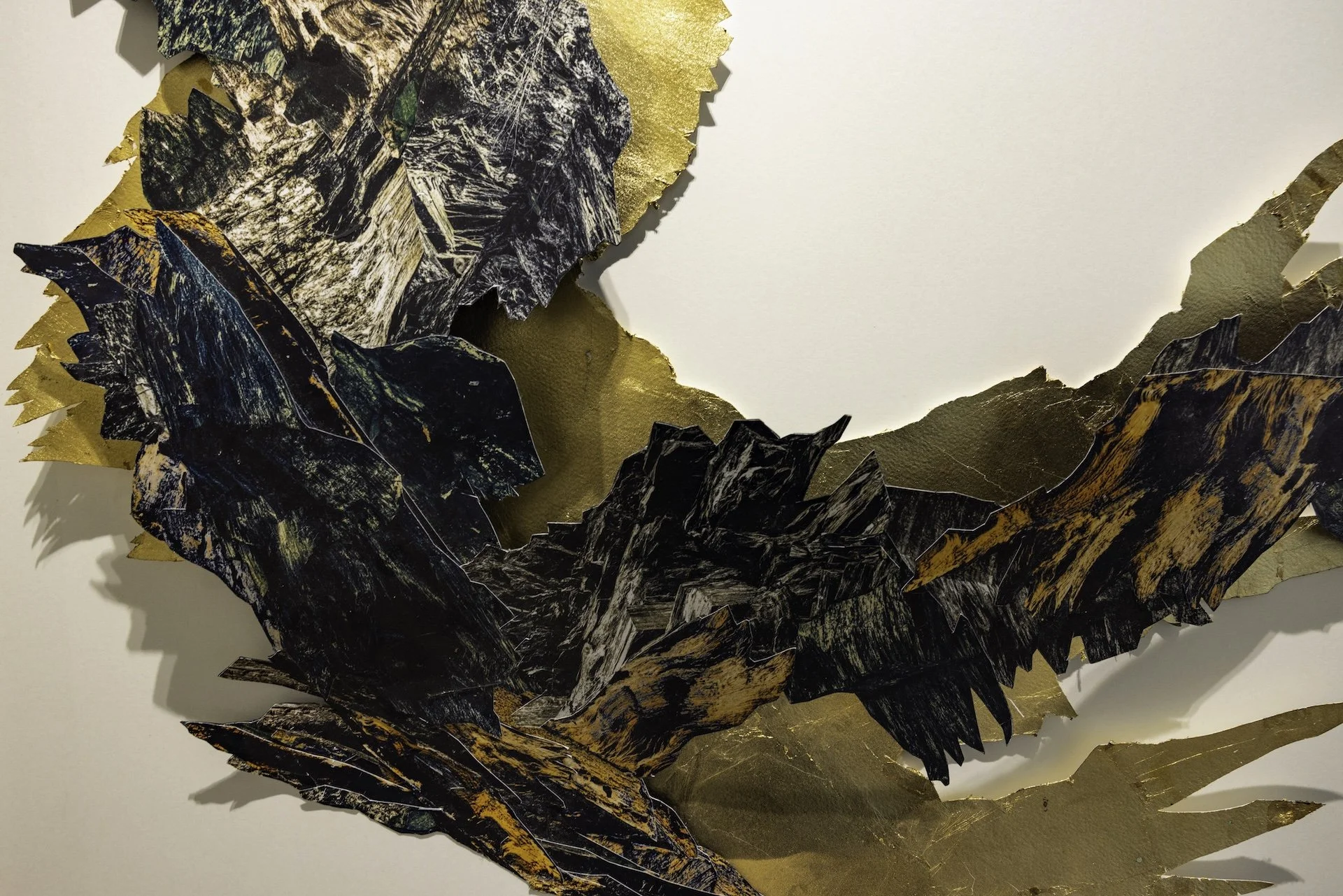
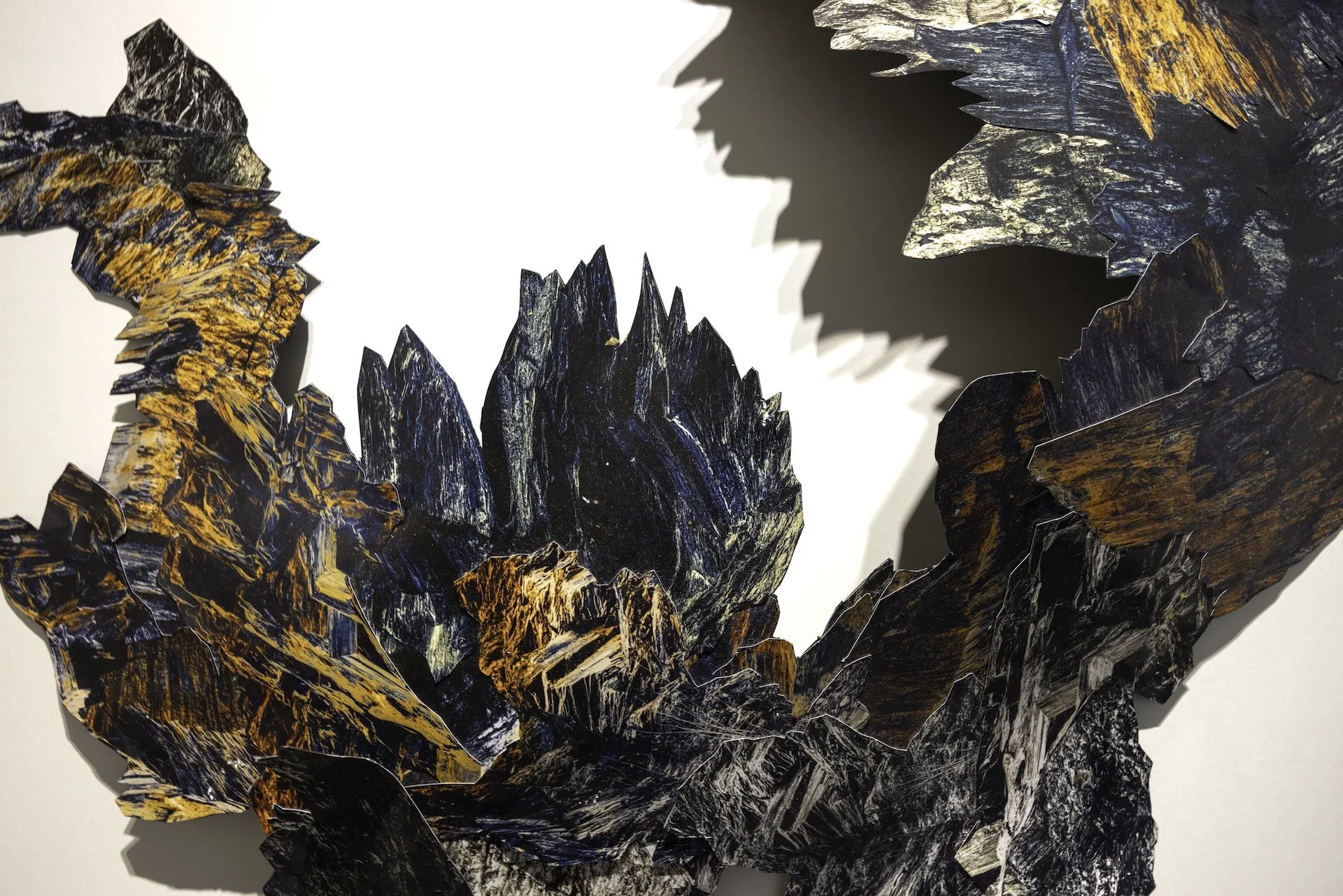
The birds are abstractions—collaged photographs of glaciers and peaks from Gilgit-Baltistan's endangered landscapes. Glaciers transmute into winged forms, soaring. Their ascent suggests migration and belonging, the reunion of fragmented parts. This is alchemy: threatened terrain transformed into forms that rise, that carry hope, that refuse to vanish.
Landscapes of Imagining 2
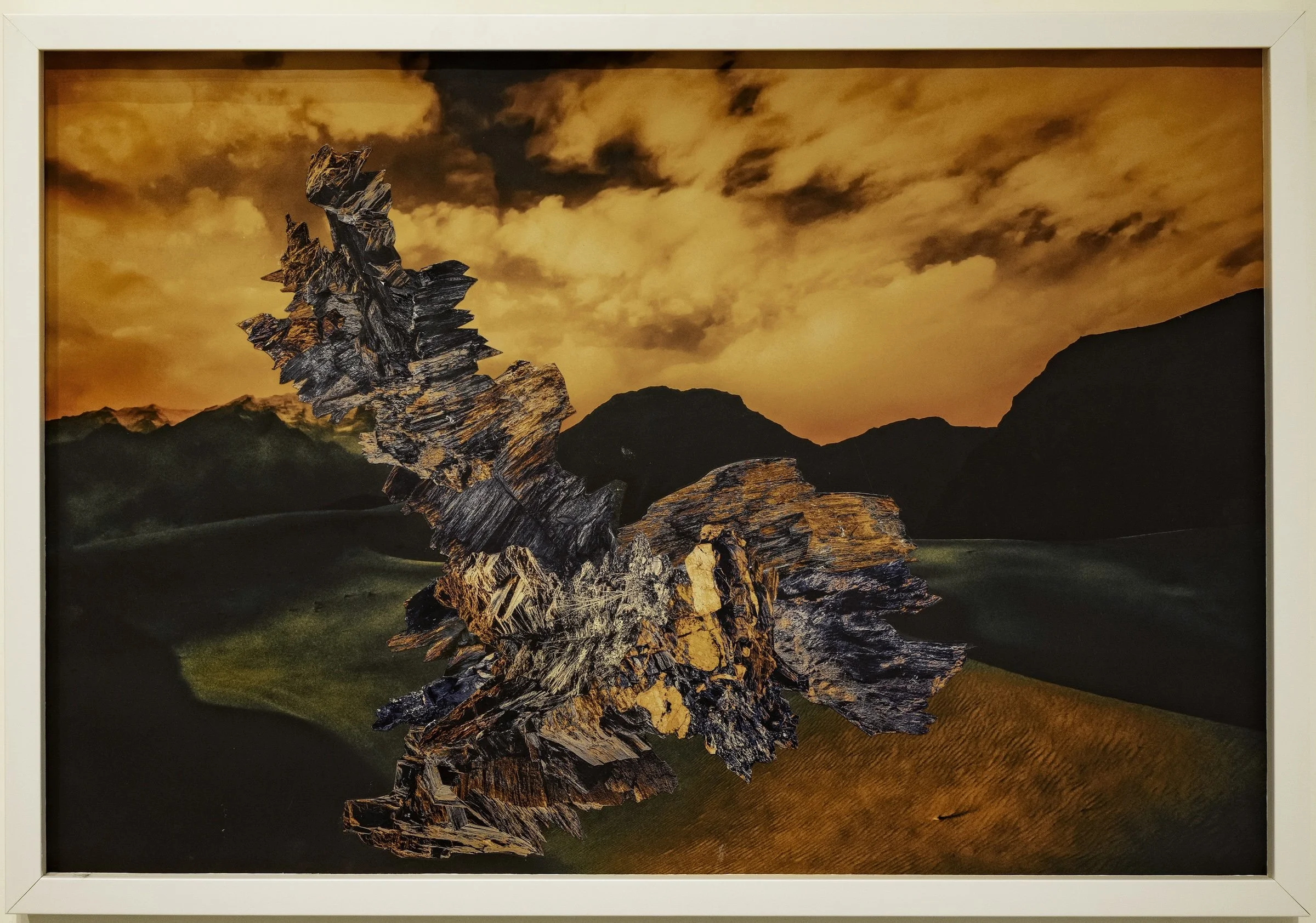
Aik Susaan Ghari (one deserted moment in time), 24 x 36 in.; collage on digitally manipulated photo printed with archival inks
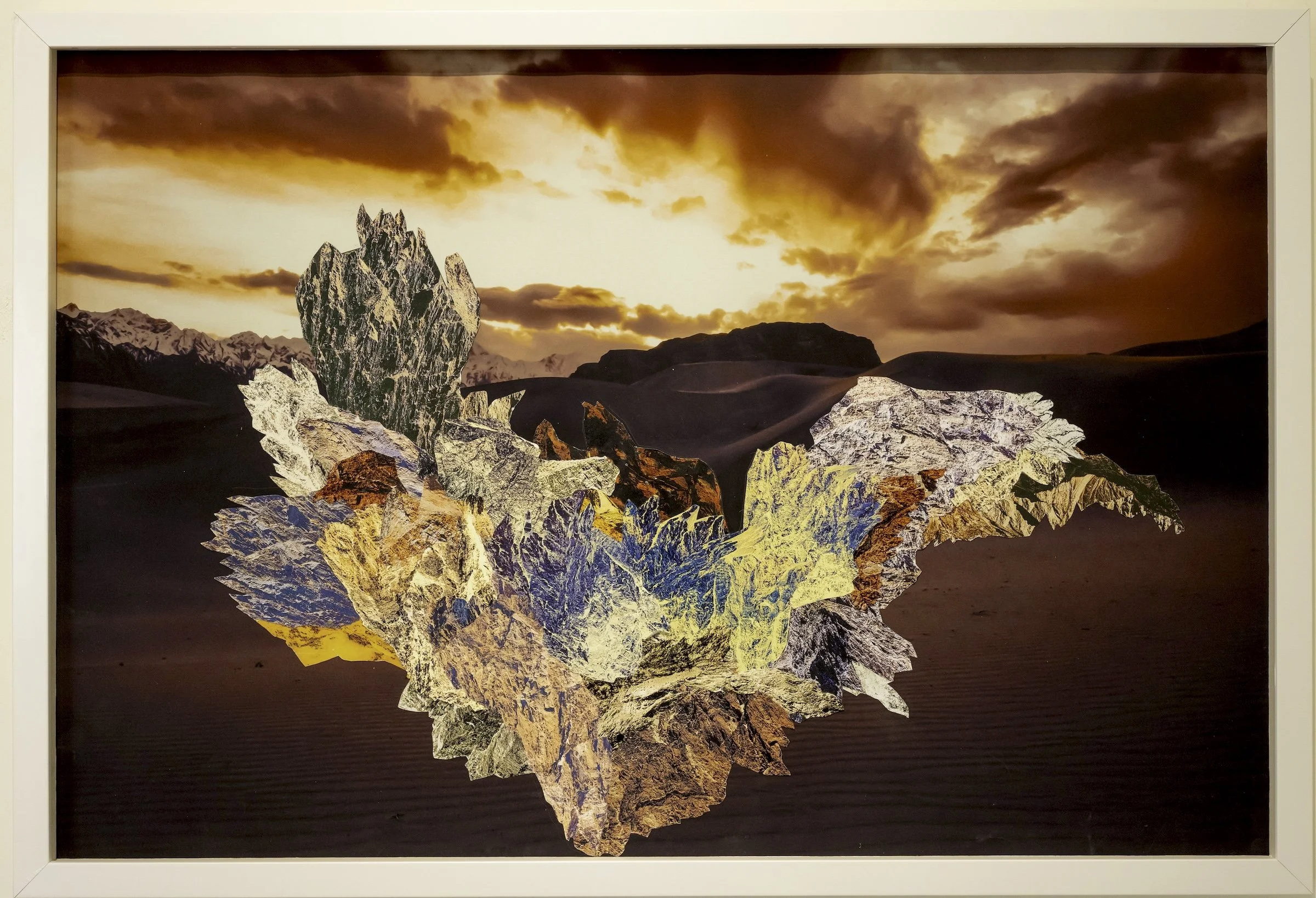
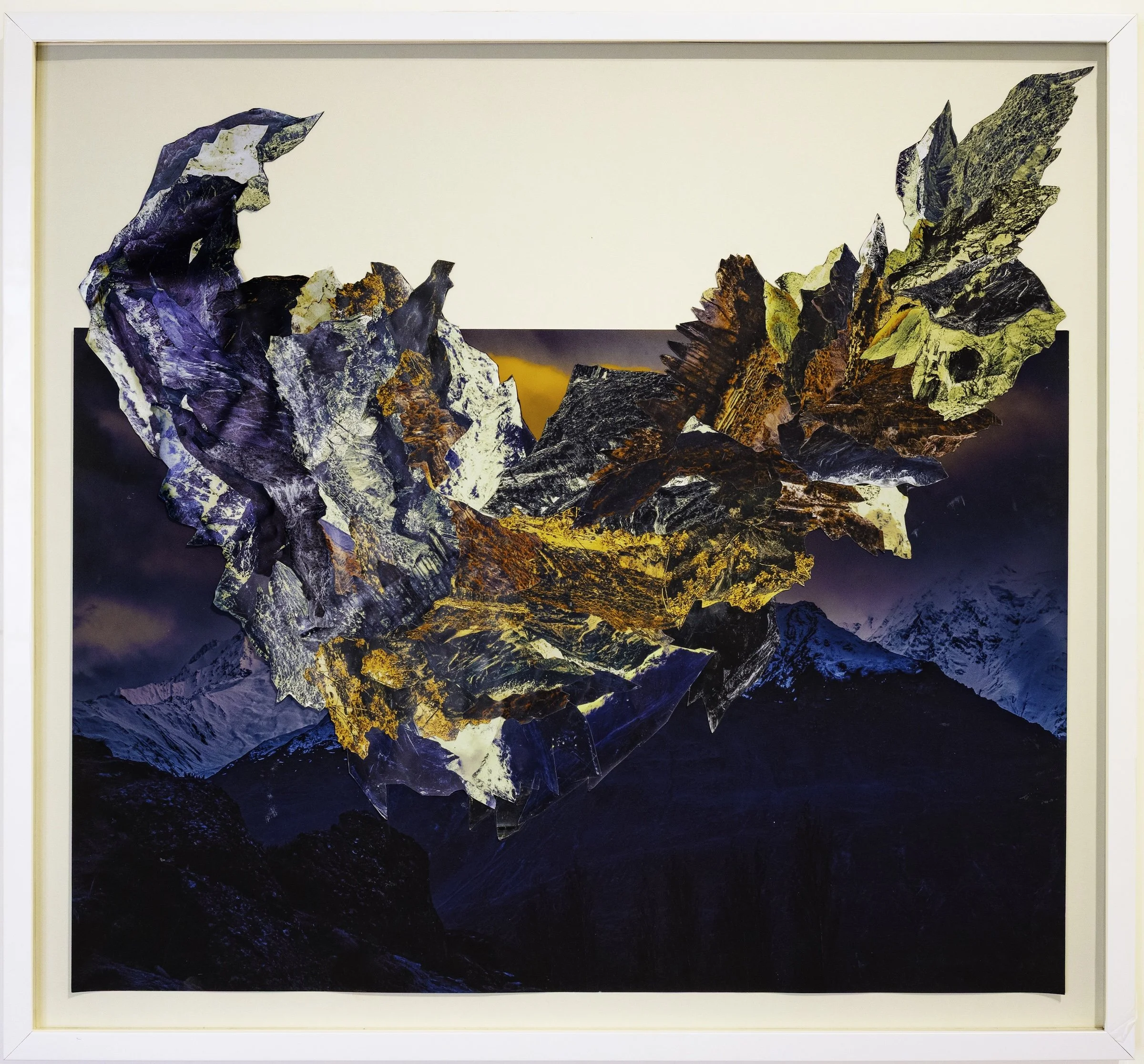
27 x 37 x 5 in. & 37.5 x 40.5 x 5 in. (framed); collage on digitally manipulated photo printed with archival inks
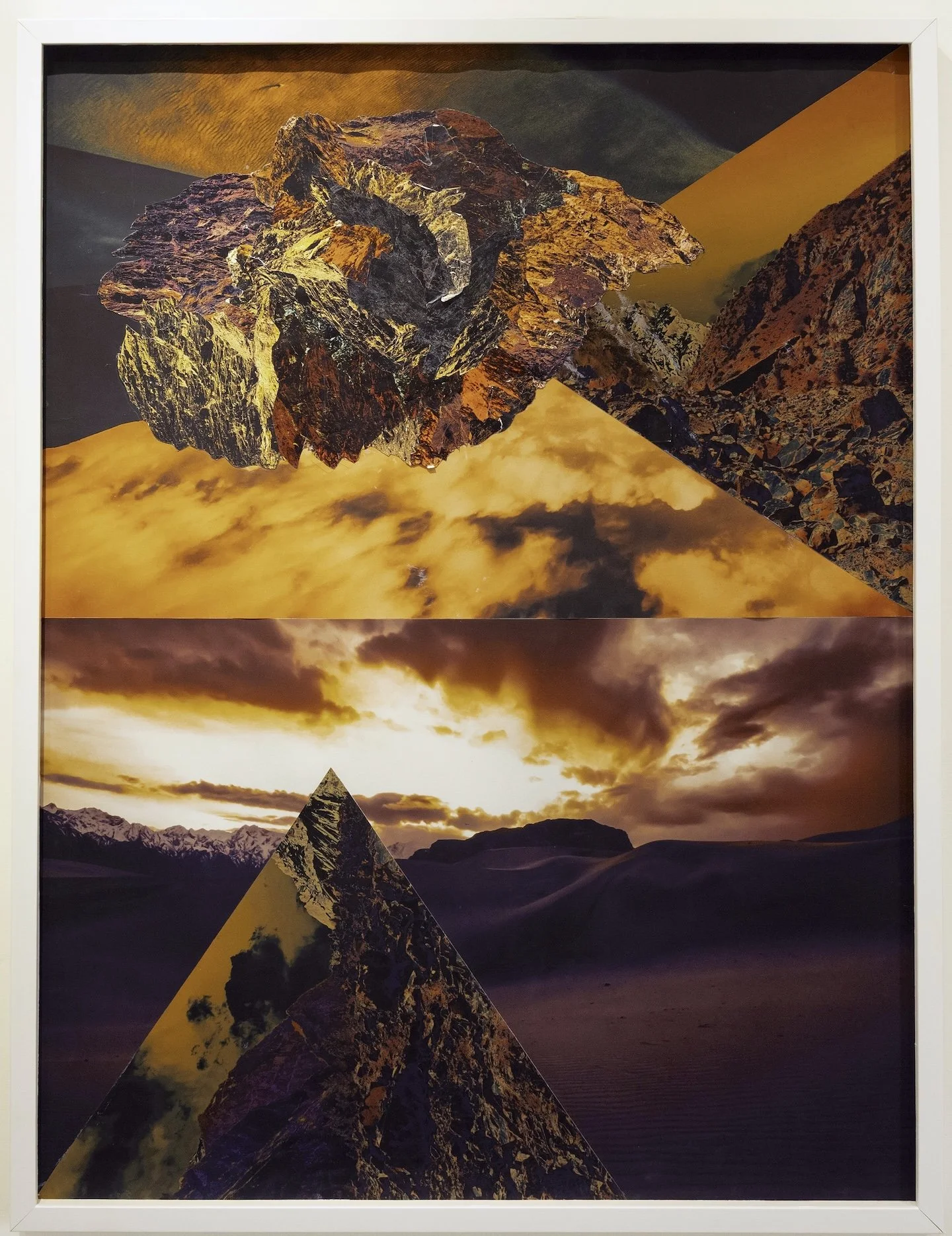
Aik Susaan Ghari (one deserted moment in time)
49.7 x 37.5 x 5 in. (framed).; collage on digitally manipulated photo printed with archival inks
Fragments of mountain peaks and rock layers collage over the cold desert of Gilgit-Baltistan at sunset. Close-up and distant views merge. The mountains that surround the desert now float over it. Digitally manipulated colors transform the terrain into something magical, light filtering through clouds, the desert vast and luminous. These are Landscapes of Imagining: the familiar reconfigured, the fragments finding new wholes.
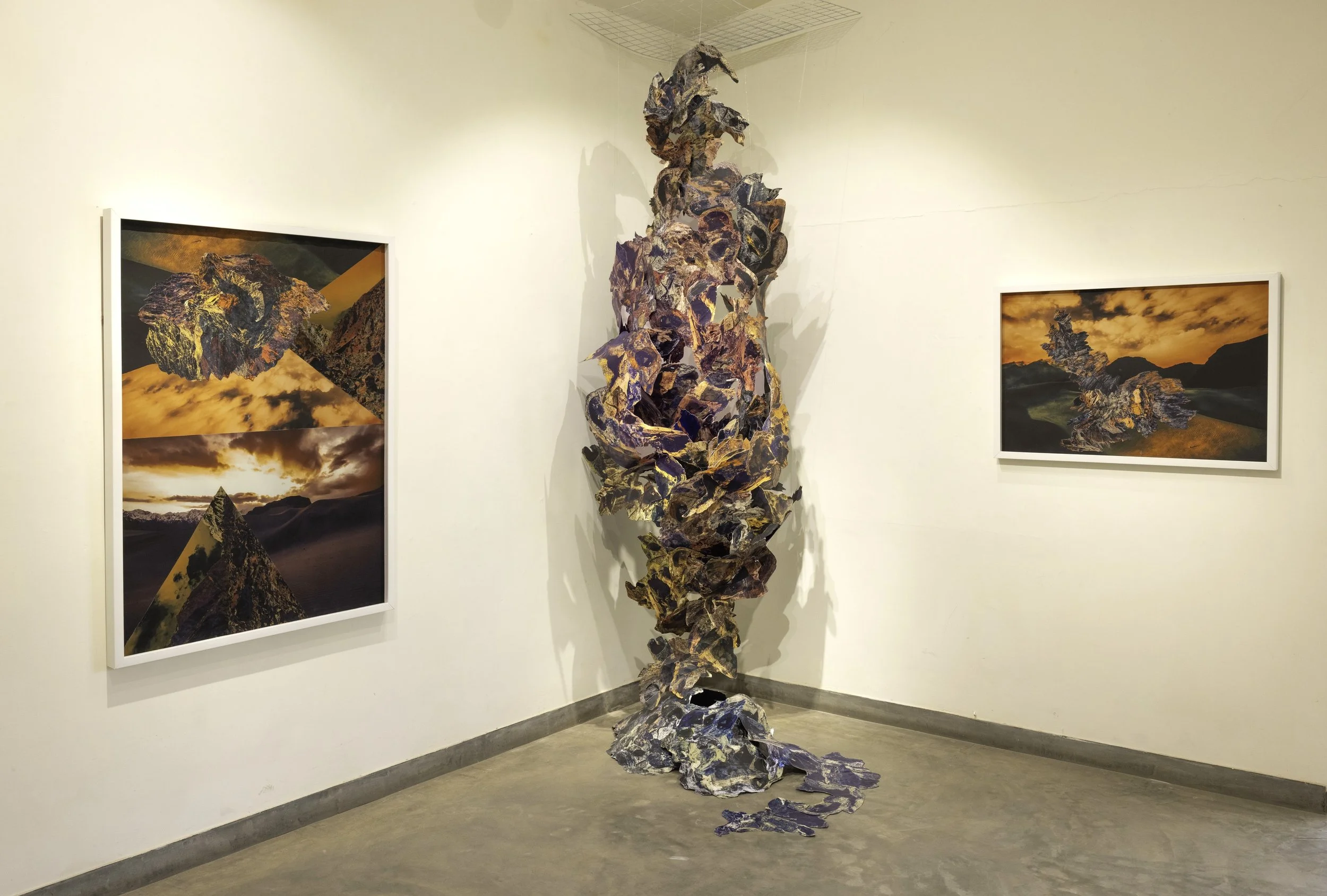
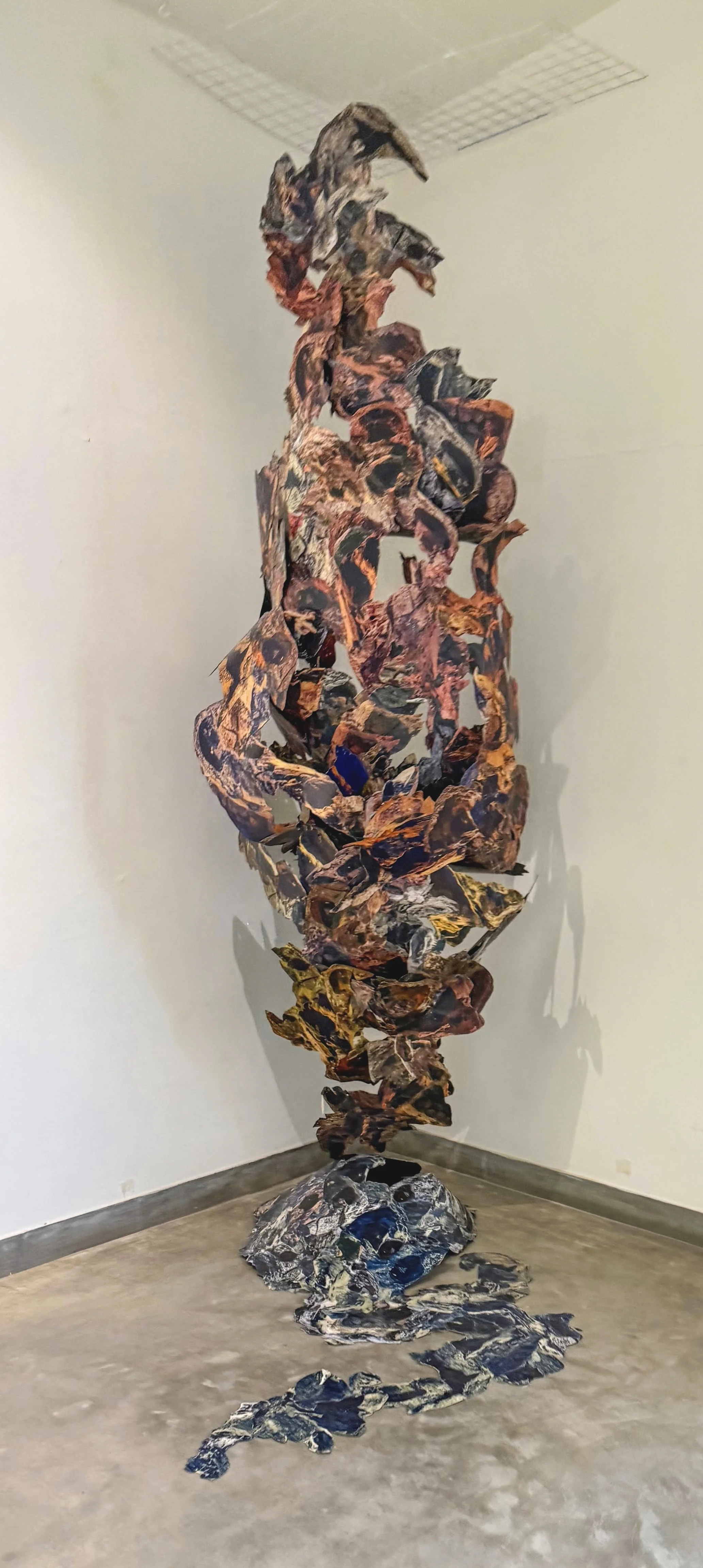
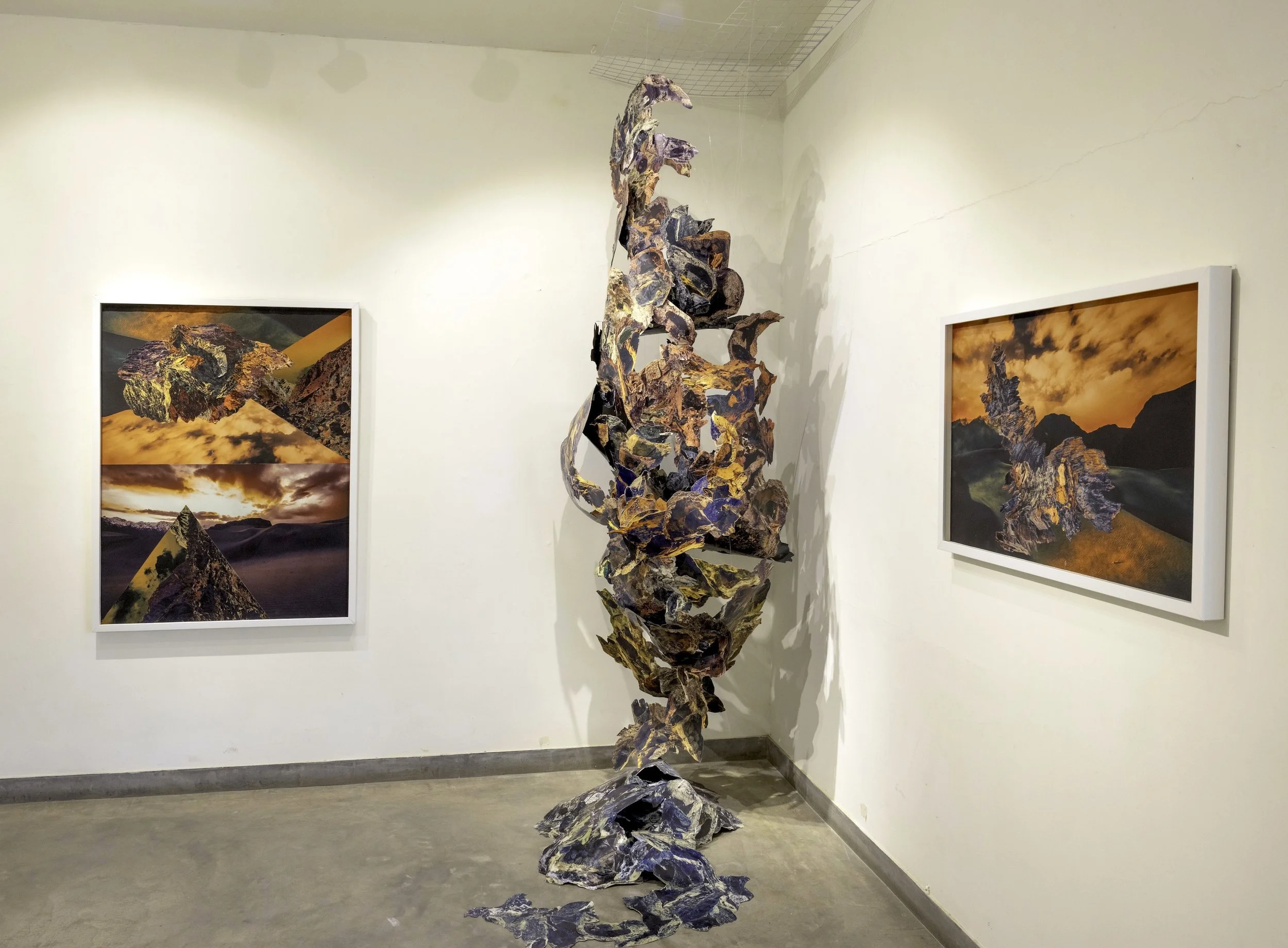
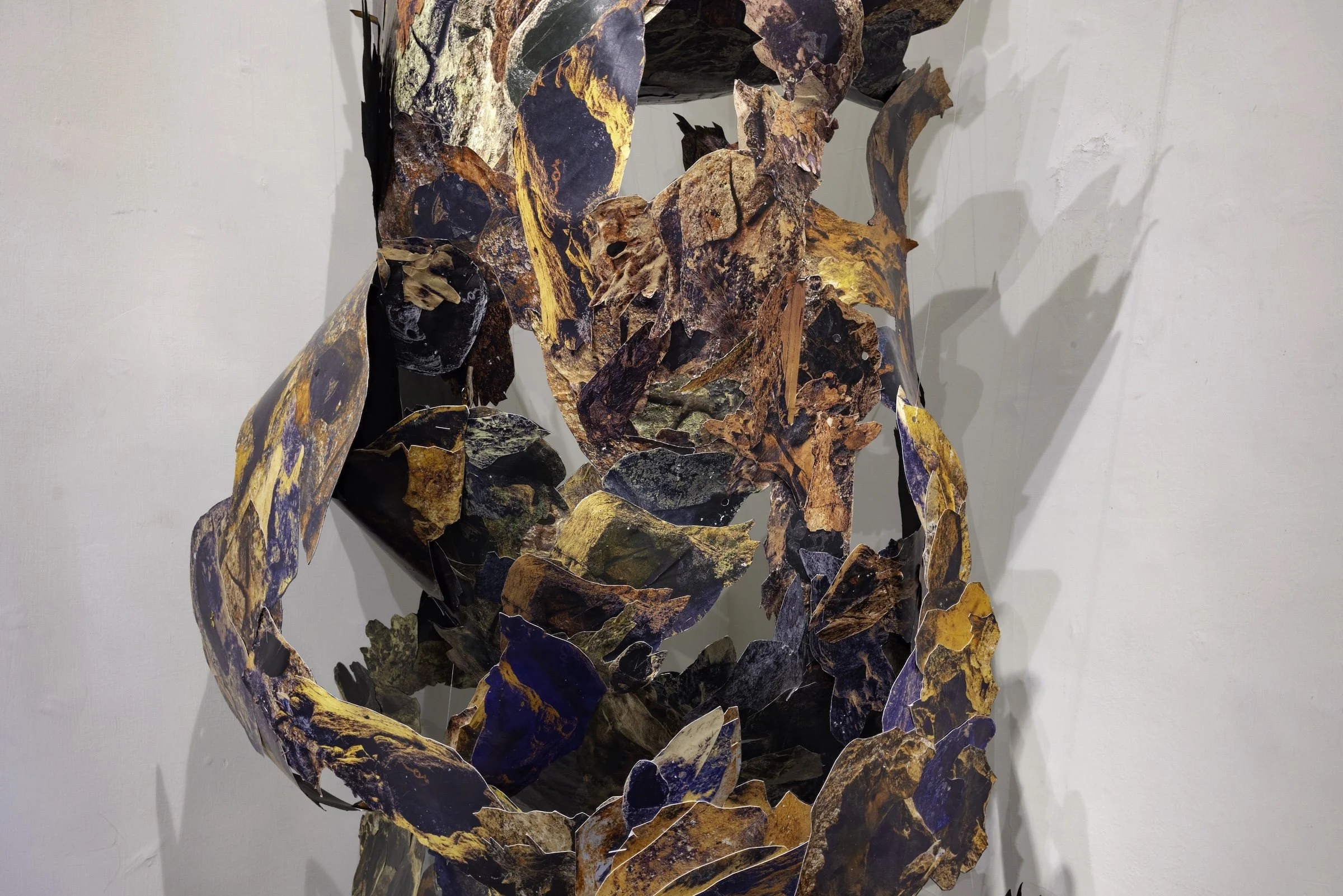
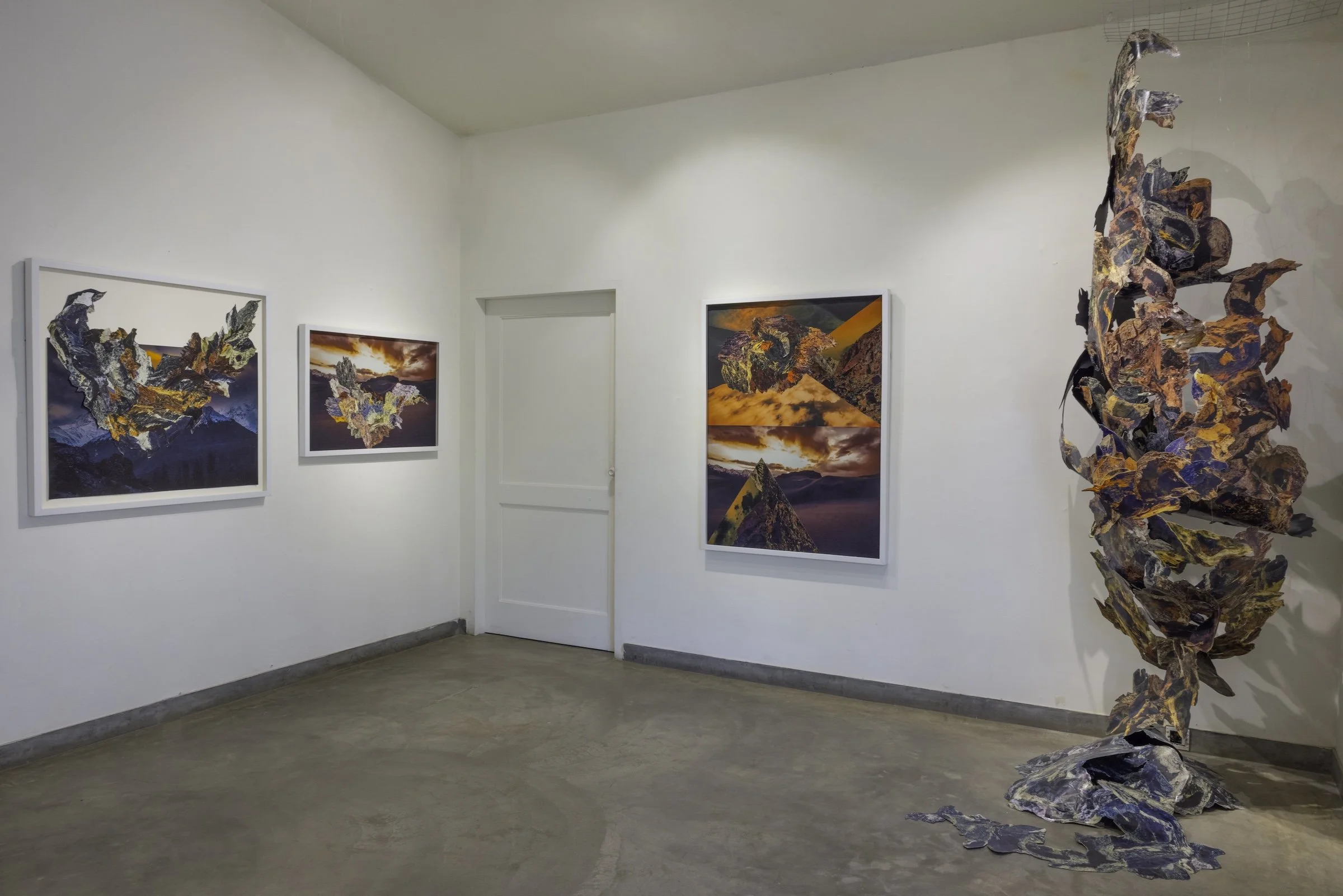
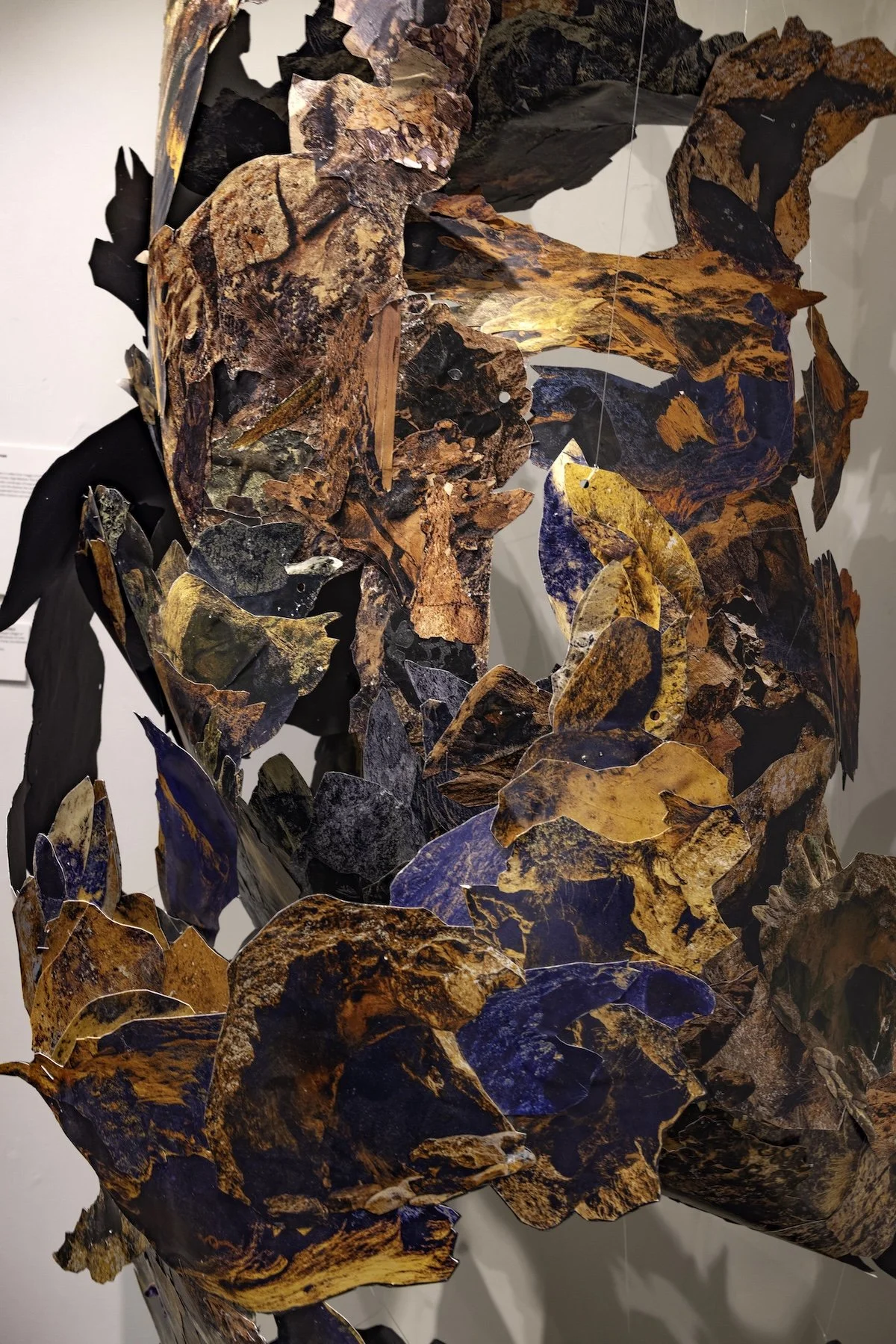
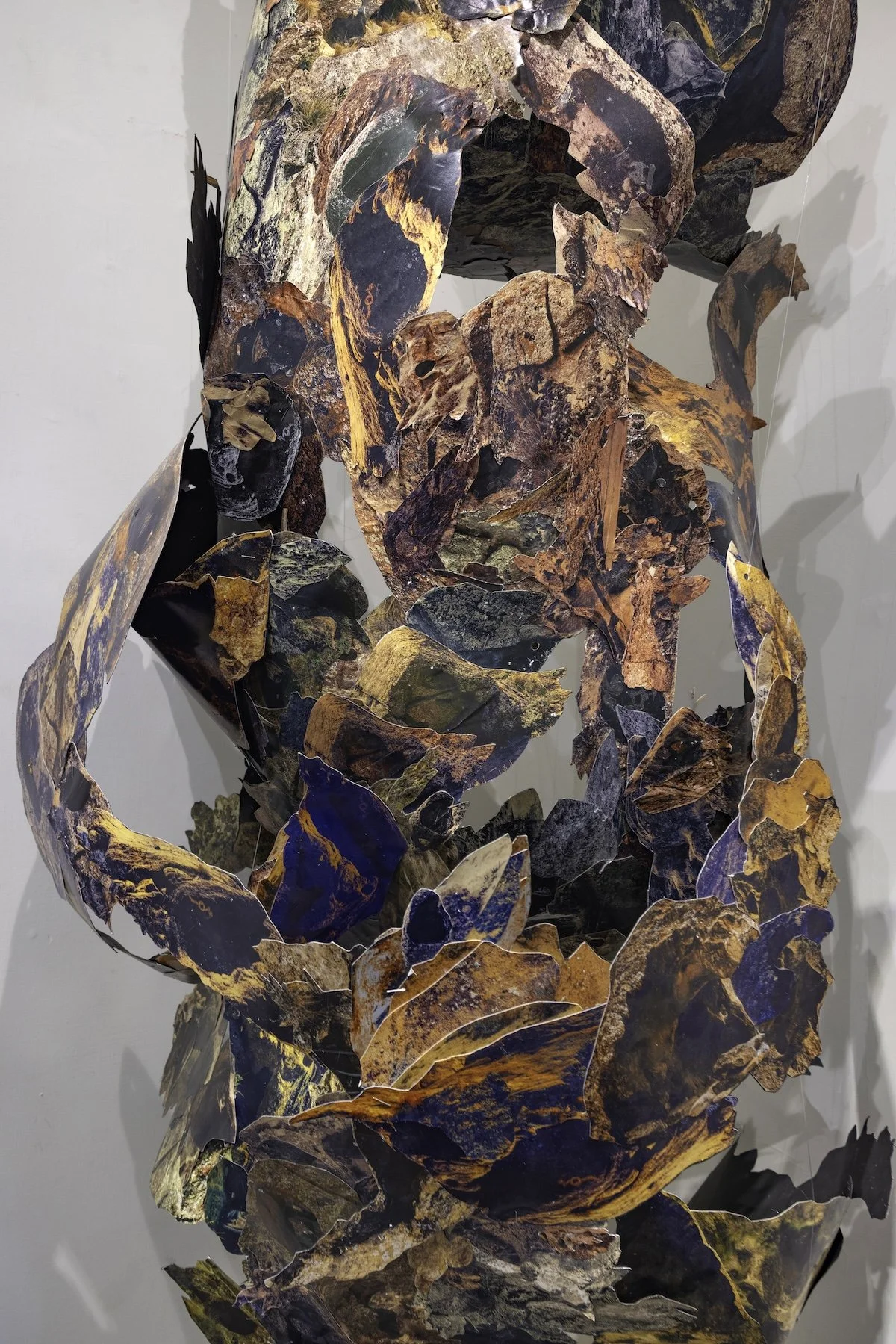
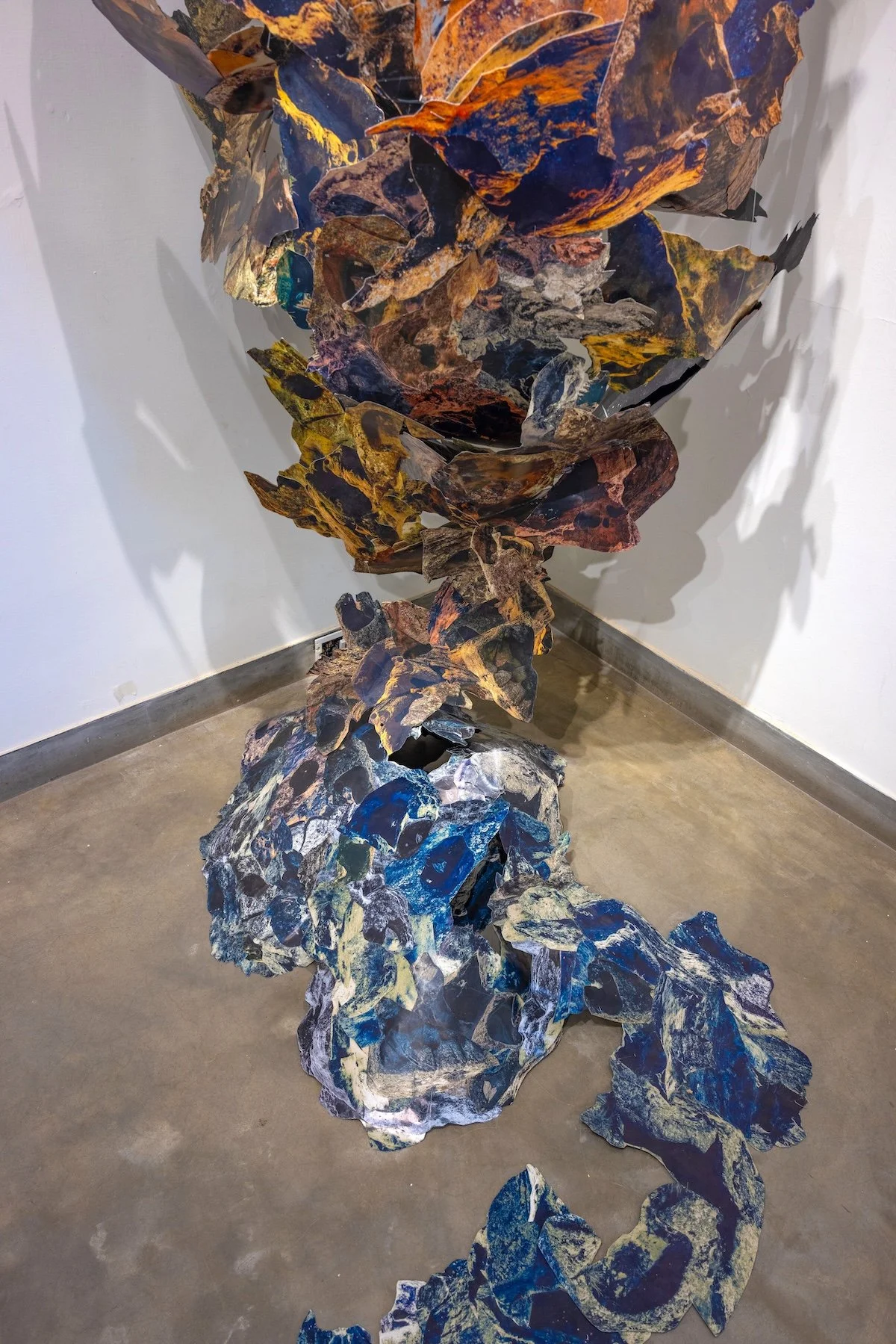
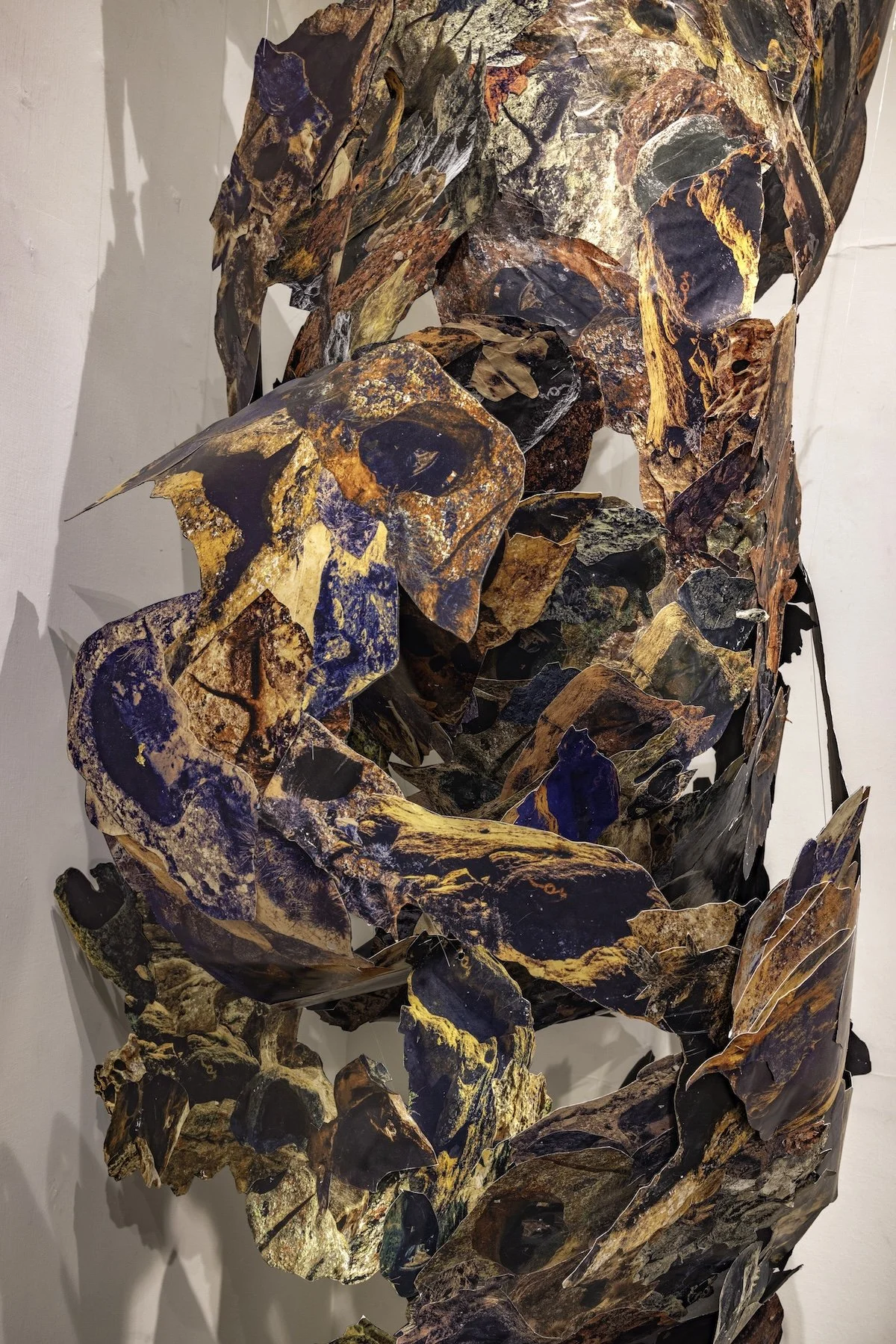
Eagles Nest Portals, 113 x 69 x 73 in.
Mixed media: landscape collages of digitally manipulated photos of rocks at Eagles Nest in Hunza, monofilament, wire mesh.
This hanging sculpture is crafted from images of hollowed rocks from Eagles Nest in Hunza, Gilgit-Baltistan. The blackened voids, eroded over time, evoke a landscape of erasure, a reflection on both the personal and the physical, the inner and the outer. Recomposed into a suspended form, the rocks rise from the ground, embodying metamorphosis and transformation.
Acts of Disappearance
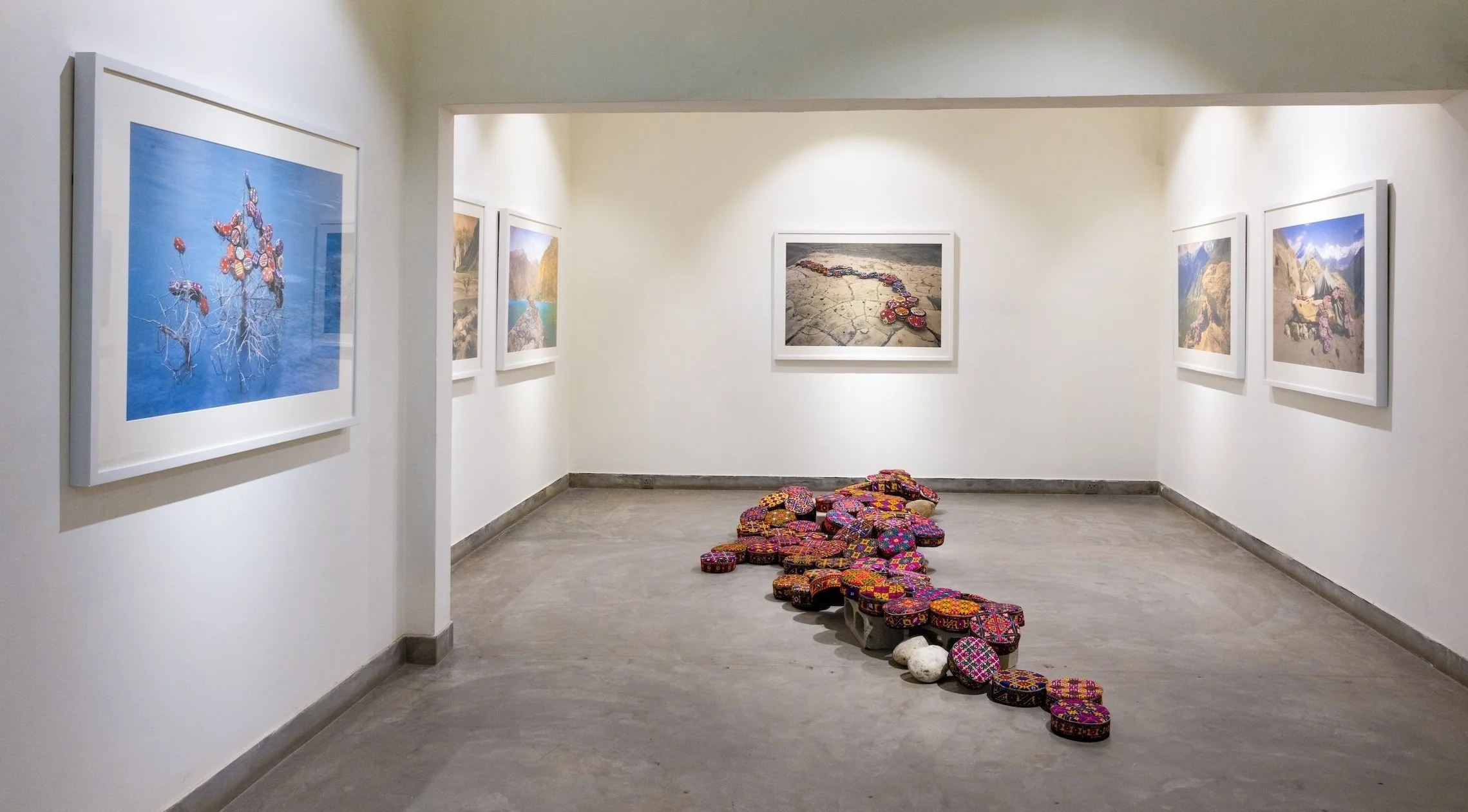
Acts of Disappearance—Installation with hand embroidered Hunza caps
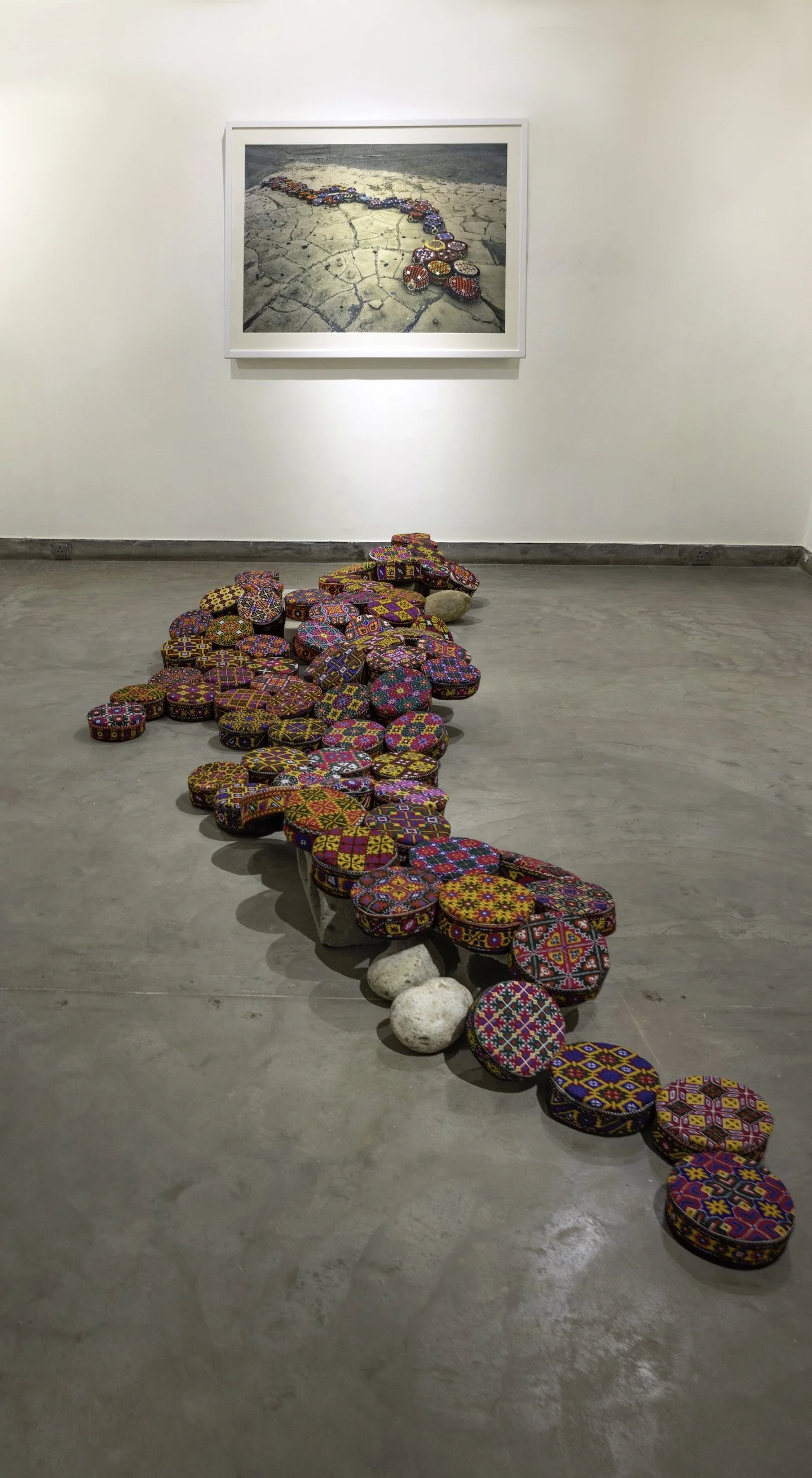
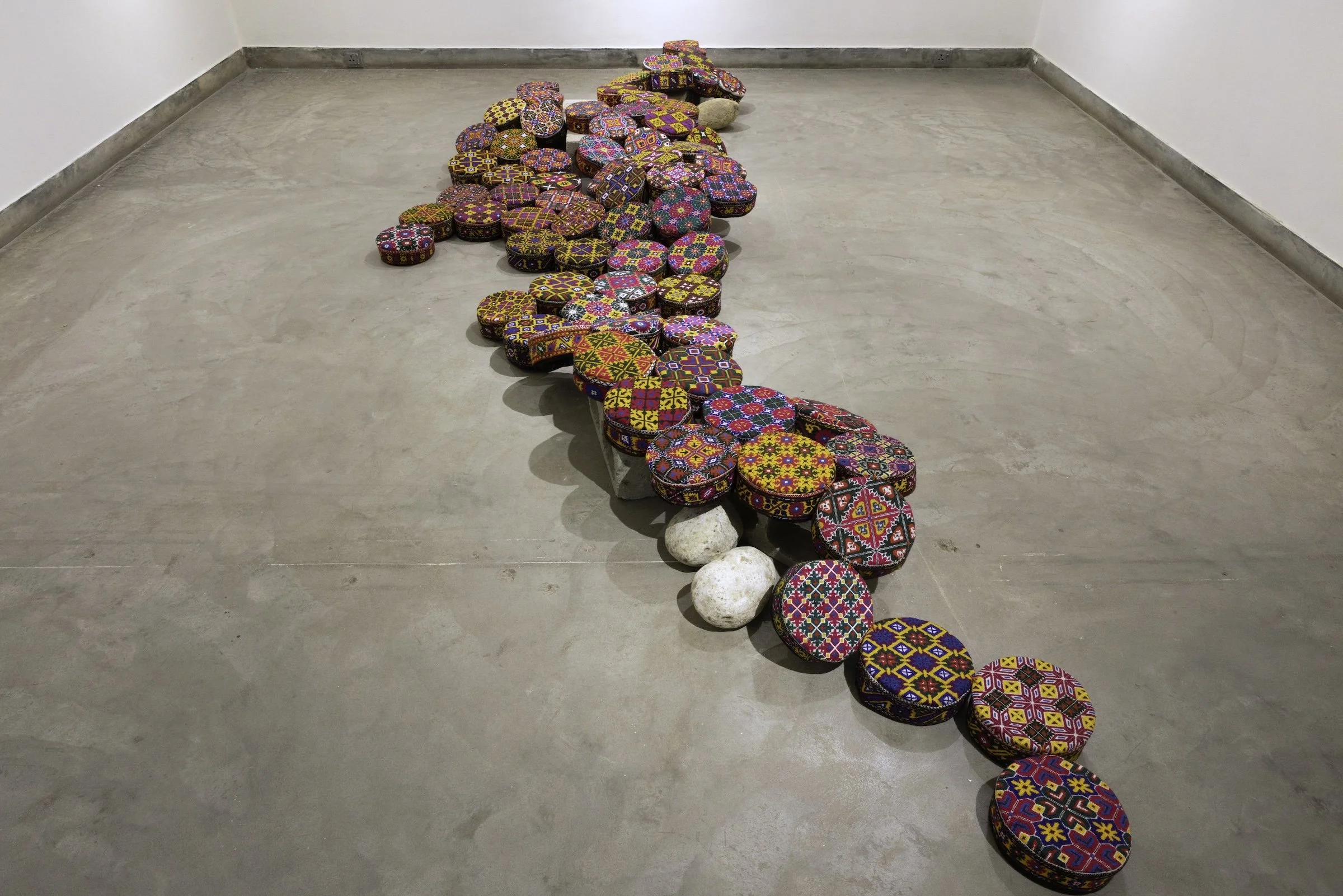
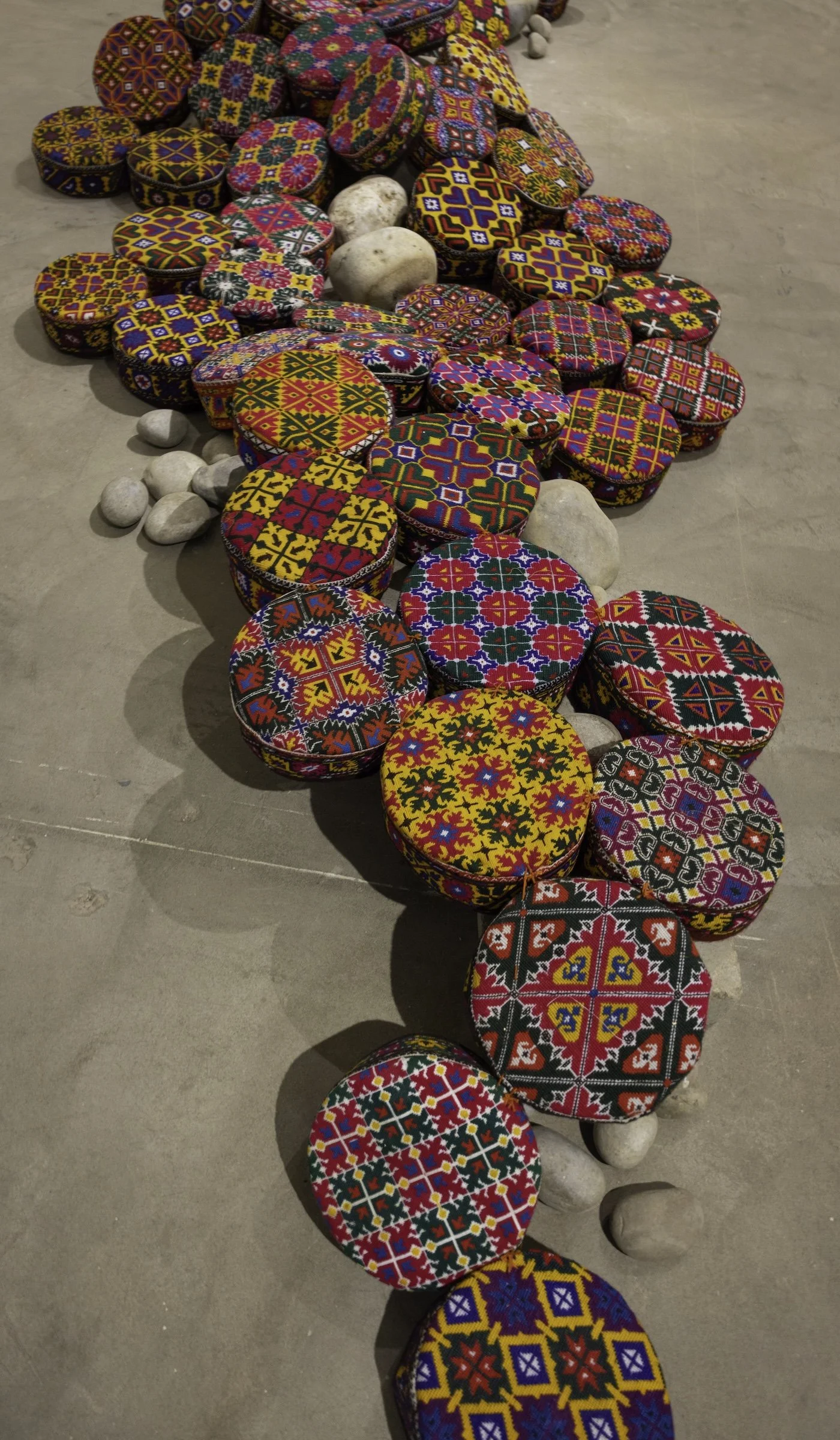
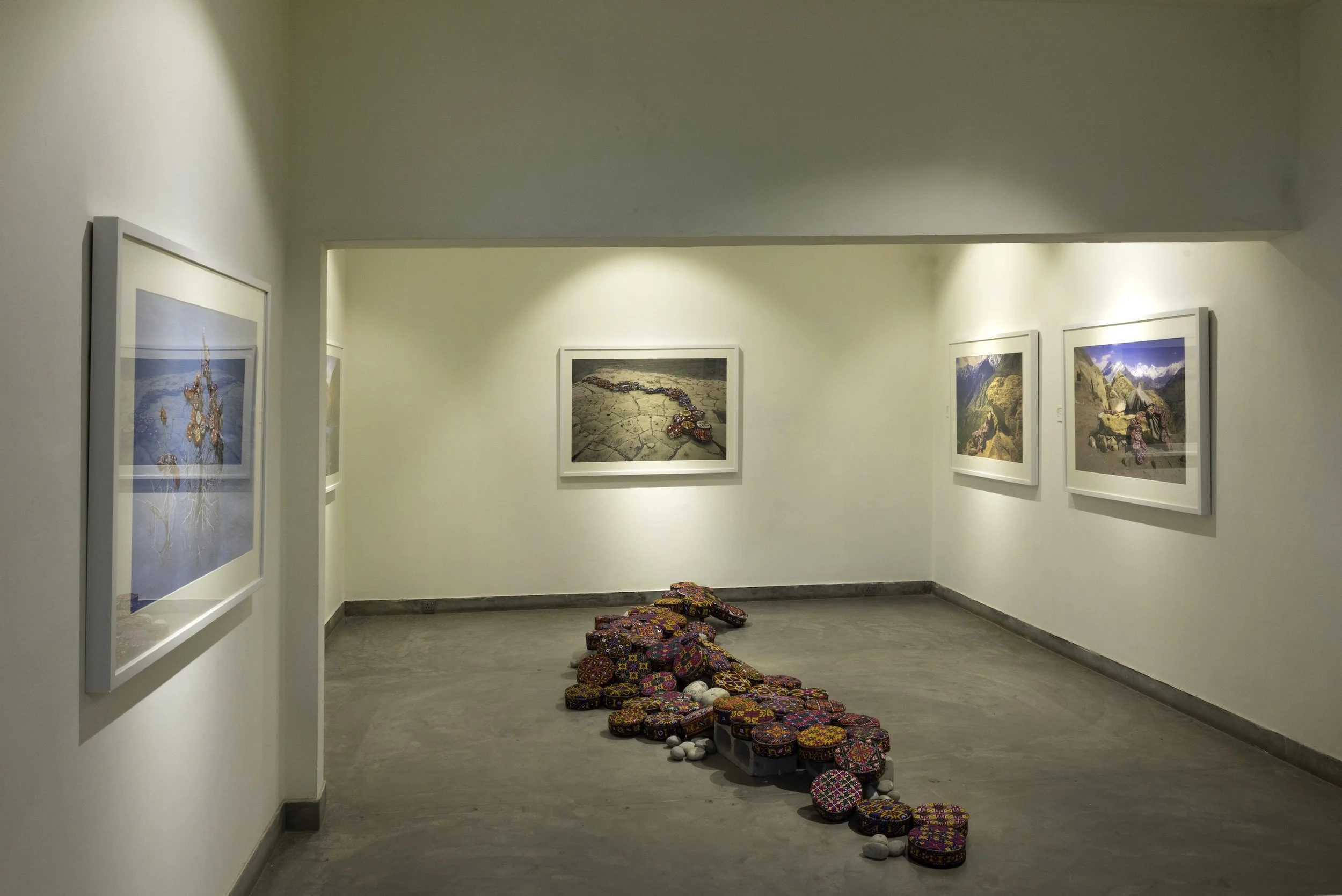
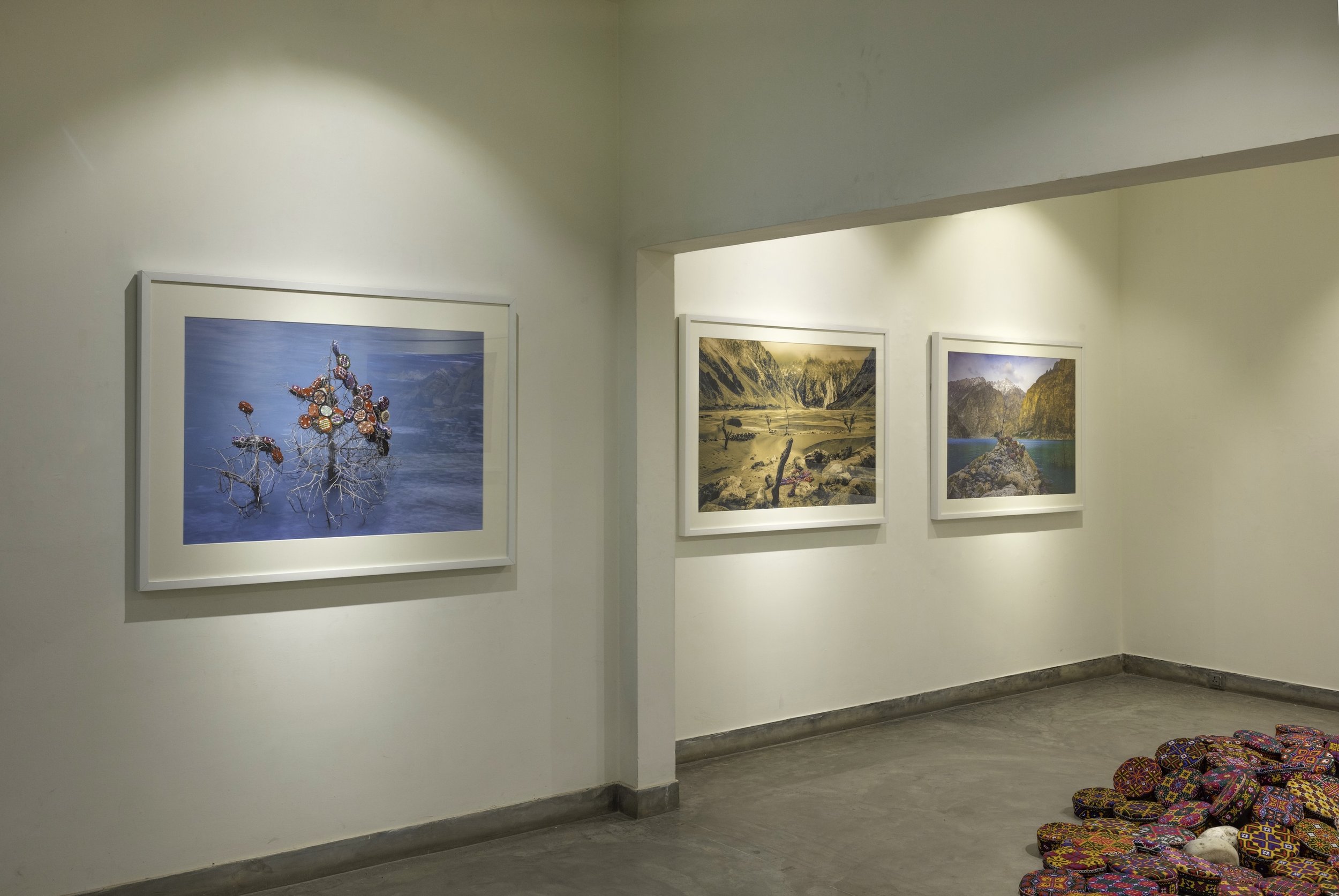
Acts of Disappearance is a reckoning with landscapes of displacement. A tribute to women’s labor. An honoring of the earth as a source of our sustenance: spiritual, material, embodied. An offering; a song of survival, rising, and becoming. Acts of Disappearance illustrates how marginalized communities bear a disproportionate brunt of climate disaster. Gilgit-Baltistan, home to highest mountains and longest glaciers outside polar regions, is Pakistan’s most ethnically diverse region. The 2010 massive landslide buried Attabad village, formed a desert of sand dunes and the Attabad Lake, and led to a loss of life-ways. Now populated by resorts as the area’s biggest tourist attraction, the displaced Attabad people were forgotten, here evoked by Hunza caps. “Disappearance” refers to the disappearing ecological system in the face of climate disaster, disappearances of activists who protest for social justice. Disappearance of indigenous bodies and of labor. Site-responsive installations of Hunza caps call attention to environmental destruction and displacement, while honoring women’s craft. Women's embroidered caps mark sites of disappearance while reclaiming them, their presence persisting through their craft placed in the landscape where communities were displaced.
Curatorial Statement by Naazish Ata-ullah
In Sarah Ahmad's Alchemy of Becoming, vast landscapes are not simply recorded but transformed. Ahmad takes fragments of these environments, selecting, cutting, editing, moving them through stages of transmutation.
The spine of this work is her own experience: taking fragments and piecing them together, pieces of trauma and displacement of a life not rooted in any one place. The cutting and piecing together of fragments mirrors this, a fragmented existence transformed into new structures. This is not detachment but a journey. Rebuilding from wreckage.
Ahmad's research happens through direct experience of the landscape, walking, hiking, and being in nature. She witnesses both renewal and destruction, the healing power of the land alongside scars of extraction and displacement. The landscapes of Gilgit, of Oklahoma and New Mexico in the rural parts of the United States, have been inspirational and even nurturing. There is a quietness to these places, something that finds expression in the fragments themselves. One senses the spiritual energy connecting us.
Within these immense landscapes, the only indication of human presence is the caps in the Hunza landscape. Women's caps. An essential reference, a sensual reference. Ahmad has not created a pictorial depiction of human presence; rather these images of caps made by women, caps that they actually wear, provide a spiritual connection between the makers and the land where they live. The people who made them remain unpictured, yet present. The caps assert human presence without depicting it.
Alchemy of Becoming exposes the vastness of these landscapes, the visceral experience of them. The depth of Ahmad's encounter lives in the work, its resonance carried into everything she creates. Each work is an iteration, the same source yielding something different in each configuration.
Transformation as ongoing practice.
Statement by Salima Hashmi
Sarah Ahmad's work emerges from multiple responses to physical realities, to different kinds of terrain. The terrain she belonged to here, and yet another terrain she also belongs to. She has inhabited multiple terrains, and her responses to each are distinct.
The works from Hunza engage with displacement, not only her own, which is always present as one of the things that induces the work, but the displacement that communities have experienced. She has found an affinity with them because of her own displacement. Something emerges from this shared experience.
It is an imagining, a kind of dreaming that incorporates the hopes of the communities. The laser process carries a certain physicality in the way it behaves, reminiscent of what happens to surfaces and terrains brutalized by human interaction.
There is an overriding allegiance to pattern. Patterns occur and re-occur in very different ways, an infinity of mark-making. This allegiance to pattern is almost in her DNA. It comes from our heritage, from experience, whether embroidery, tile, or the clothes one chooses. This is an underlying layer present in most of the work.
In this particular Becoming, Ahmad has placed different occurrences side by side. The work with the laser etchings is still in-process, experimenting, discovering what a particular tool can do for mark-making. It heralds the next stage, yet remains linked to everything before. One can trace it back to her first show, working in very different mediums and manner, drawing influence and discovery from different physical experiences, different interactions, in a totally different part of the country, a different environment. This is the spine.
© 2025 Sarah Ahmad. No content on this site may be used without permission. All Rights Reserved.