
“The day that has been promised”
(kafala narratives, nature gap & a place of belonging)
2023-2026
work in progress
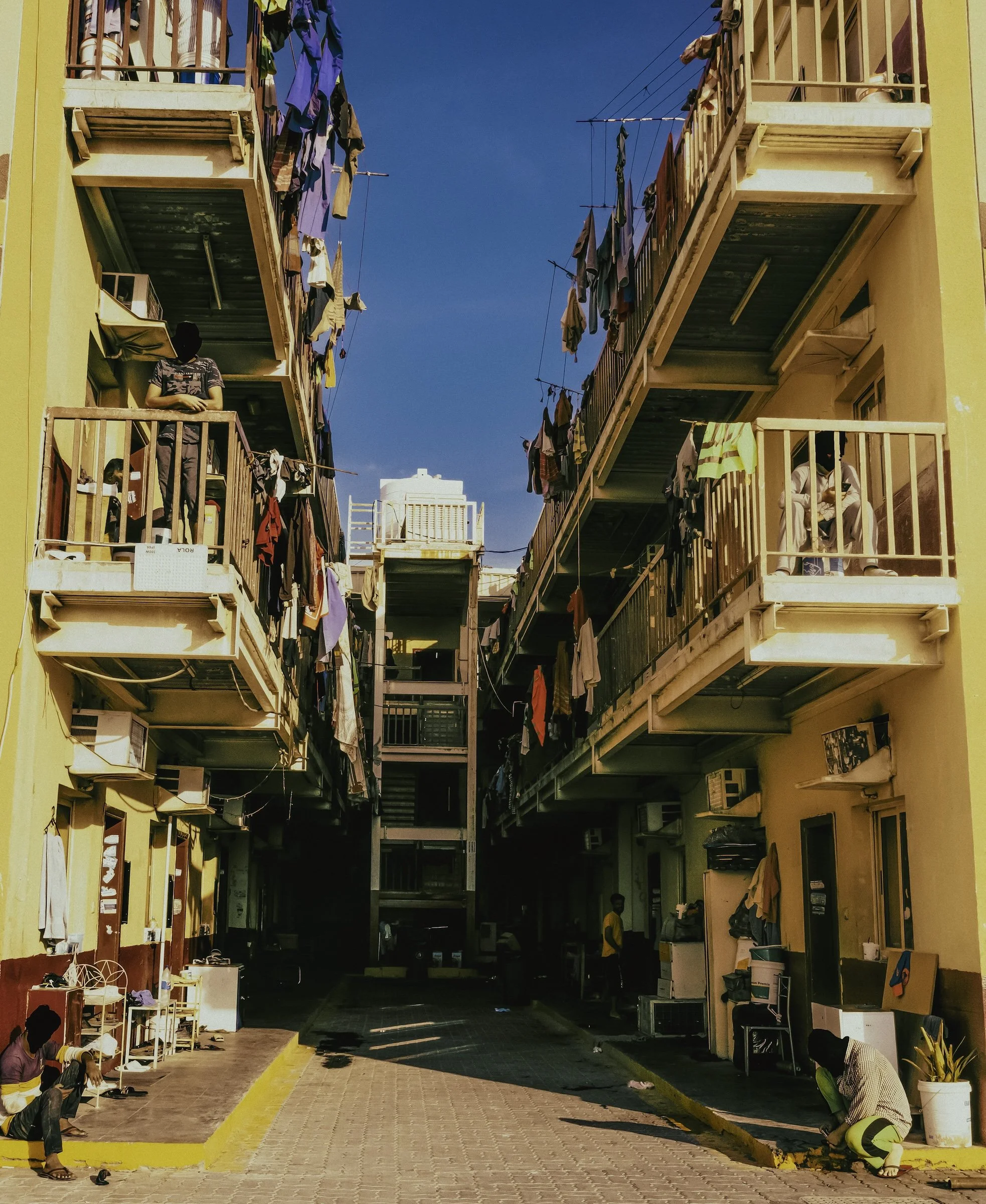
Dubai archives— photo collage, 22 x 252 in.
Doha archives— photo collage, 22 x 252 x in.
“The day that has been promised”
(kafala narratives, nature gap & a place of belonging)
"The Day Promised" grew out of stories I heard in Pakistan of Pakistani workers in Persian Gulf states, especially Dubai and Doha, packed into cramped rooms, burdened by crushing recruitment debts, some deceived by agents who disappeared with their life savings.
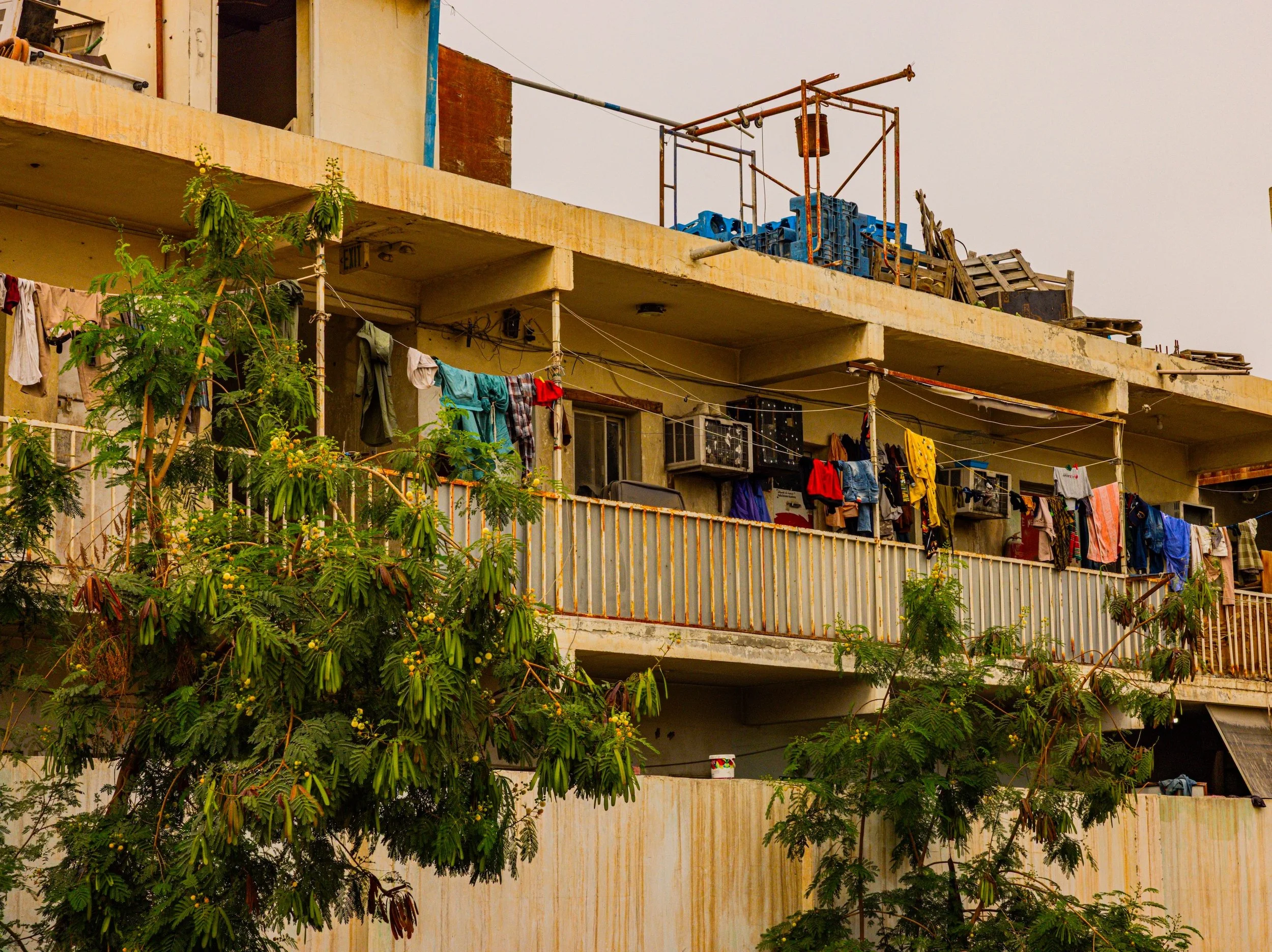
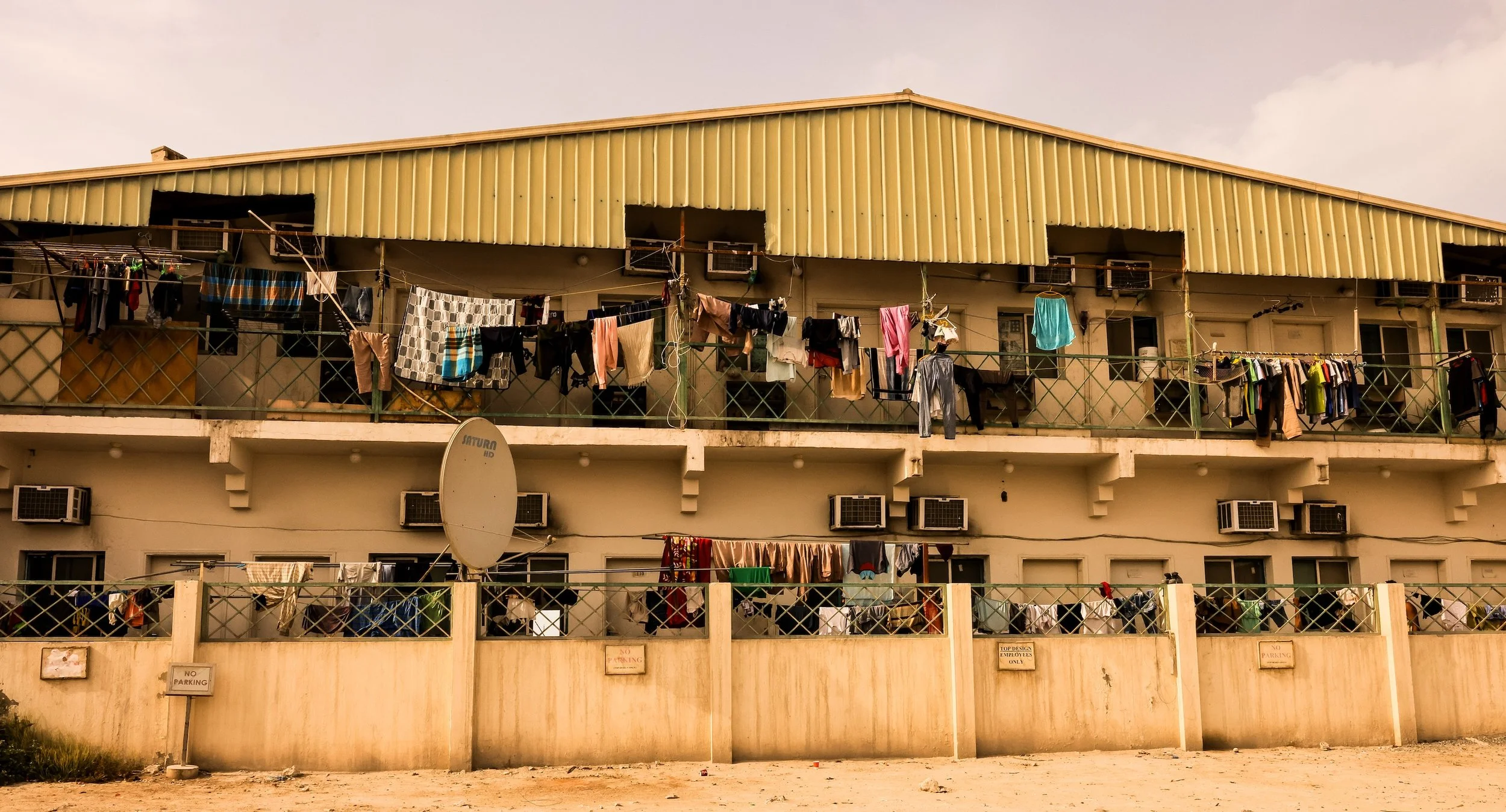
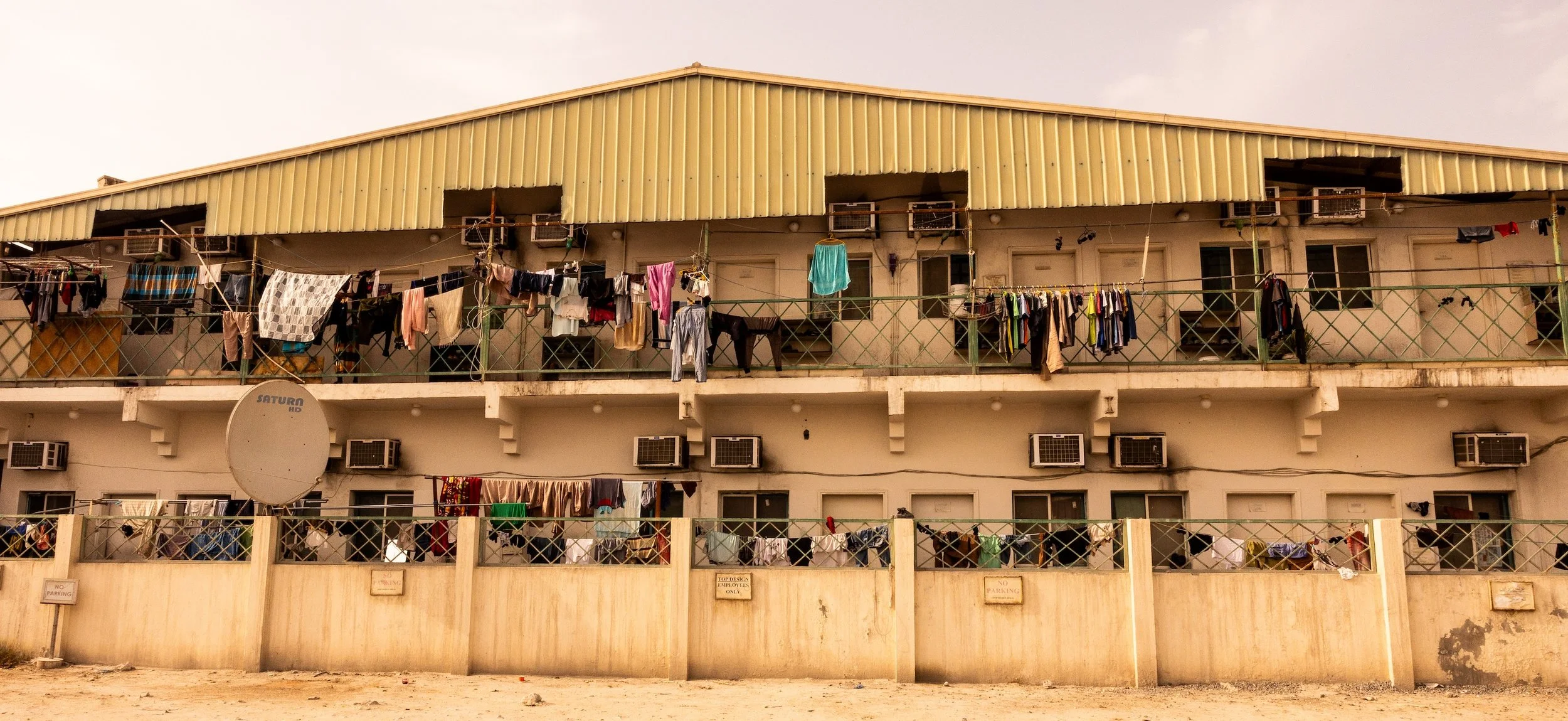
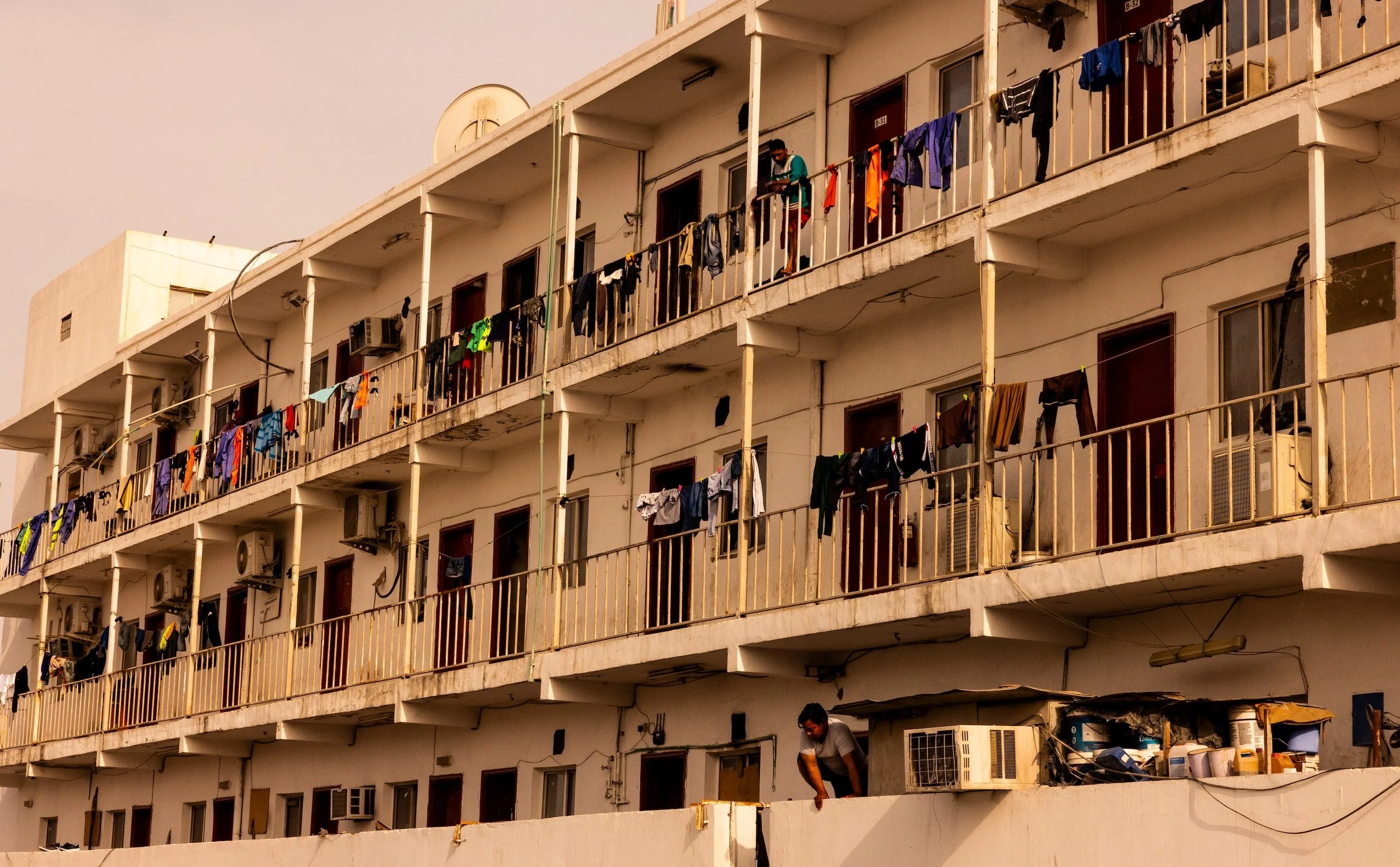
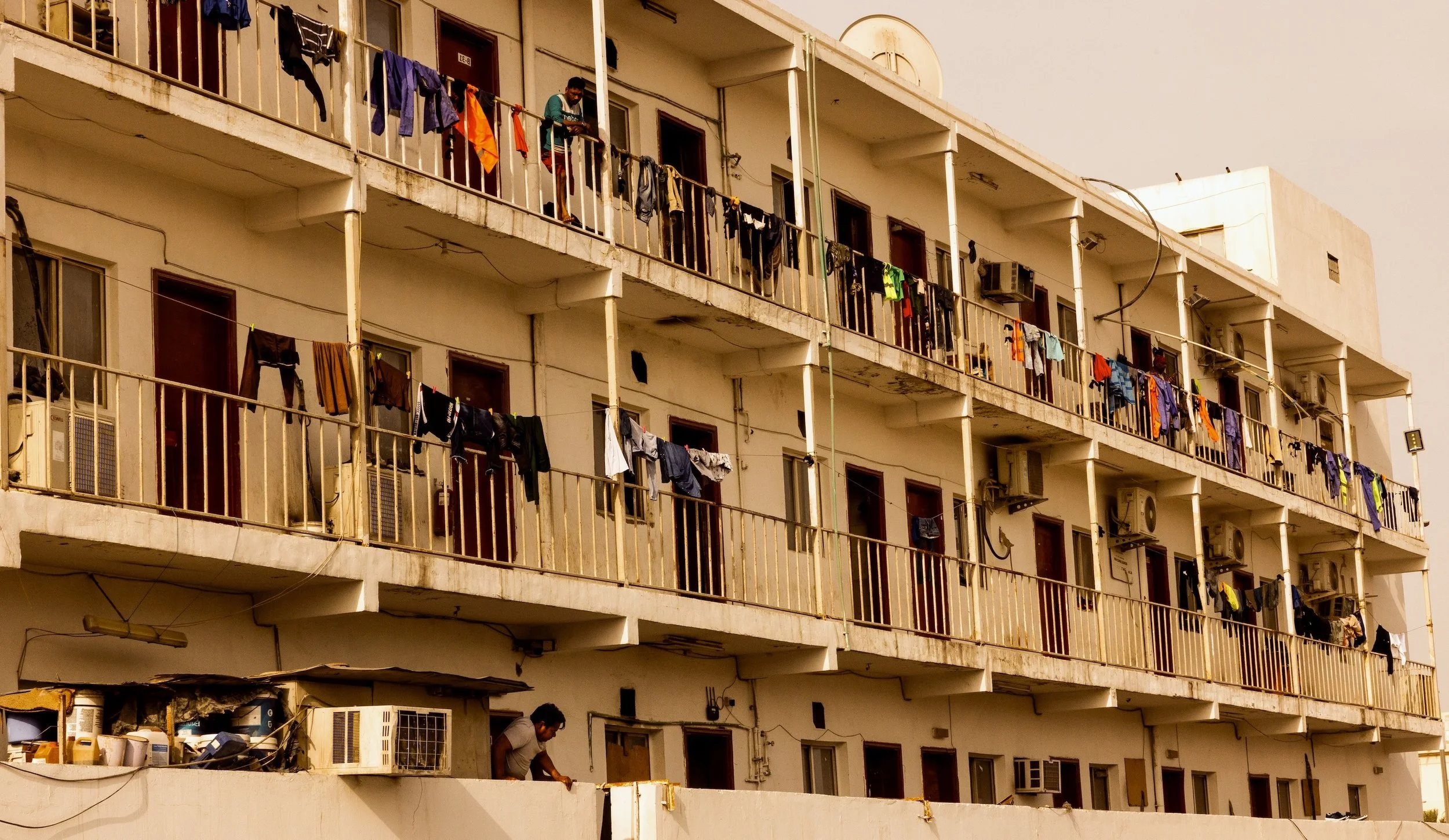
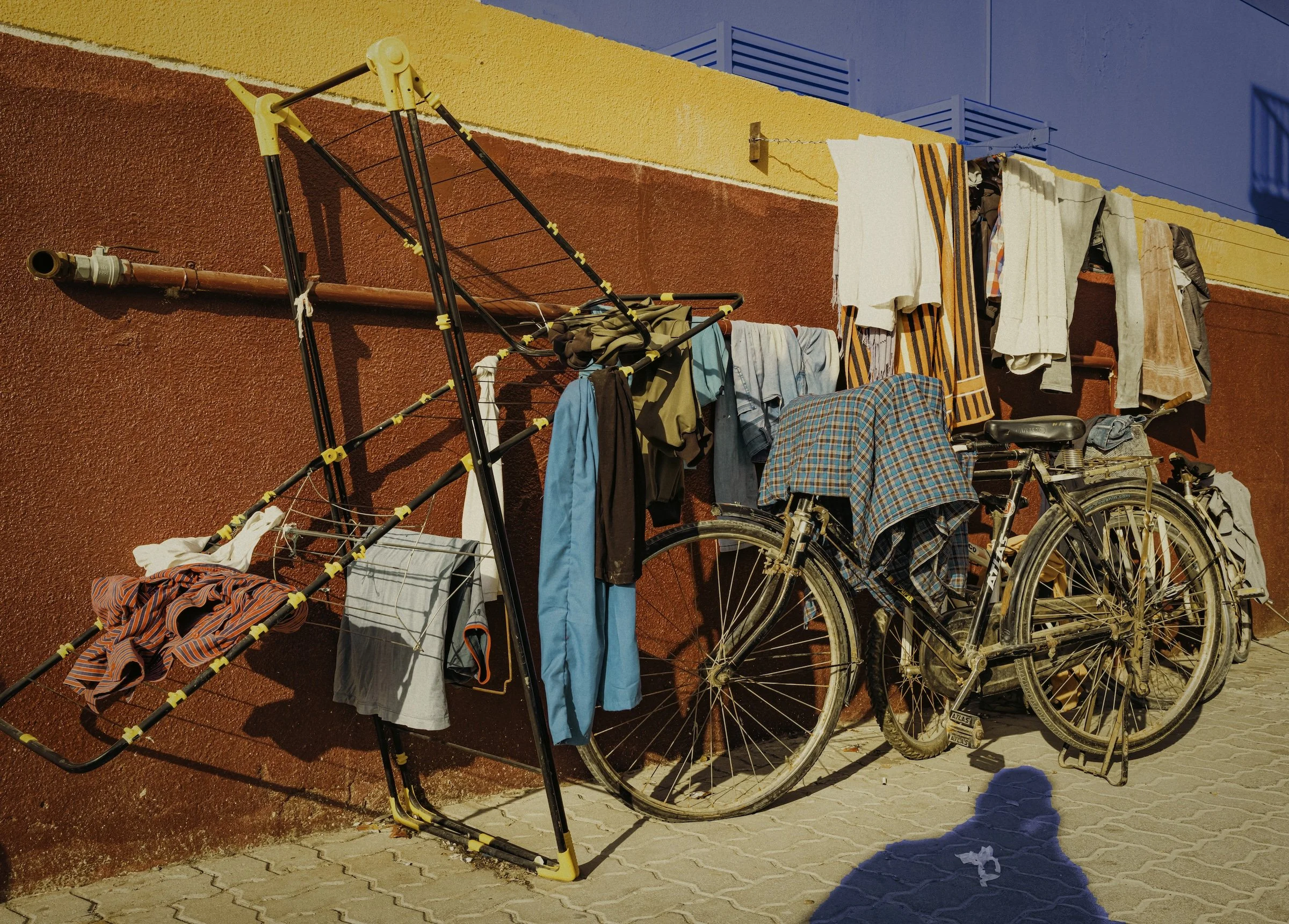
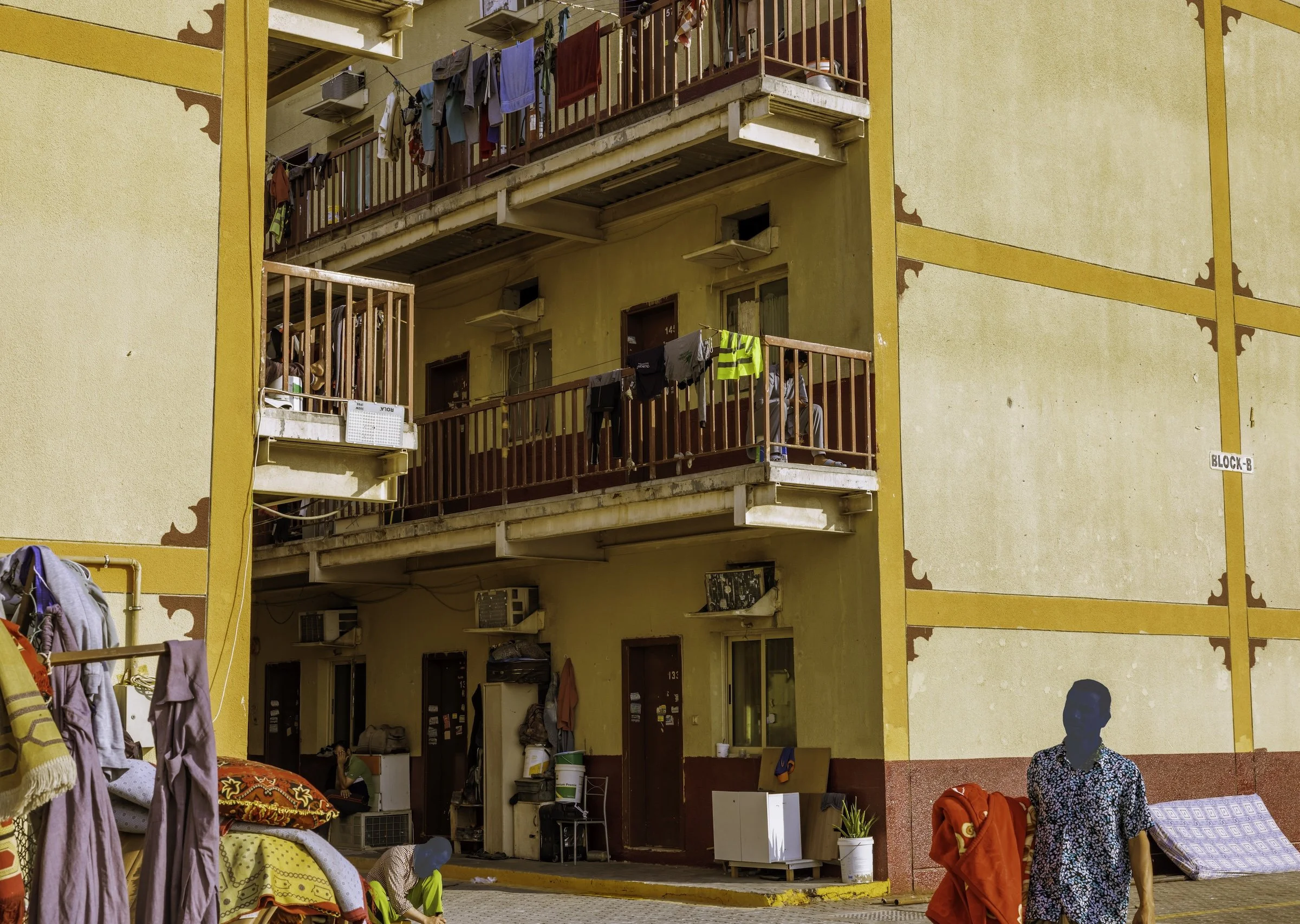
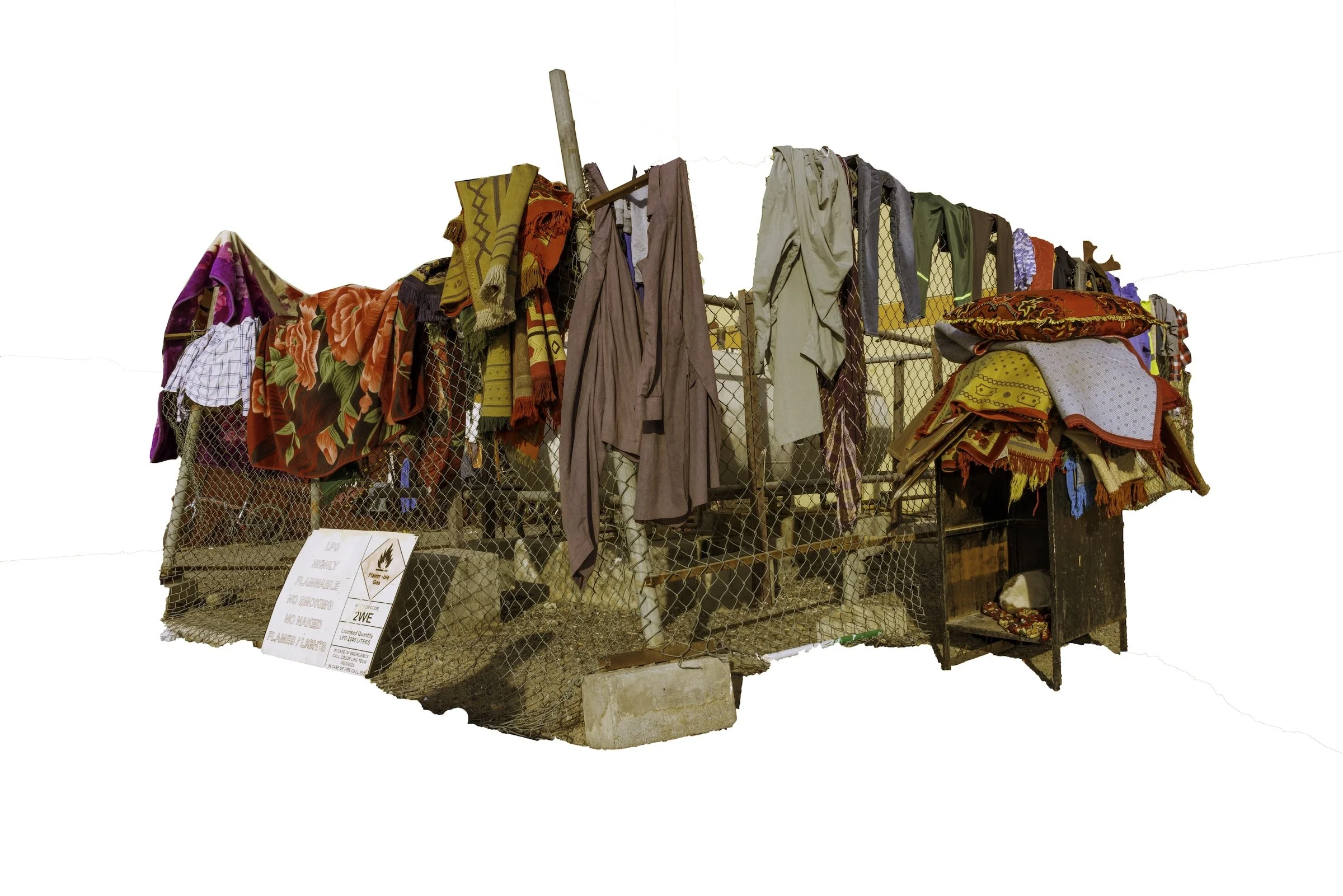
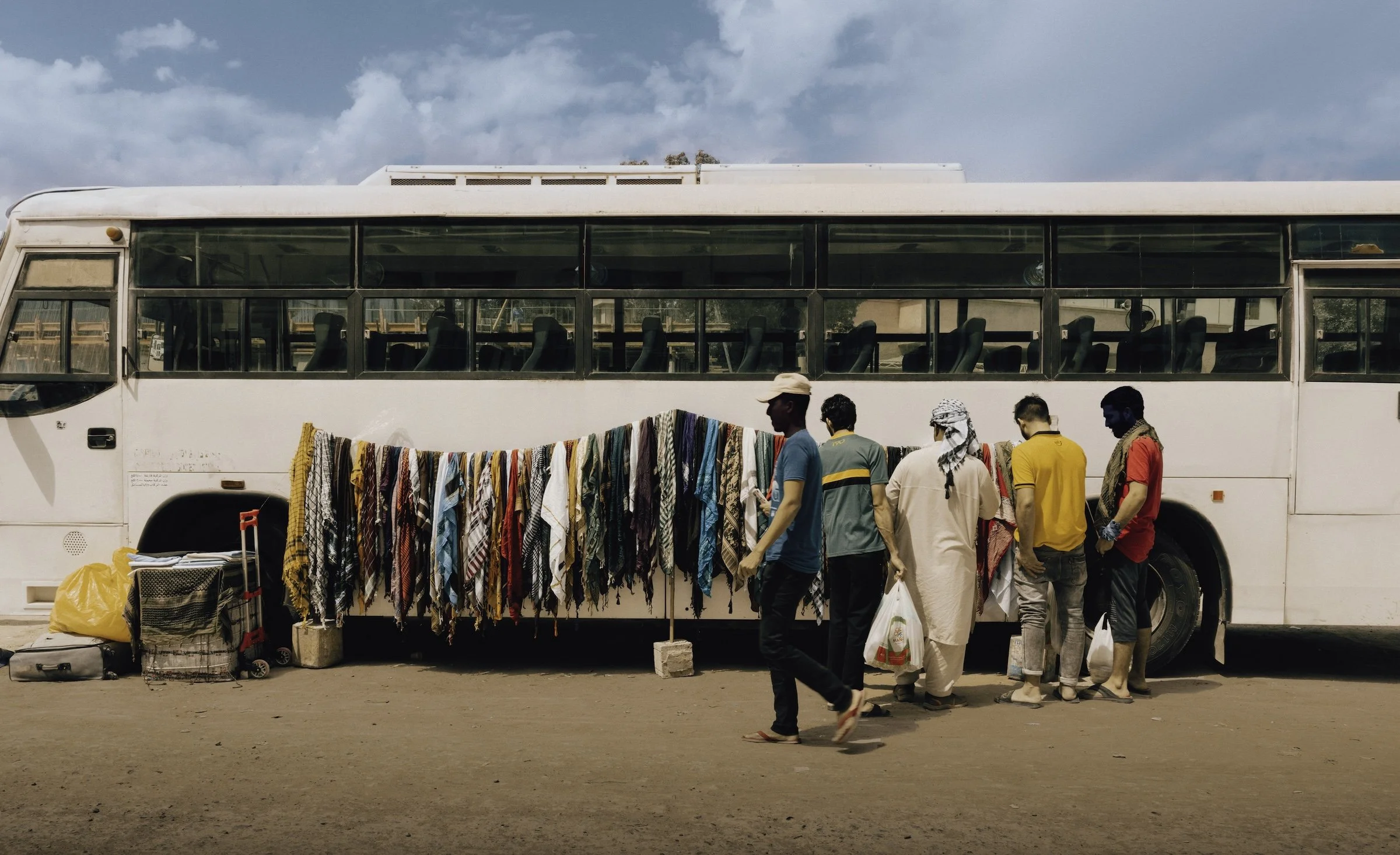
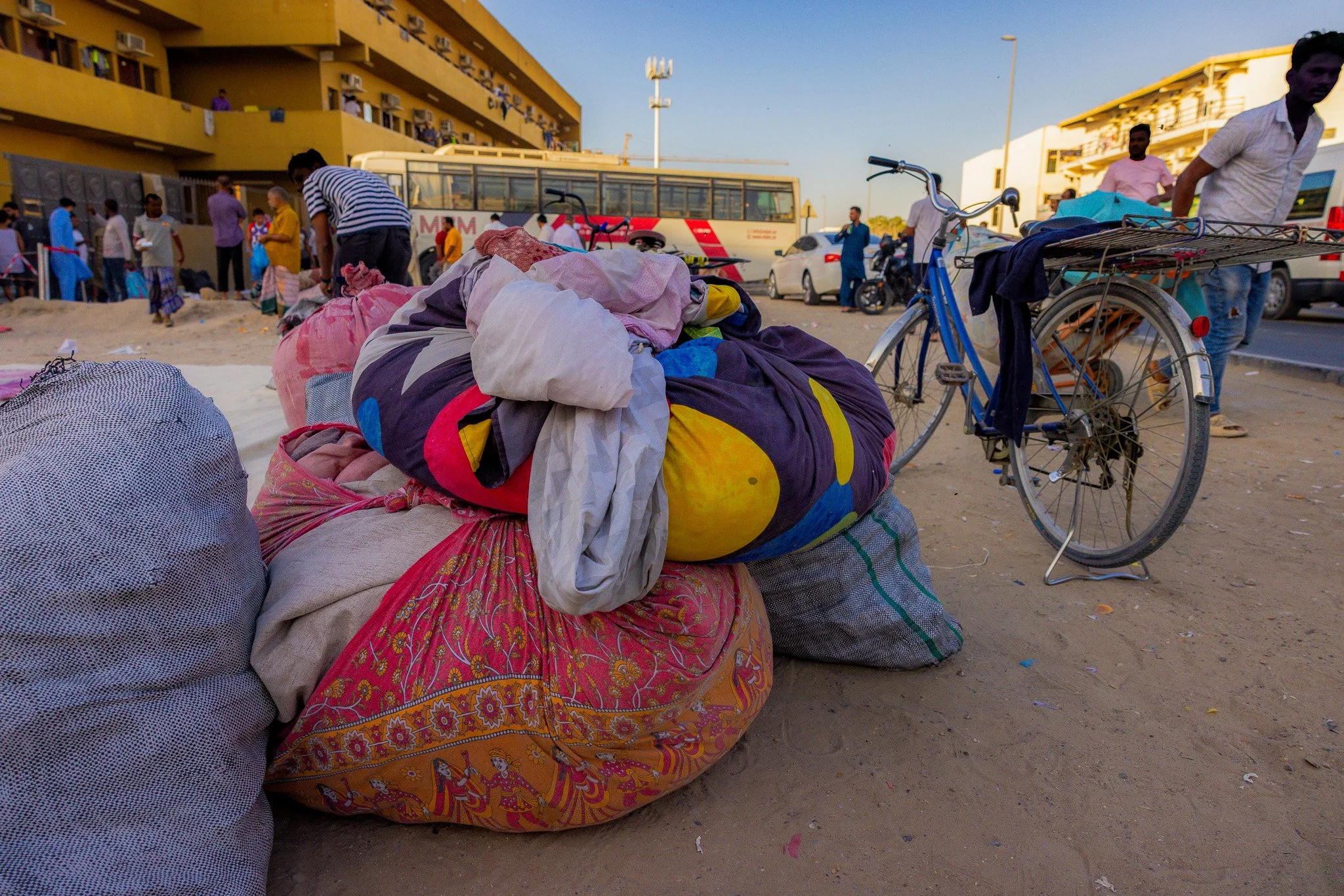
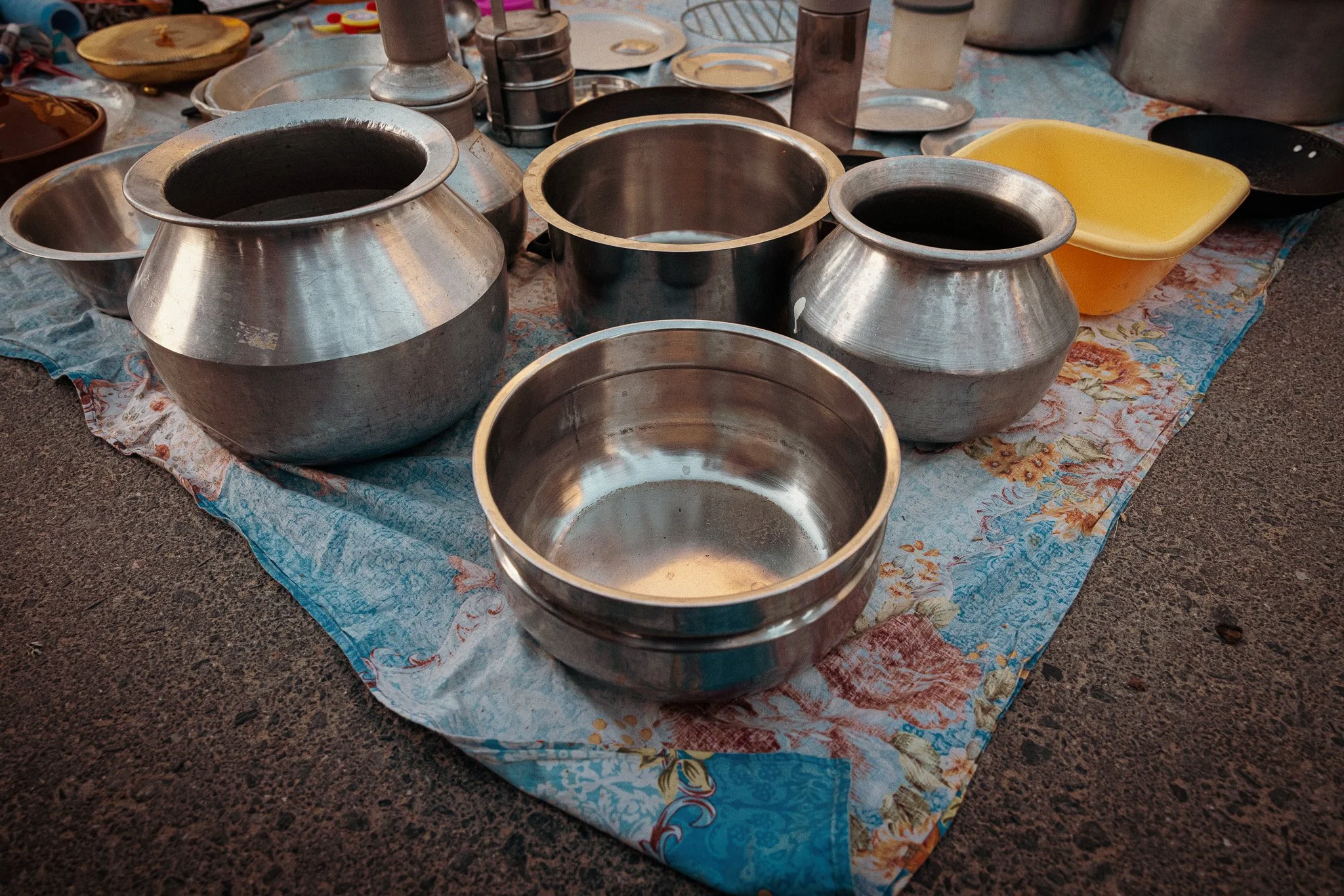
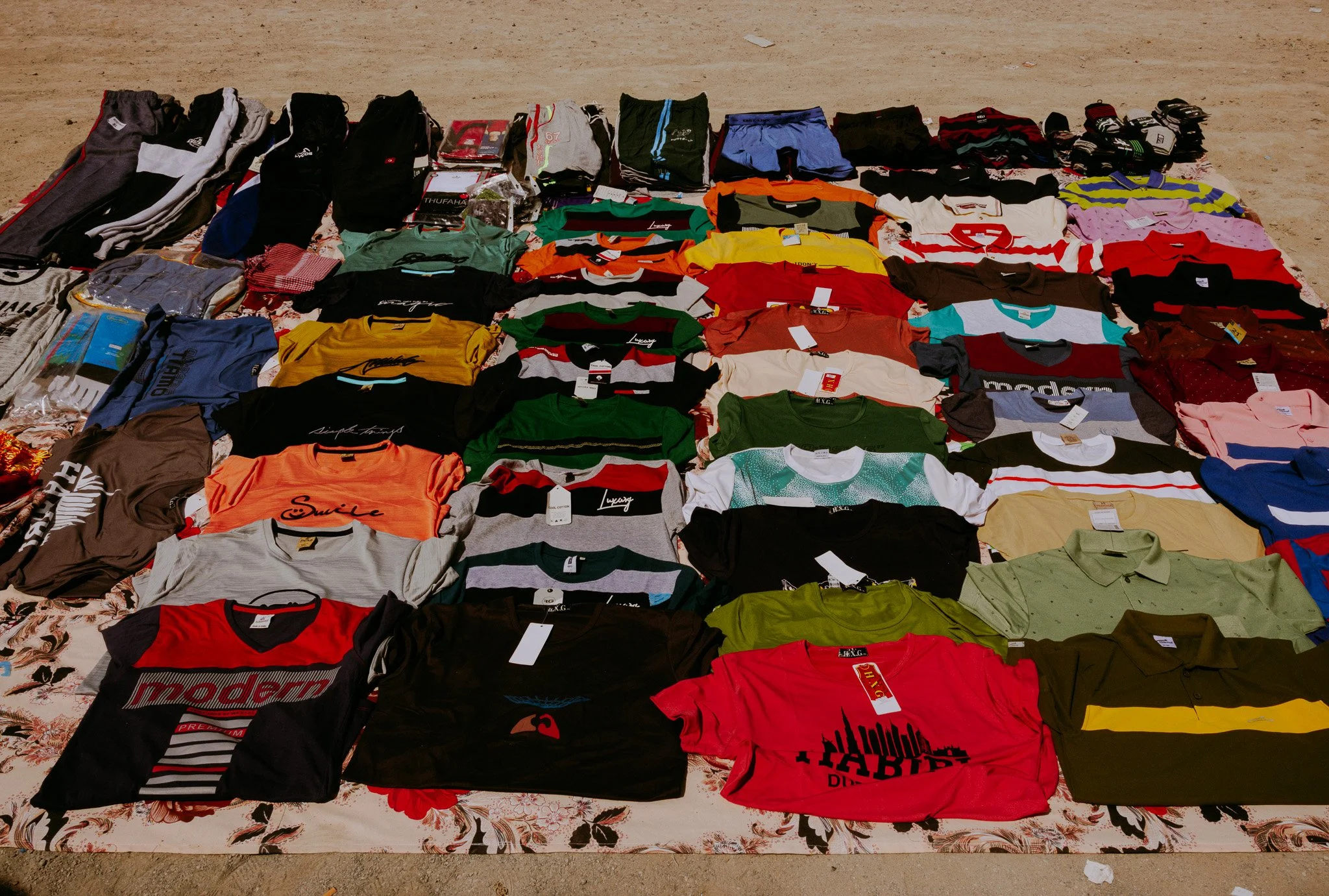
In 2023, I documented through photography and video, living conditions and lives of migrant laborers in Dubai and Doha, recording conversations with them. I documented snippets of their lives: weekend soccer games on makeshift fields, shopping at improvised roadside bazaars, laundry and clothing cascading from balconies in vertical neighborhoods where not a single woman is visible—reminders of families left behind. Since majority of the laborers are from South Asia, as a South Asian and Pakistani, shared language and homeland helped me gain limited access to their neighborhoods, allowing me to capture glimpses of their lives and conversations revealing both resilience and vulnerability.
"The day that has been promised" reckons with Gulf States' oppression of migrant workers under the "kafala" system. The title references a famous poem by Pakistani poet Faiz Ahmad Faiz that foresees a day when oppressed people will be freed to become masters of their own destiny. In recent years, Faiz's iconic line has been taken up as a rallying cry among labor movements in South Asia. Long the site of both extractive land and exploitative labor practices, South Asia remains a key recruitment location for “kafala” workers in the Persian Gulf states.
“The day…” is a multimedia project that weaves personal testimonies of South Asian indentured laborers in Dubai, United Arab Emirates, and Doha, Qatar with visual traces of their lived realities. Through collage, drawing, installation, photography, video, audio, and text, it reveals glimpses of hidden neighborhoods, makeshift roadside bazaars, and vernacular landscapes—spaces largely concealed from public view. These are starkly contrasted with the iconic skylines their labor helped construct. Distant glimpses of migrant housing, obscured from the outside world, are juxtaposed with the natural landscape of the region, heightening the tension and disconnect within a layered environment that exposes the contradictions underlying these glamorized urban centers. This immersive setting will be overlaid with personal reflections by those who leave home to labor in foreign lands alongside poetry by authors directly tied to South Asia. The project itself is one of a trio of inter-related works, together with Stories from the Core (Oklahoma, 2022) and Unearthing Stories from the Core (Pakistan, 2023). “The day…” fills a void in the visual arts, centering South Asian migrant workers and positions art as a conduit toward reckoning, reconciliation and healing.
Dubai & Doha Archives
Collages
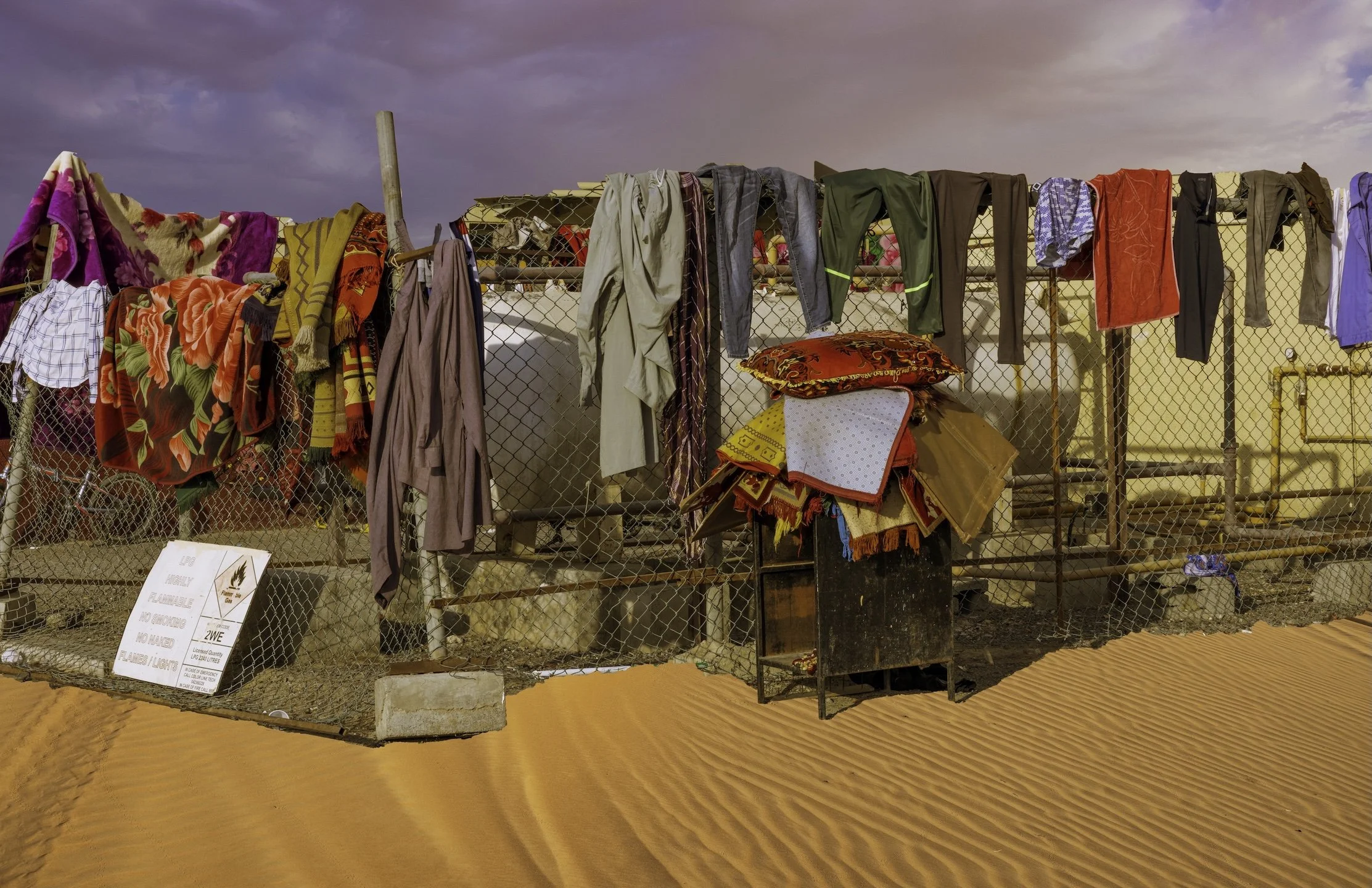
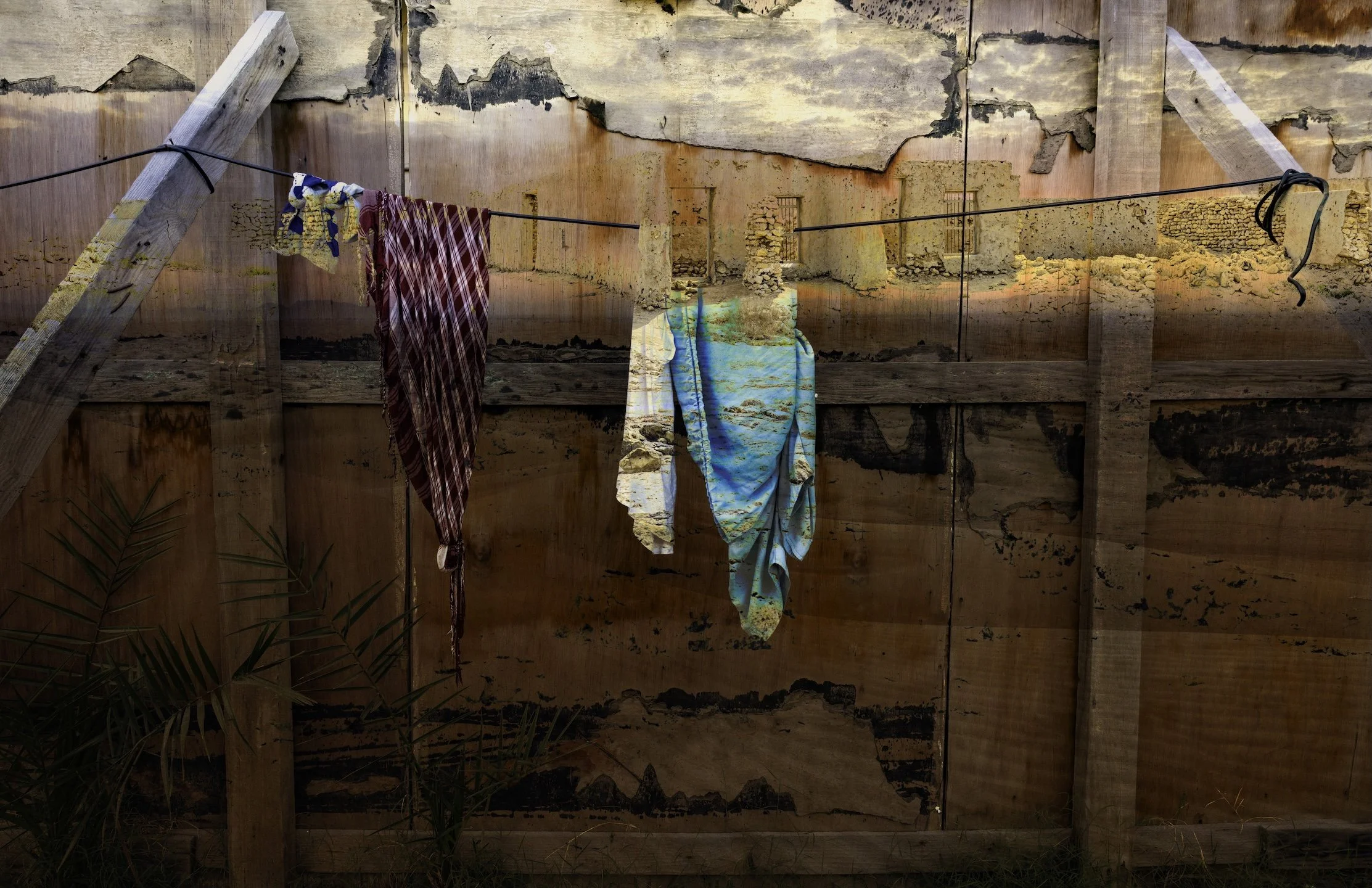
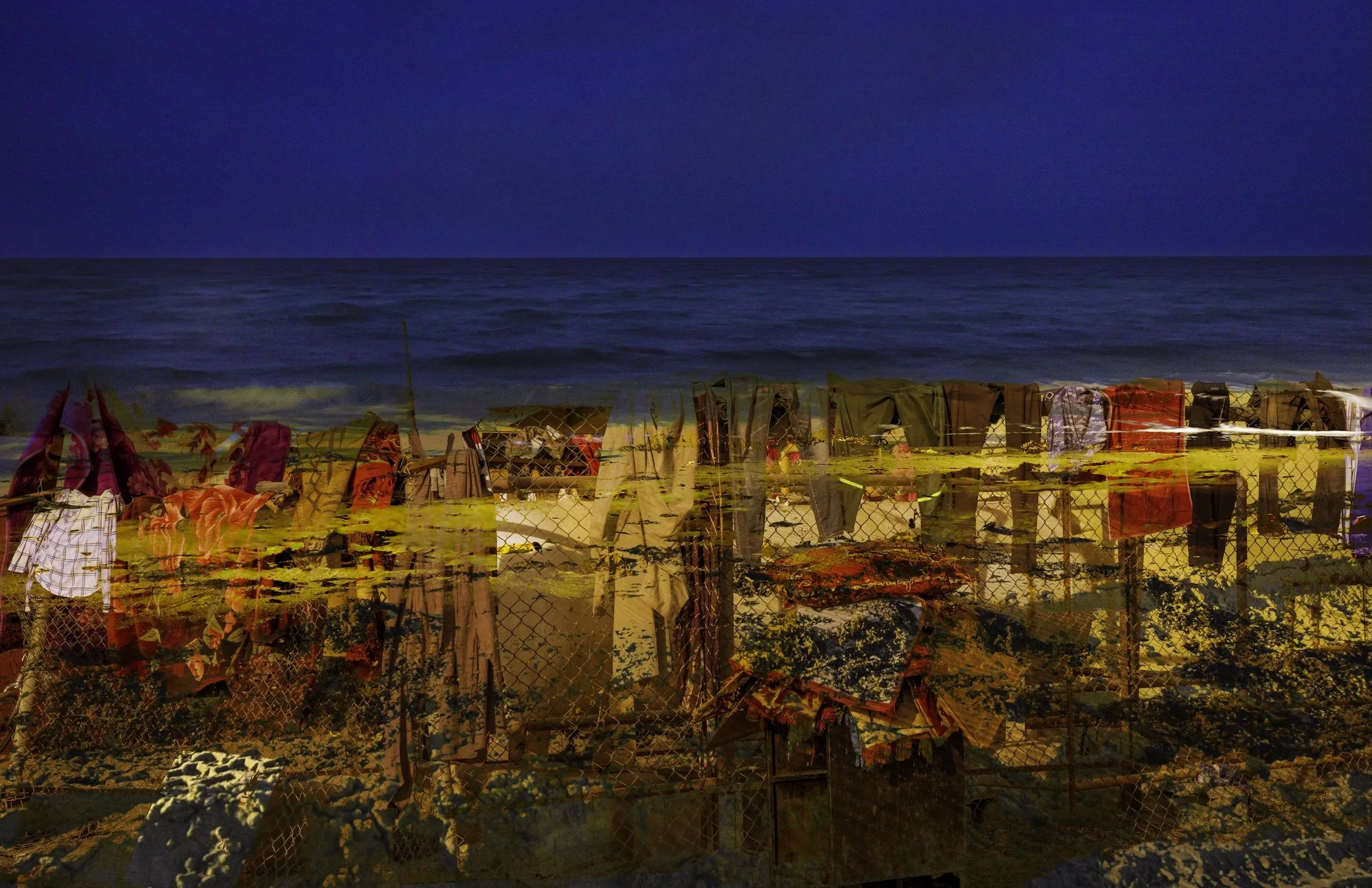
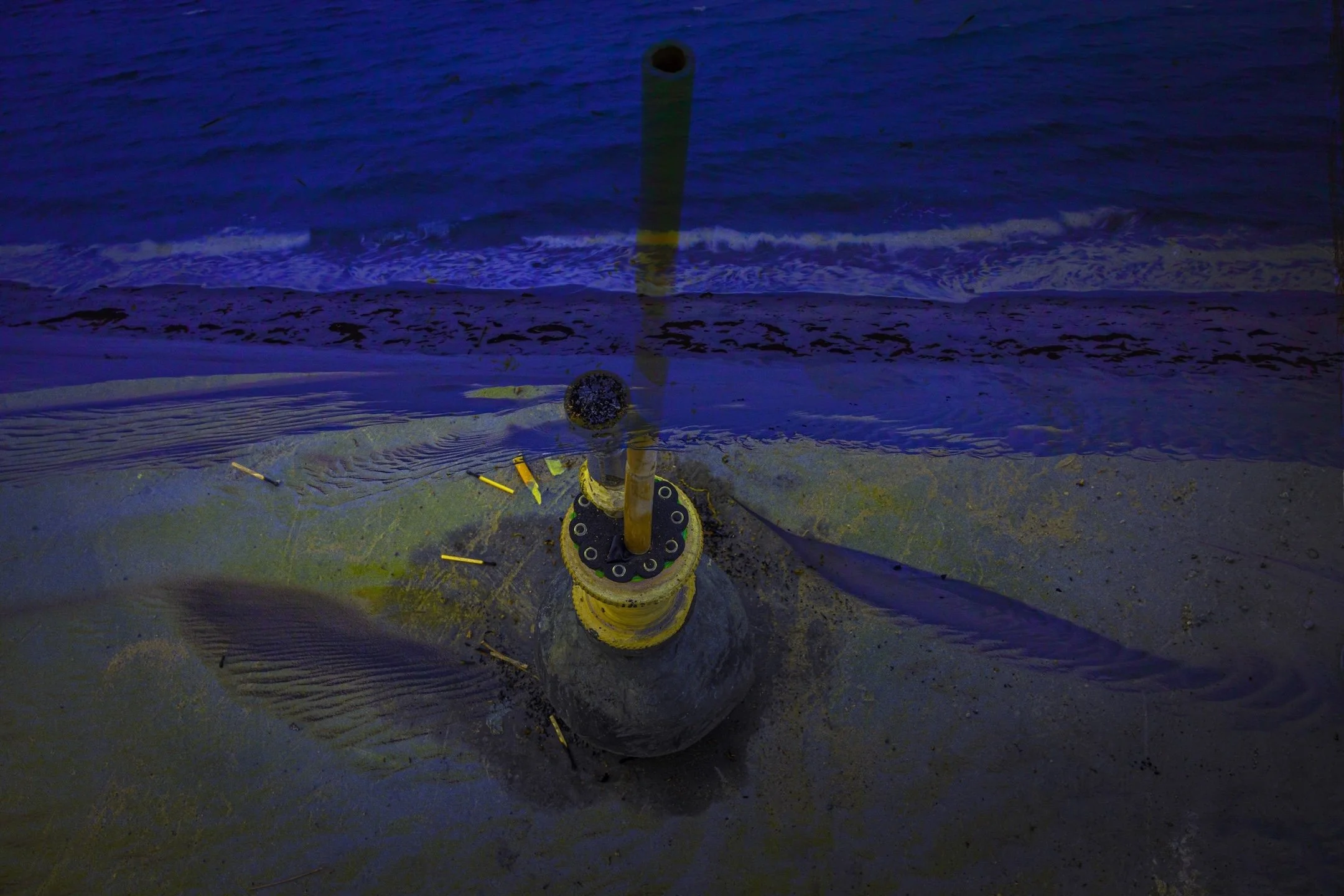
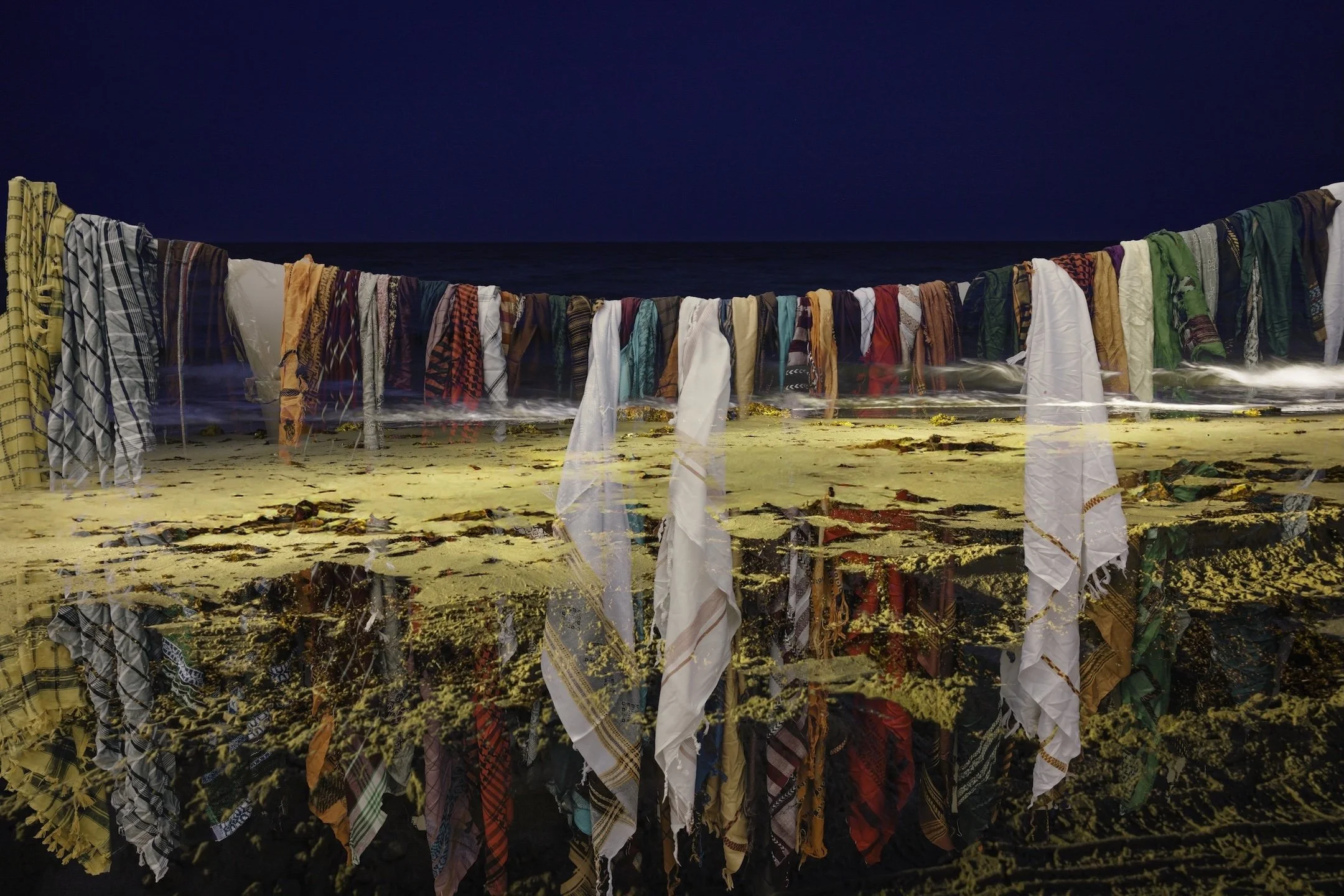
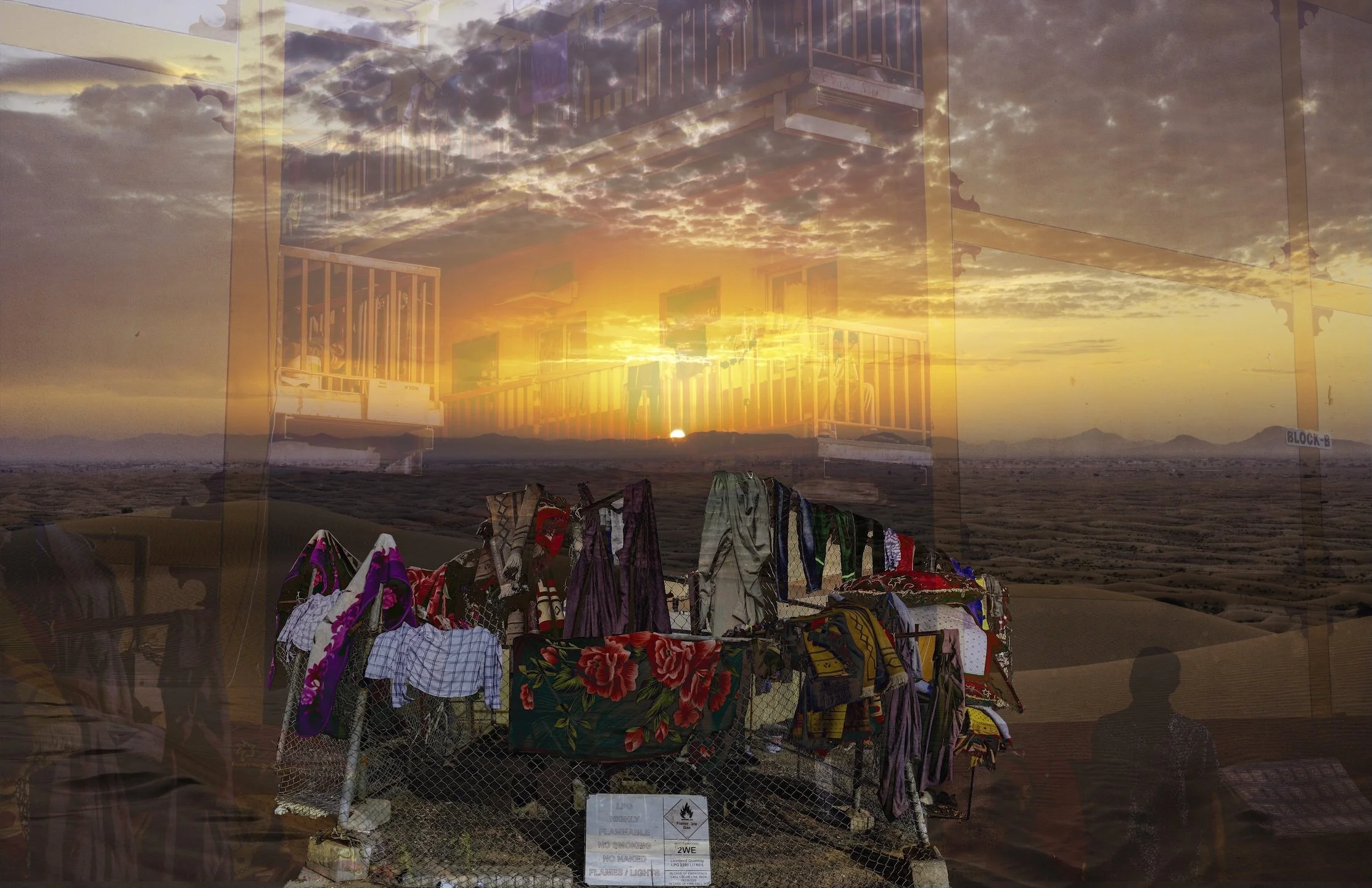
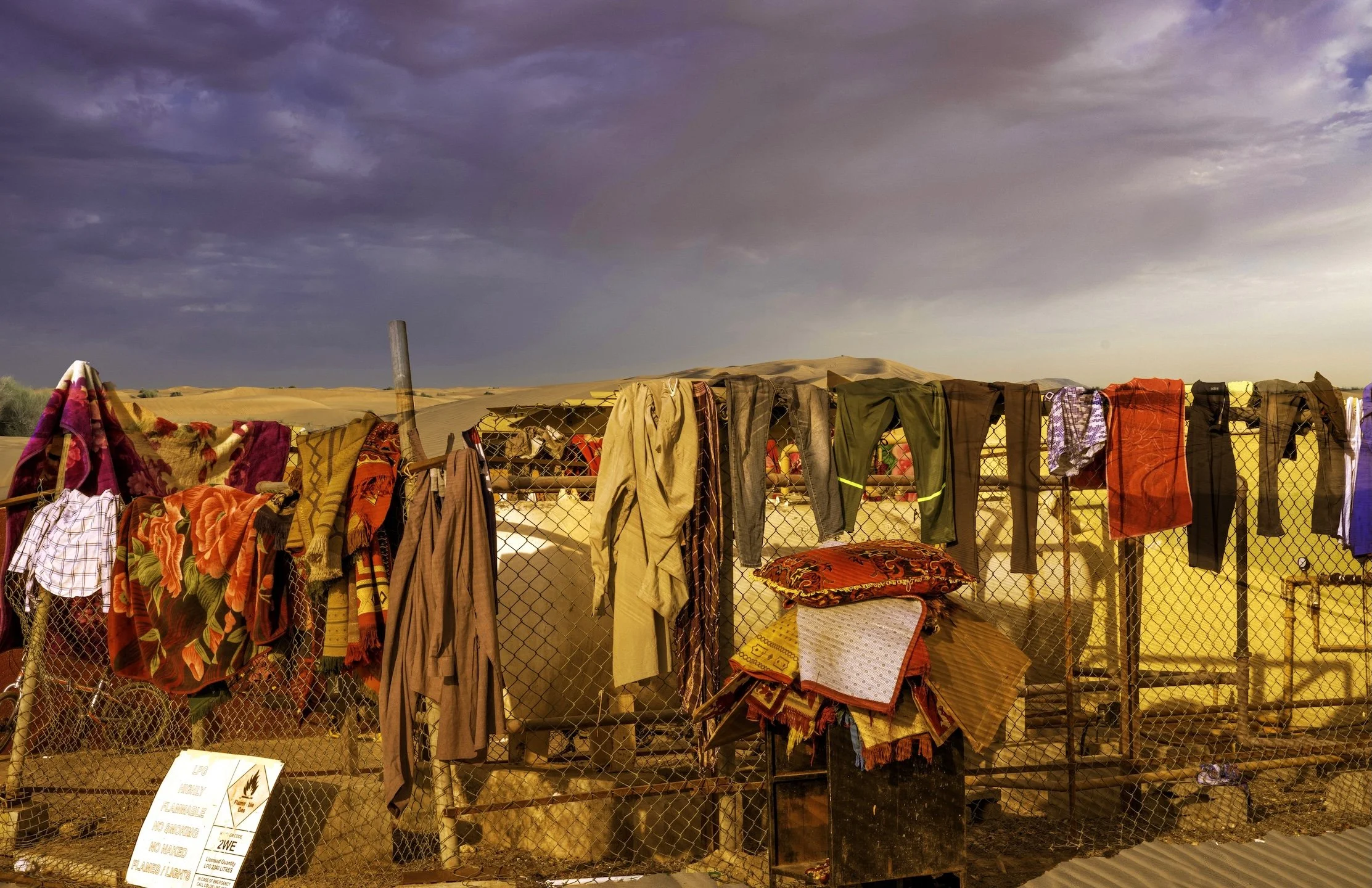
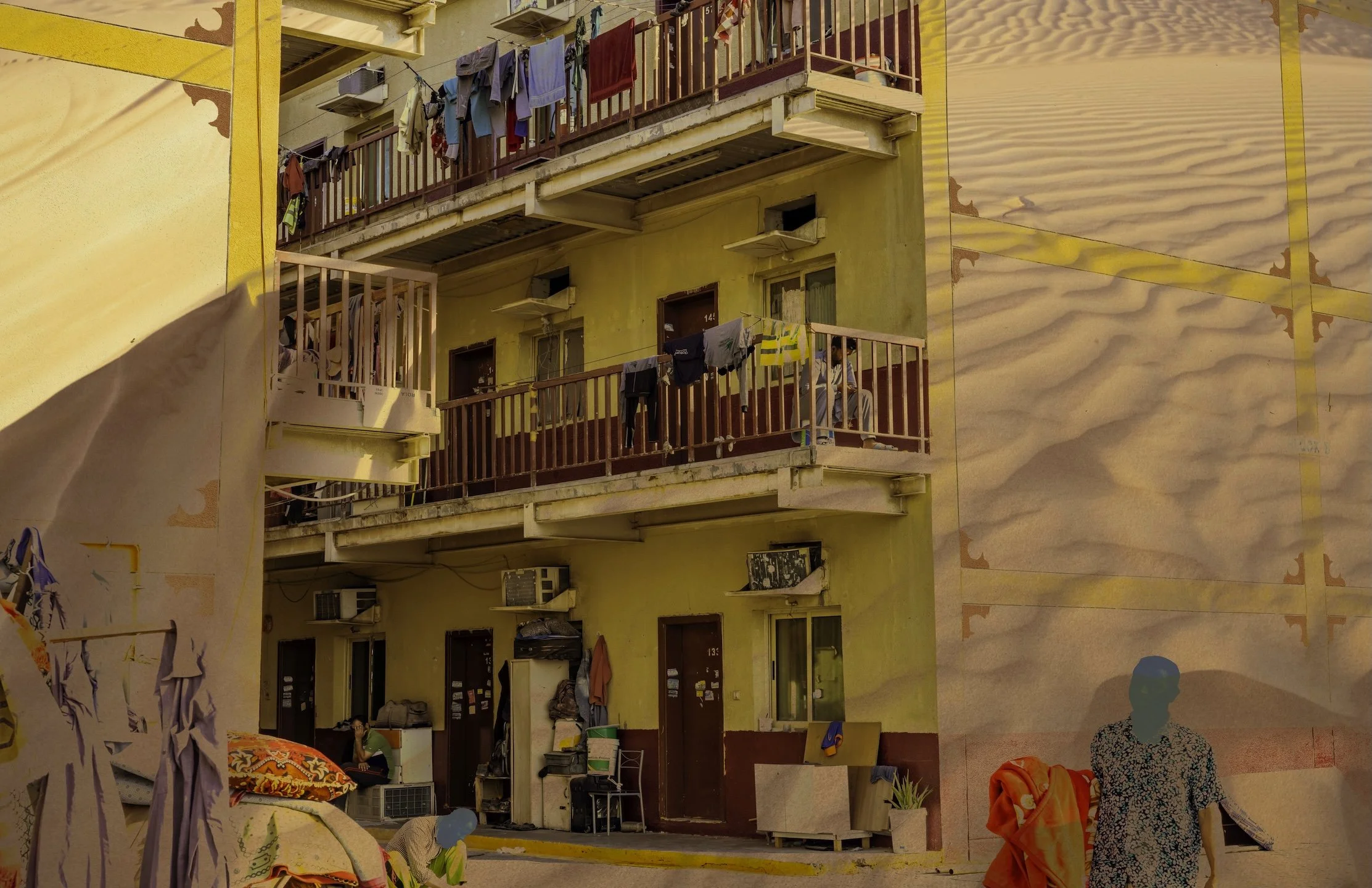
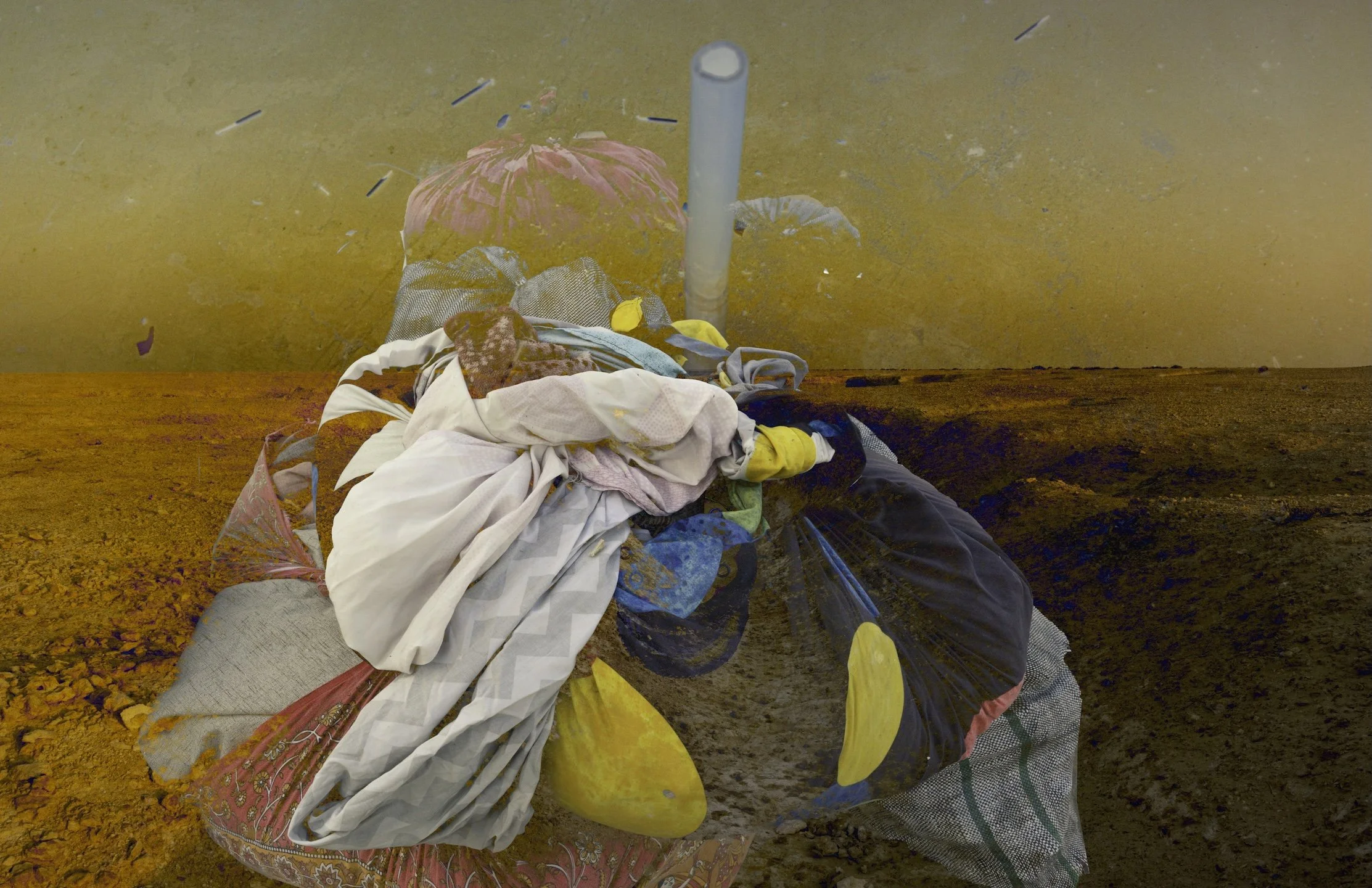
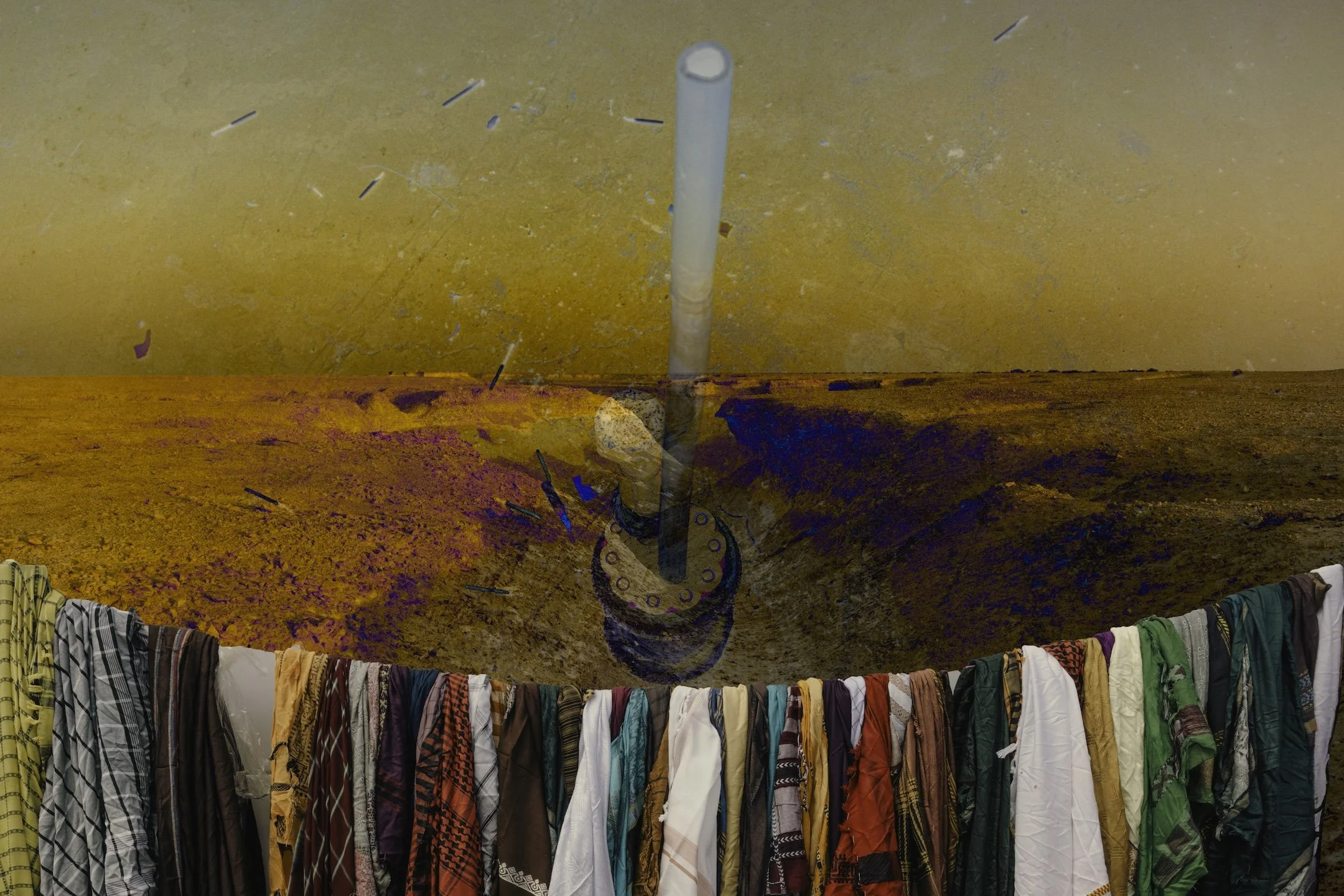
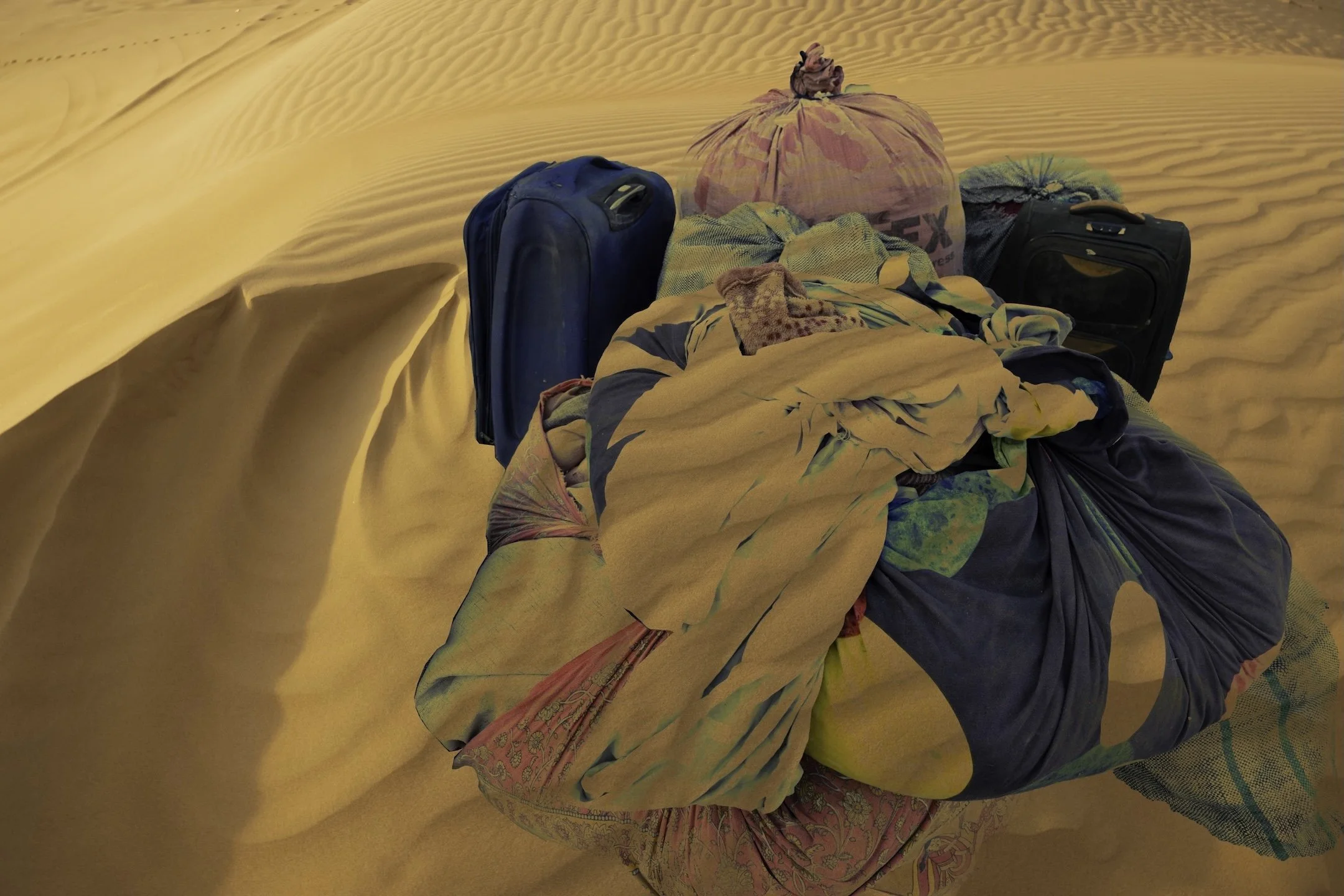
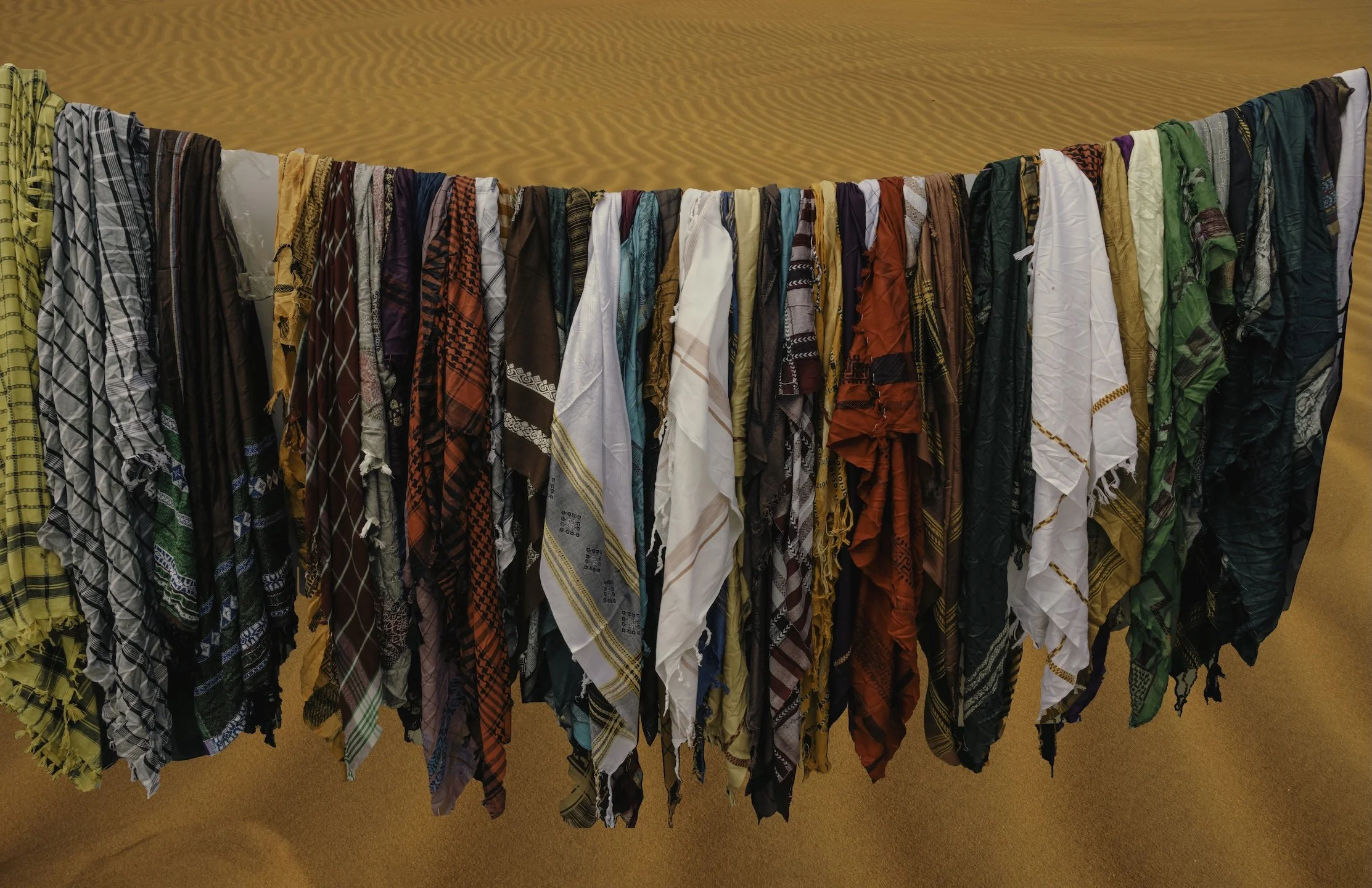
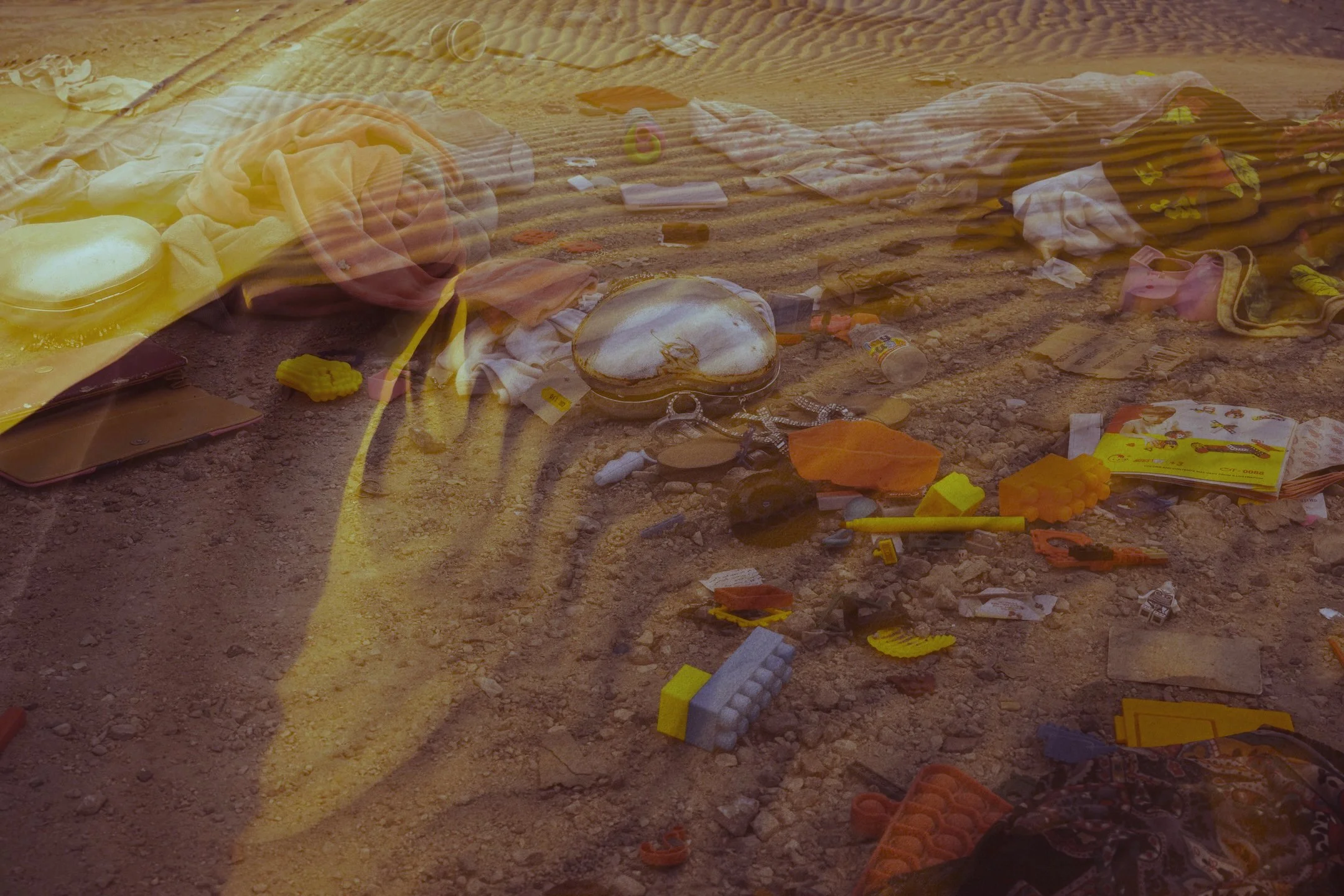
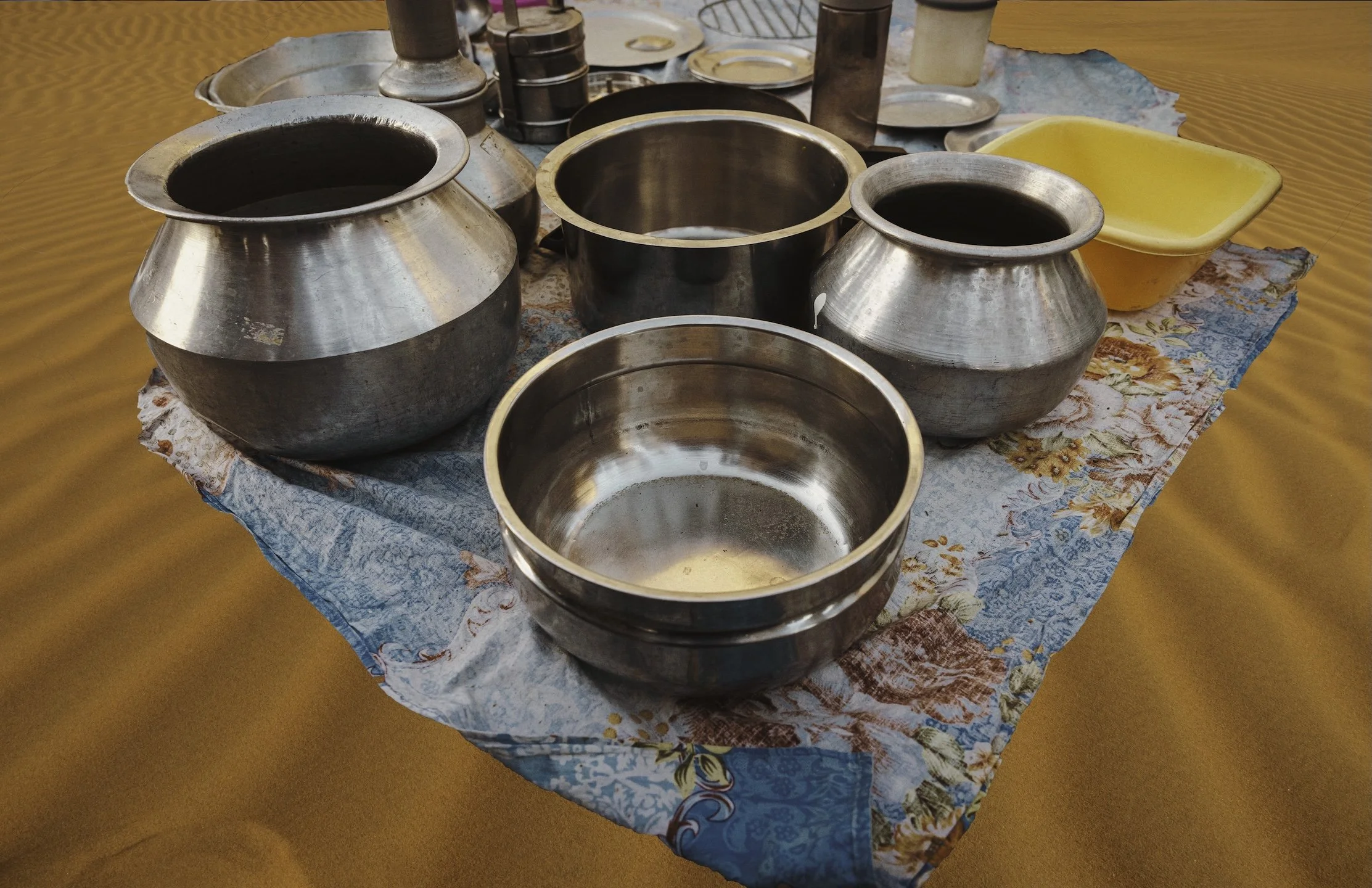
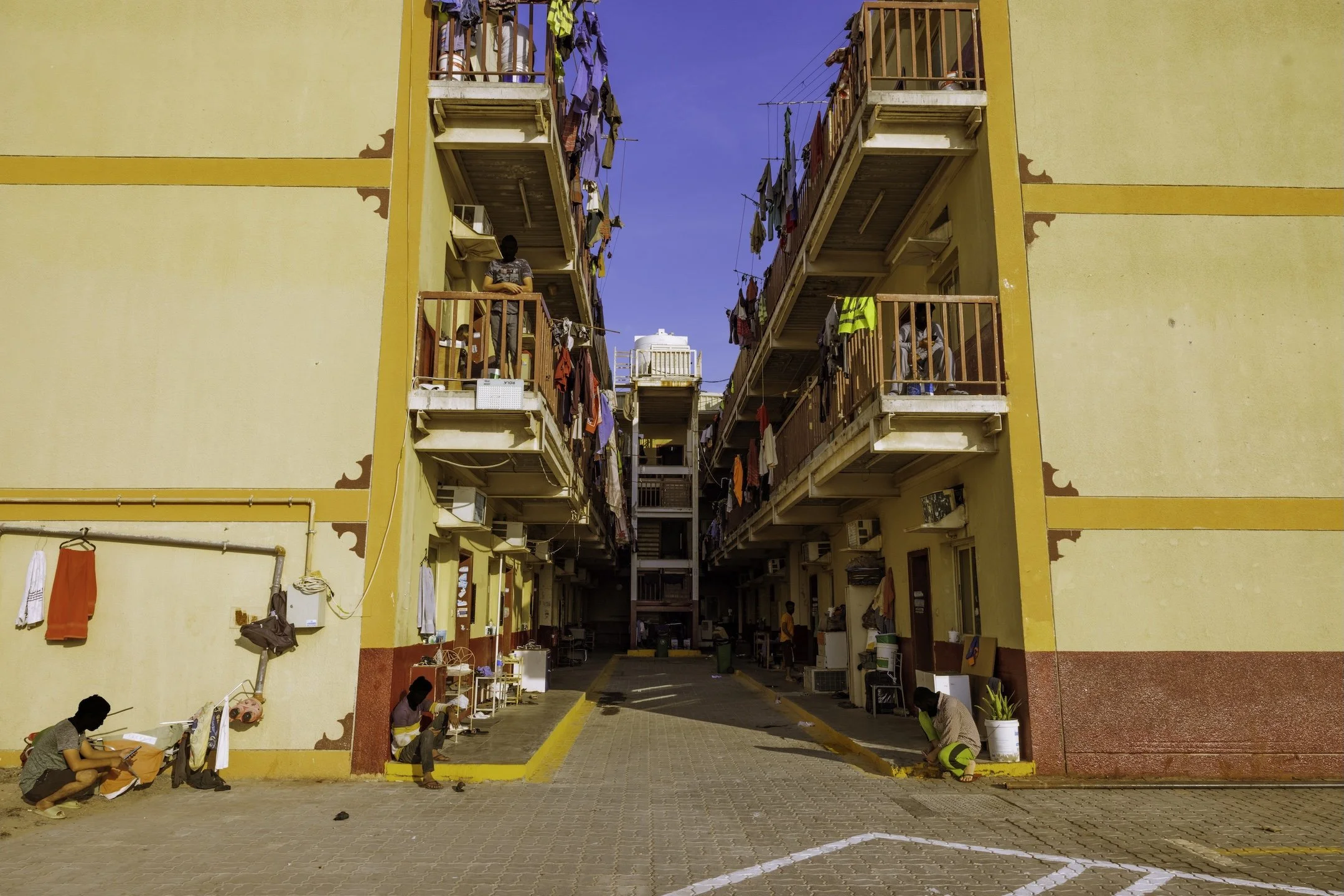
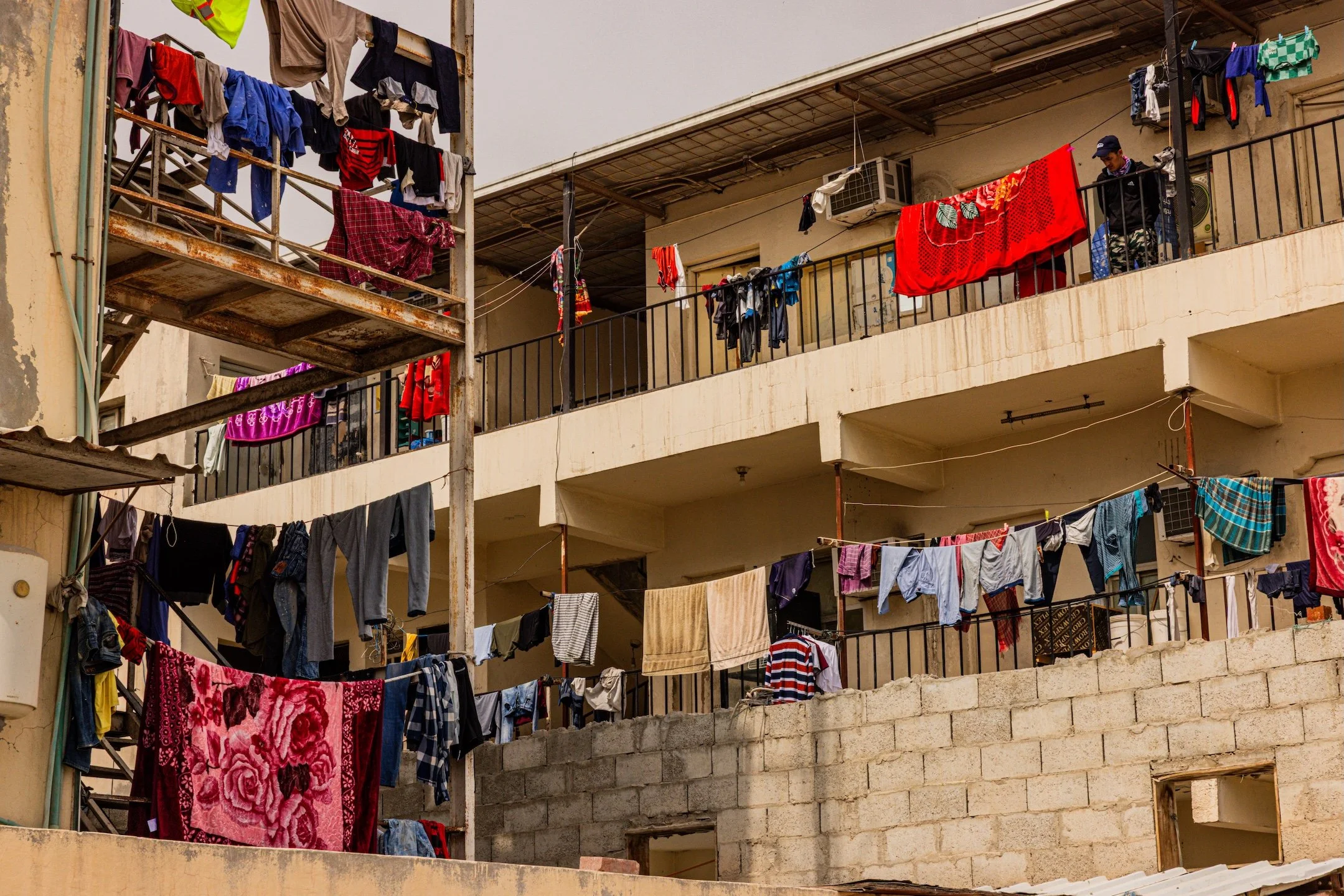

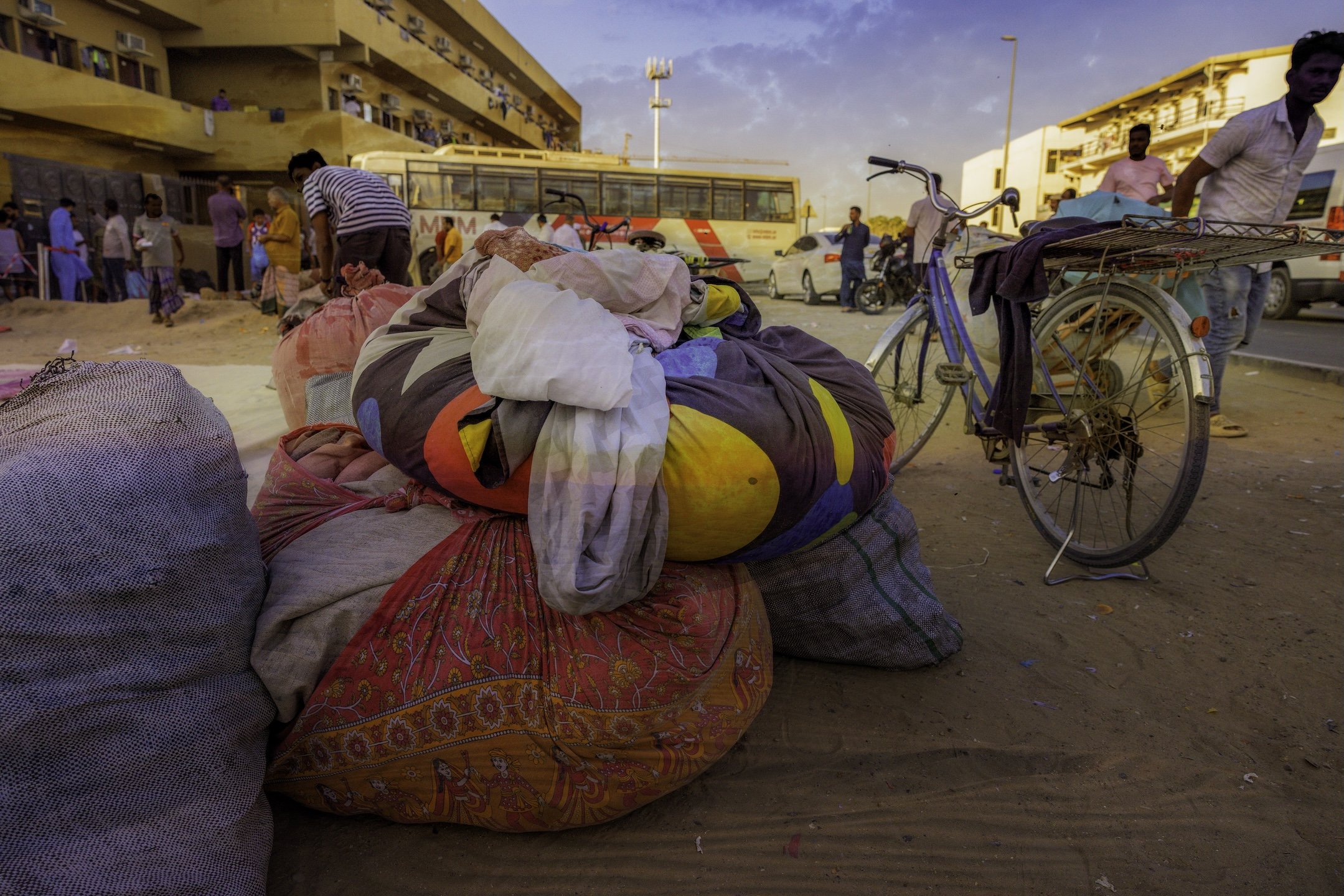
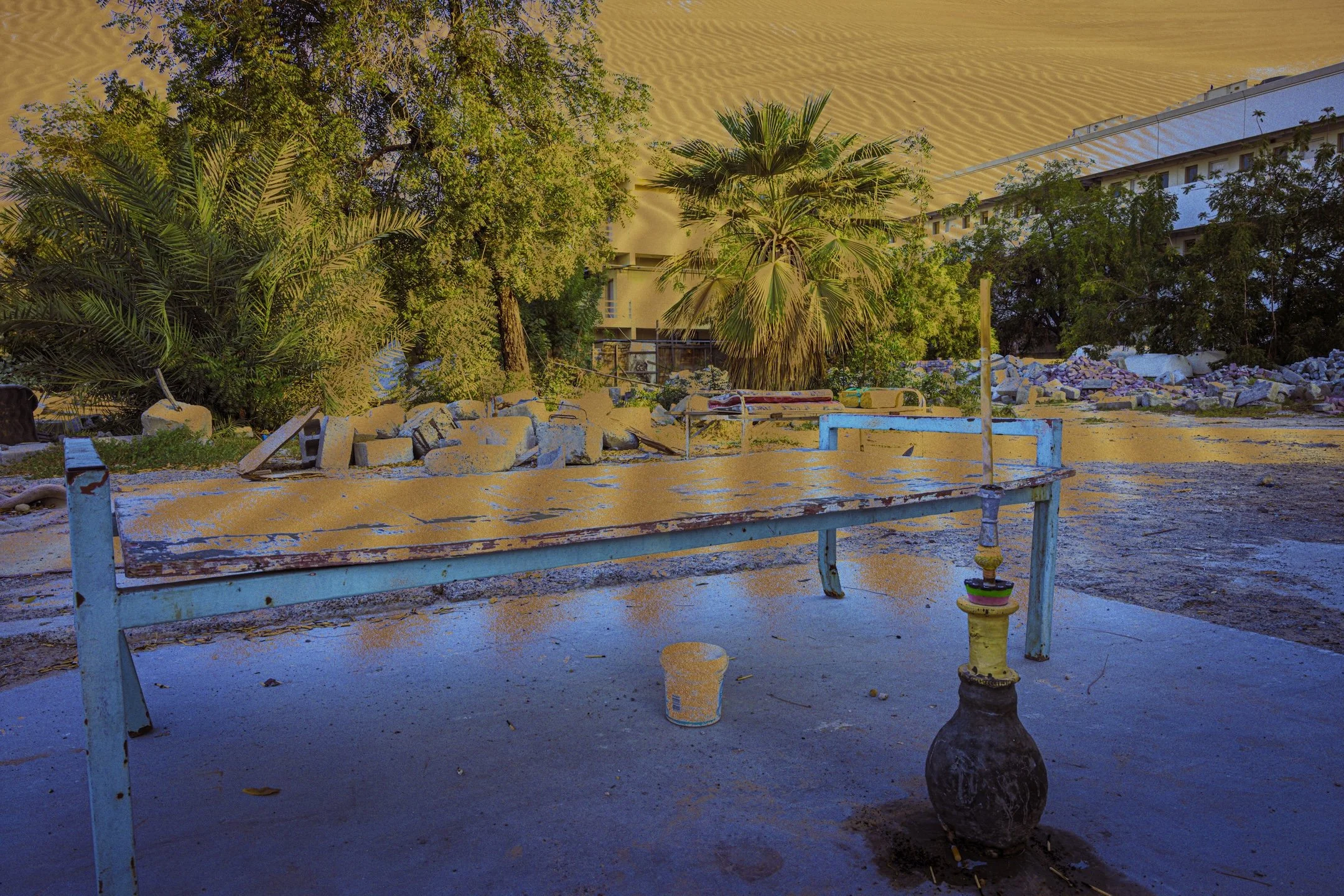
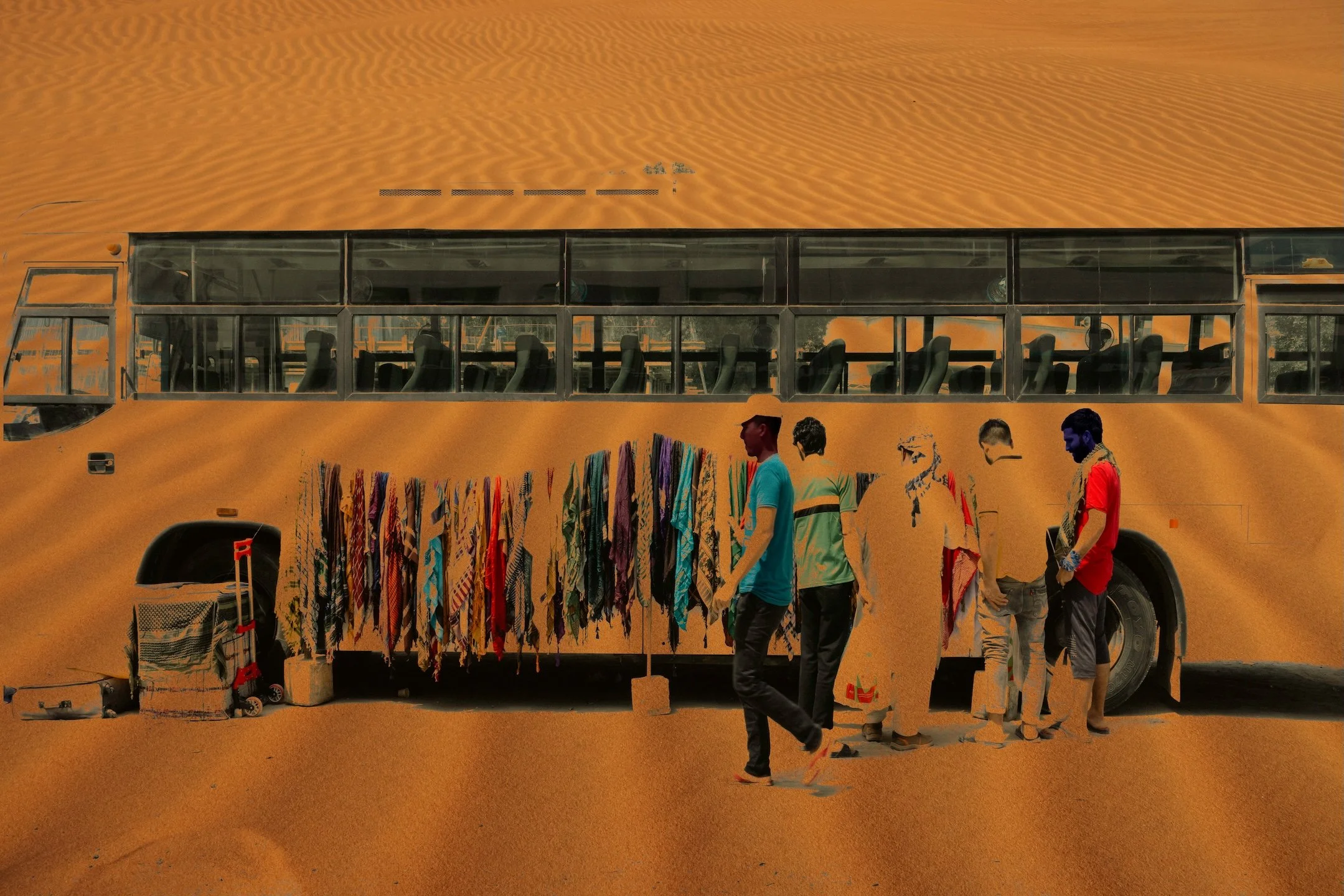
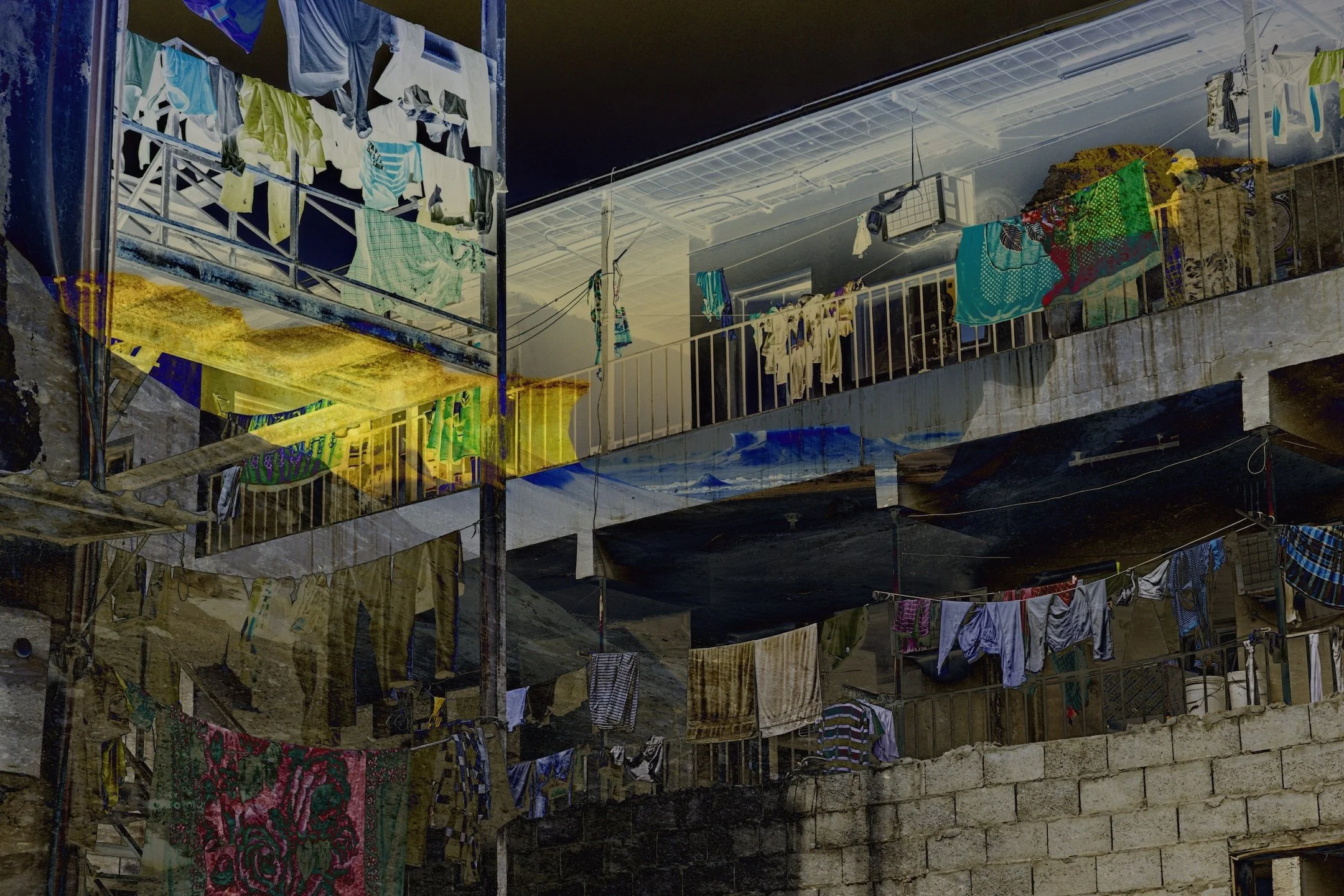
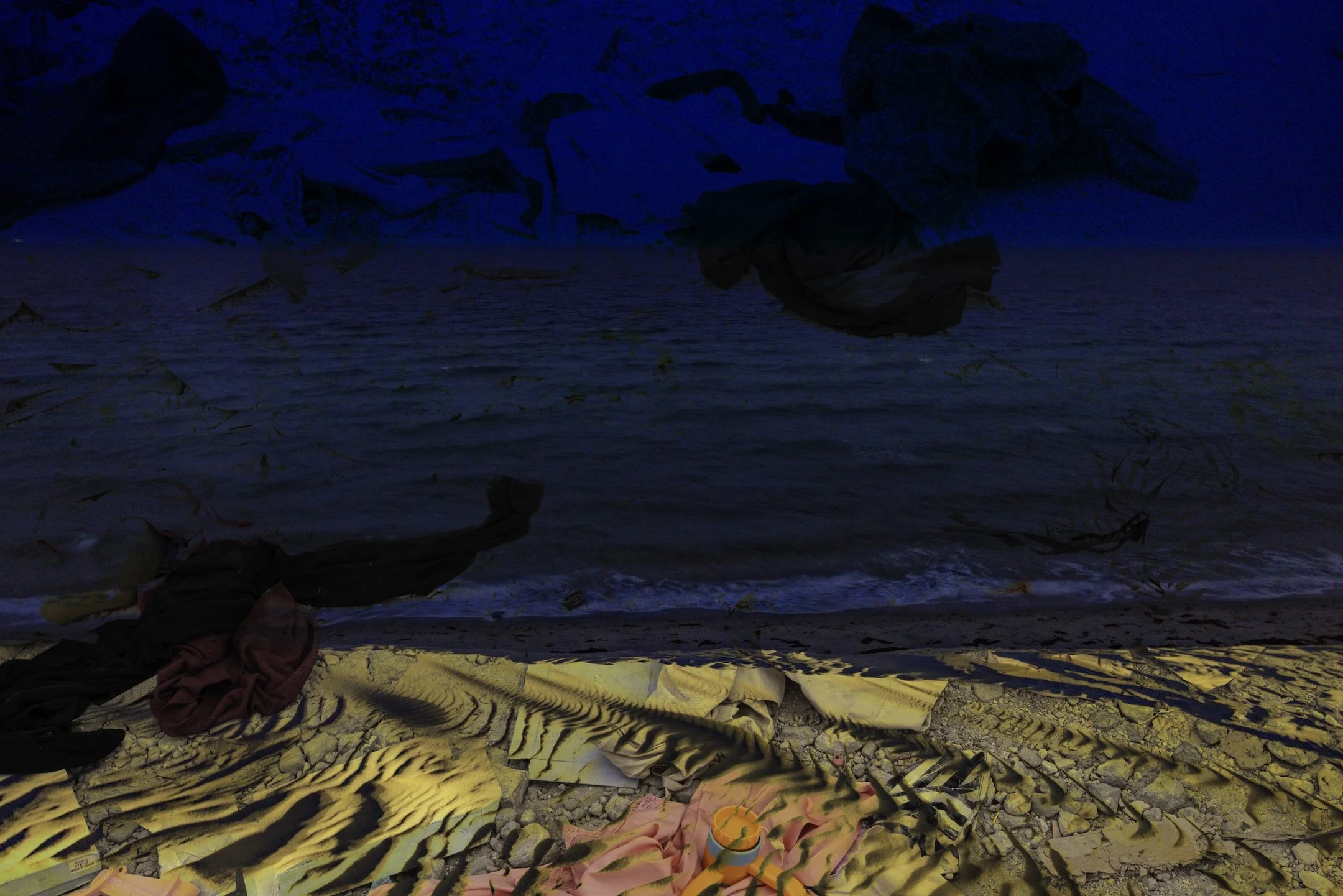
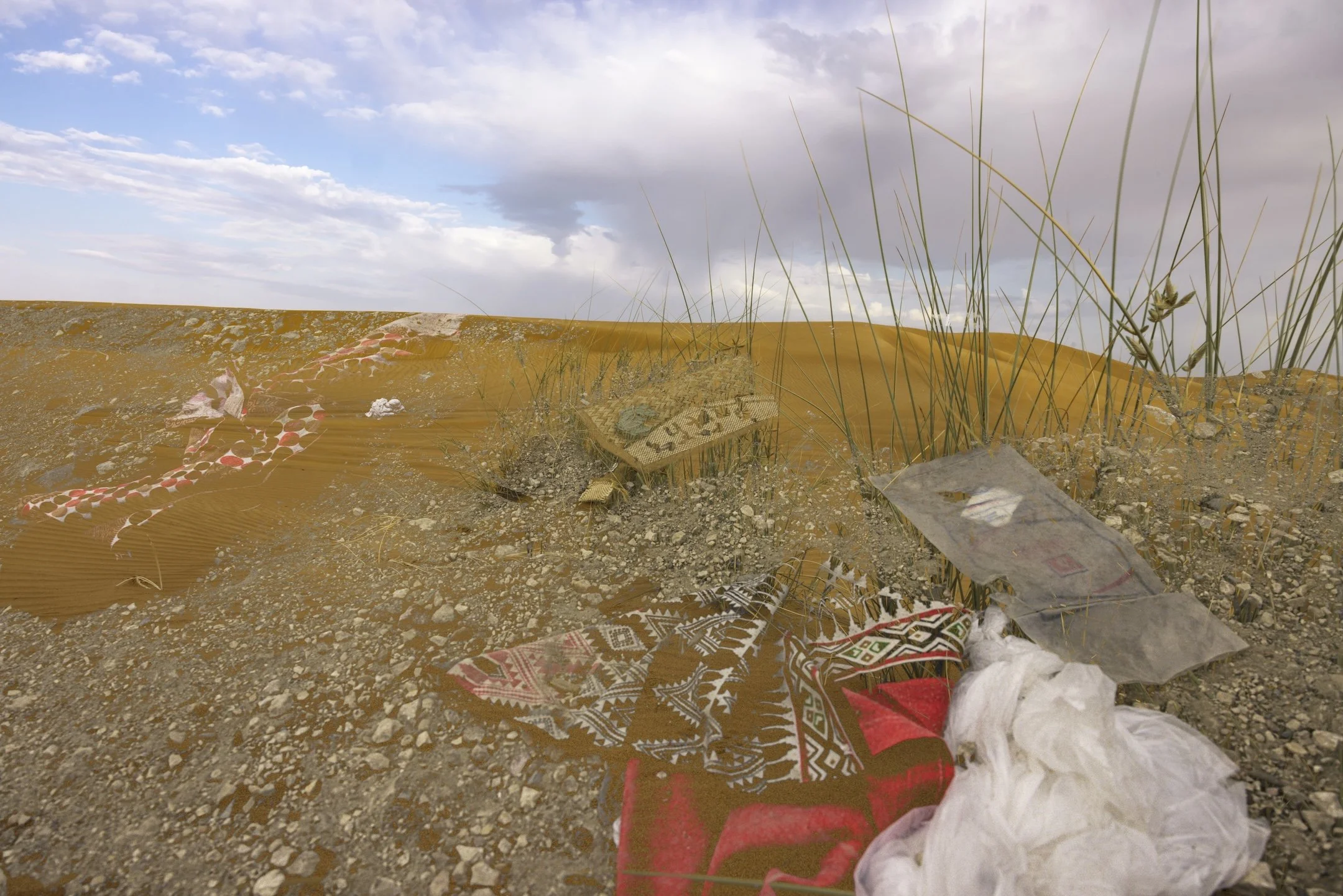
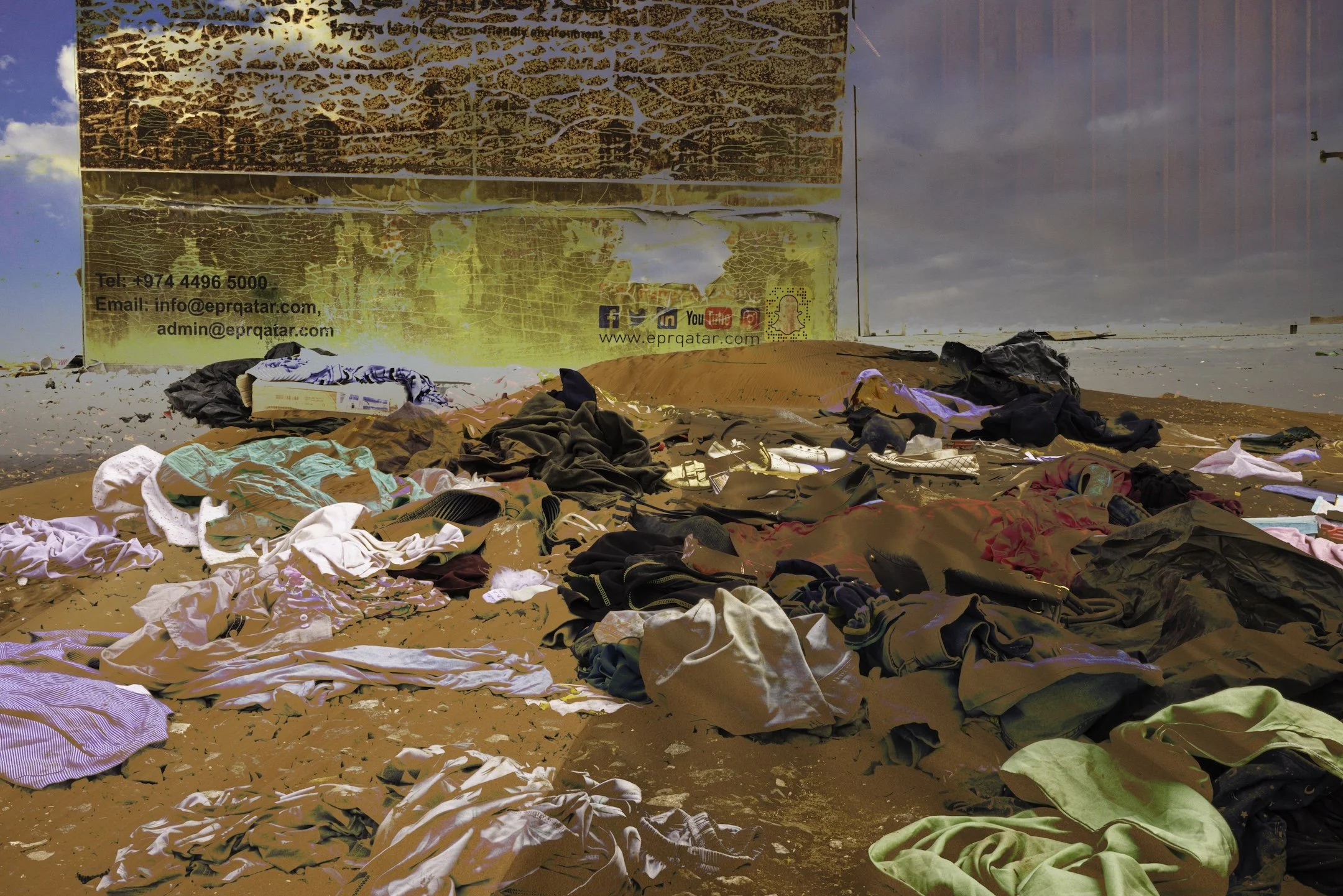
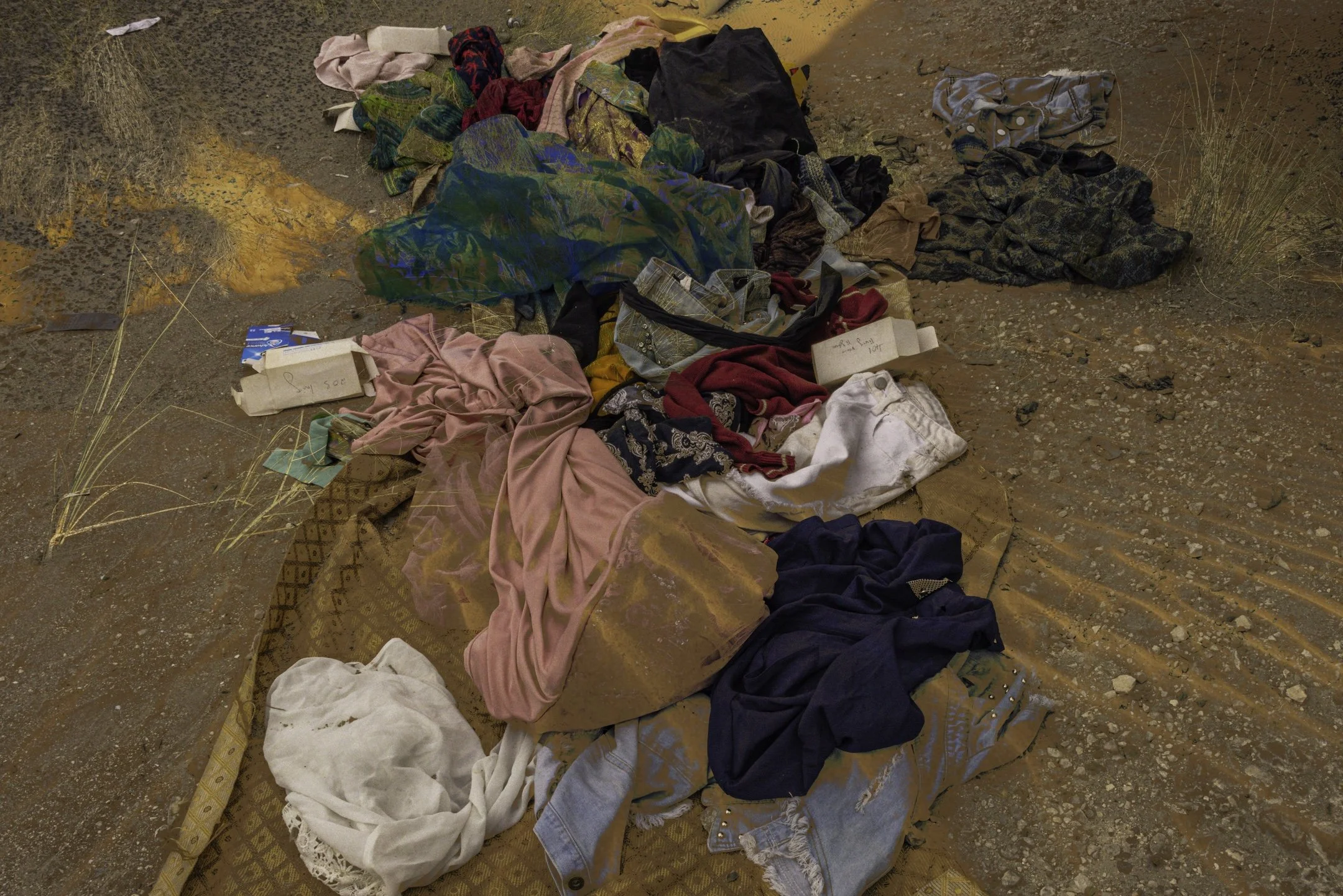

Laundry/Clothing Series, Doha & Dubai
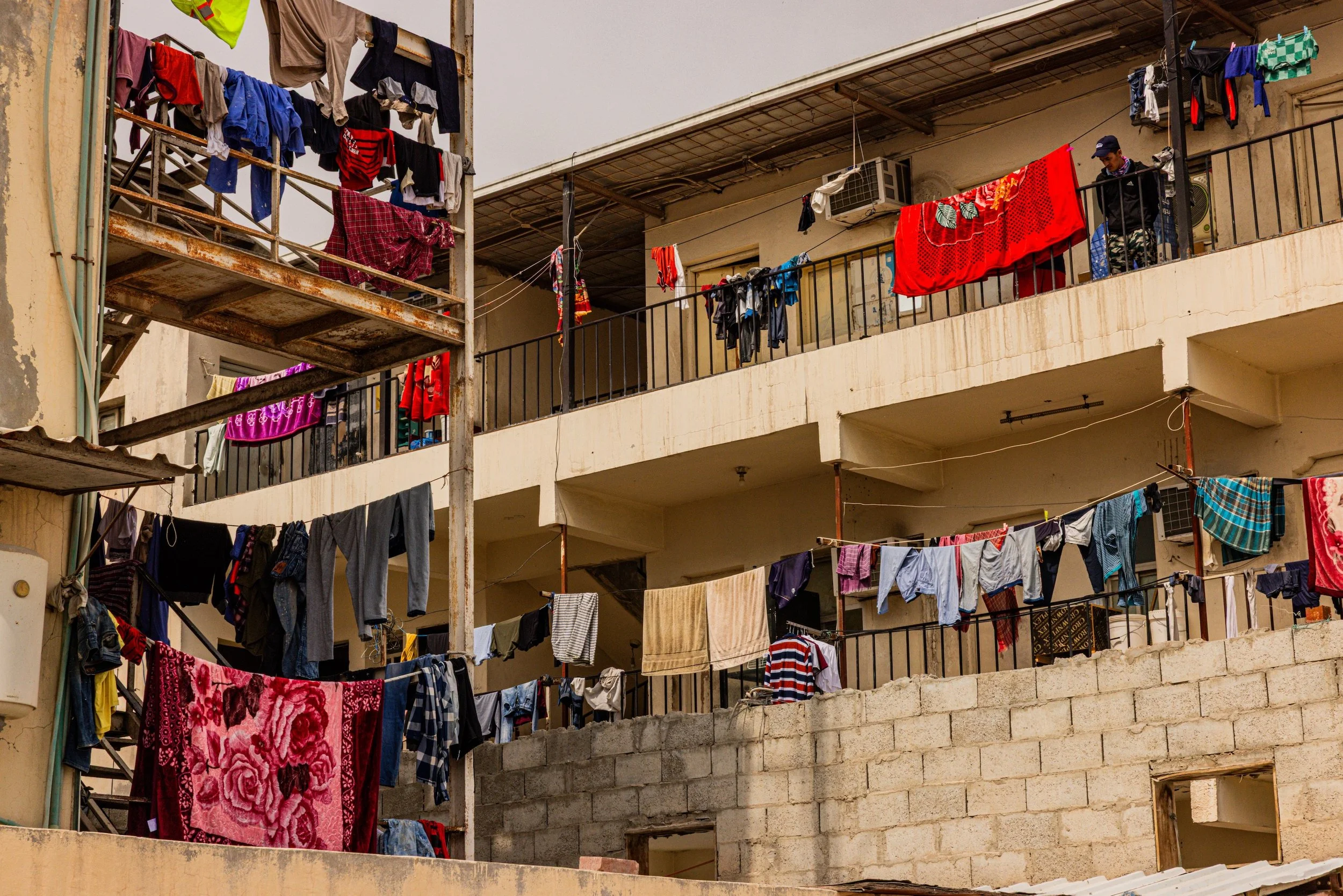
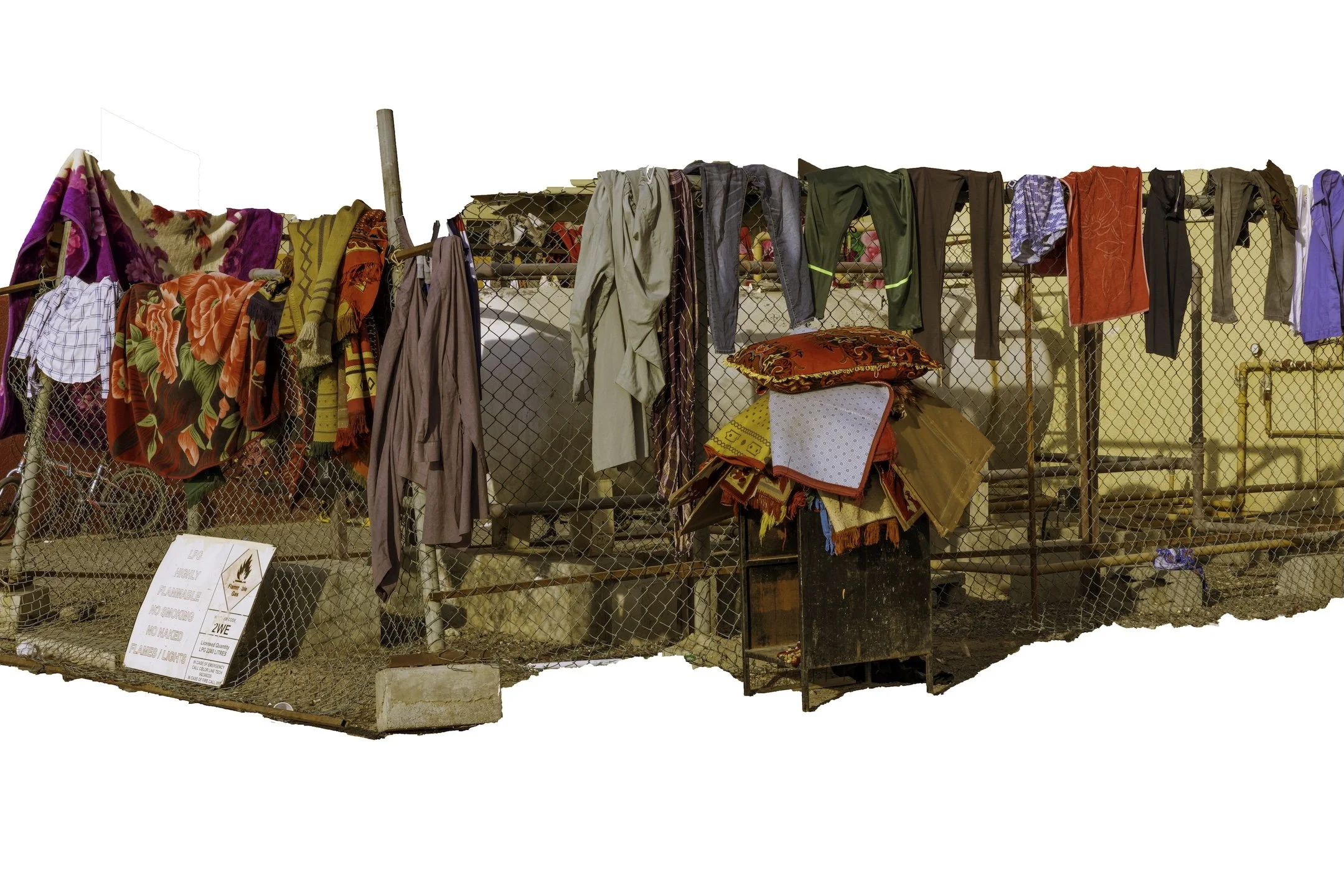
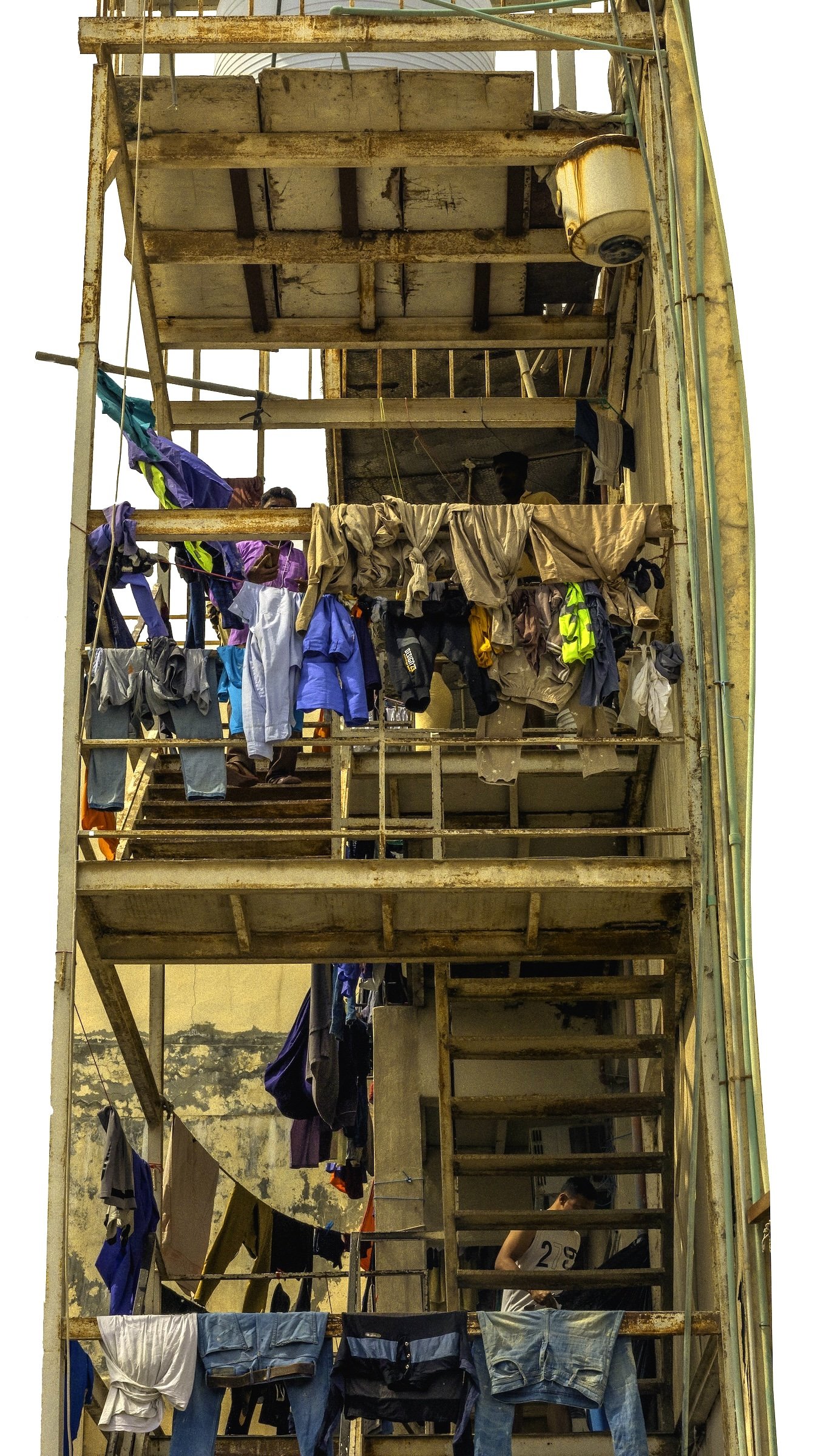
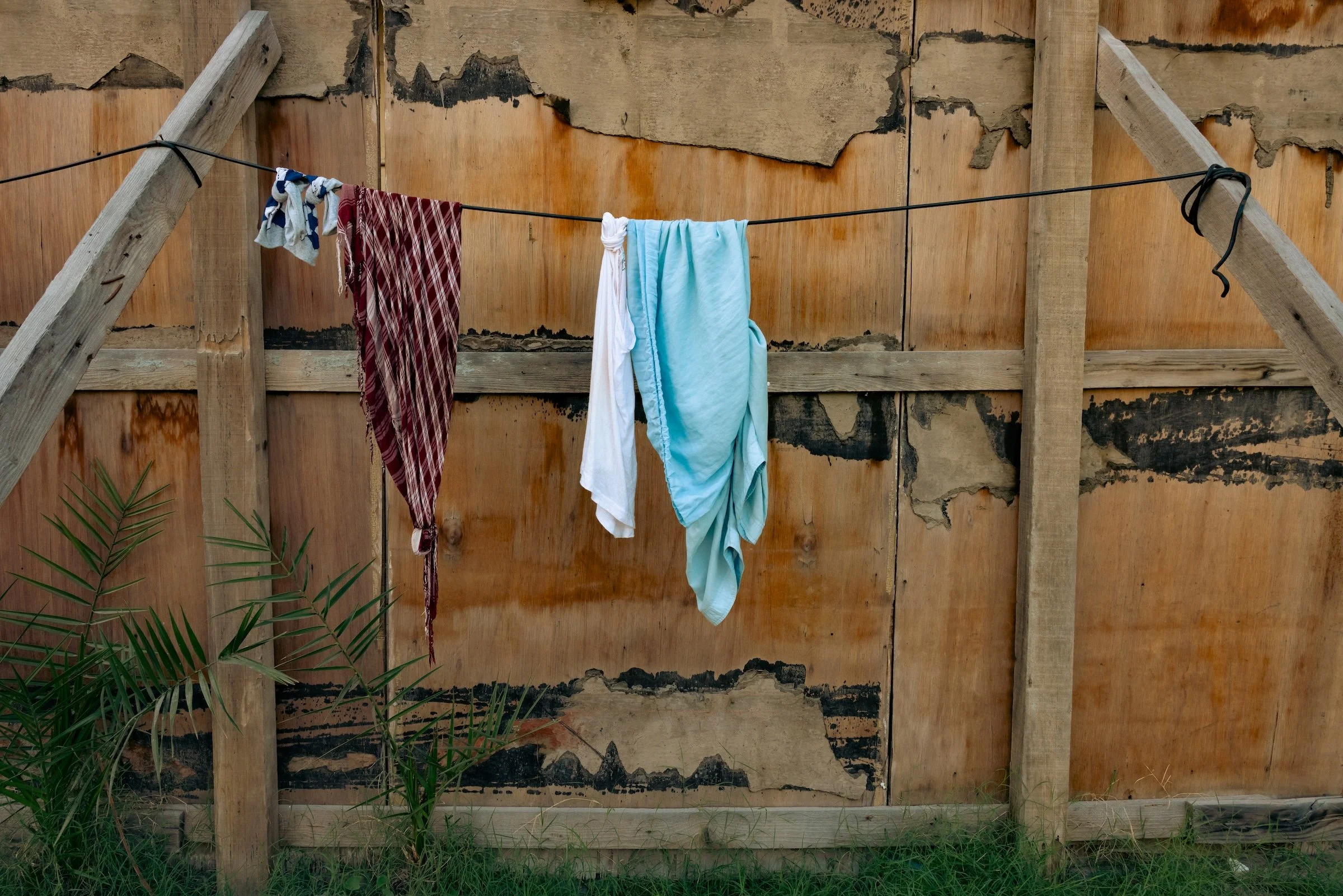
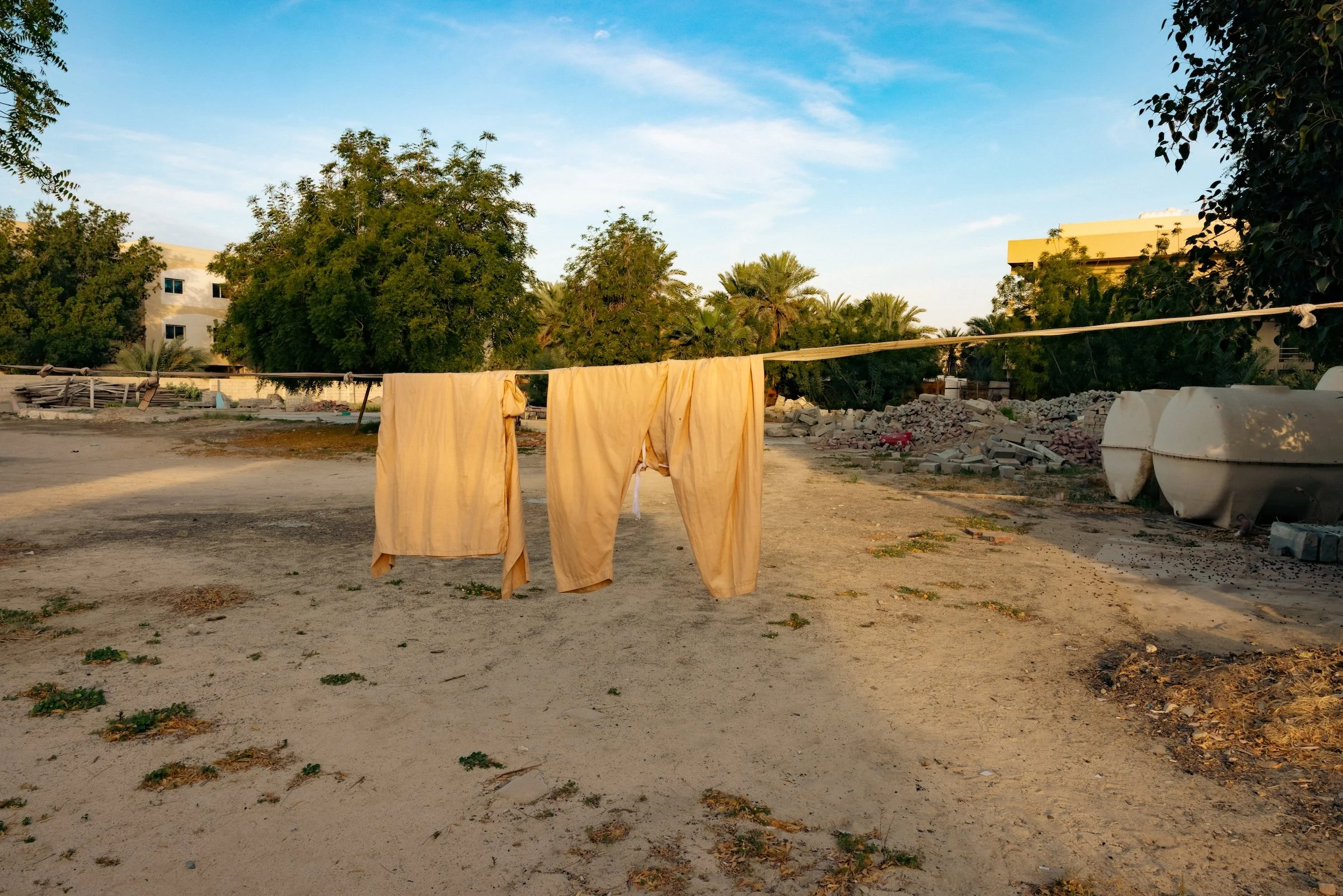
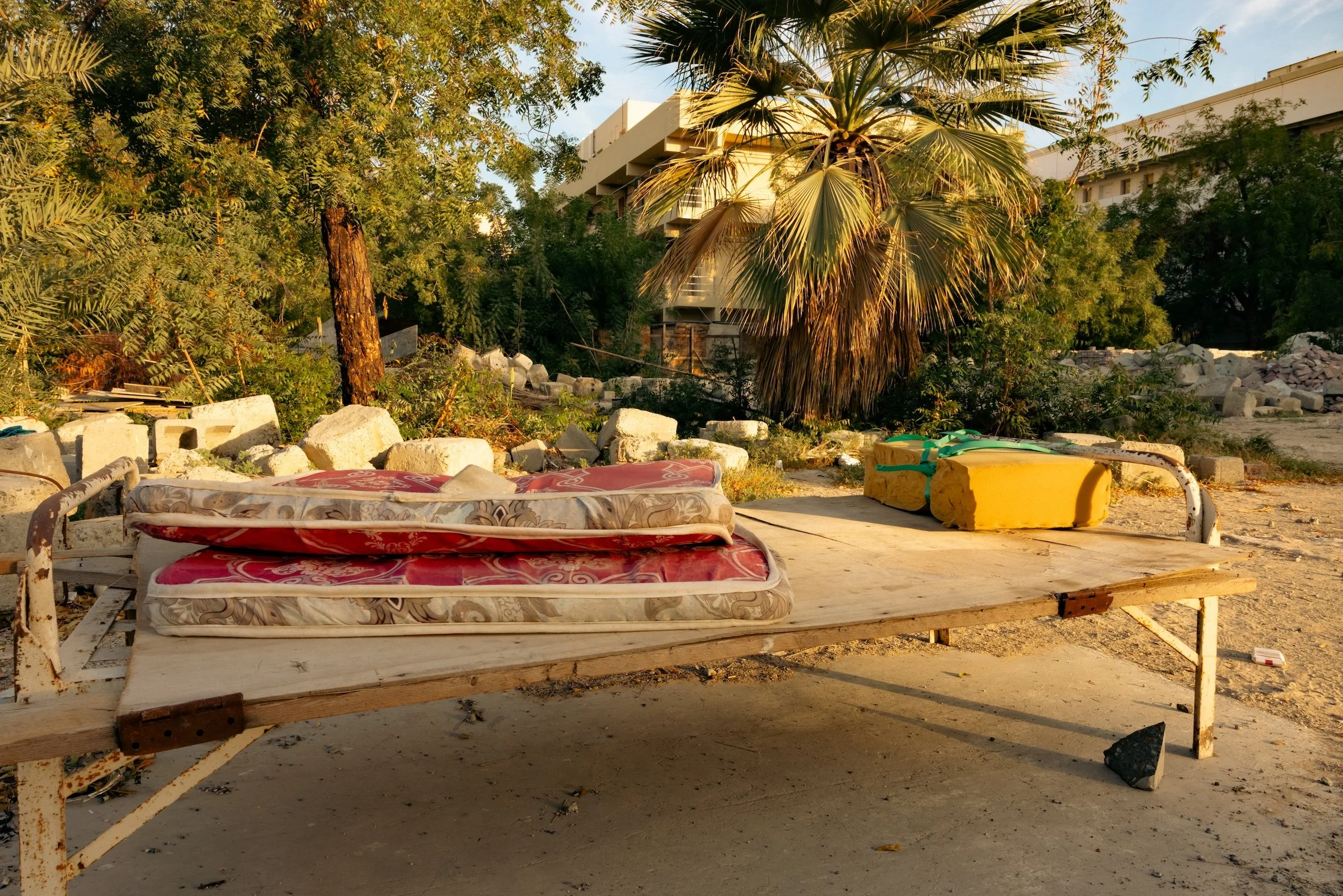
Doha & Qatar Archives
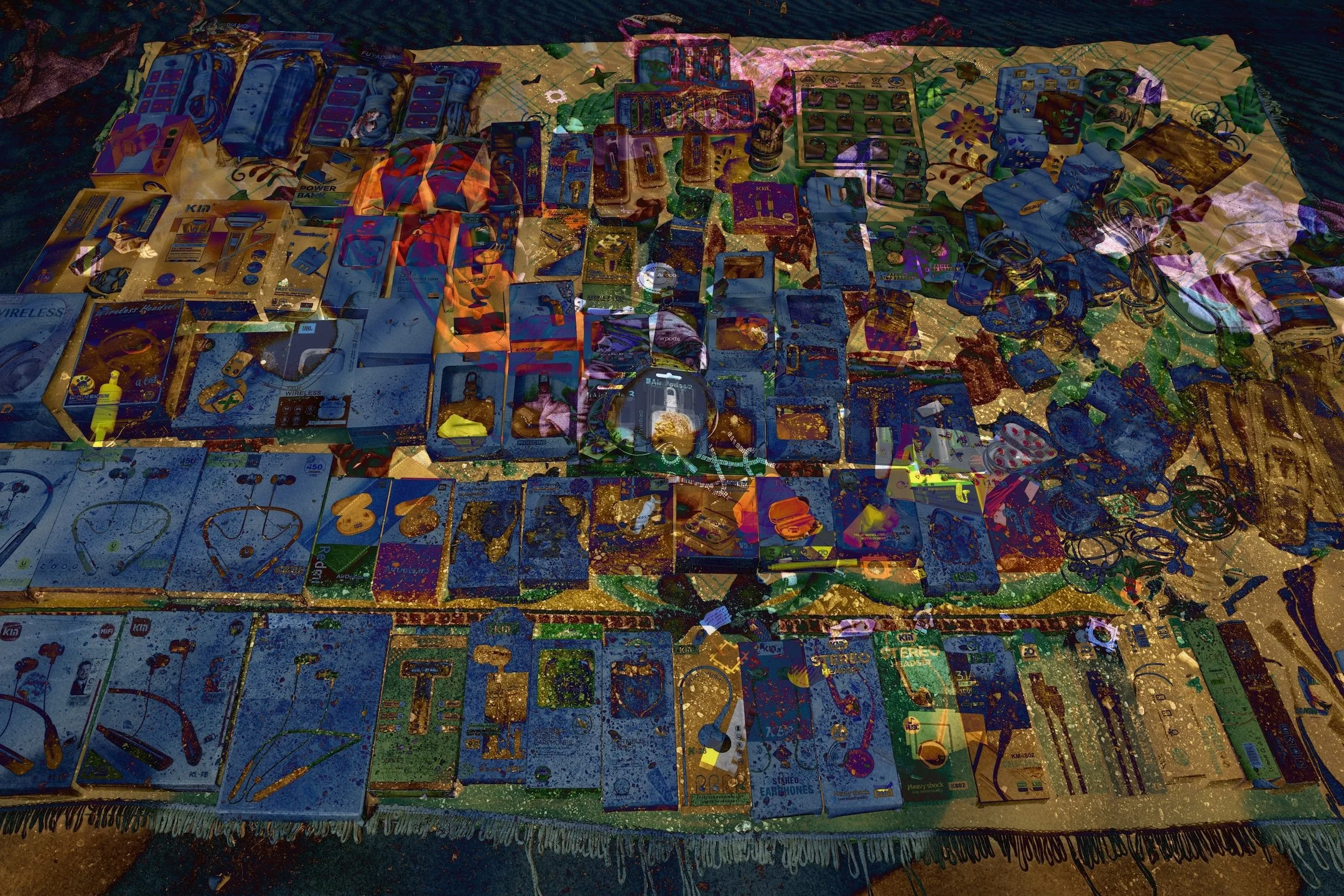
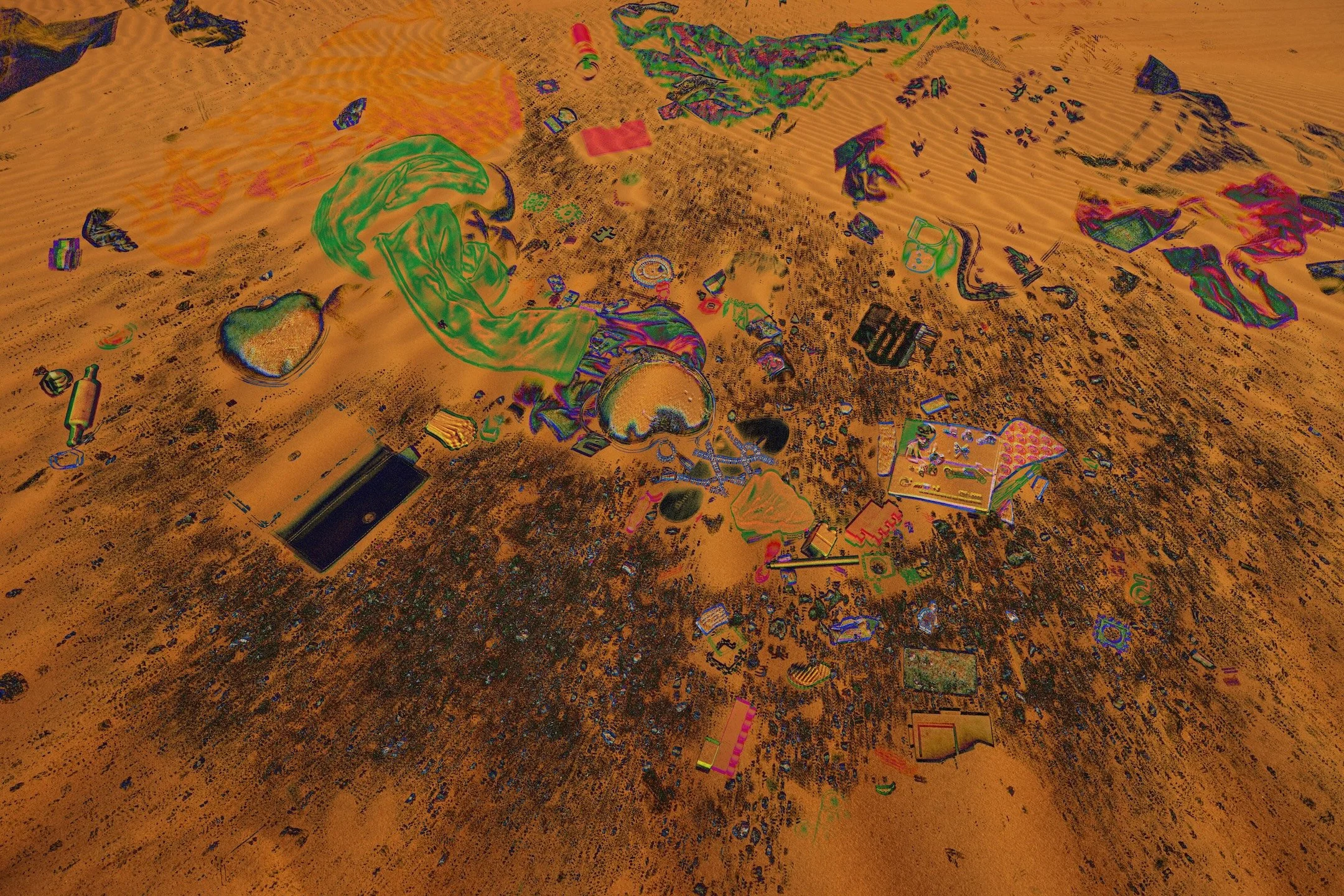
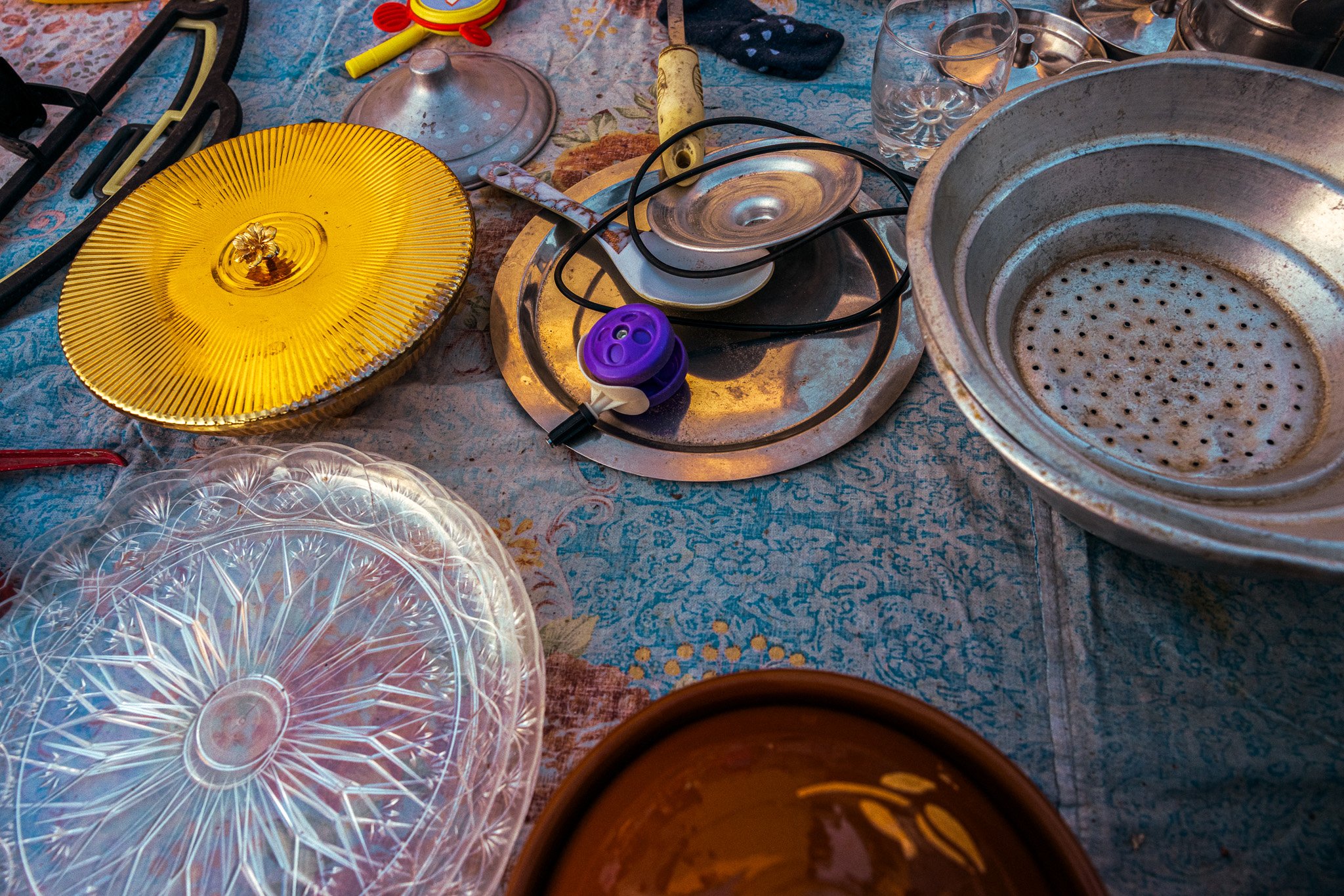
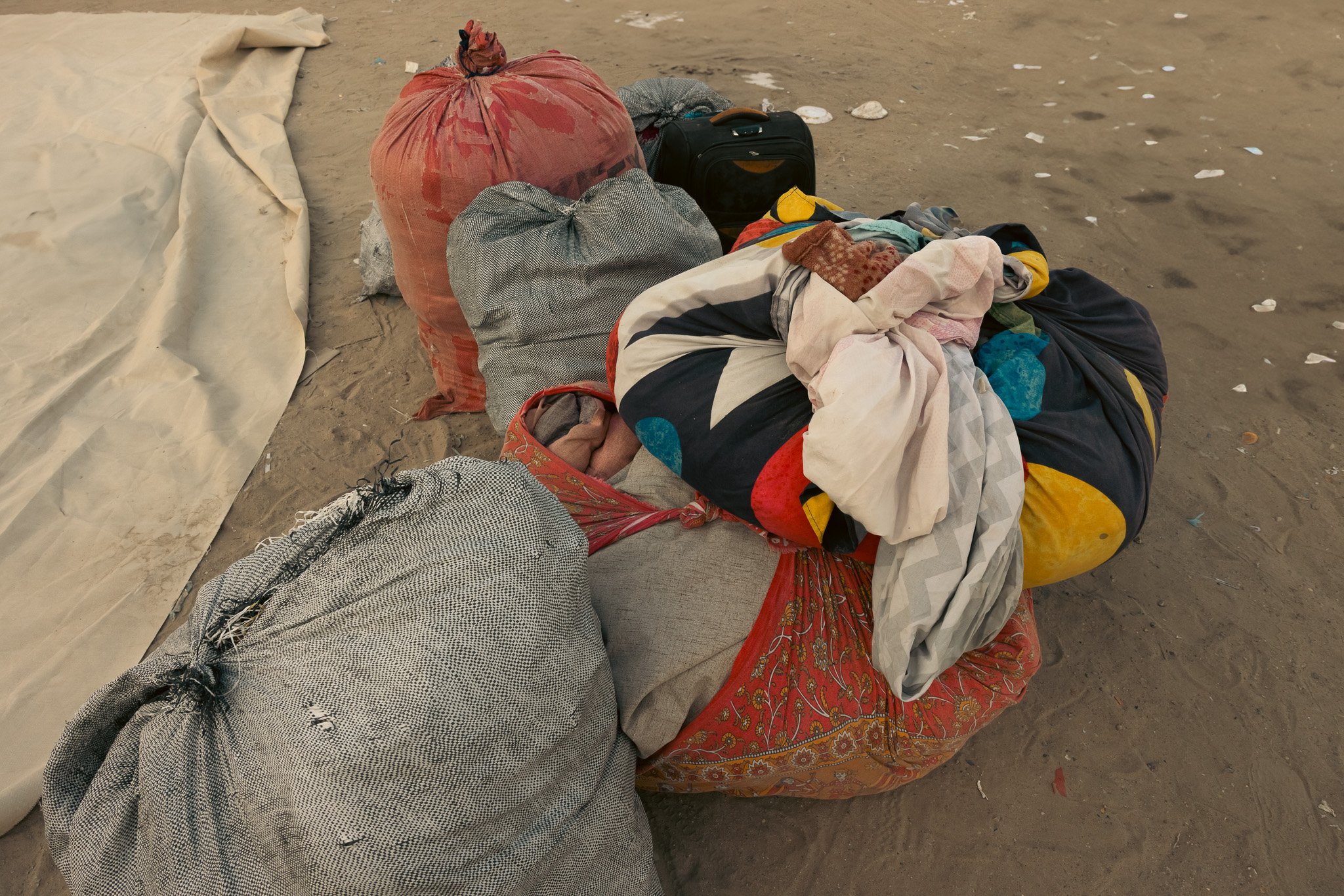
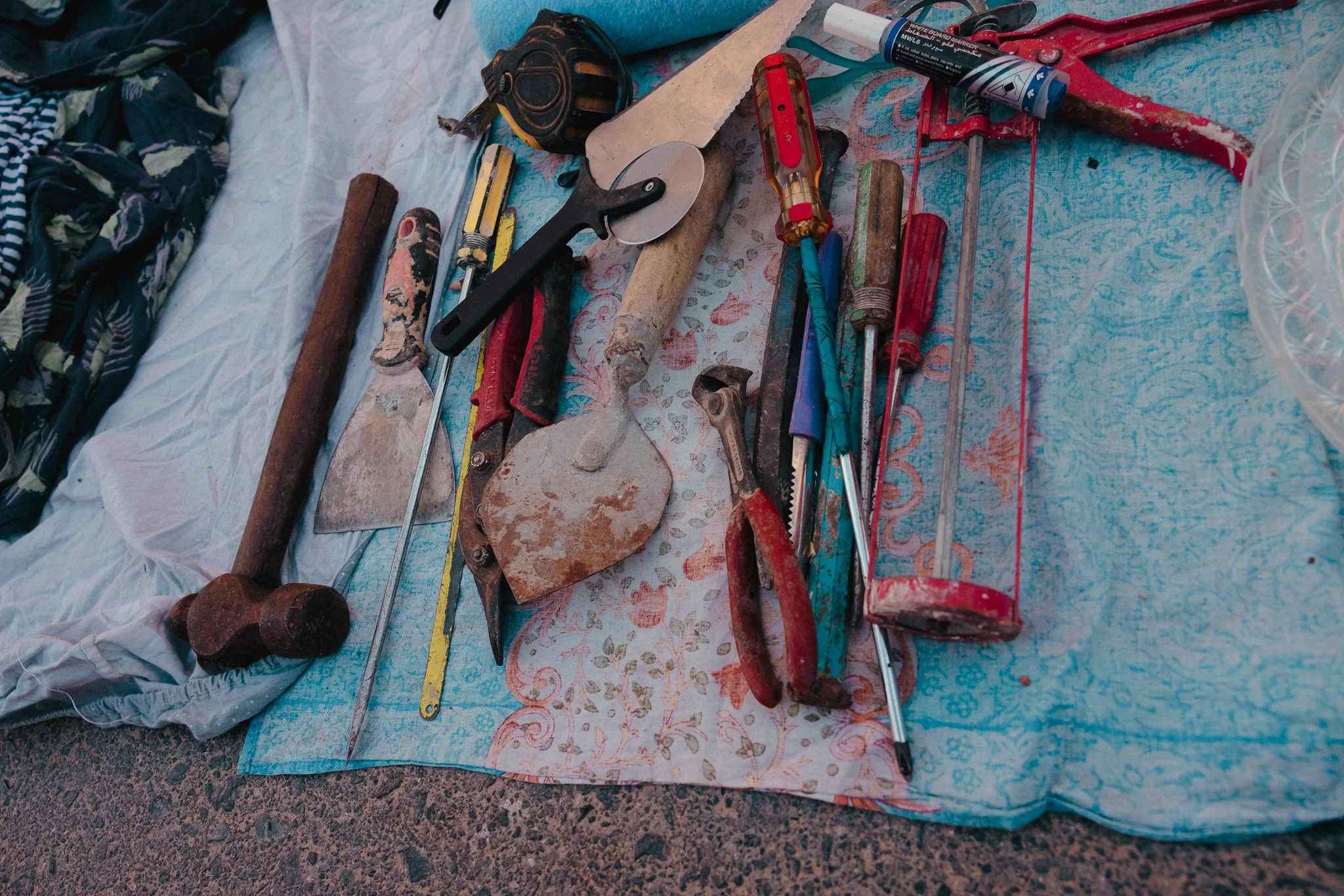
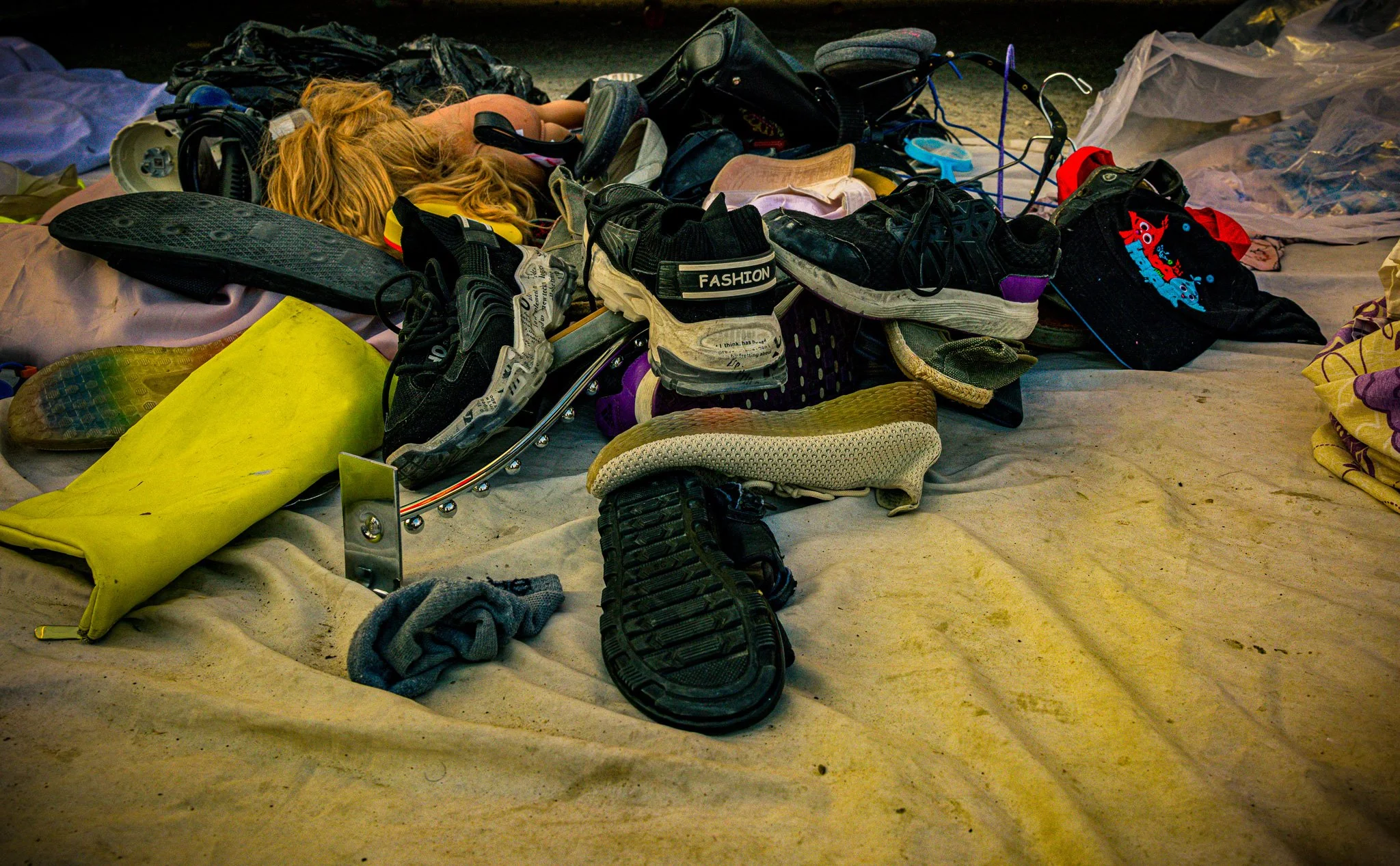
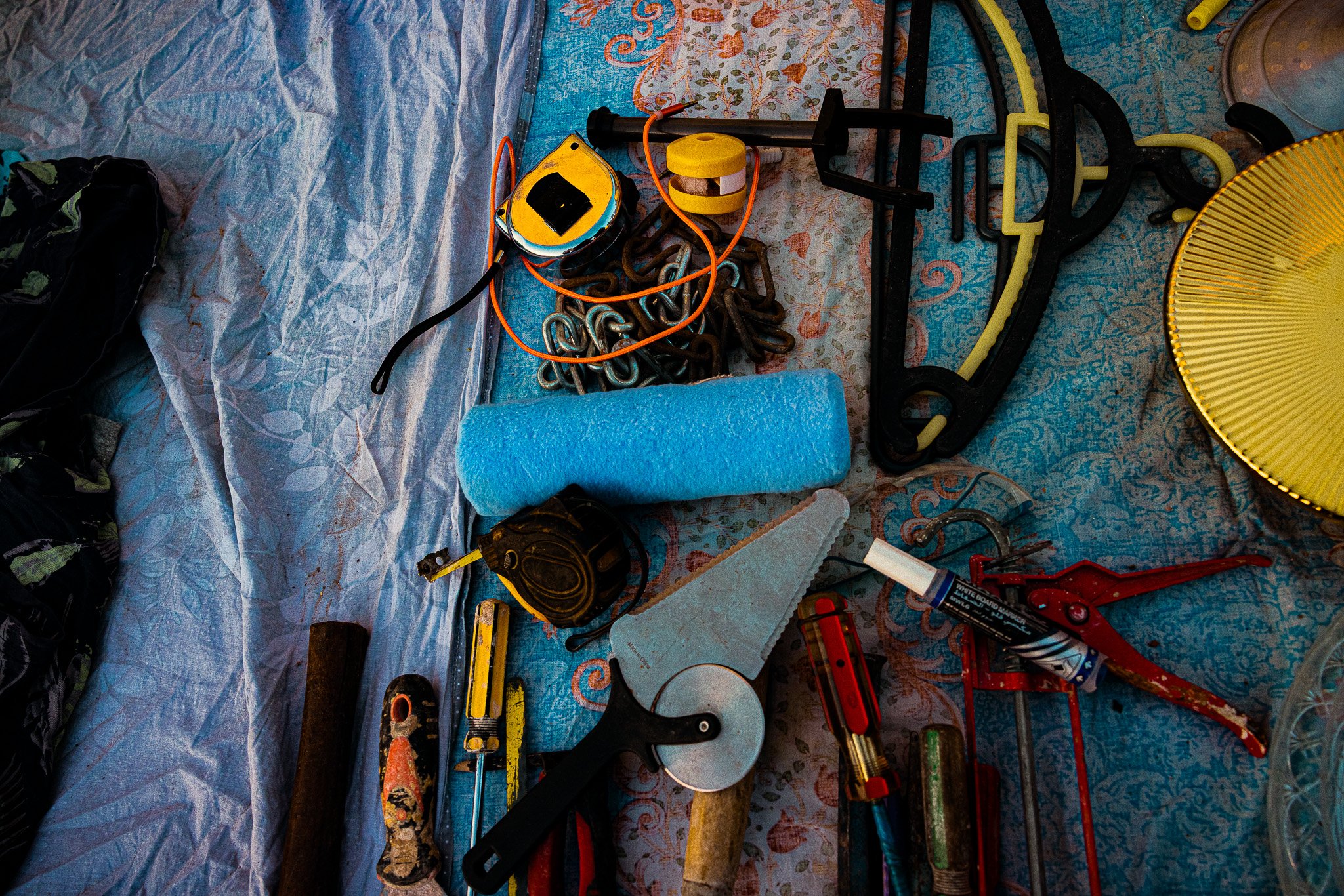
Street Bazaars
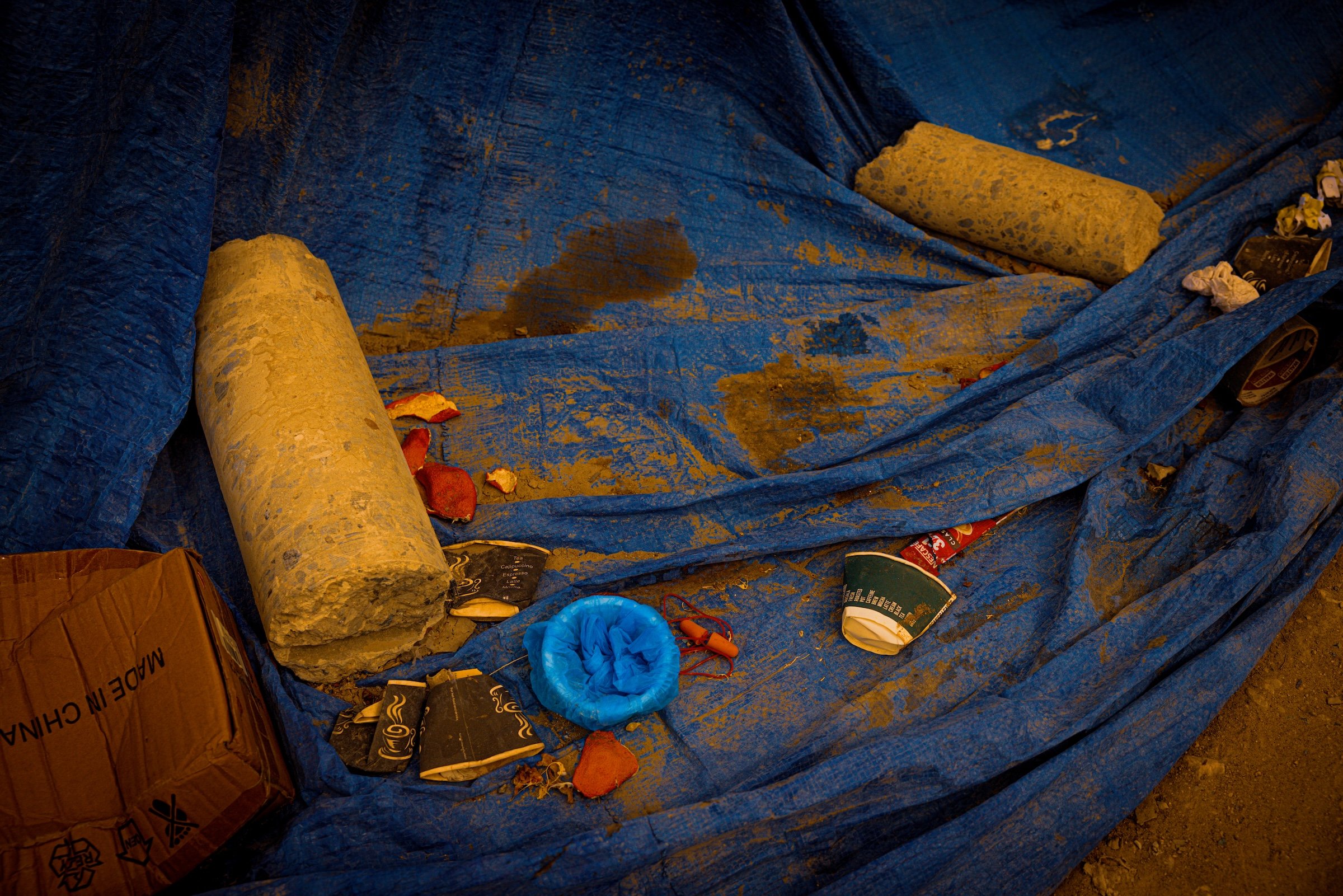
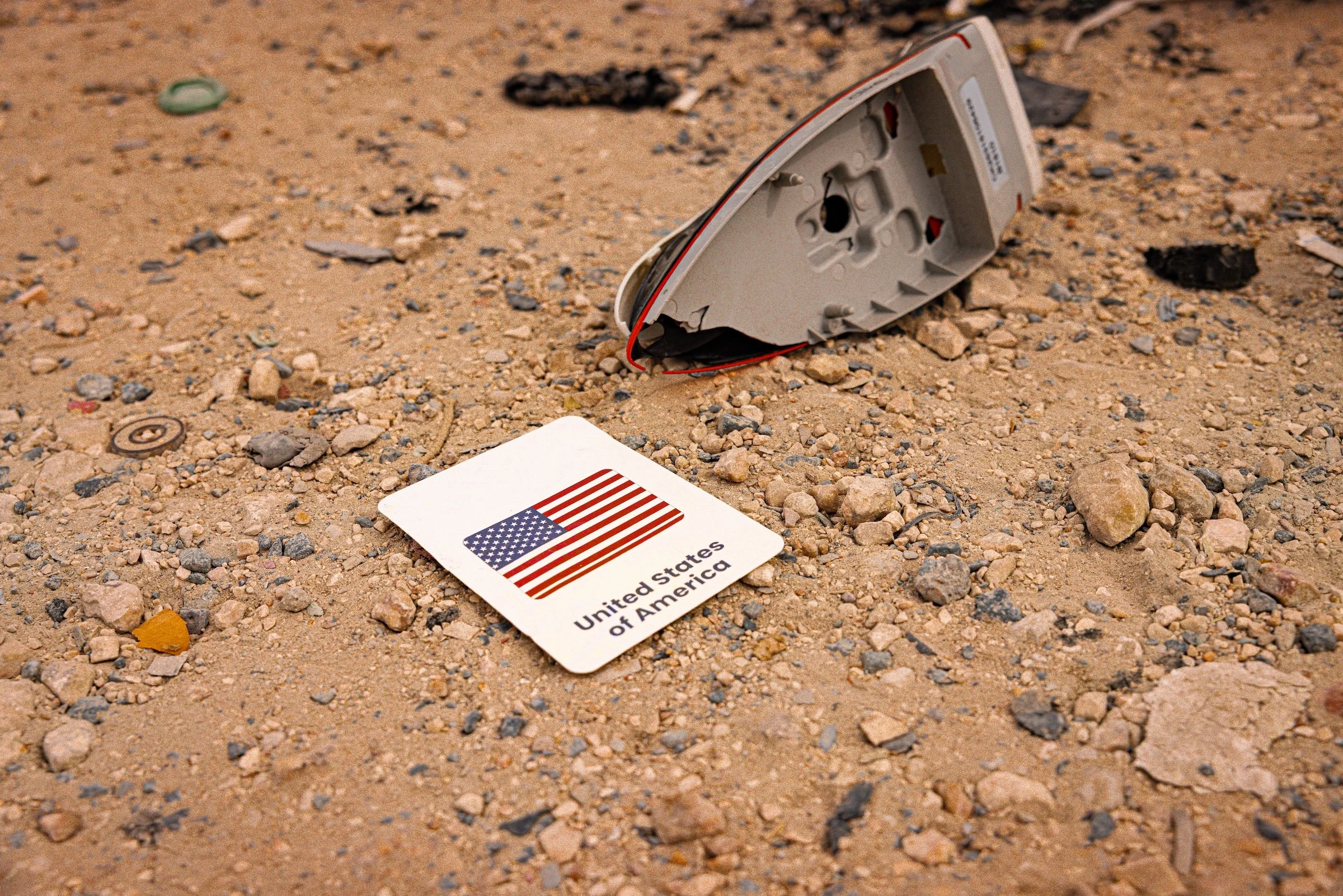

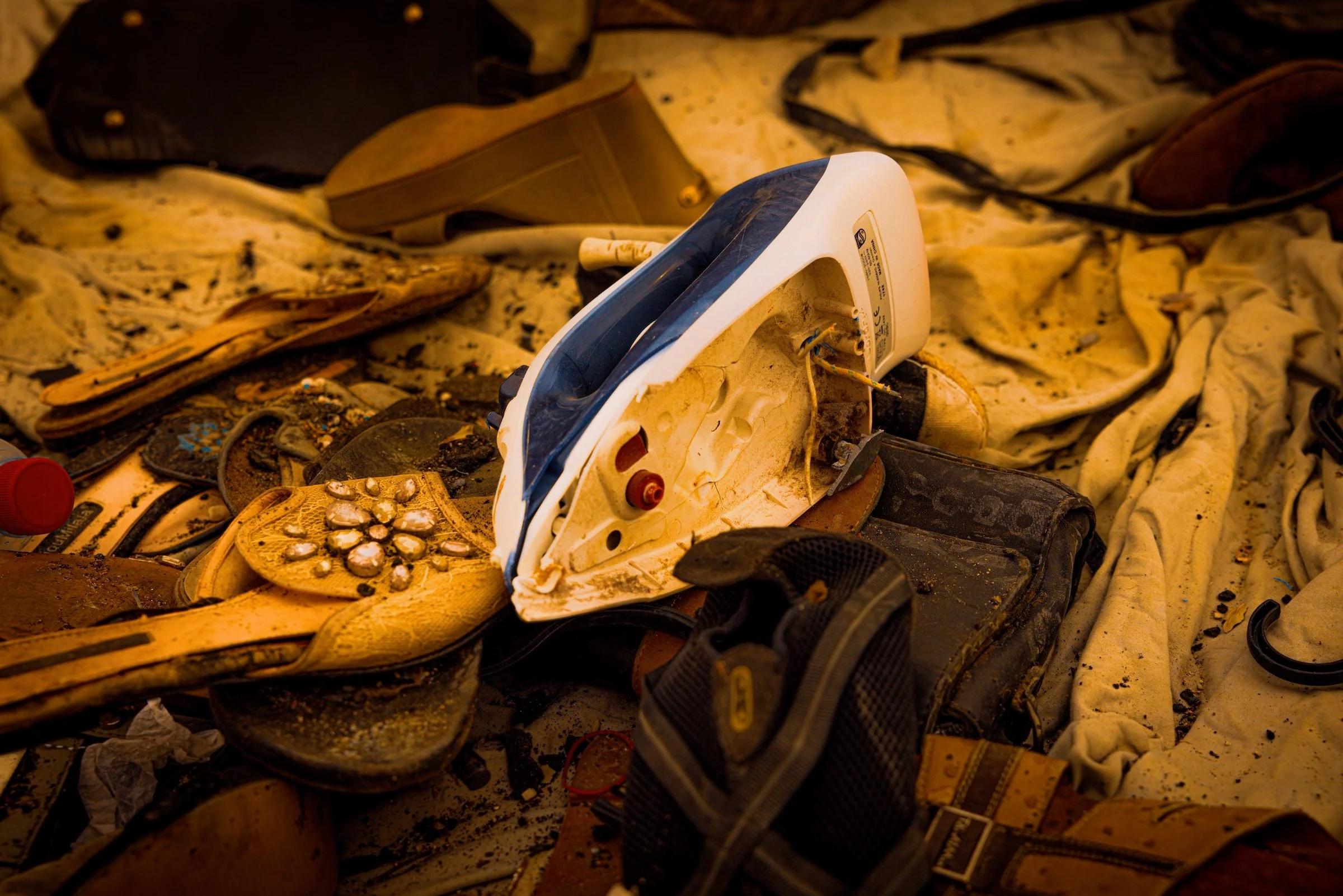
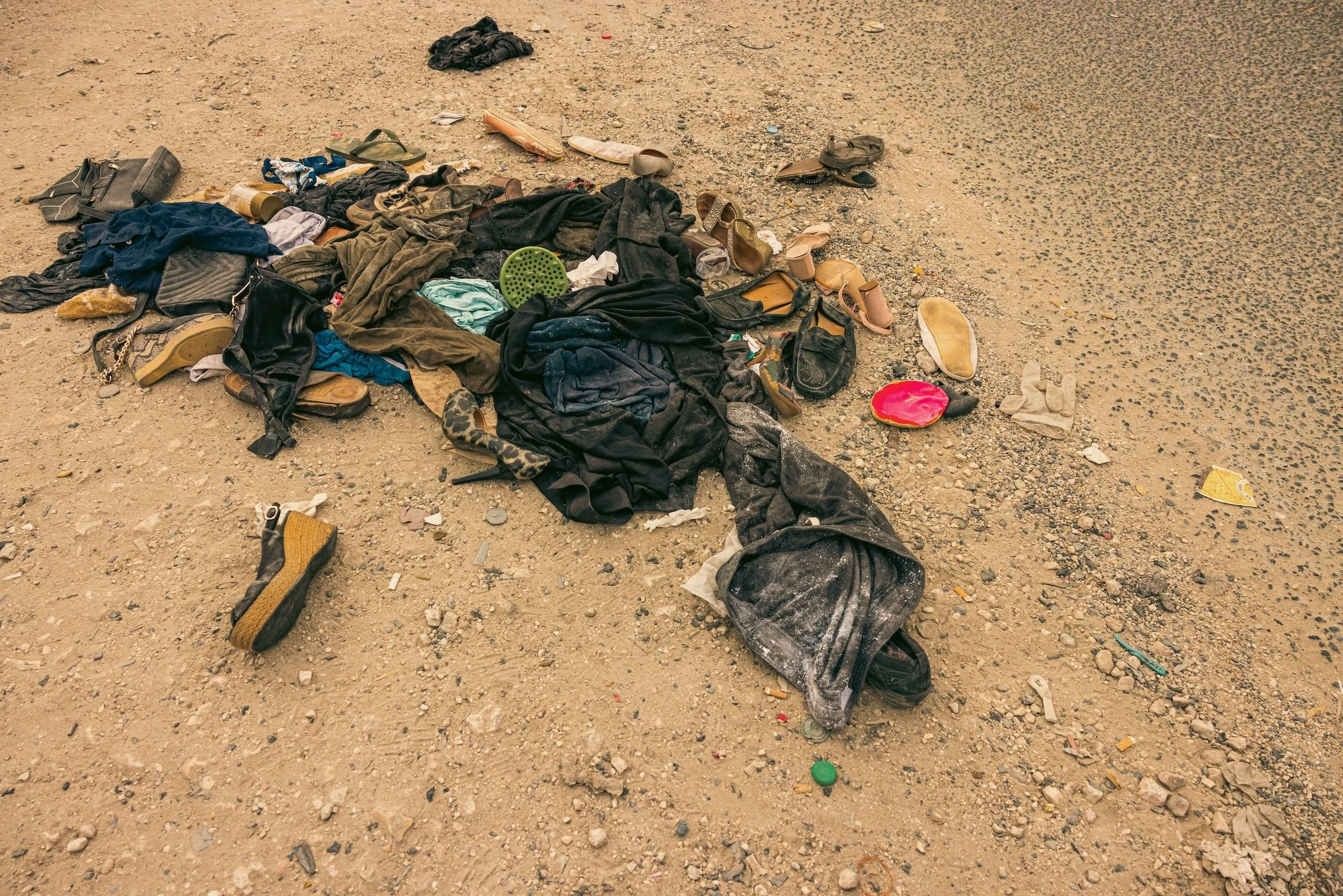
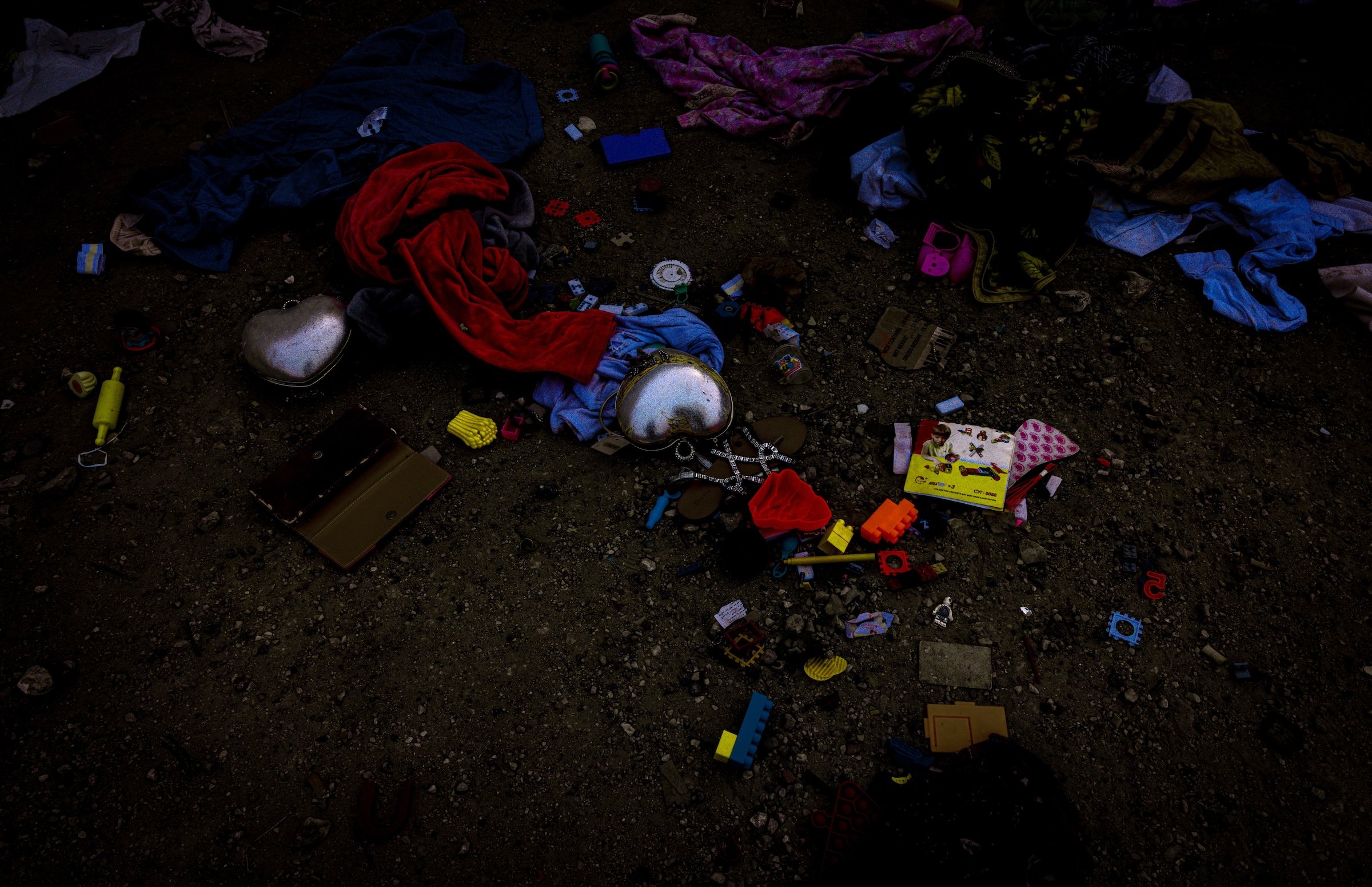
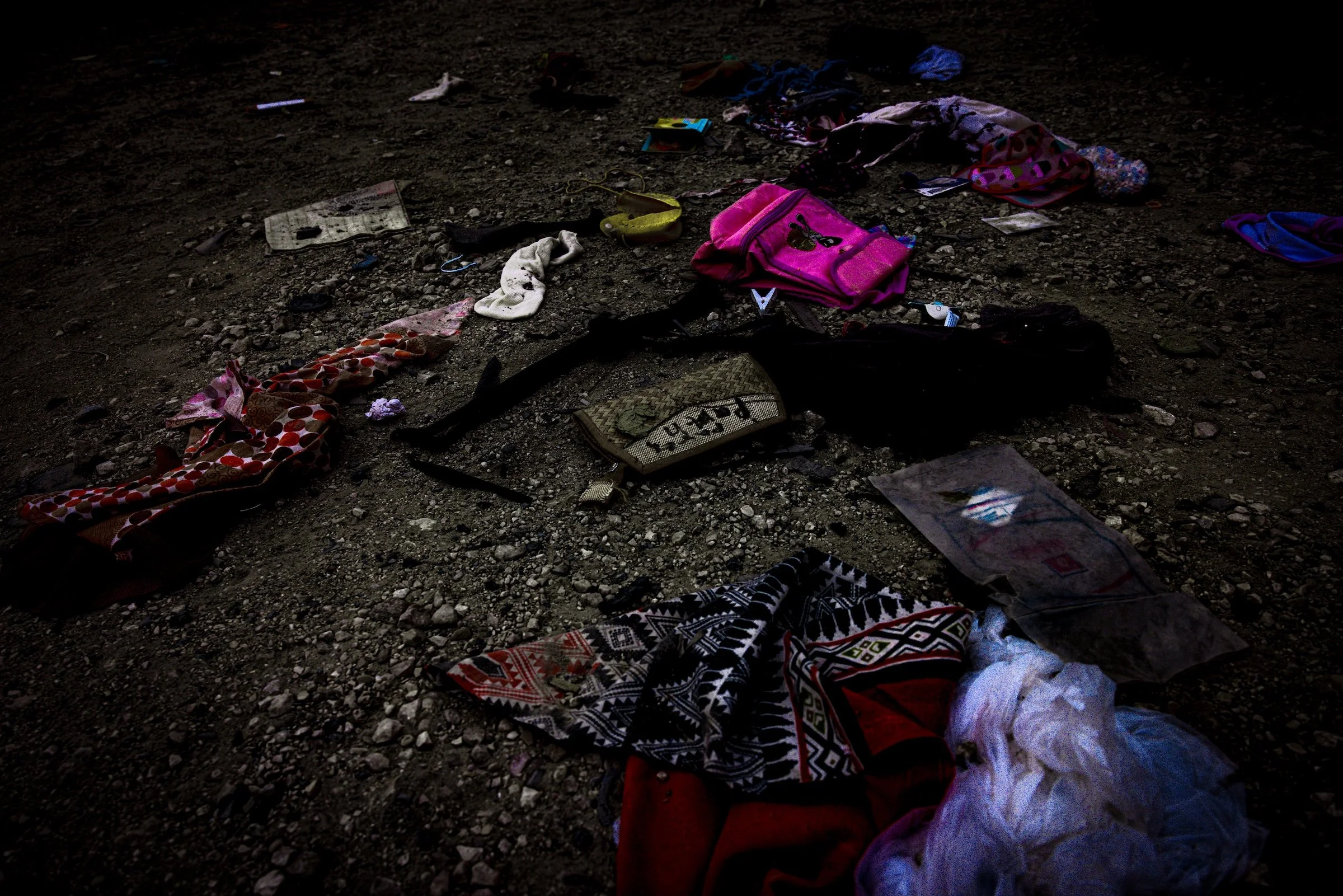
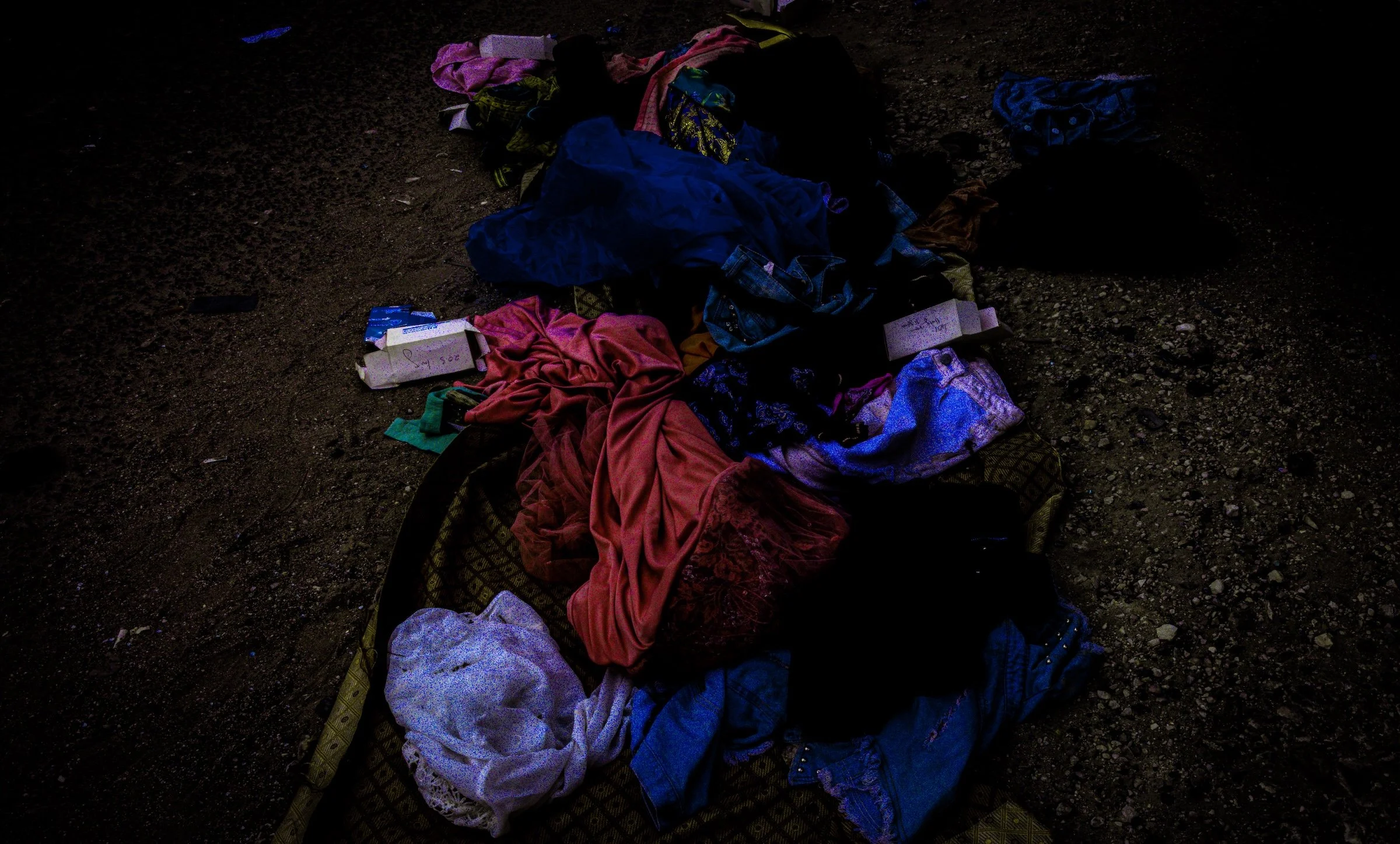
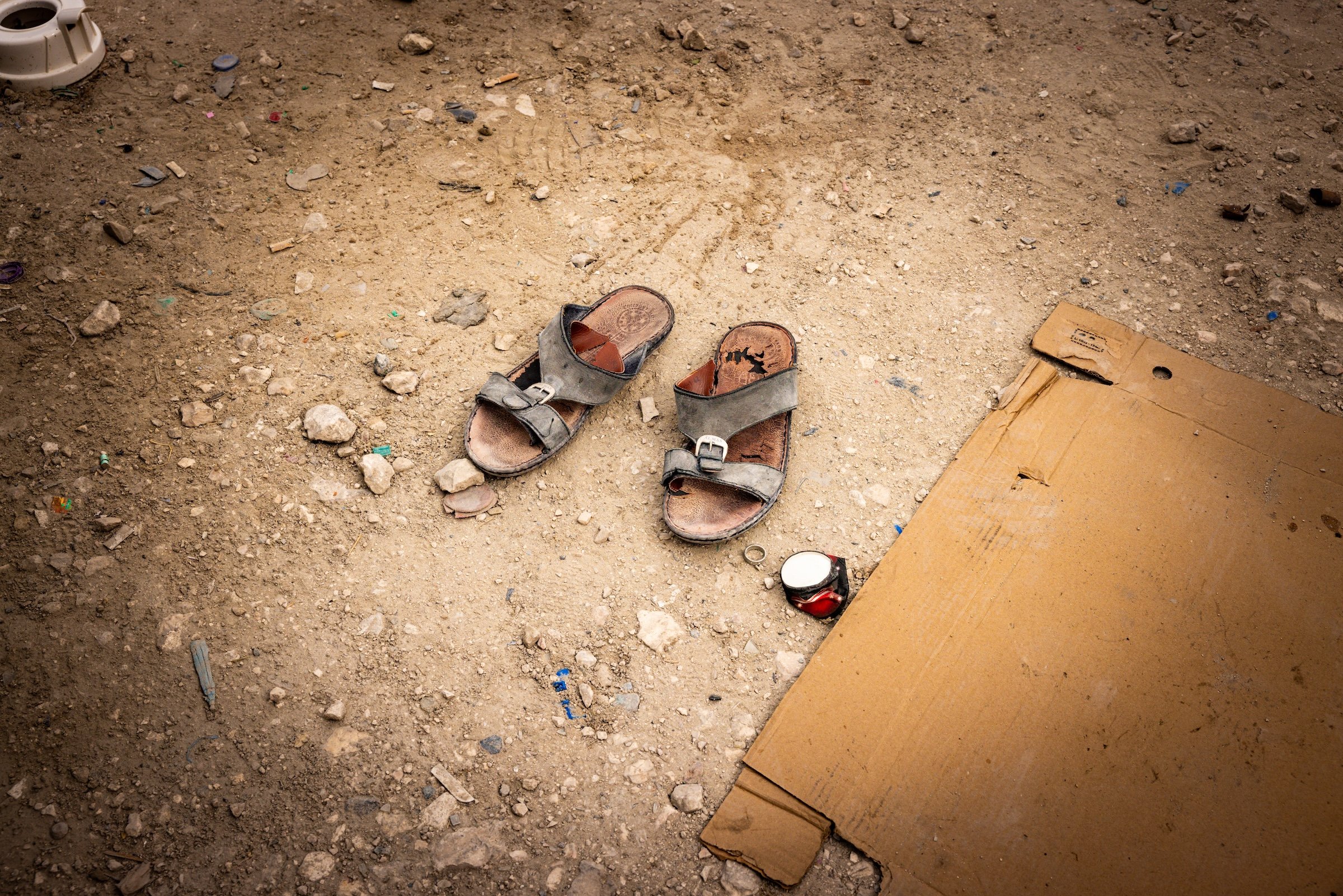
Illegal street bazaars, police raids, detritus left behind as the goods are bundled up and hurriedly taken away.
Waste recycled by the migrant workers, sold on the streets, some left behind as the hurriedly clear the street bazaars.
Qatar Landscape Archives
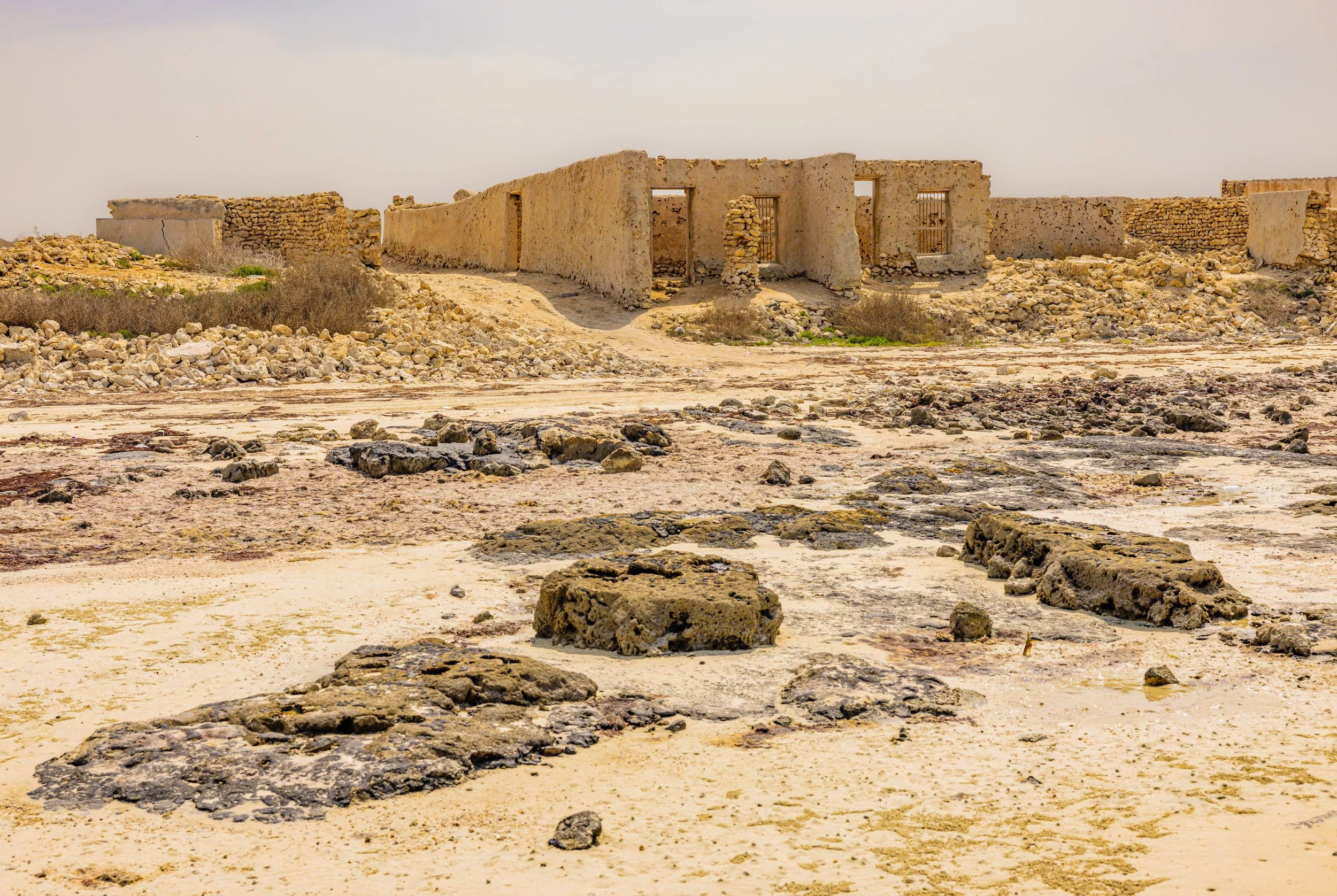
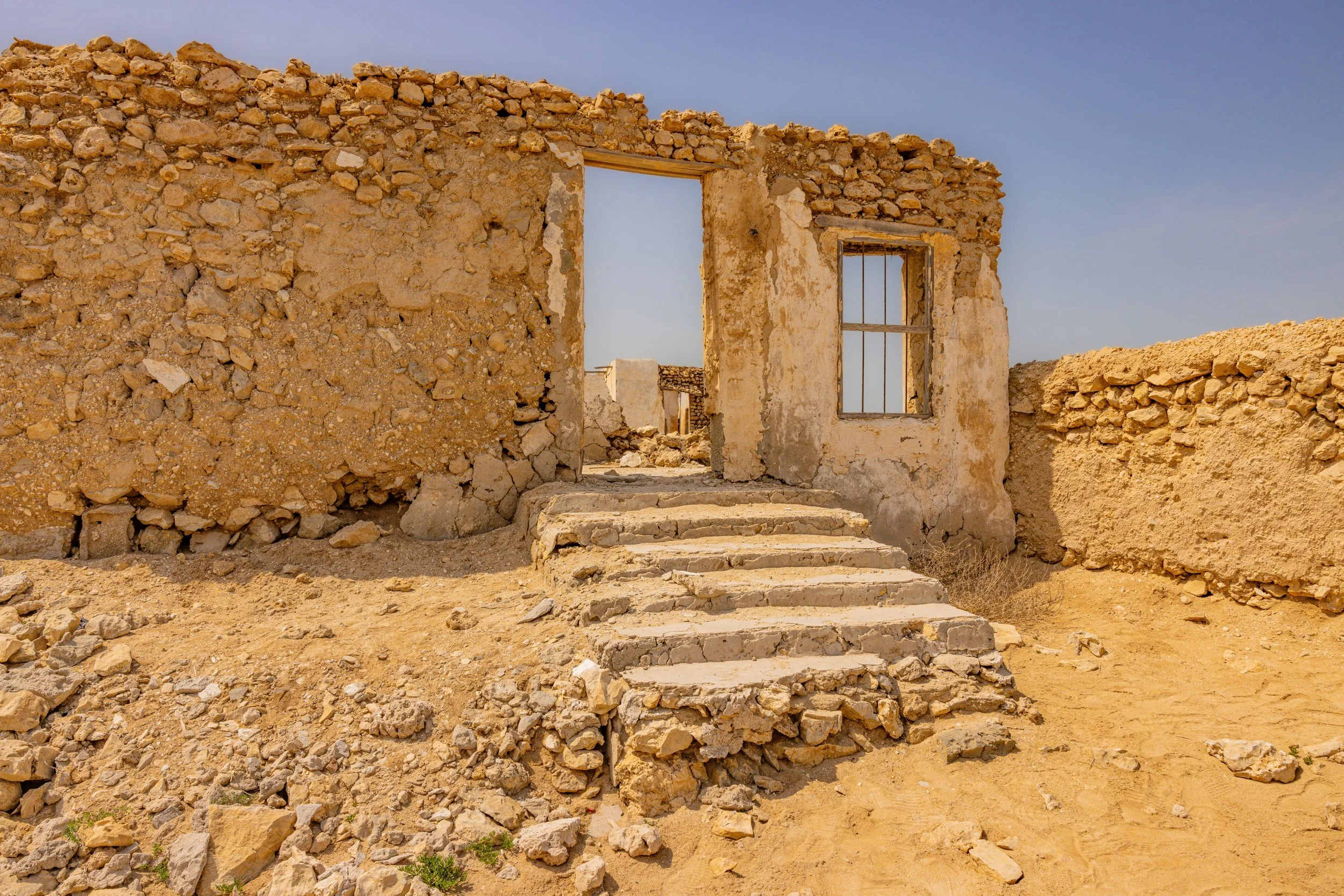
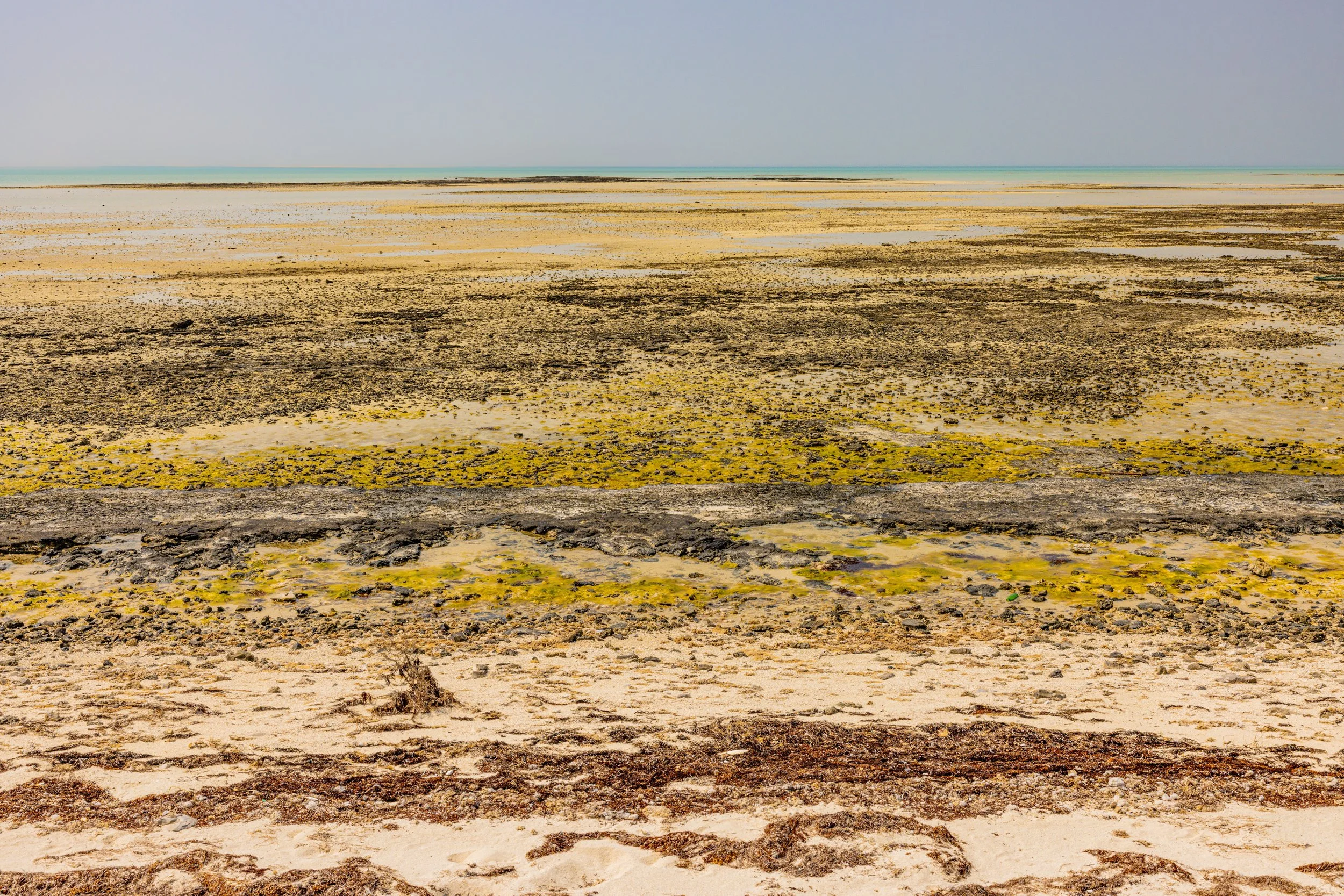
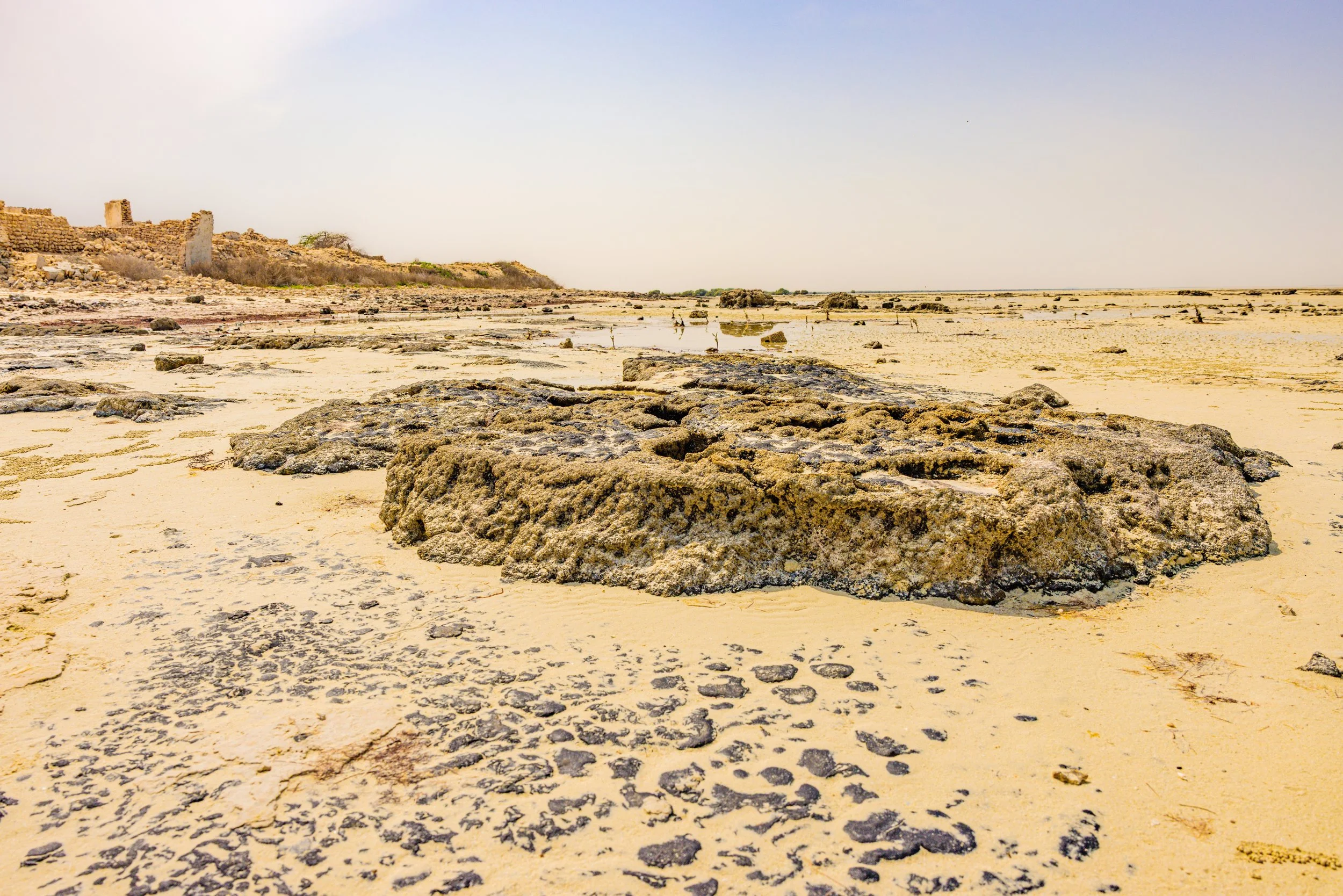
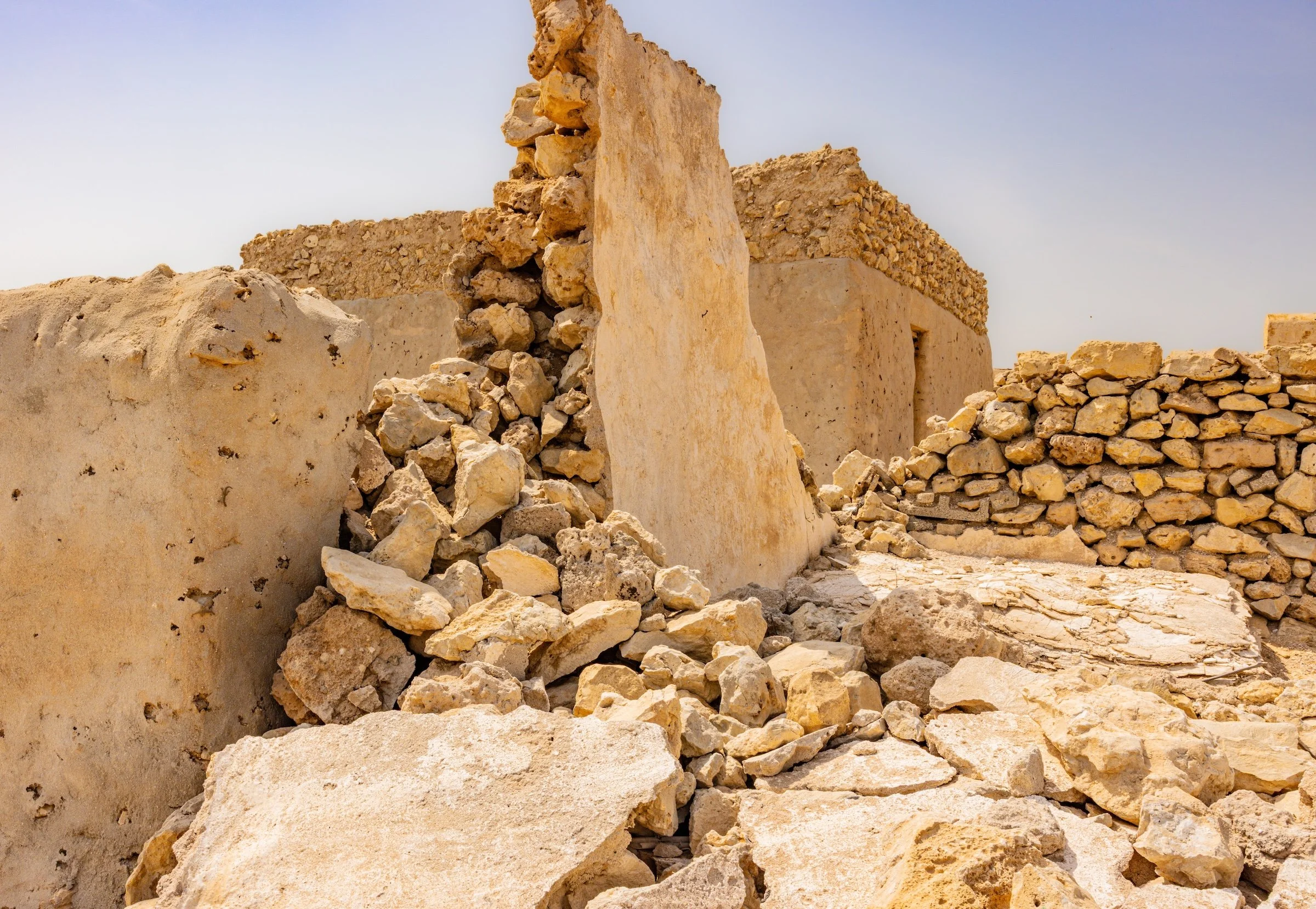
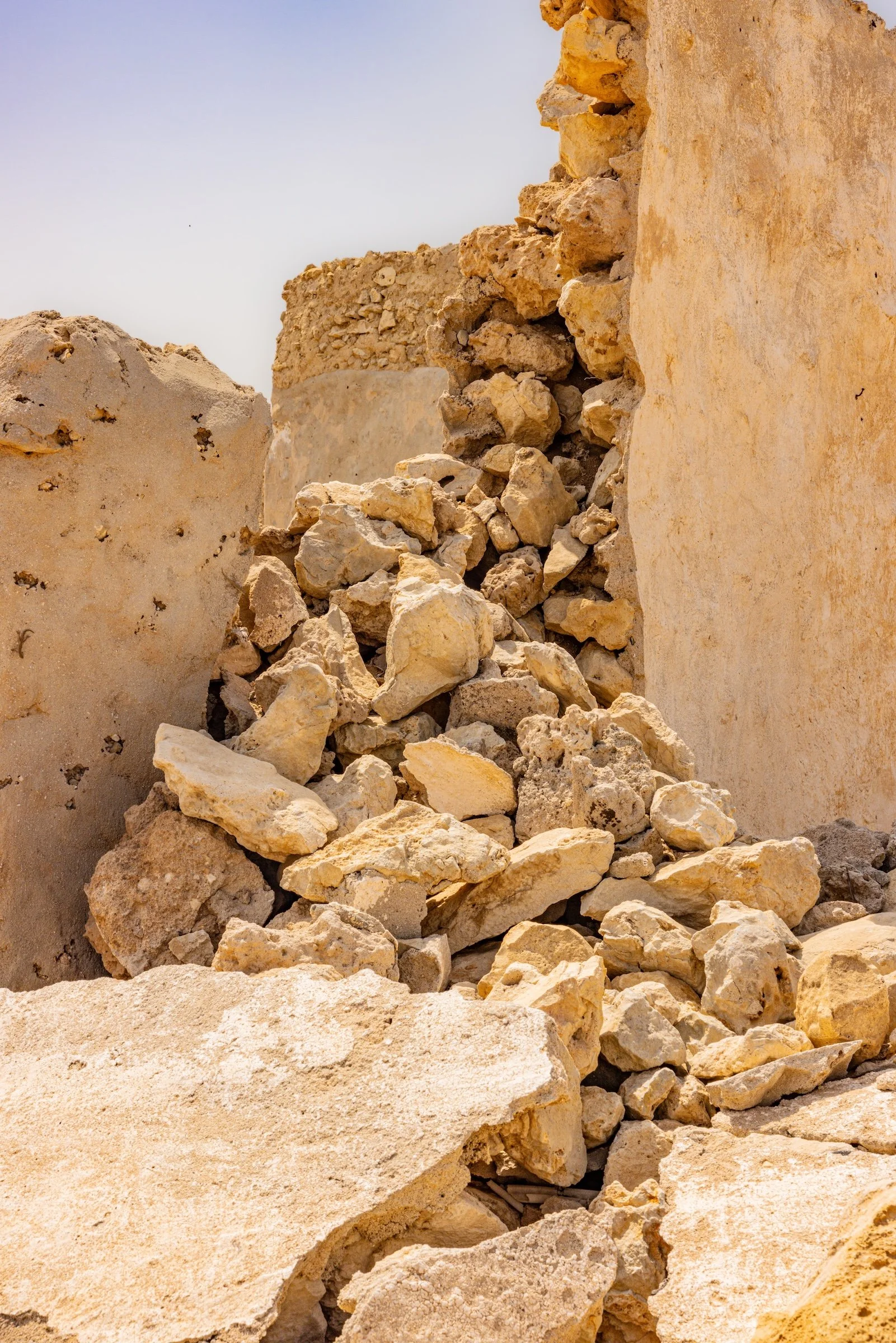
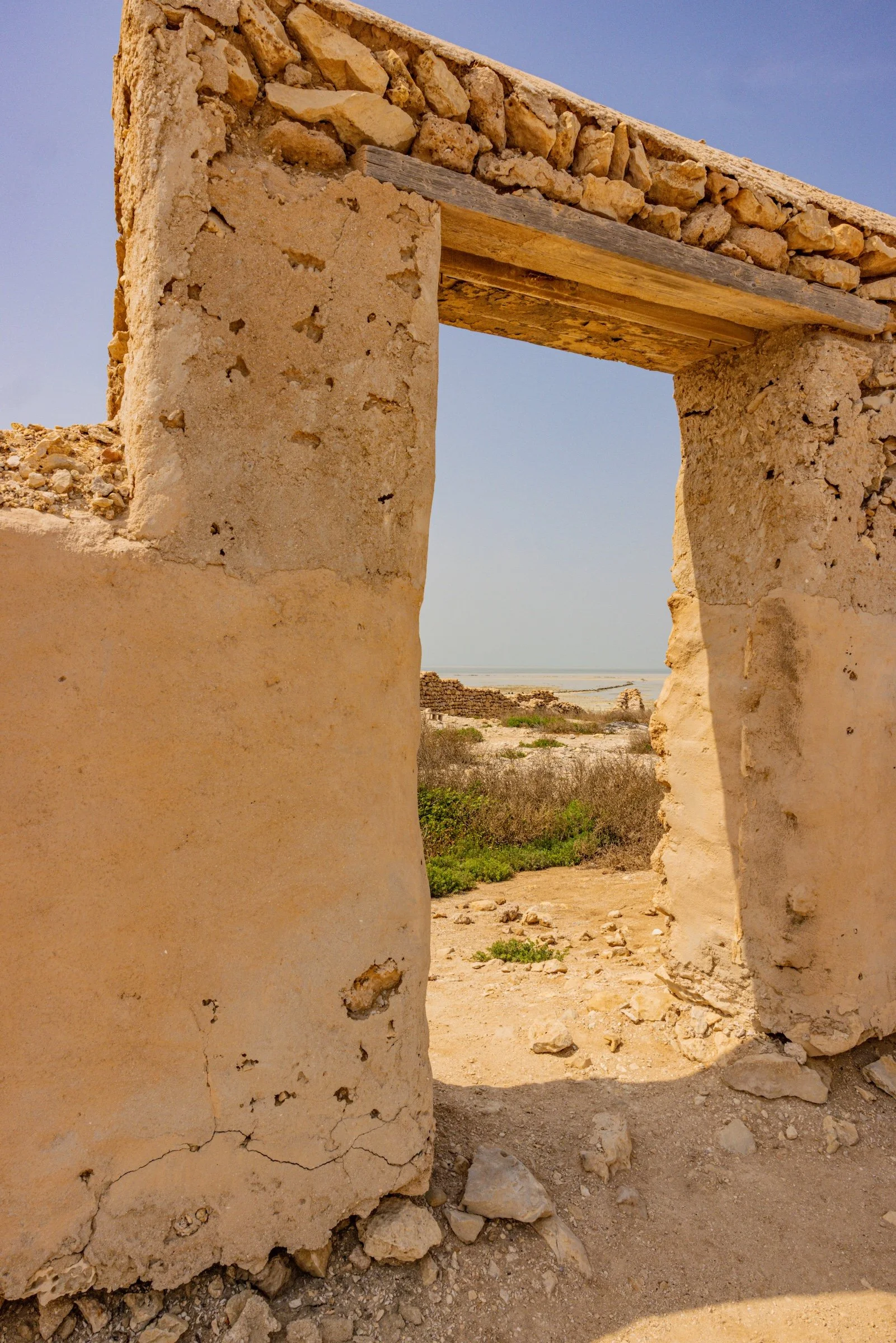
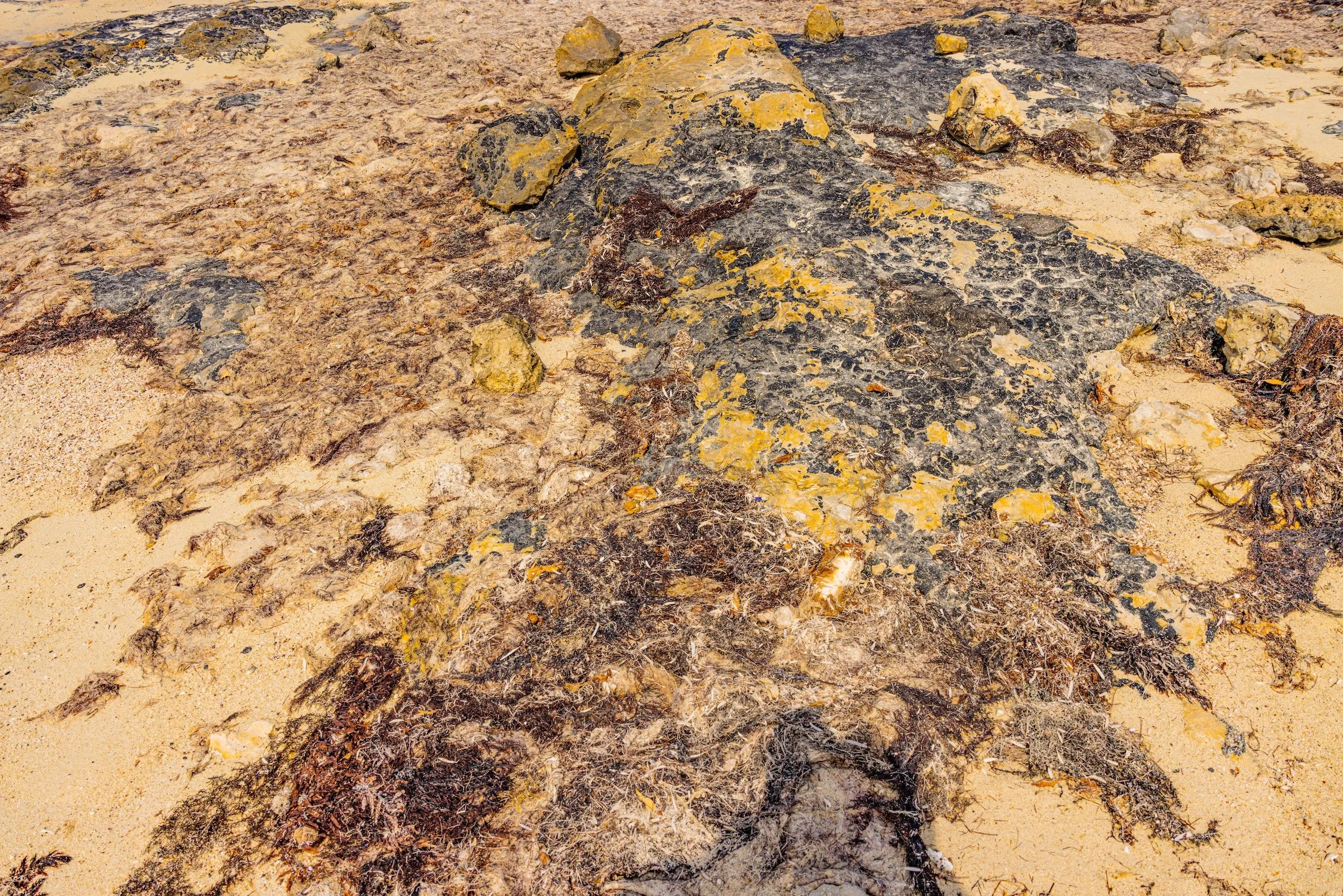
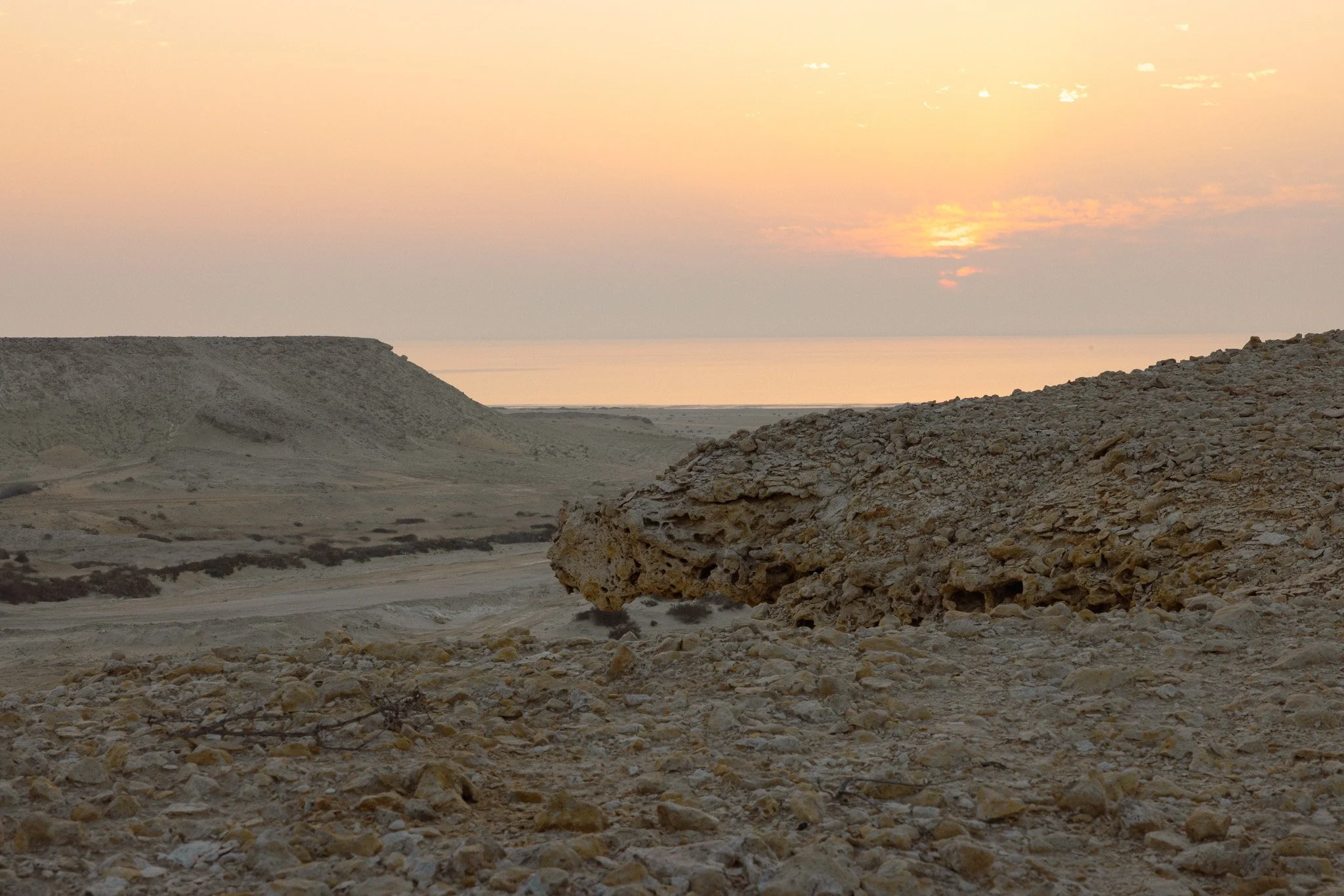
Al Jumail, Qatar
Al Jumail—named after the Arabic word jameel, meaning beautiful—is a haunting remnant of Qatar’s maritime past. One of the oldest settlements in Qatar, once a thriving 19th-century pearling and fishing village, it now rests in silence along the northwest coast, its coral-stone homes echoing a life once bound to the rhythms of the sea. Abandoned in the shadow of Qatar’s oil and gas economic boom, Al Jumail stands as a ghost town—a fragile monument to resilience, tradition, and the quiet poetry of a vanished way of life. The modern economic booms marked by swift urban expansion and the mass arrival of migrant laborers, who constructed the glittering skyline of contemporary Qatar. The dramatic rocks on the coast create a surreal landscape. The interplay between crumbling ruins and eroded stones echoes the quiet weight of migrant journeys—each fragment a testament, as the land itself bears silent witness.



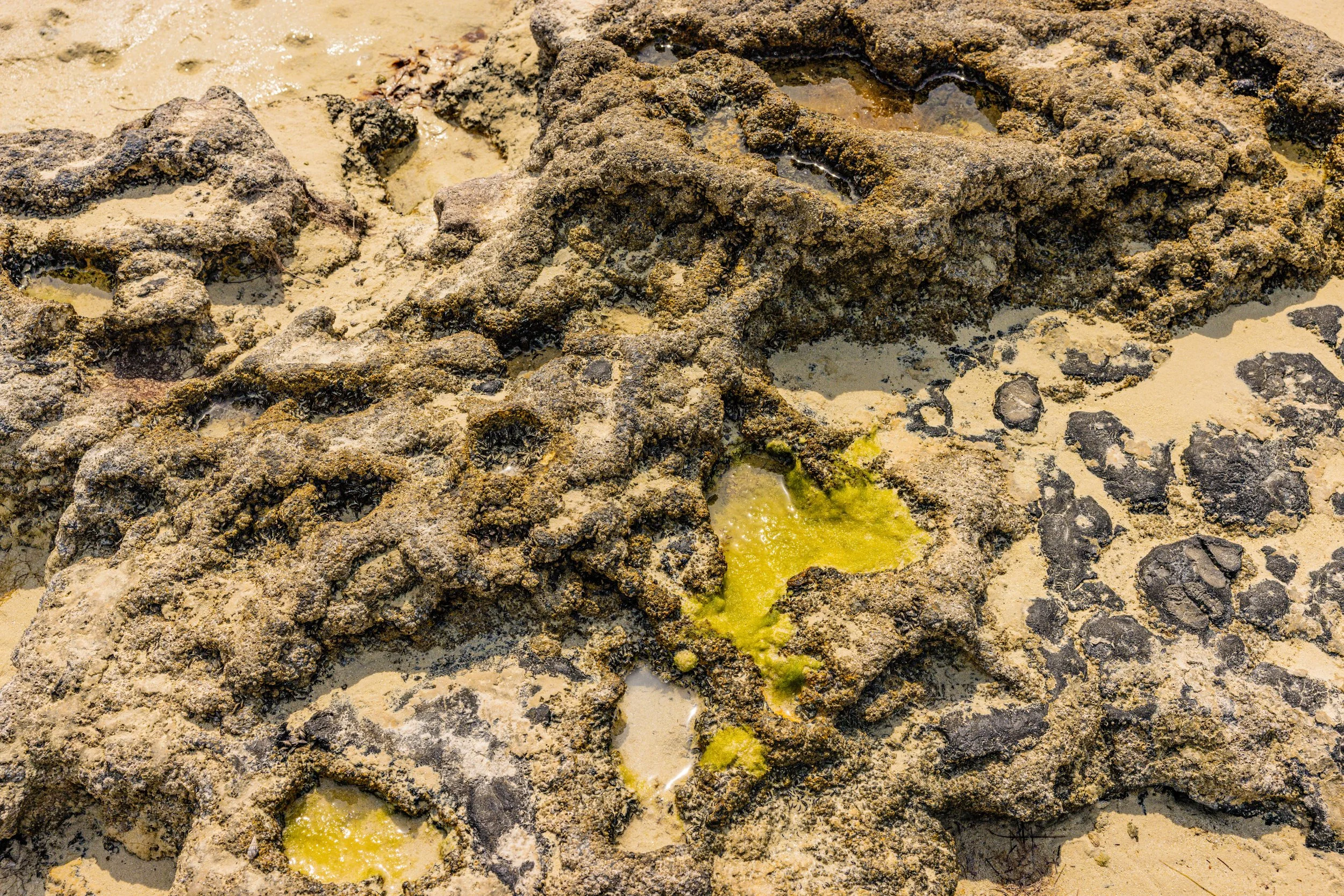
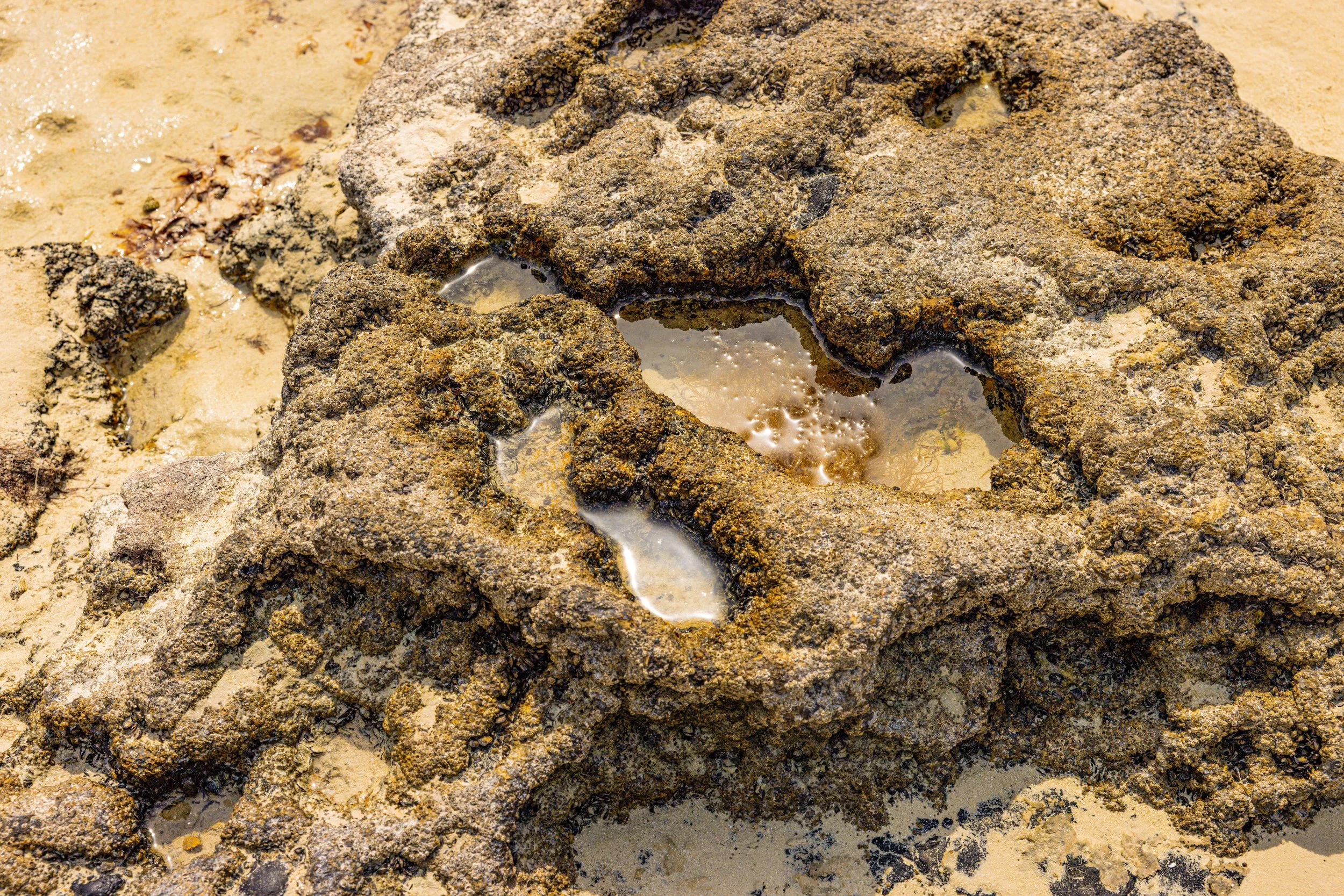
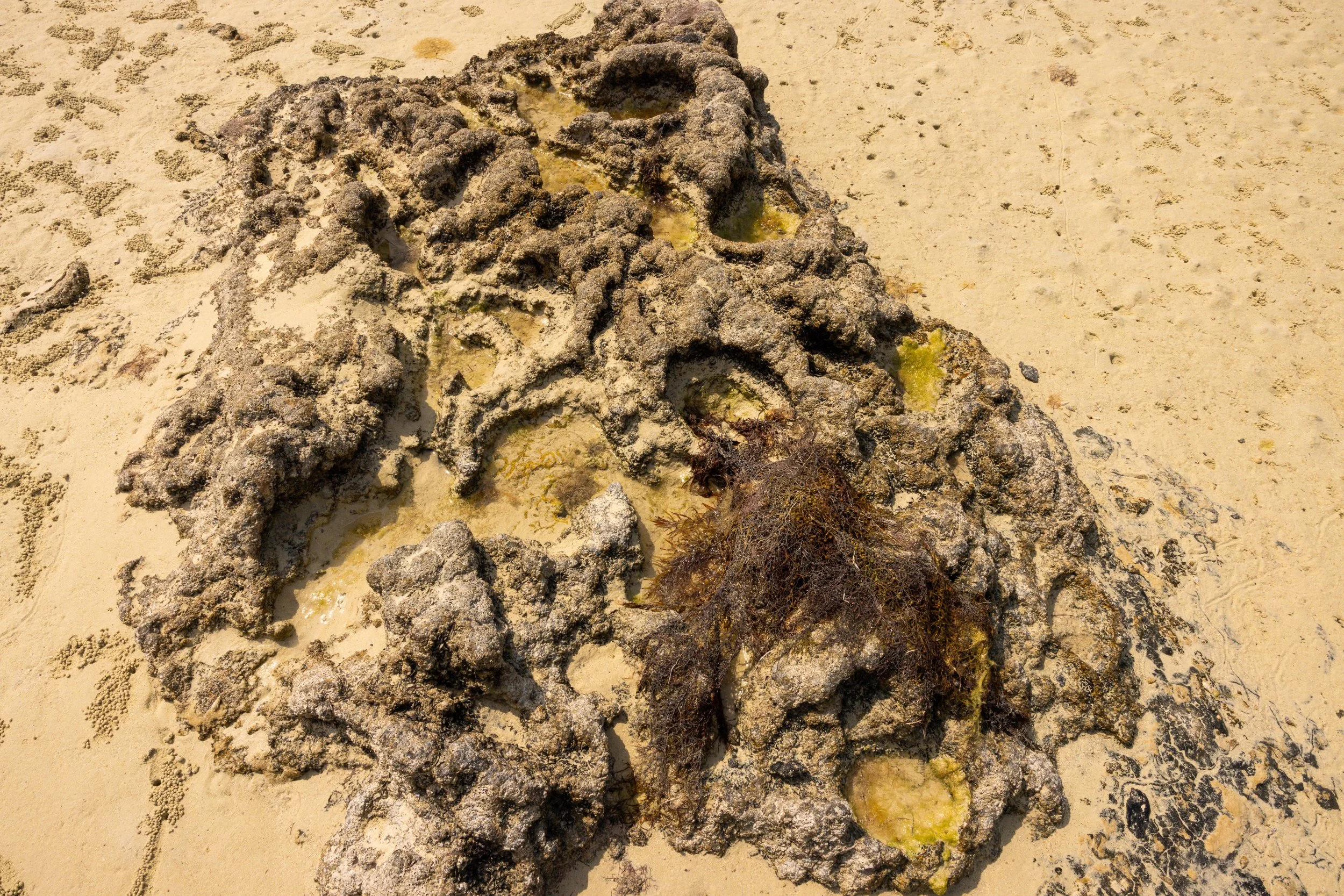
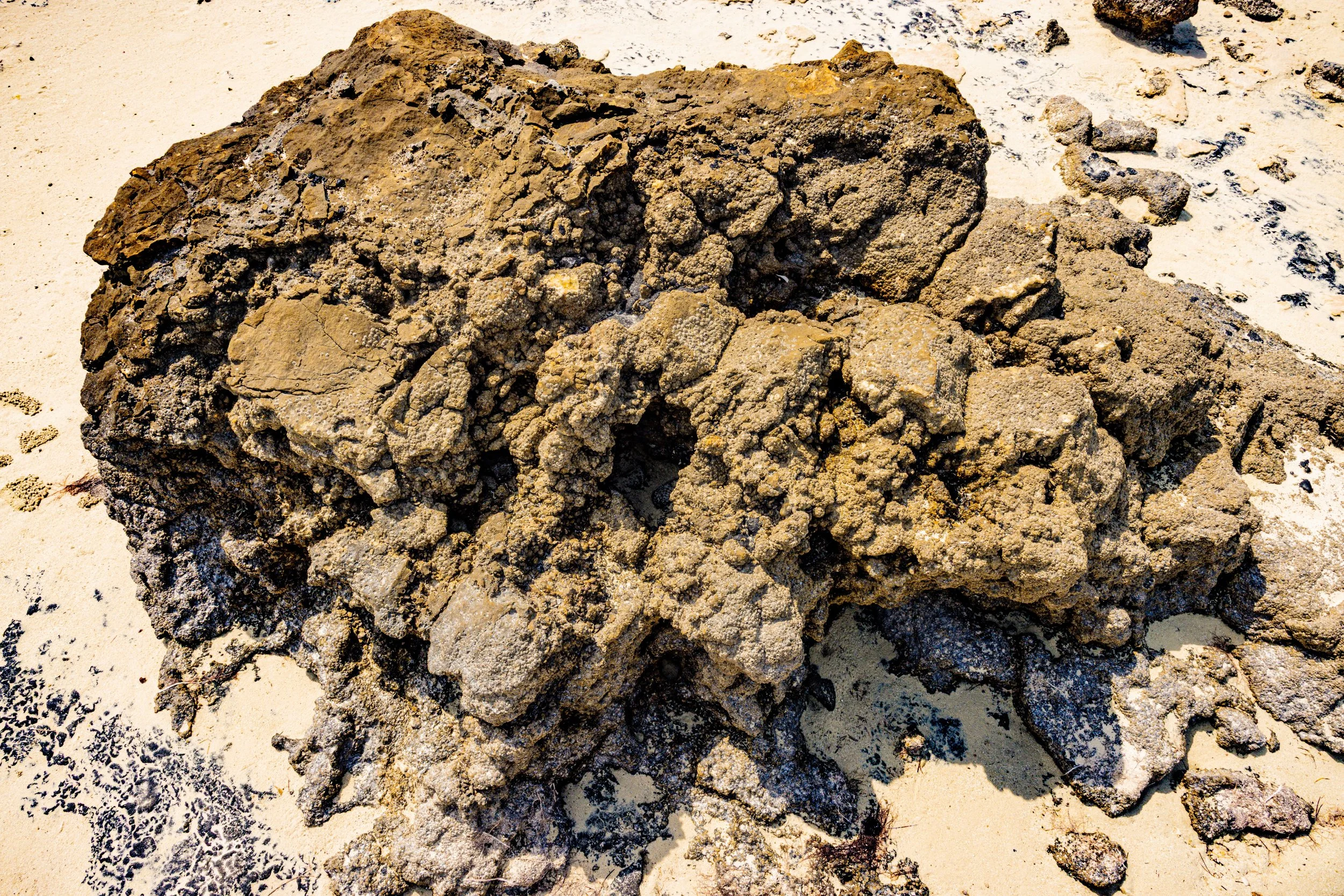
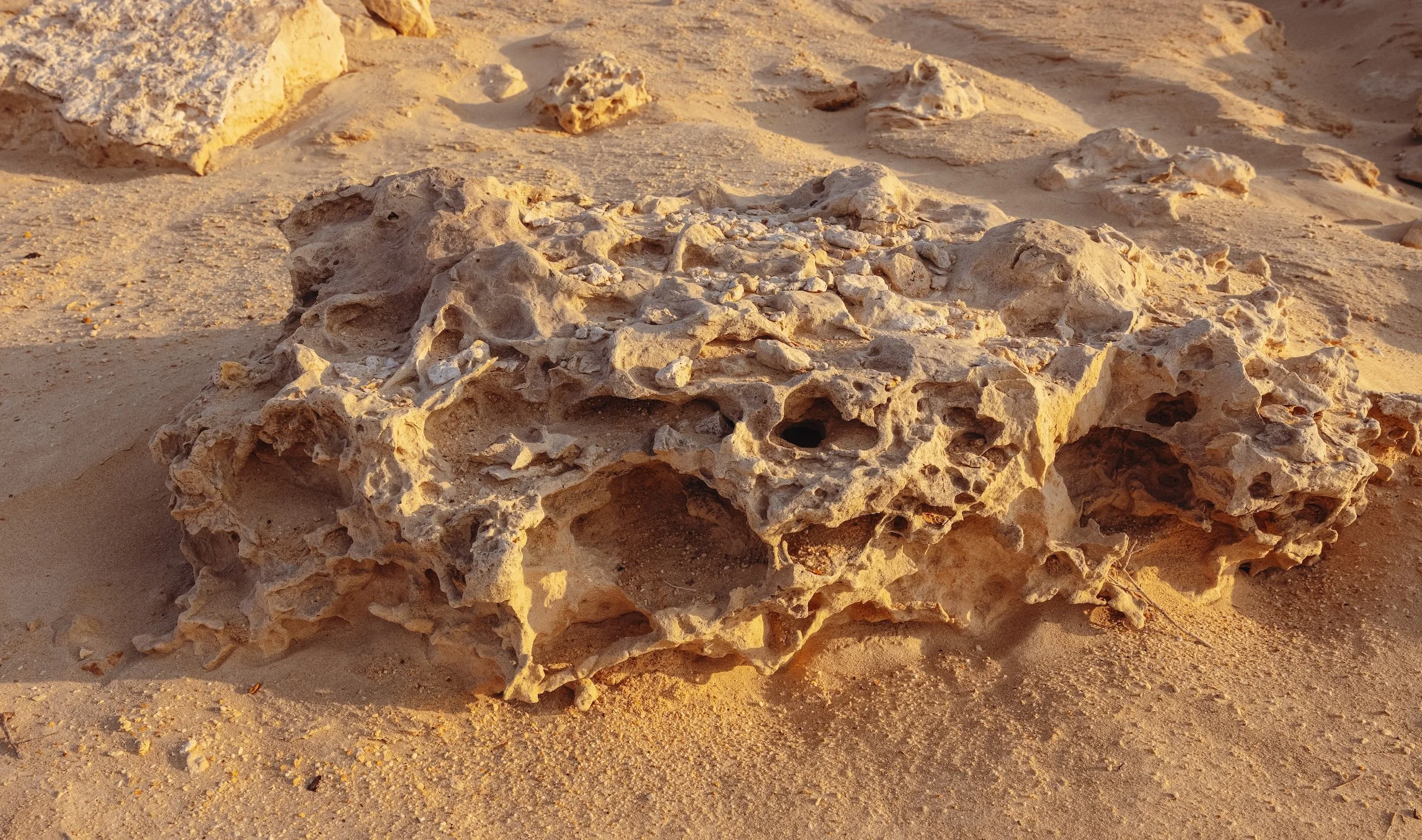
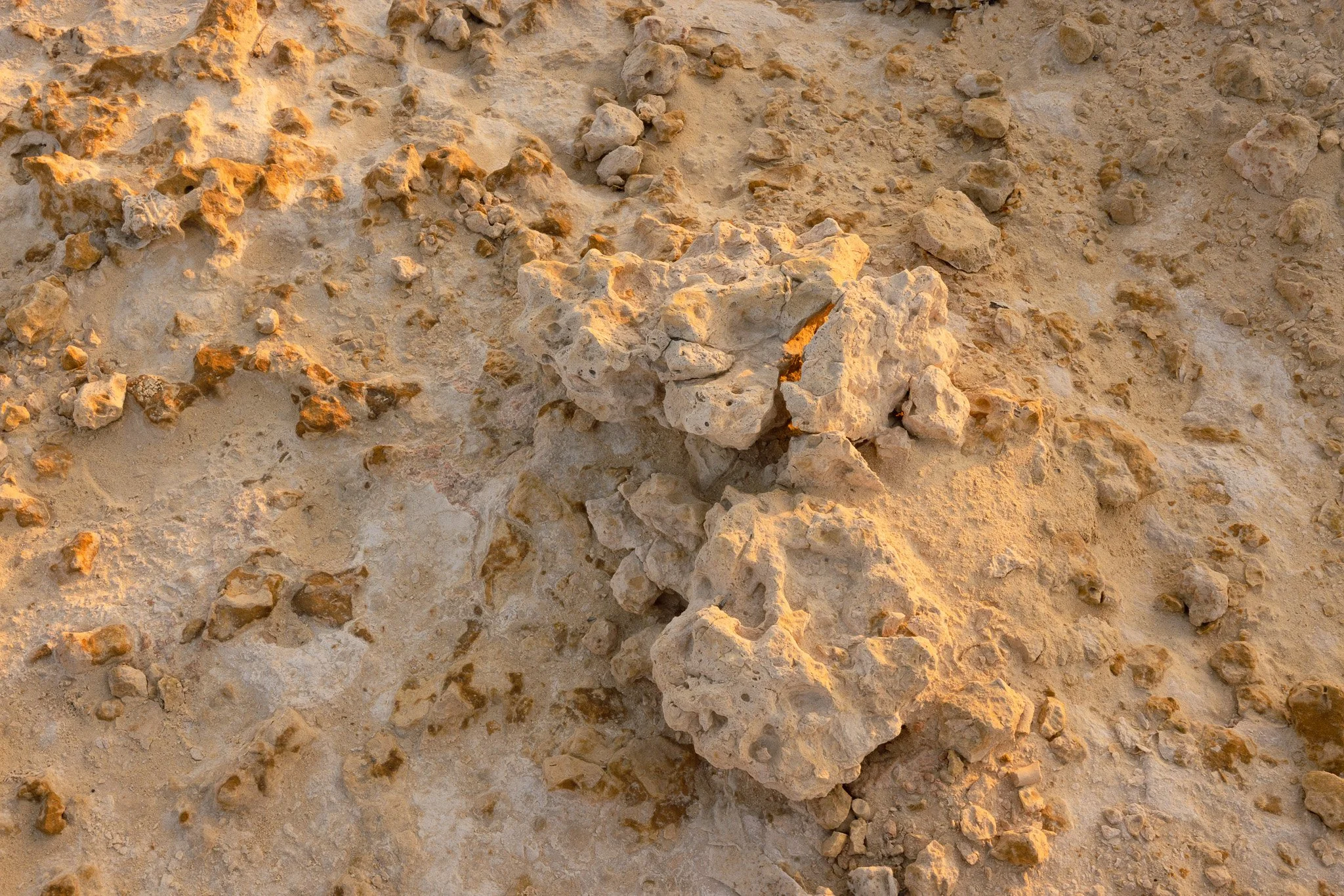
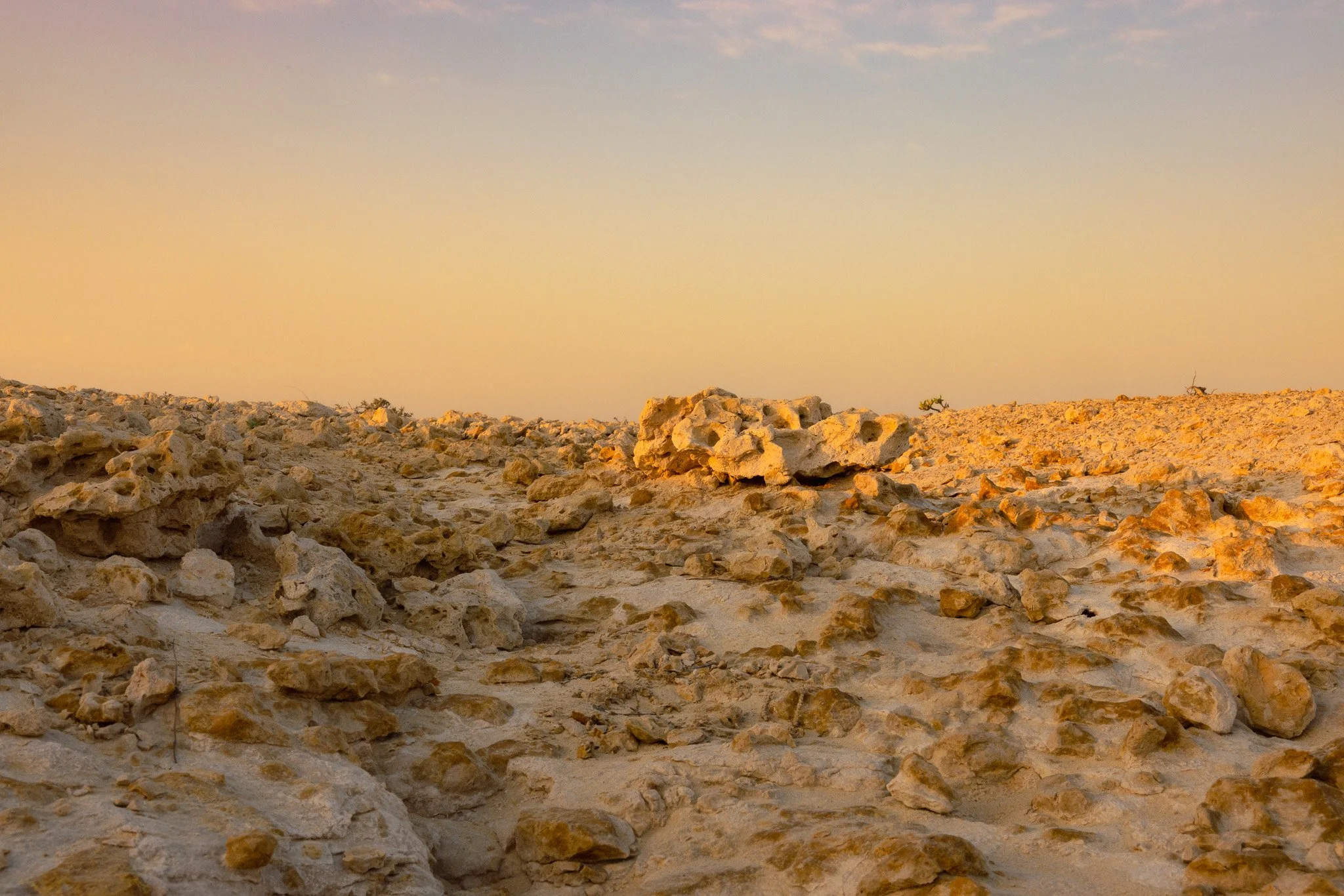
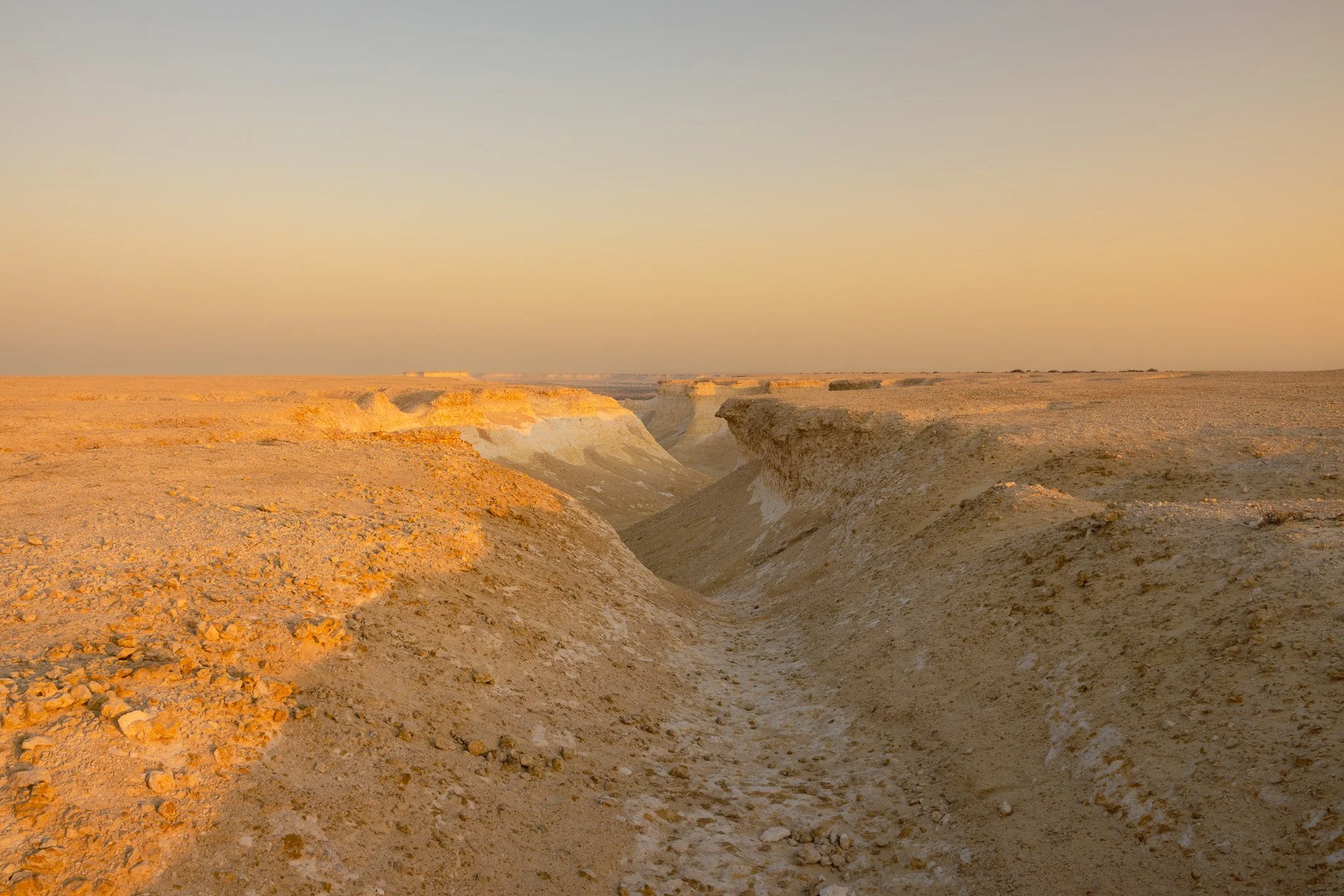
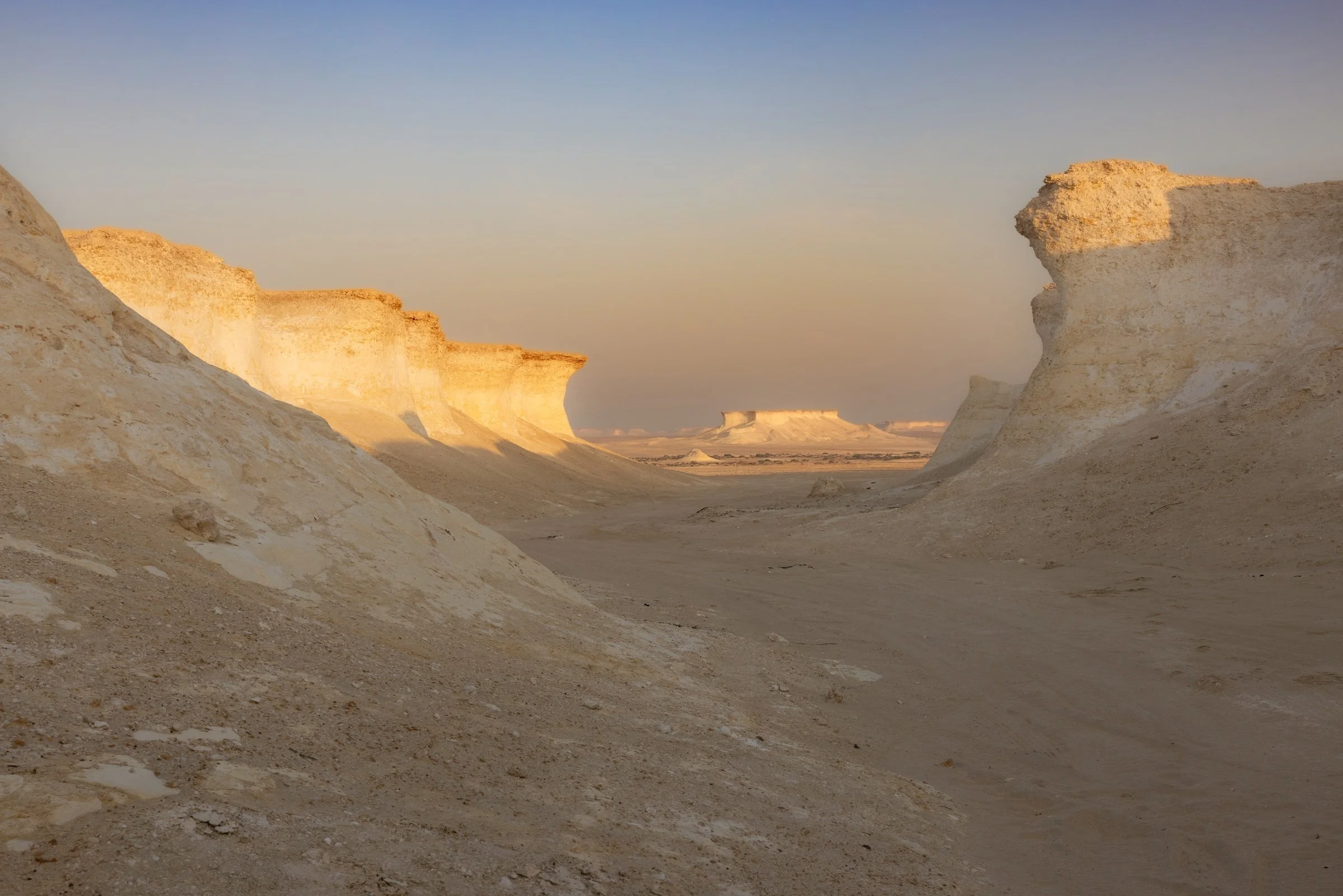
Zekreet Peninsula, Qatar
The eroded rock formations of Zekreet, sculpted over millennia by desert winds, stand as monuments to endurance over time. Their weathered shapes mirror the unseen labor of countless migrant workers, who have endured and shaped the modern landscapes of Qatar. In this shared language of erosion and labor, there is a quiet resonance: a testament to the forces—natural and human—that shape and reshape the world. The land remembers and preserves the marks we leave on it.

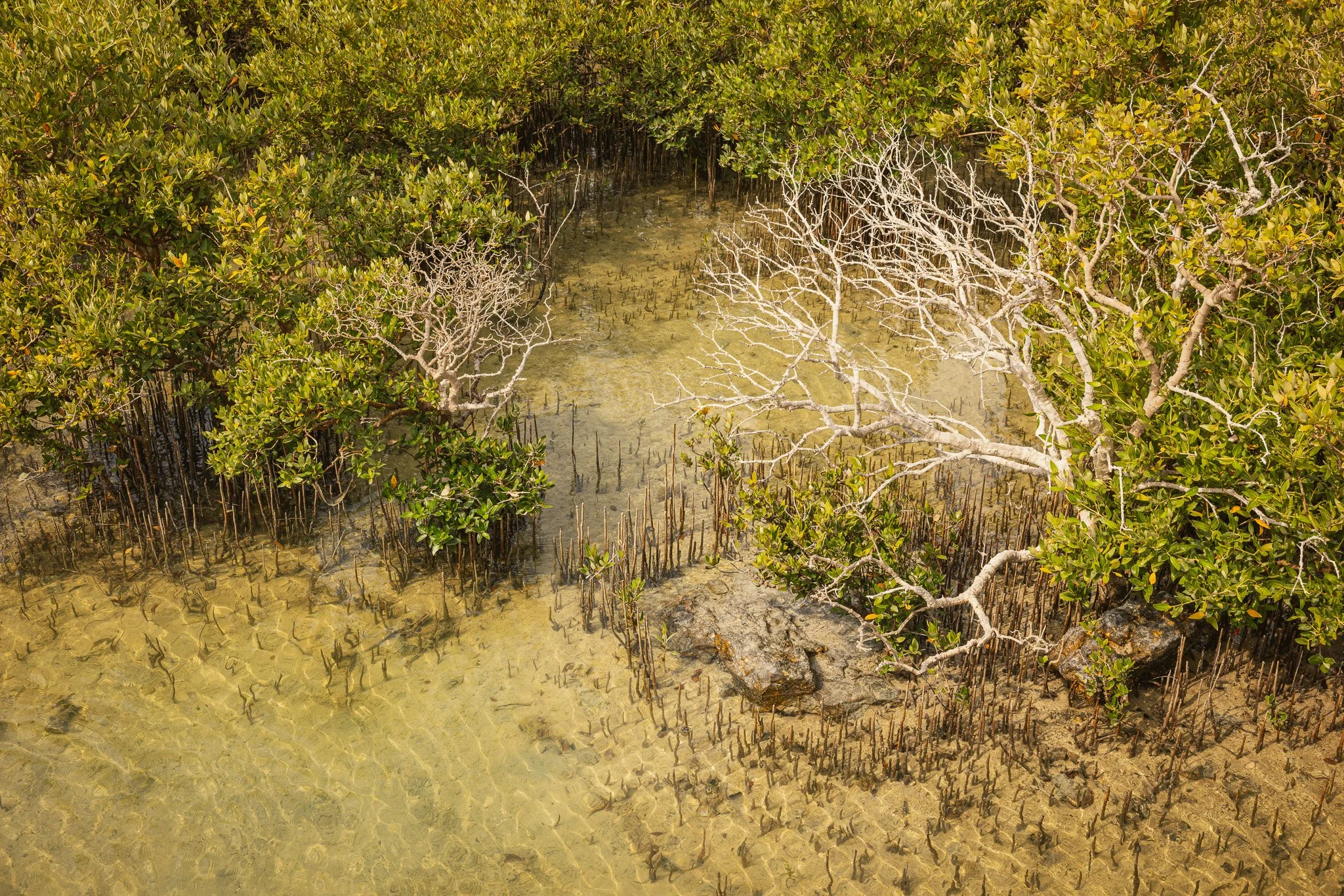
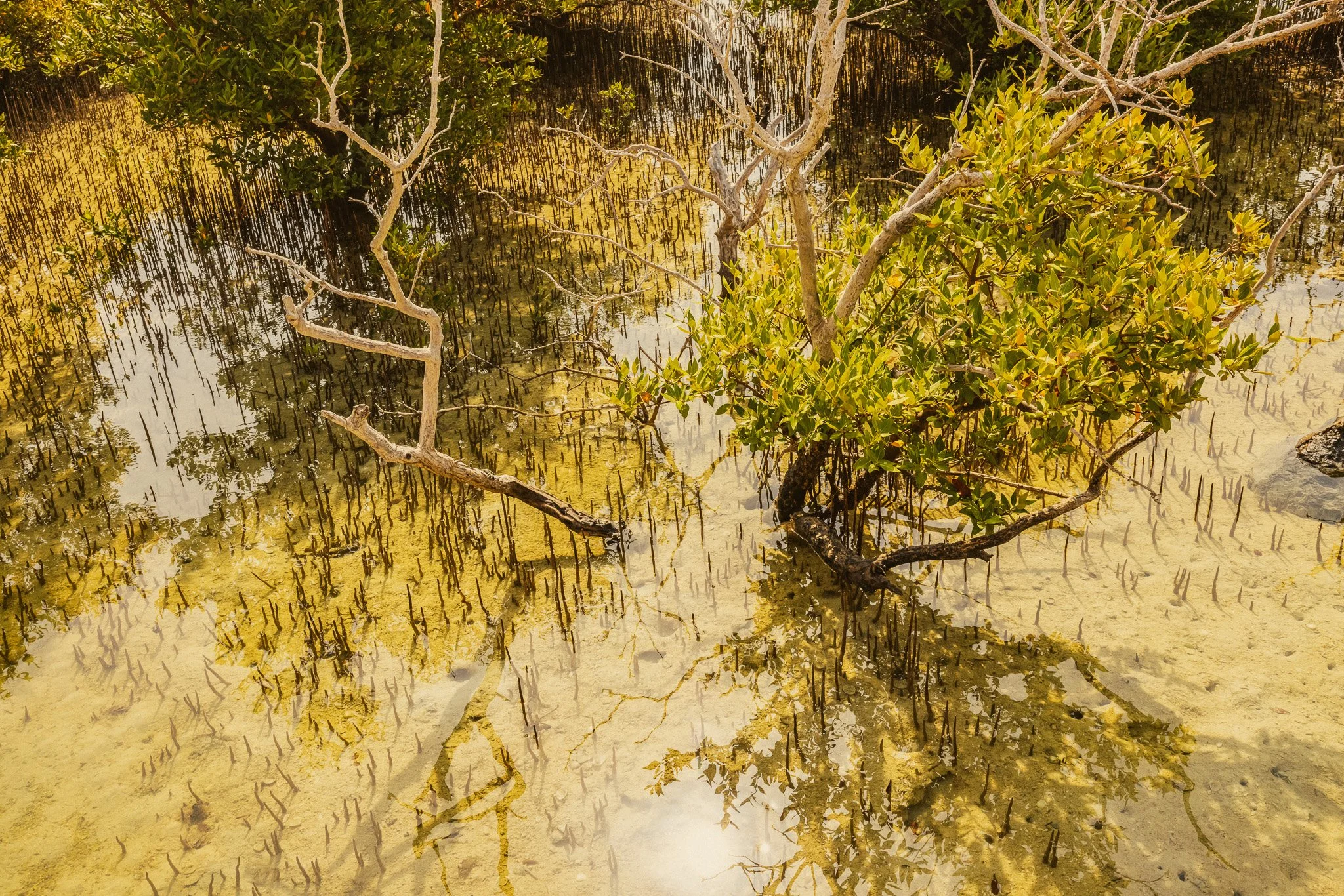
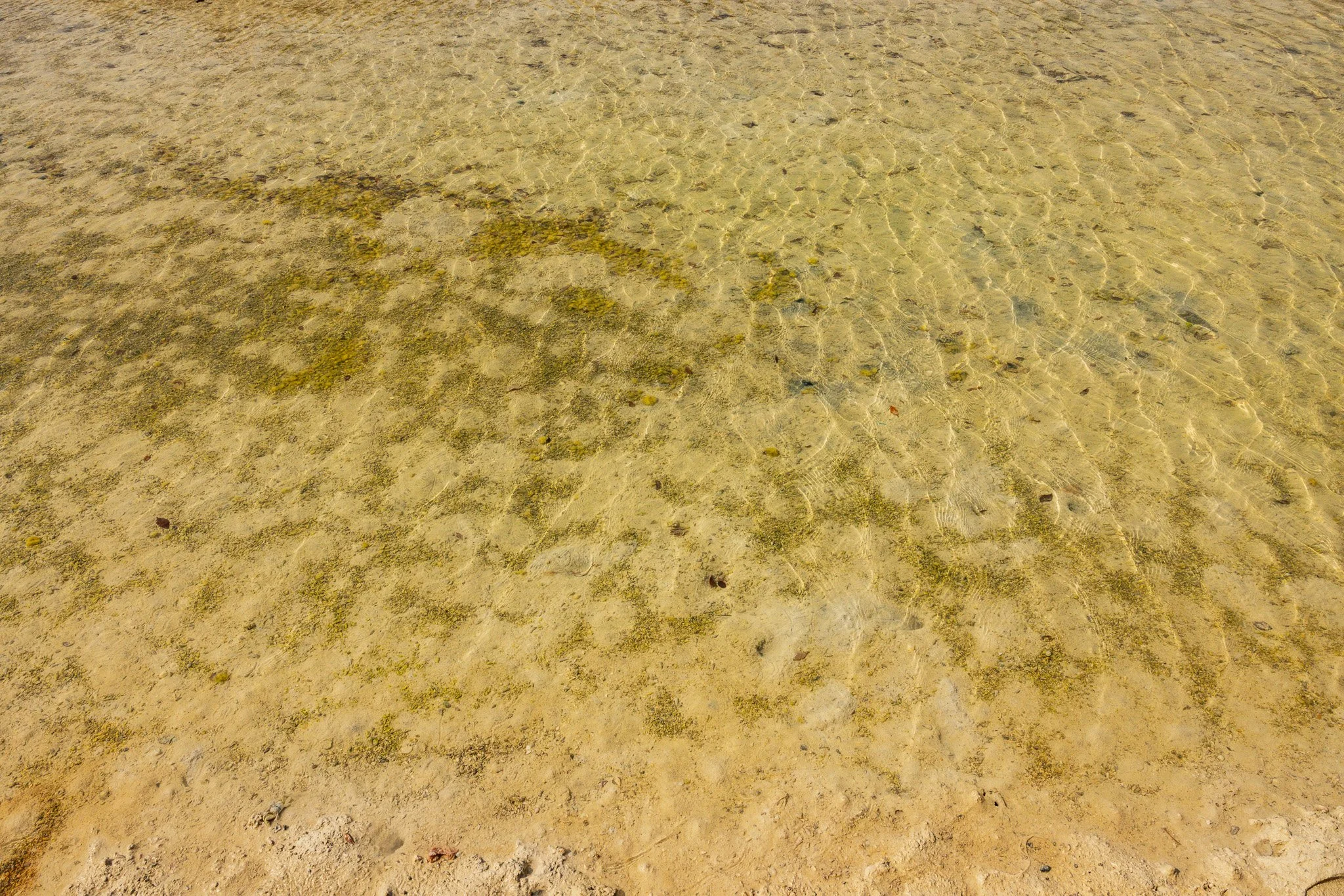
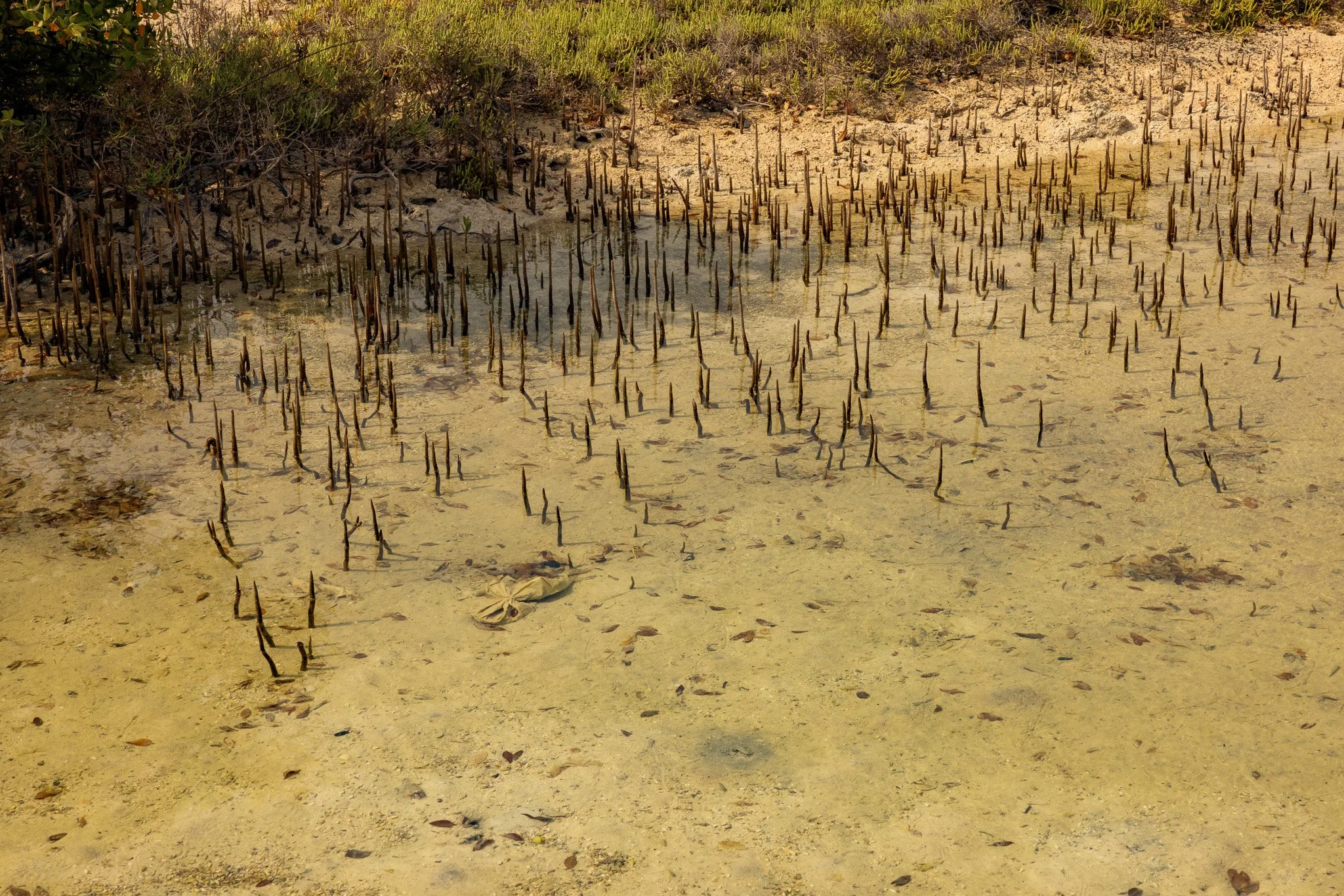
Purple Island/Al Thor Island, Qatar
This enclave of mangrove forest and tidal flats, form a protective barrier to erosion on the coastline. Mangroves anchor themselves in shifting sands, providing shelter and stability. Where do uprooted migrant communities find anchor and belonging? Qatar’s urban development has been shaped by the labor of of over two million migrant workers—ninety-five percent of the nation’s workforce. This work is a meditation on the intertwined narratives of nature and humanity, resilience and displacement.

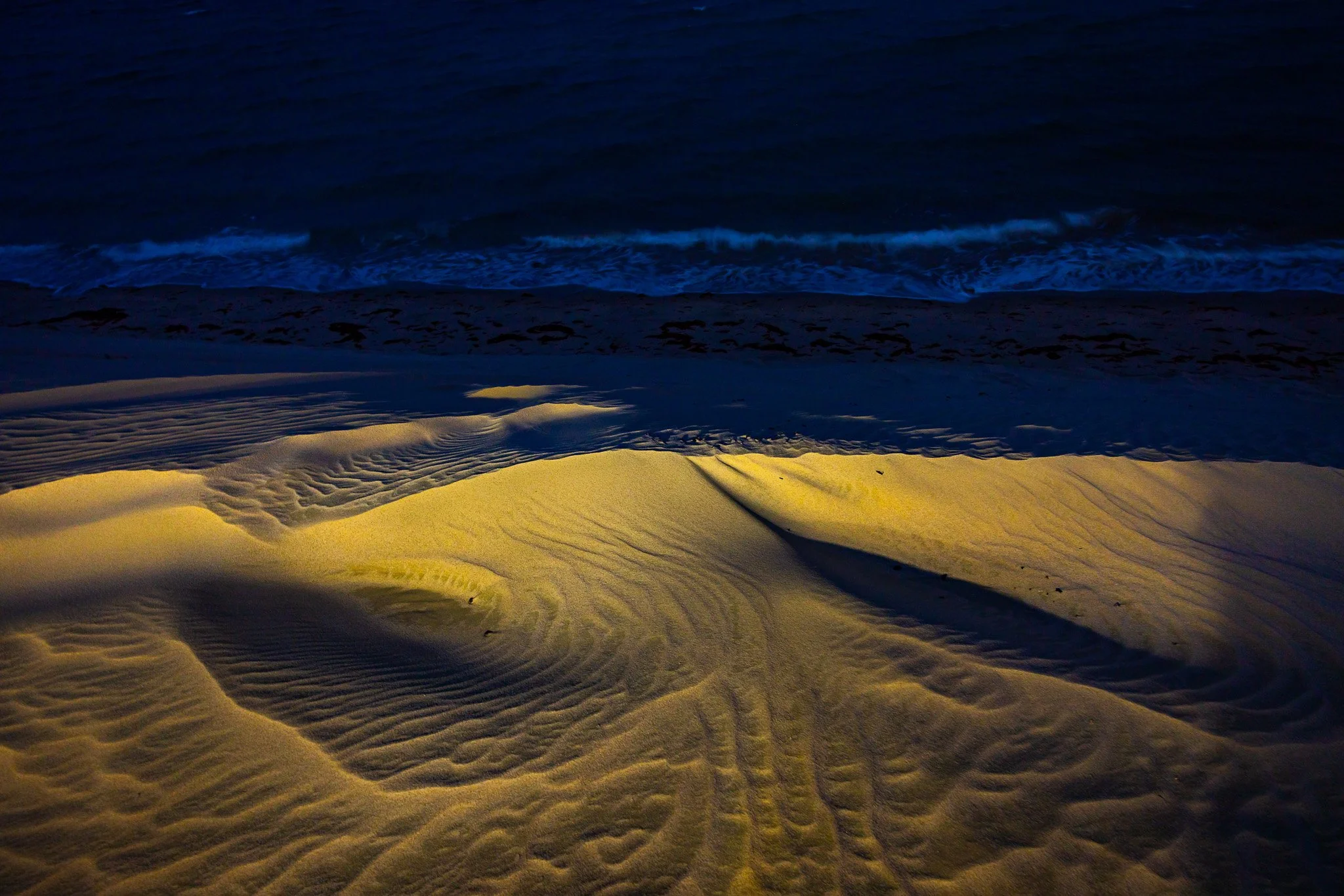
desert and the sea, Qatar coast
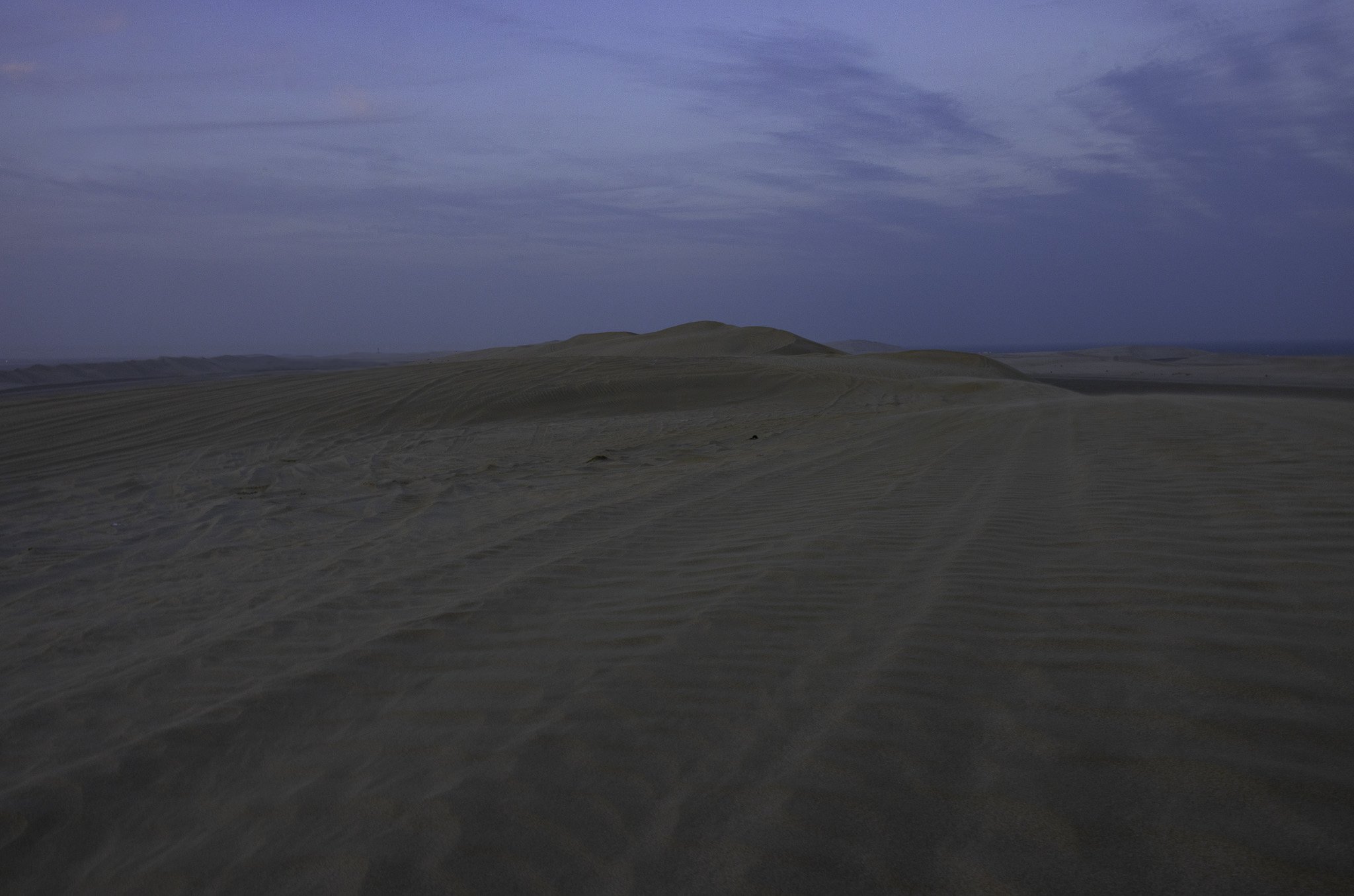

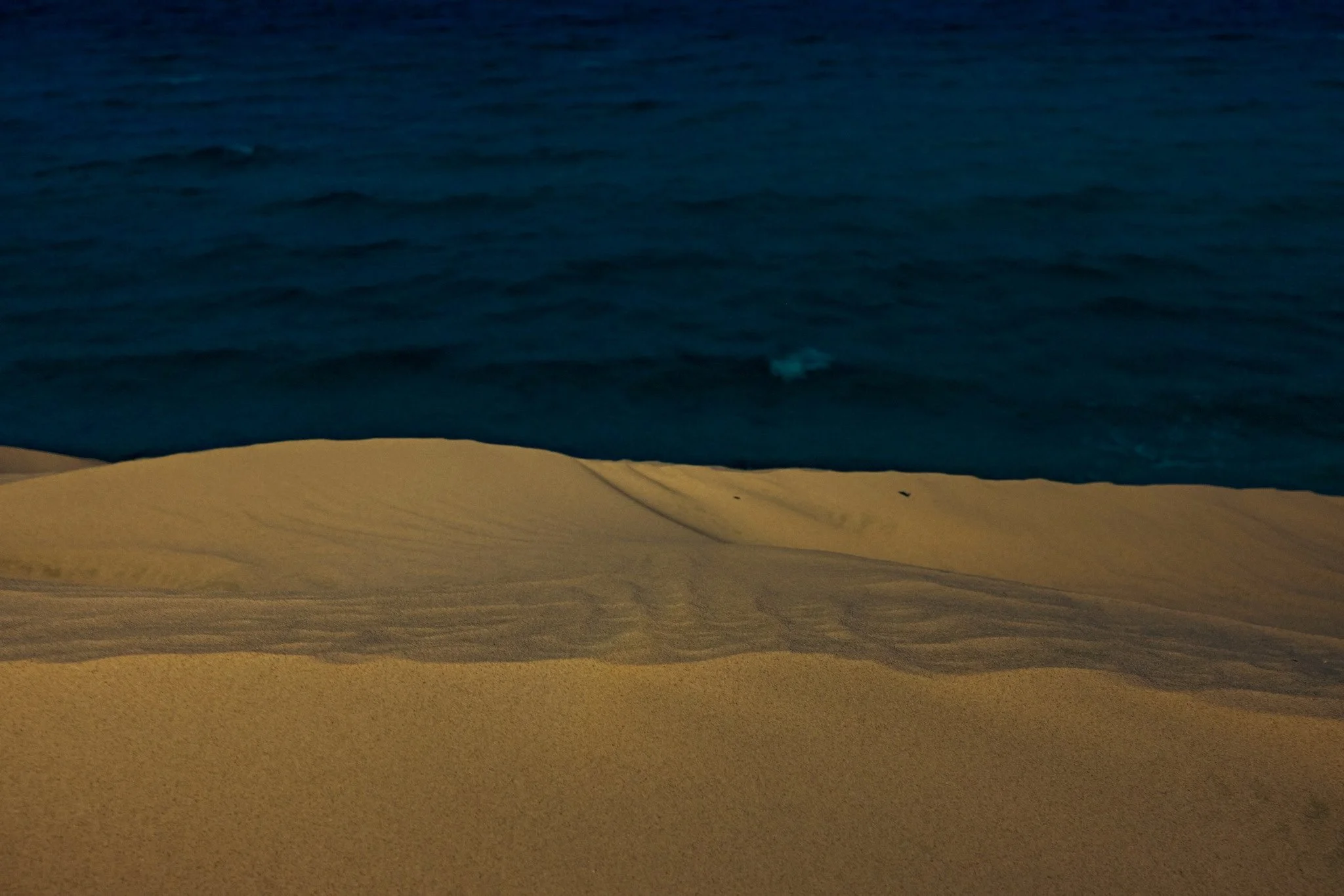
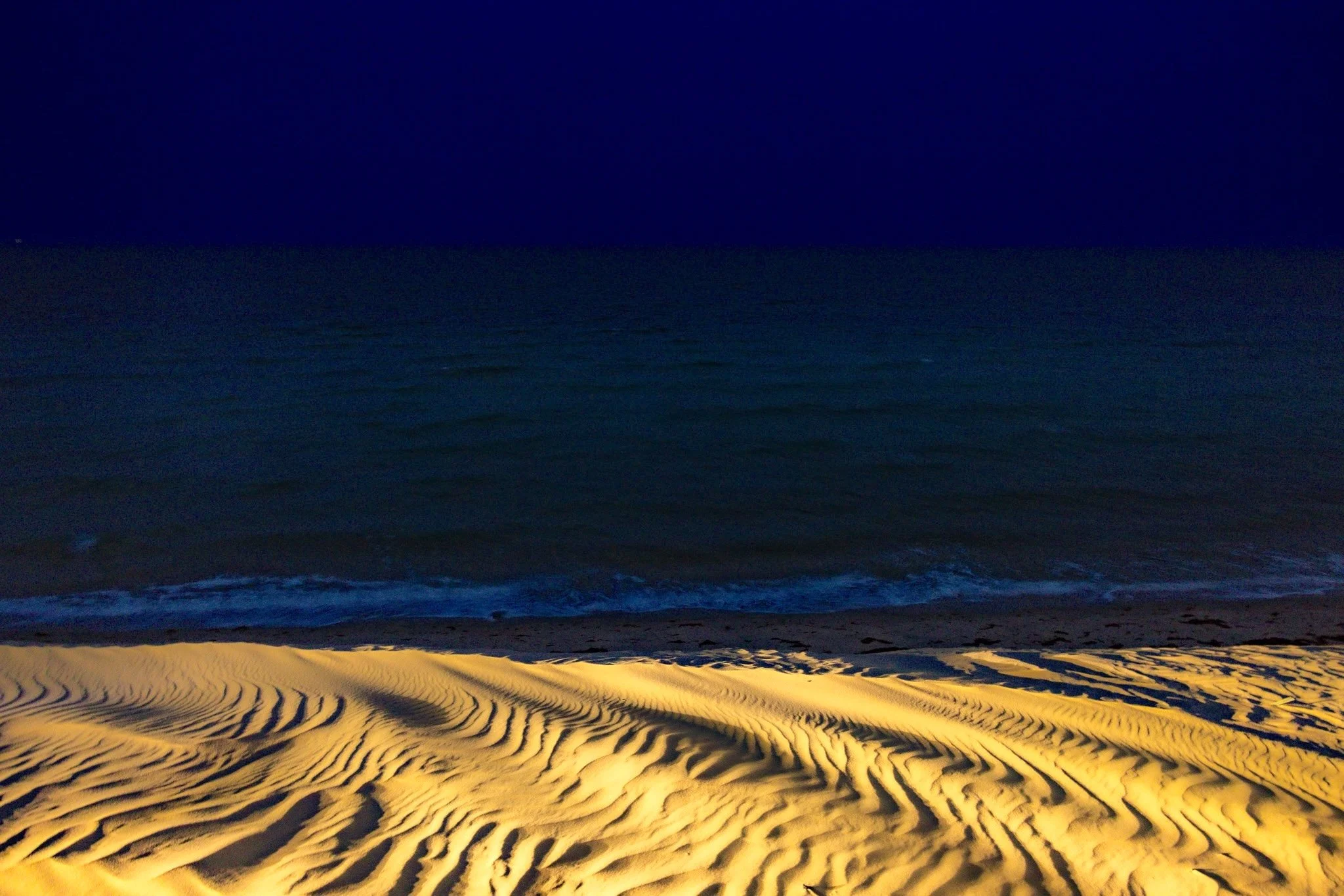
The desert and the sea—two vast, ancient forces—frame the story of migration in the Gulf, where the shifting sand and the rhythm of tides echo the journeys of those who arrive seeking livelihood.

skyline of Doha
Dubai Archives
Dubai street bazaars, rest, weekend play
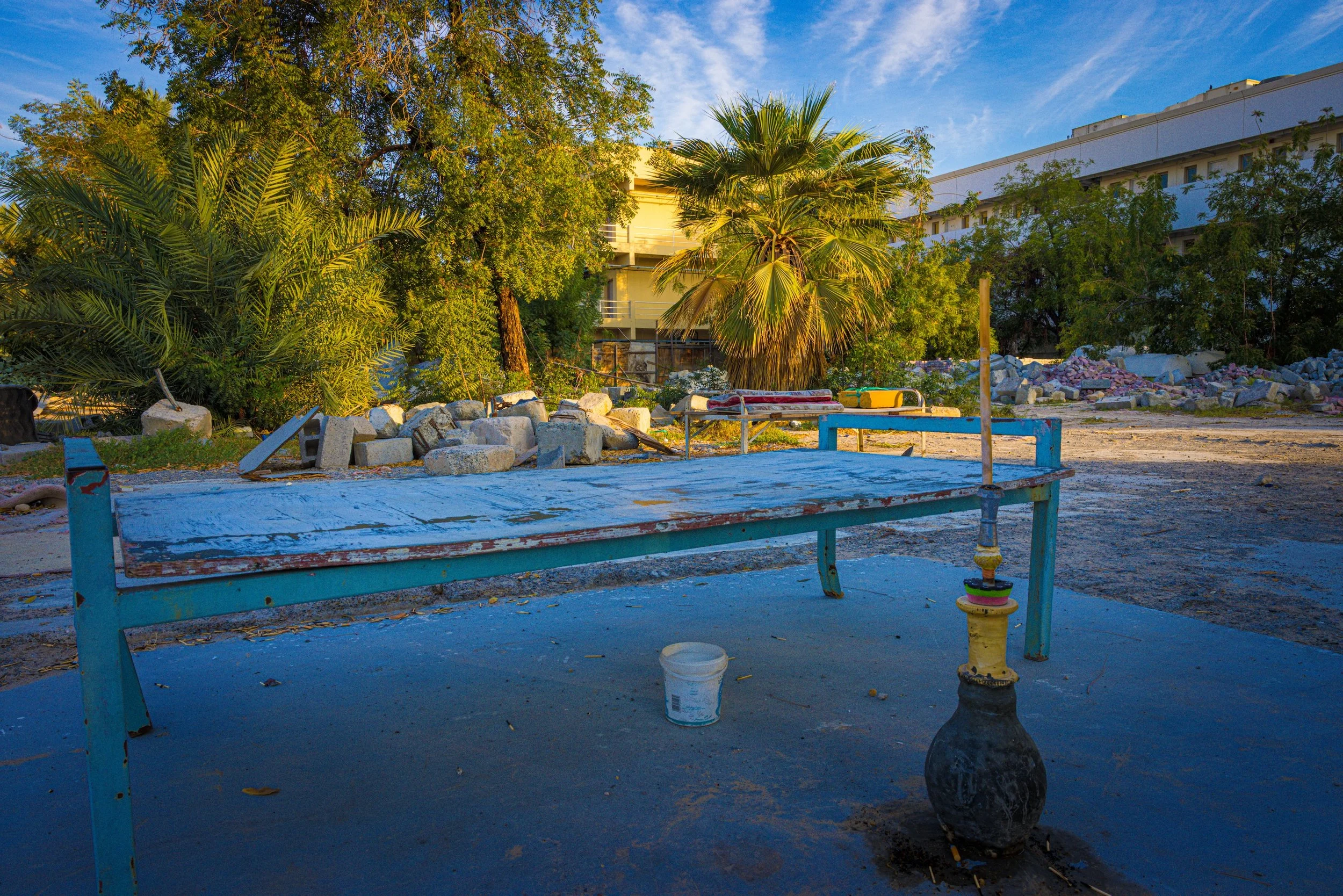
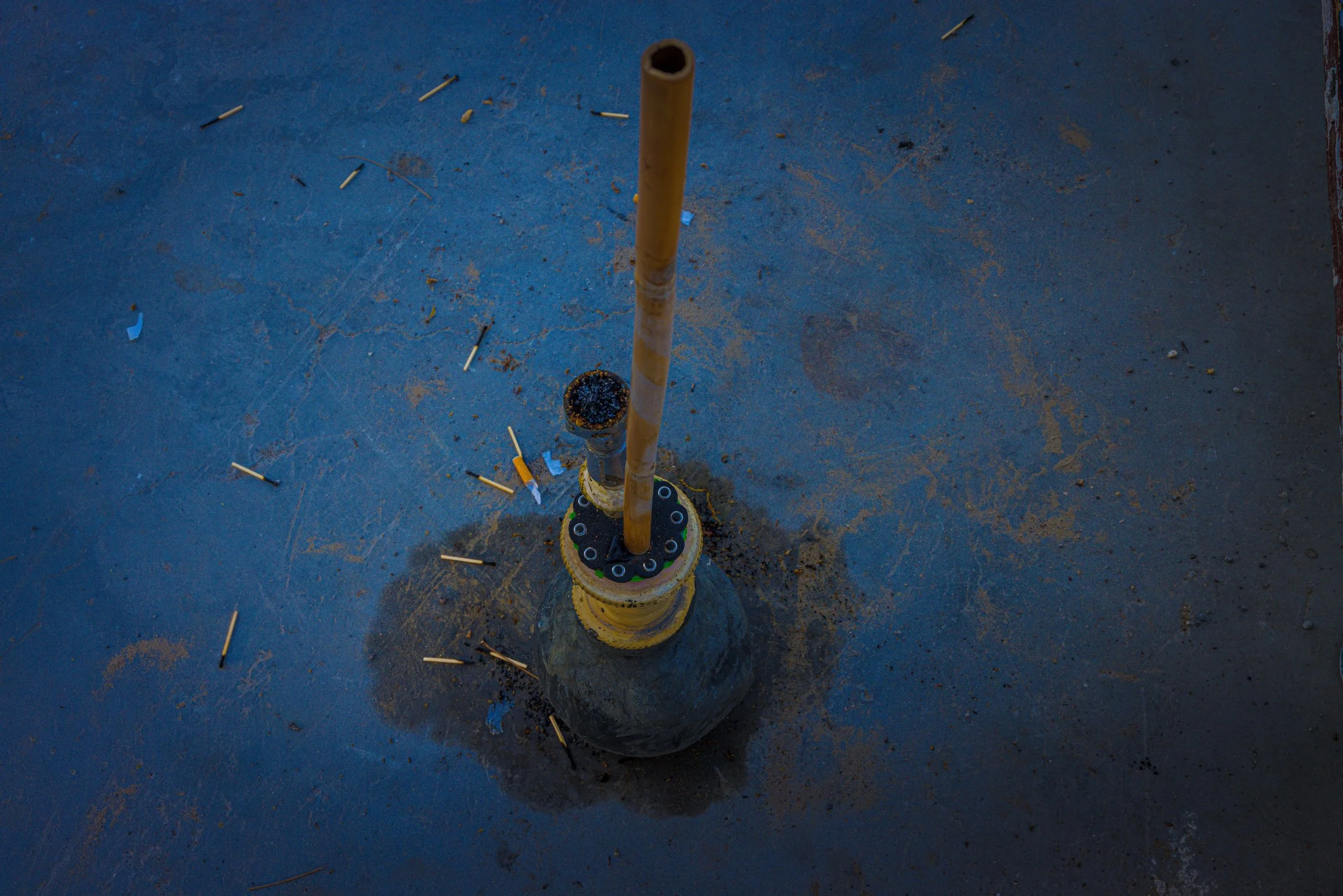

Street Bazaars




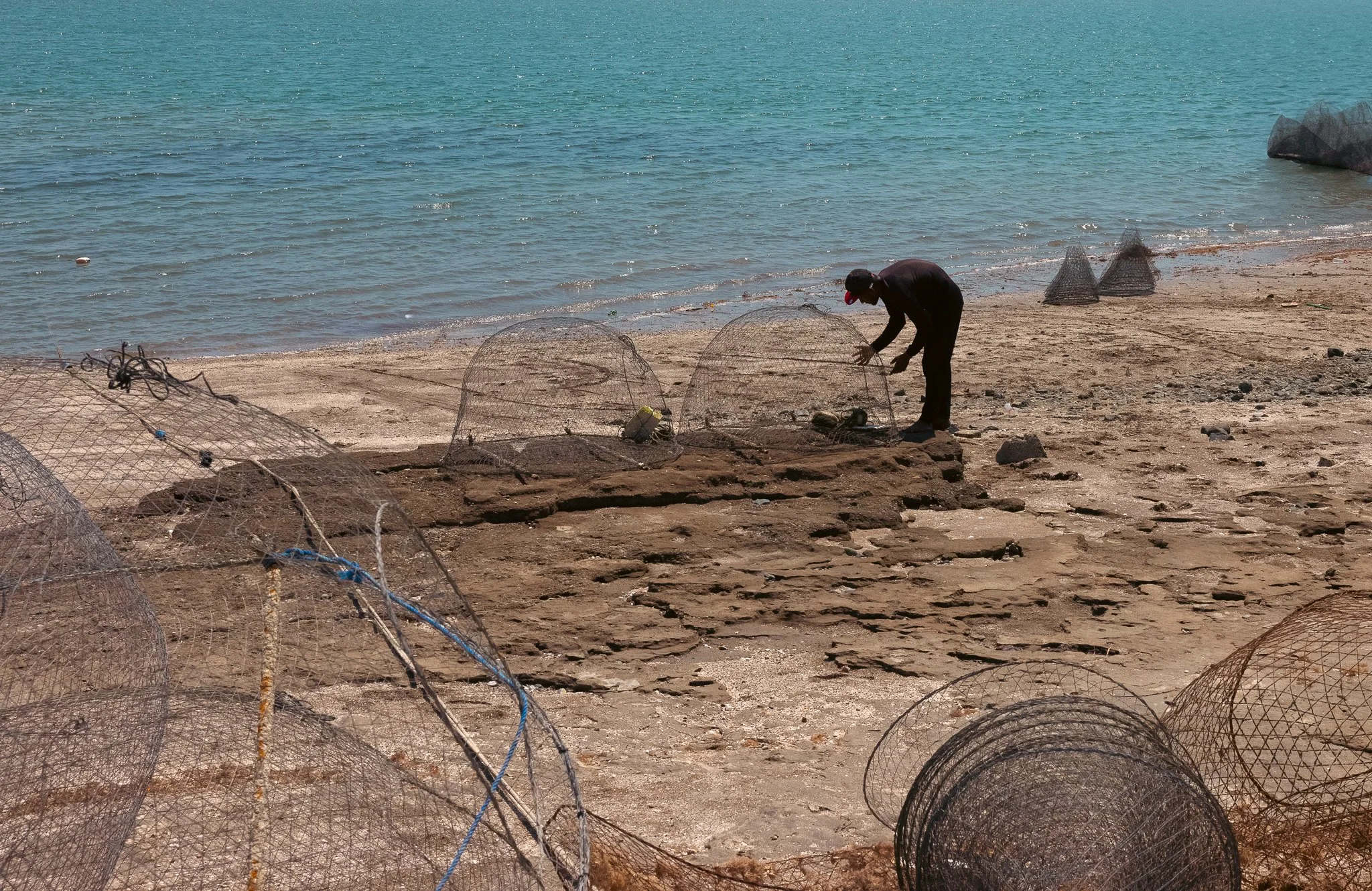
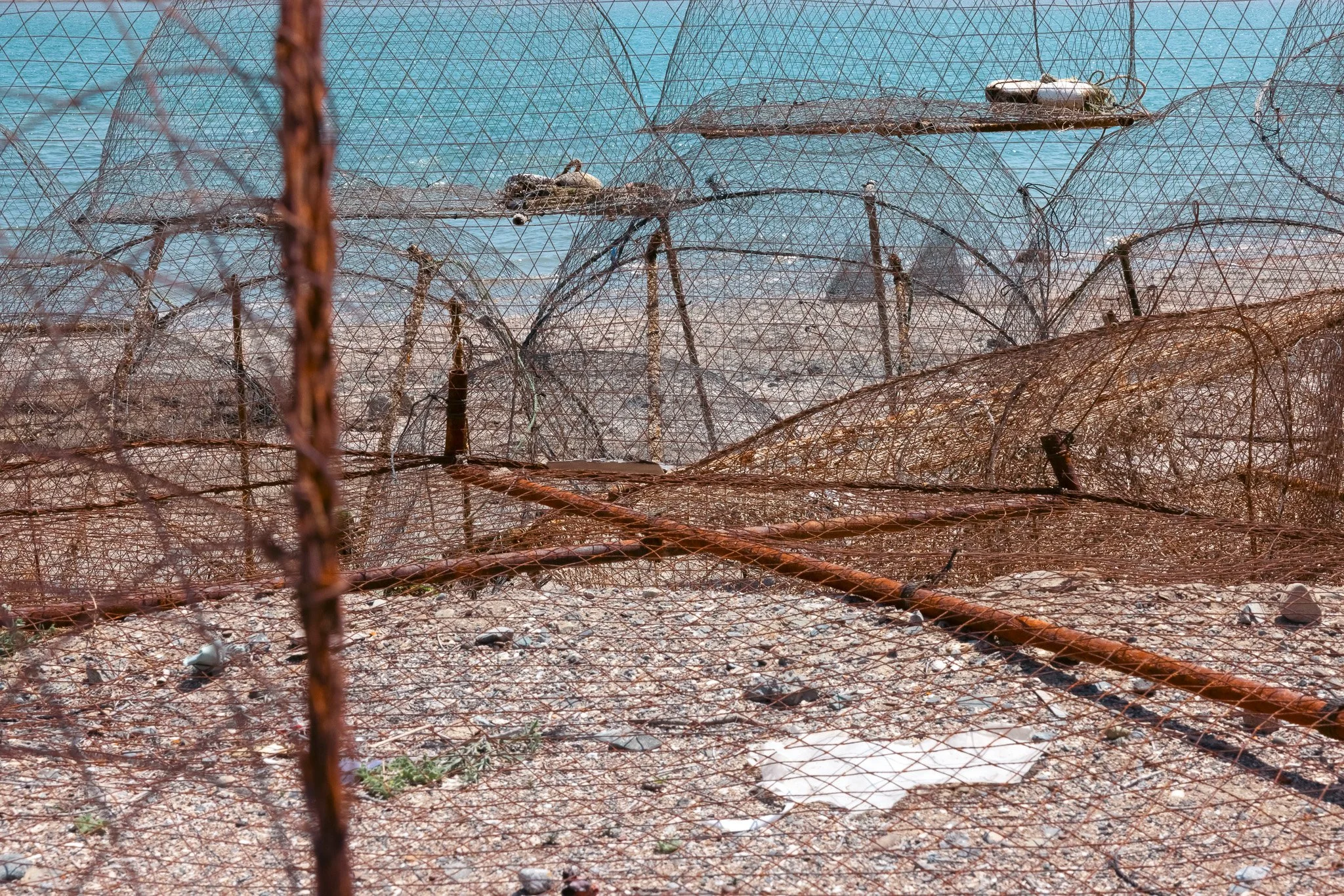
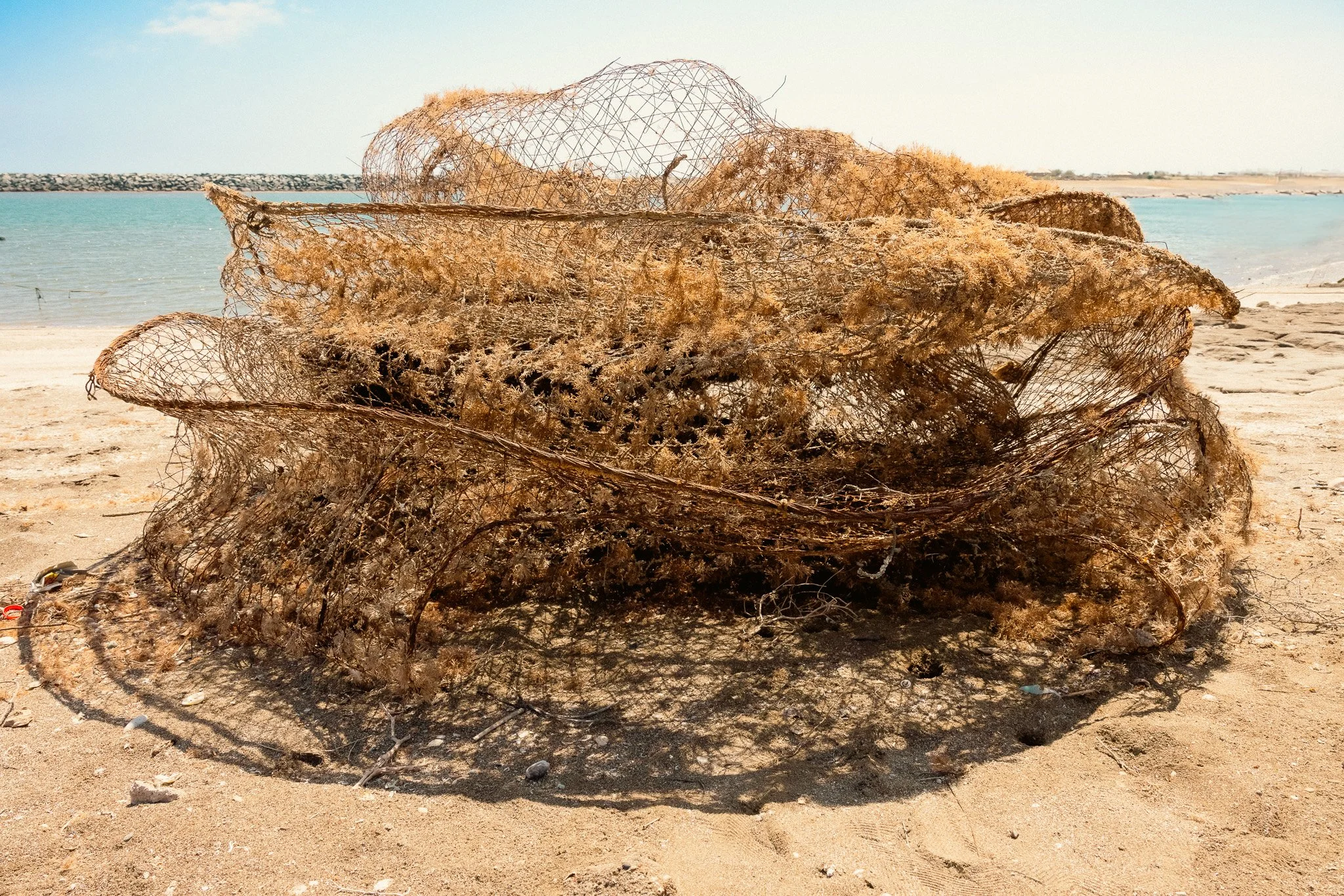
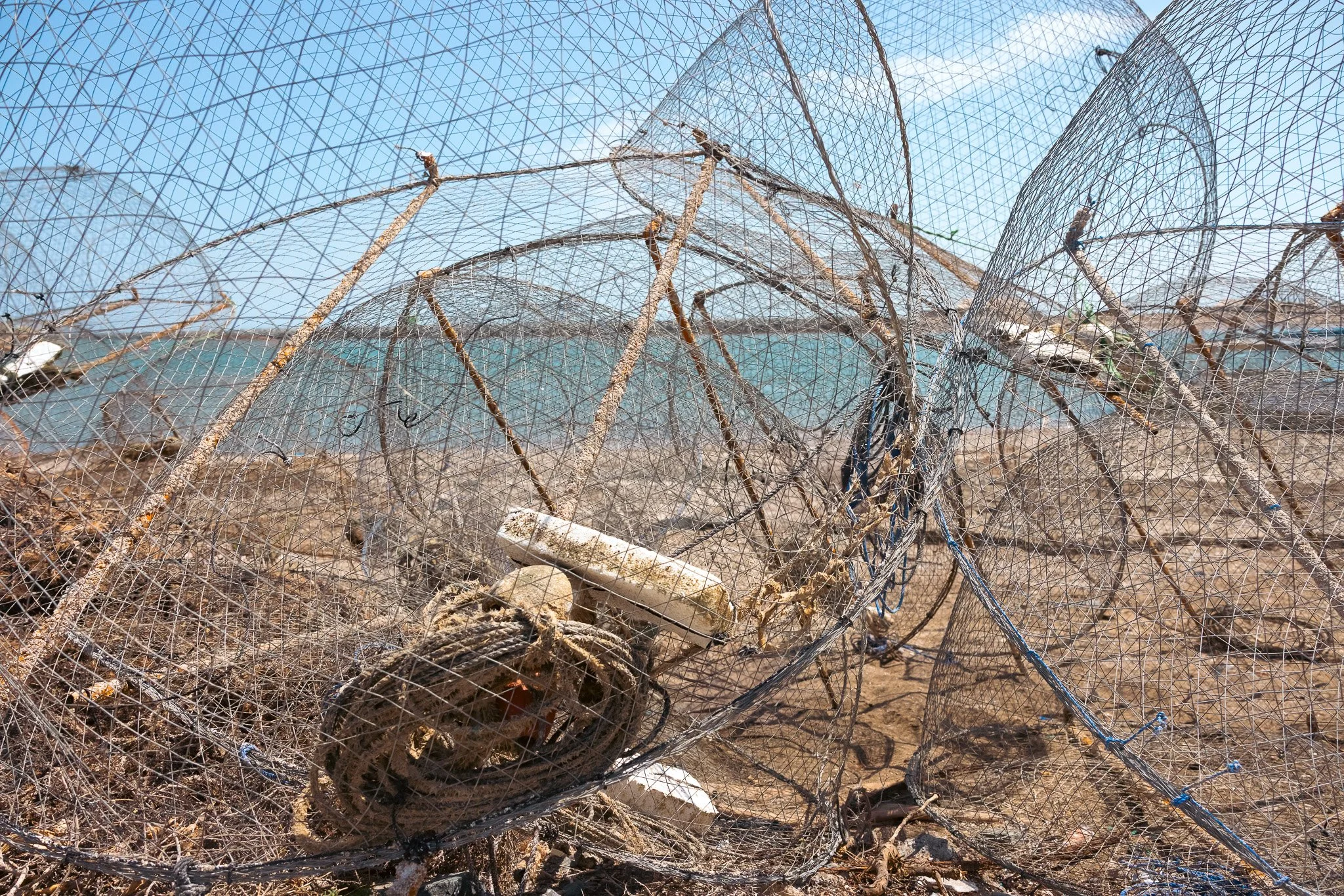
Sharjah
Sharjah’s fishing culture, deeply rooted in Emirati heritage, has long relied on migrant labor—primarily from South Asia—for commercial fishing, market work, and boat maintenance. While Emirati fishing traditions are celebrated, the vital contributions of migrant workers remain largely invisible.


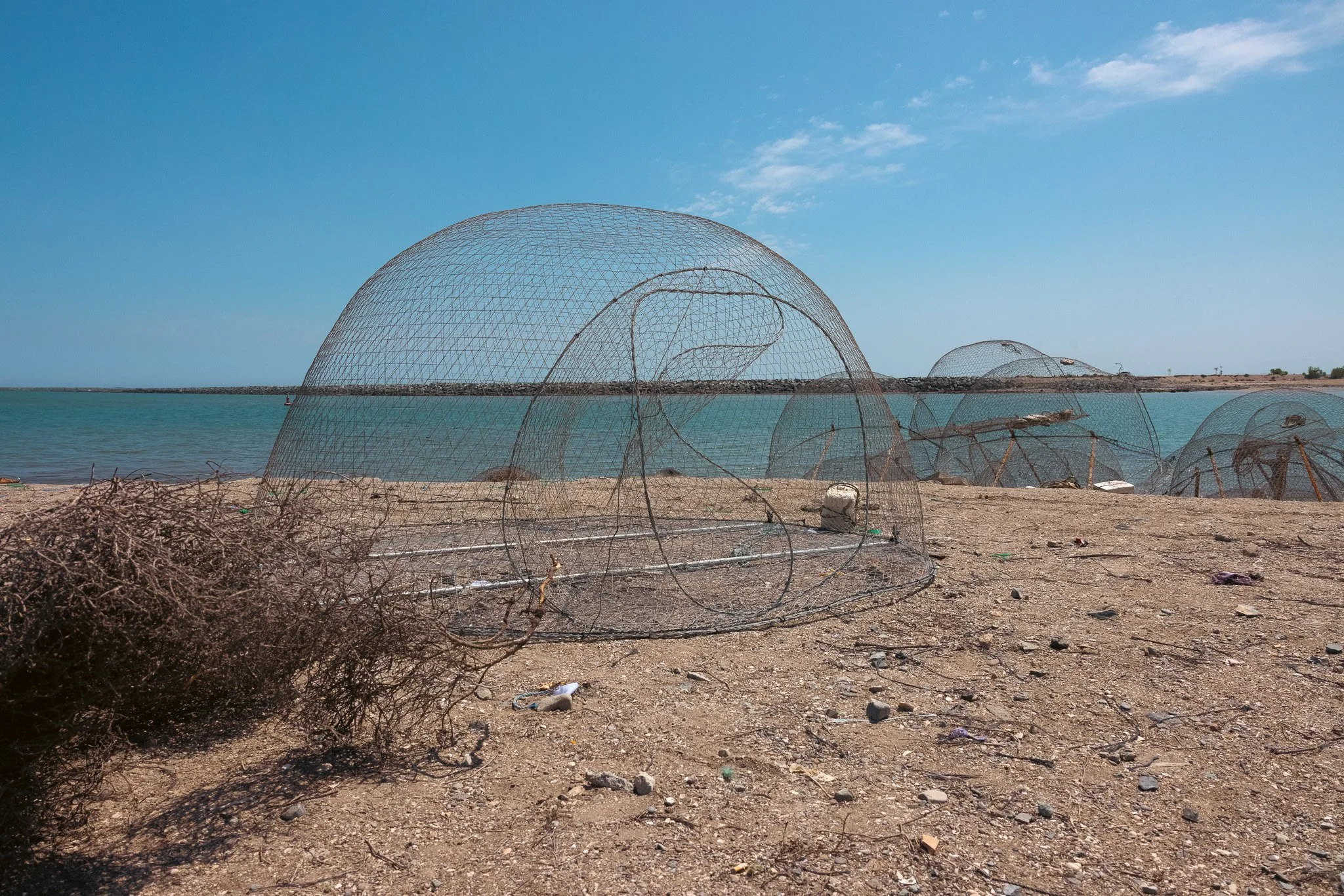
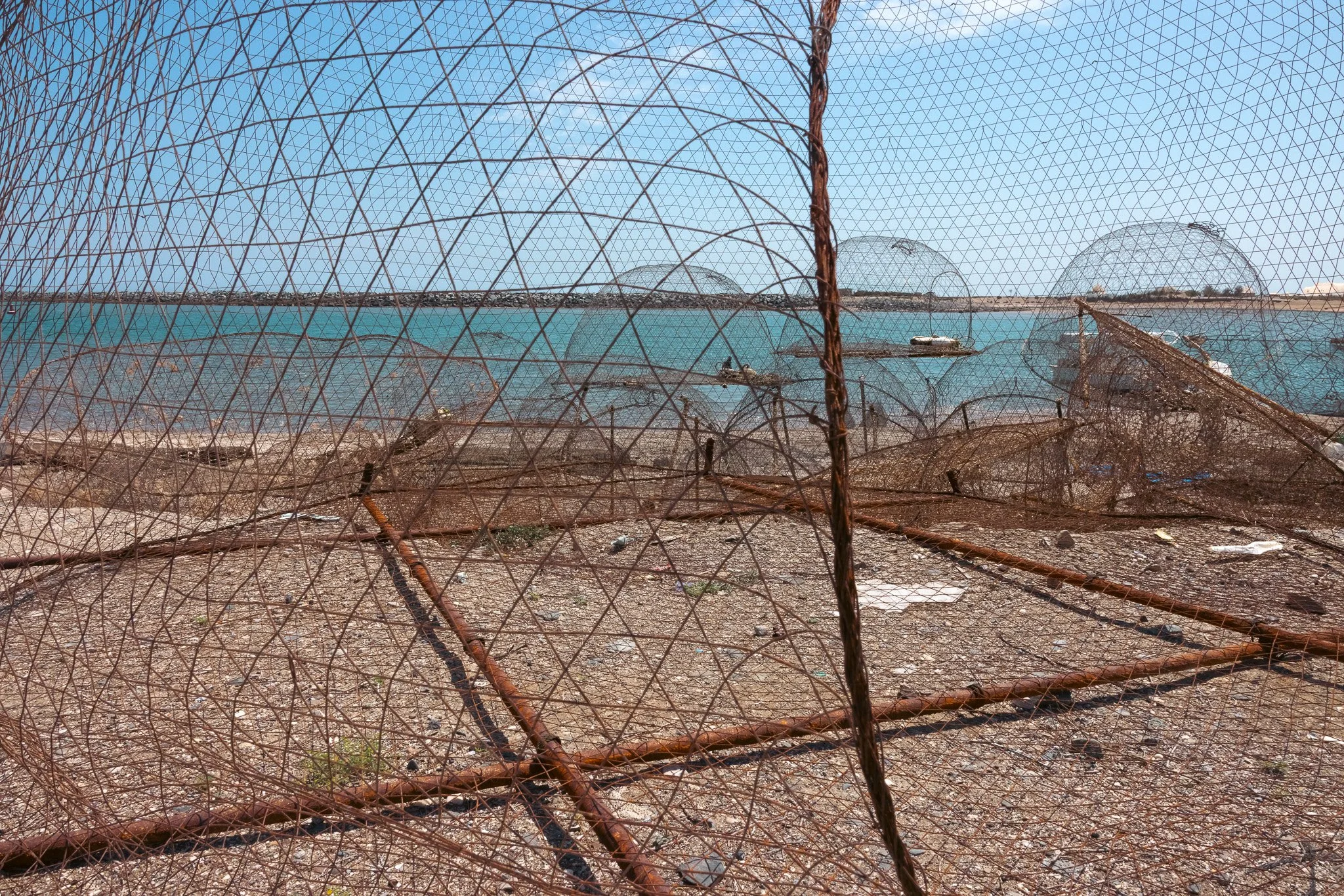

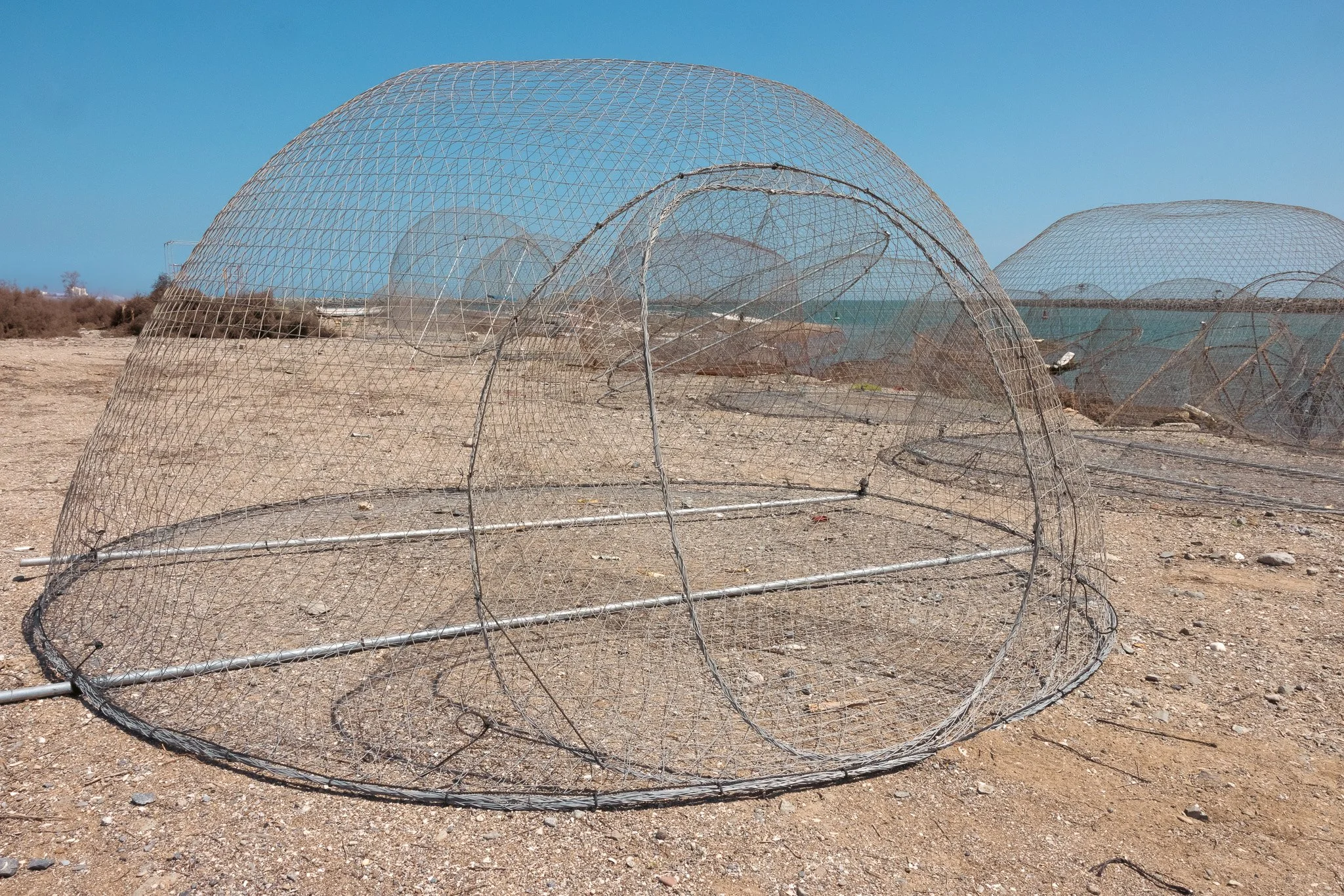
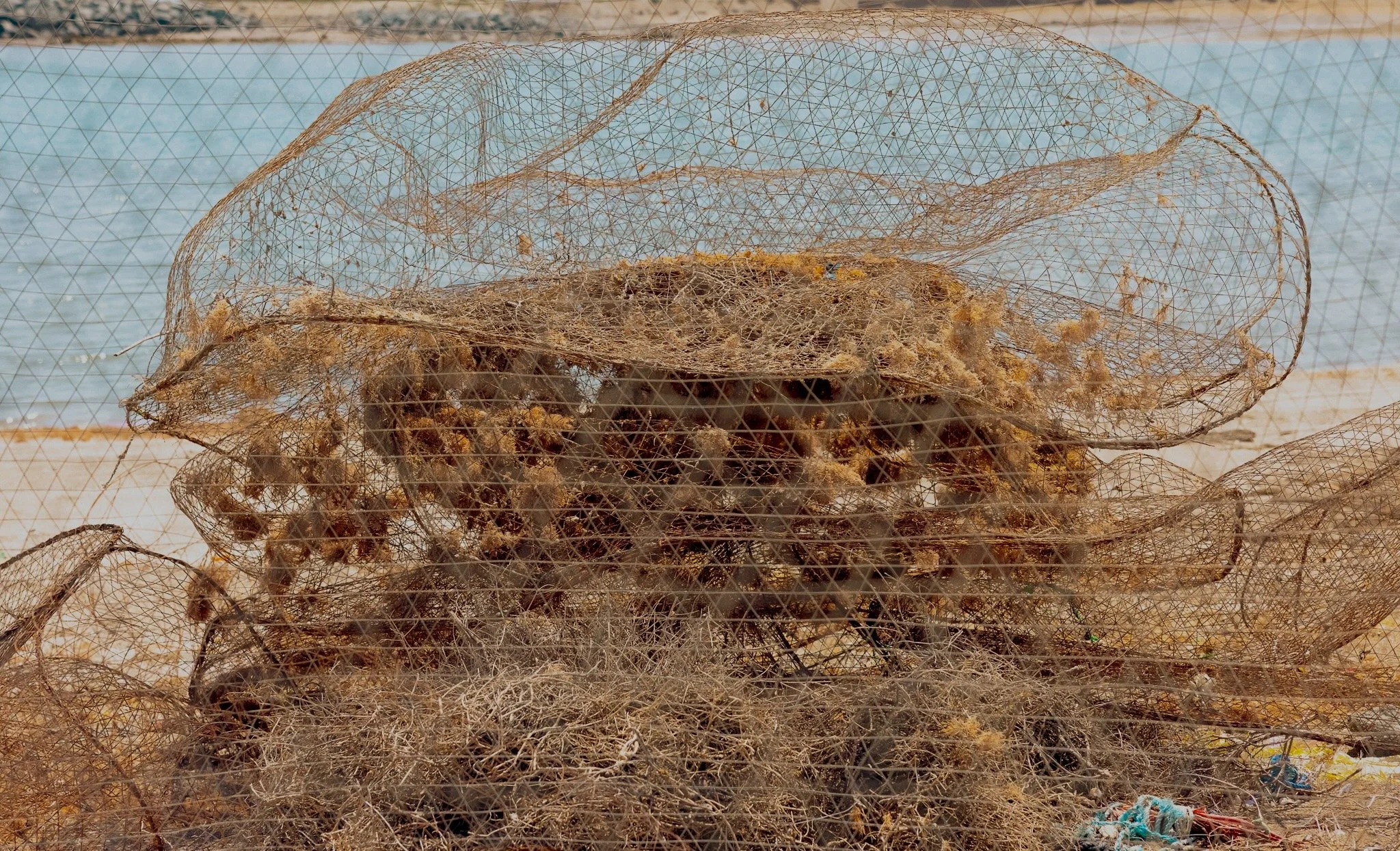


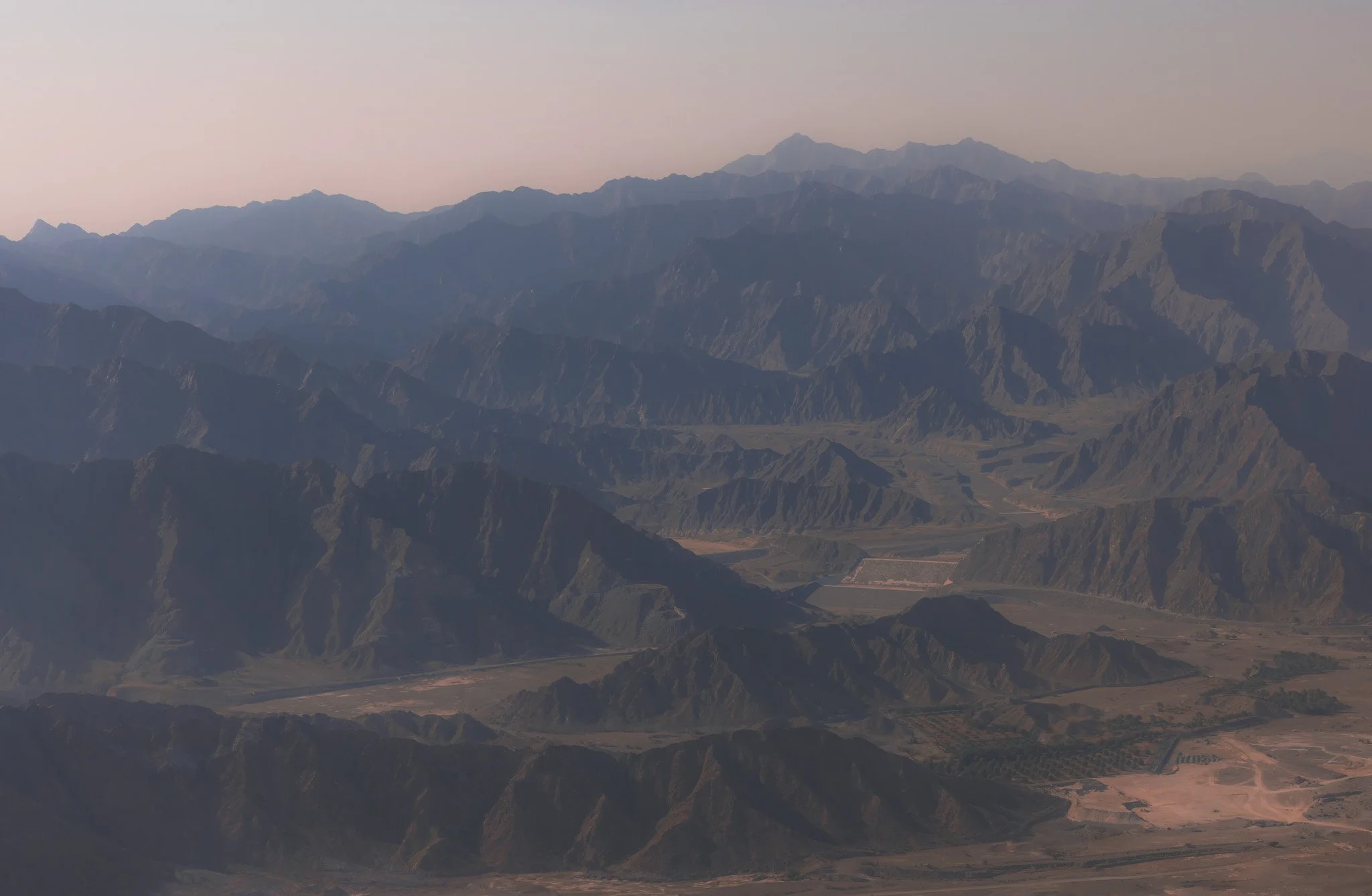
view of Hajar mountains near Sharjah
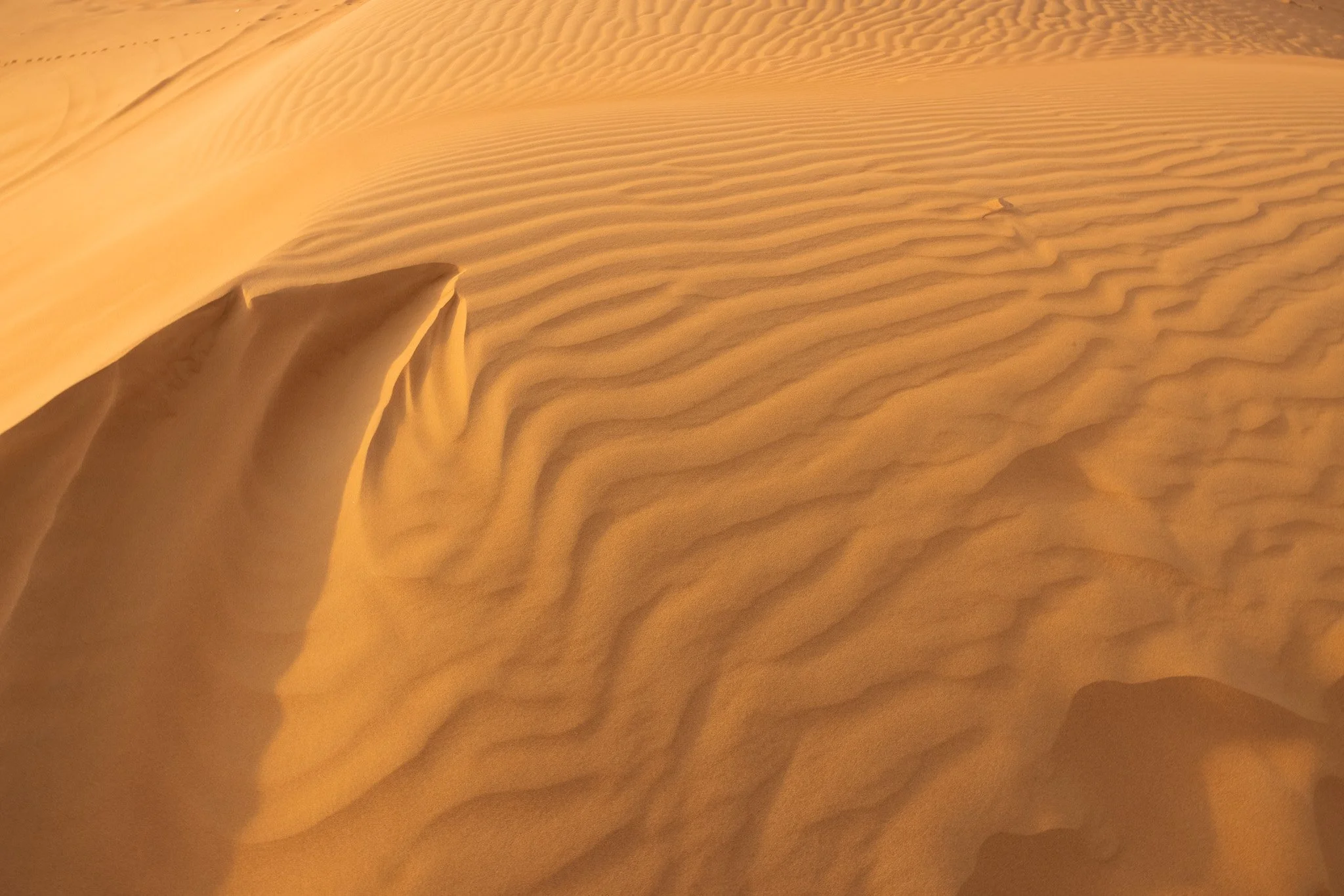
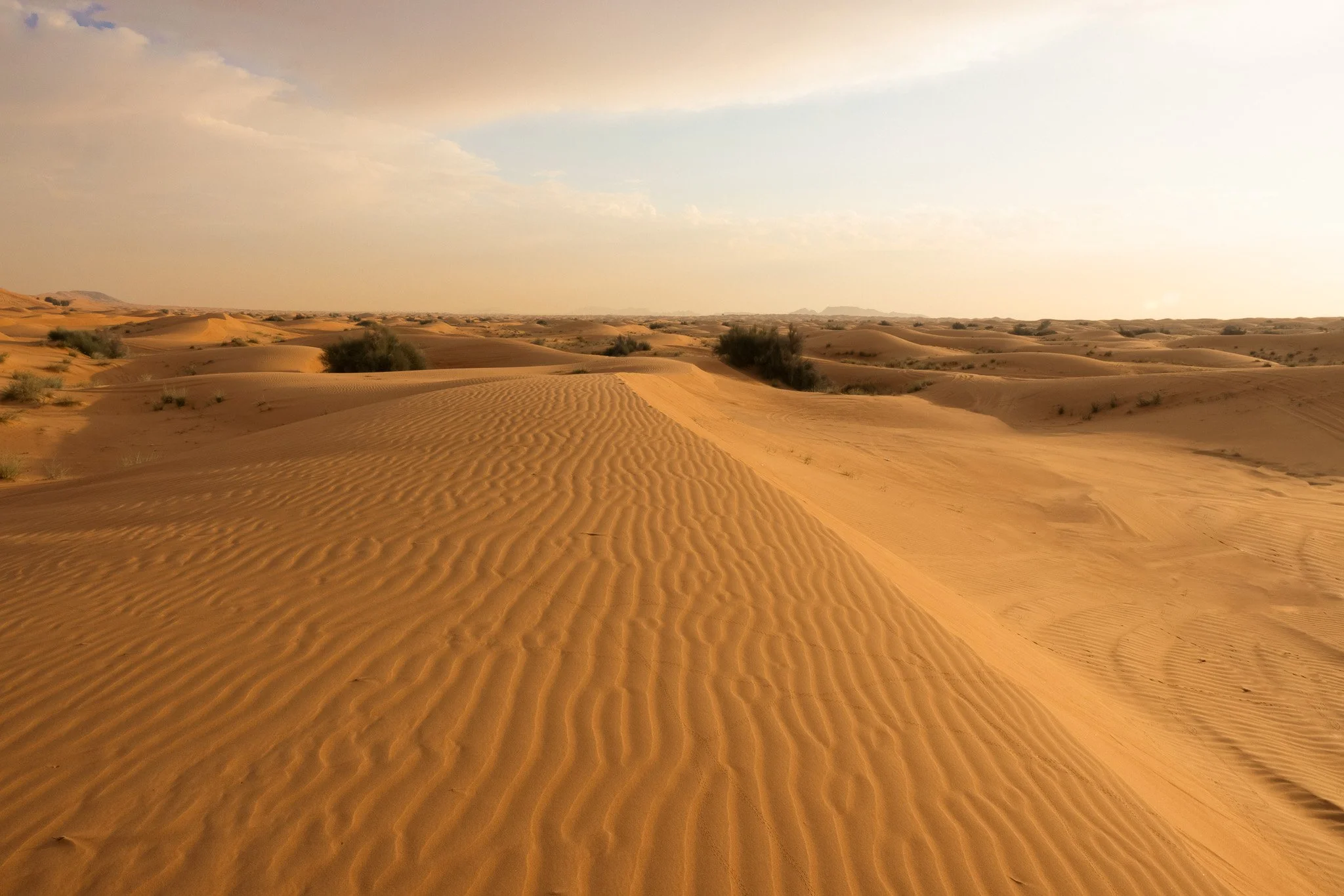
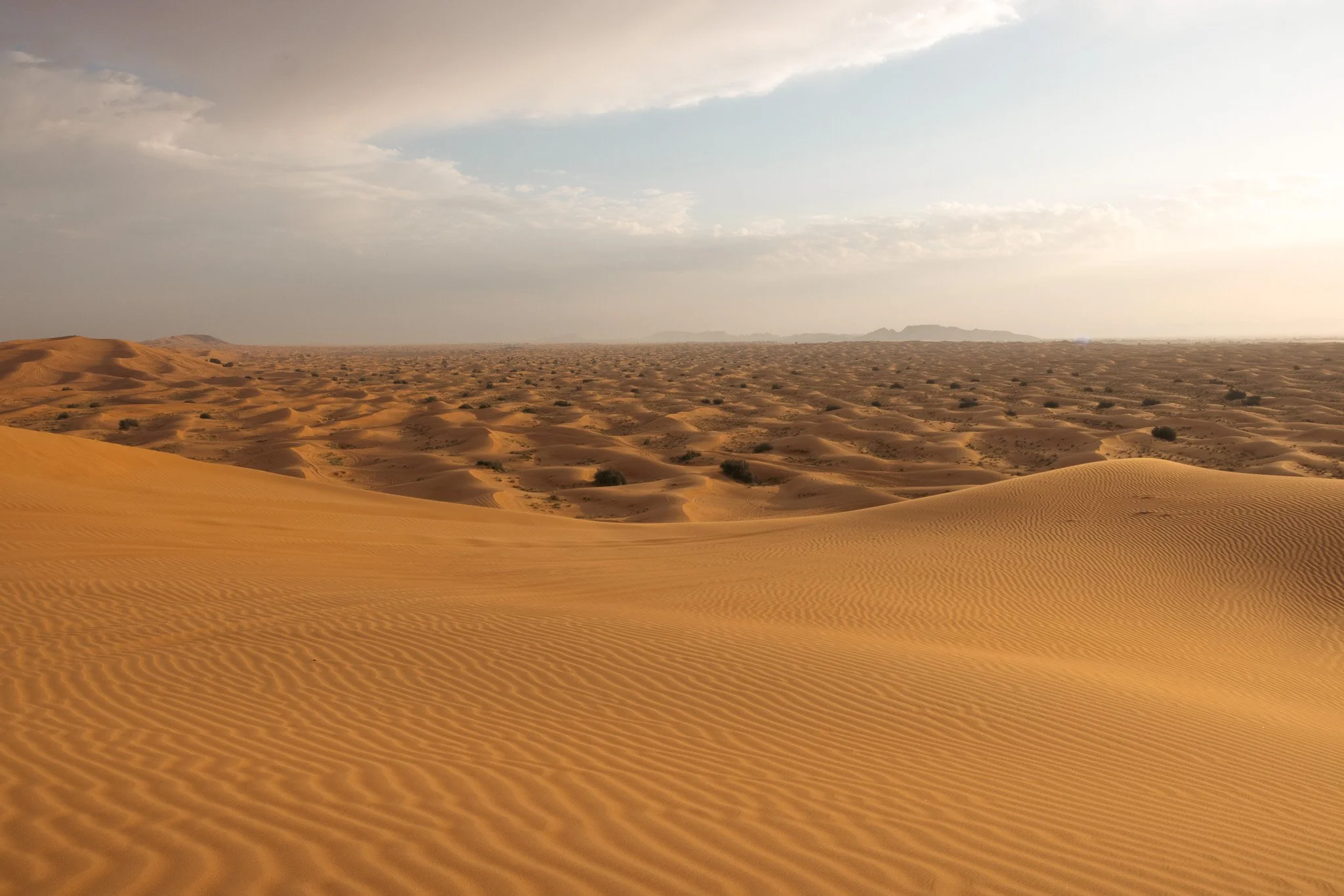
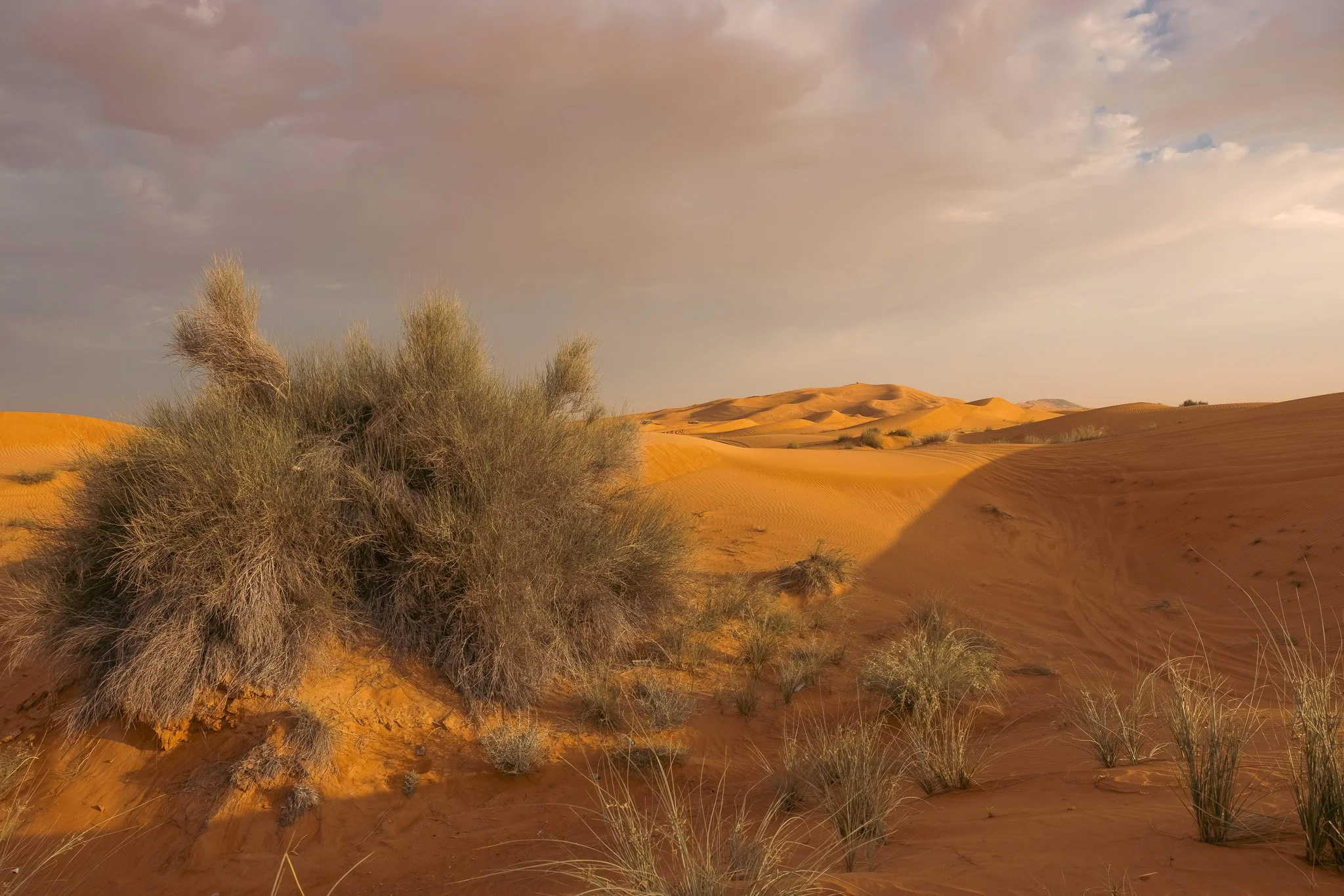
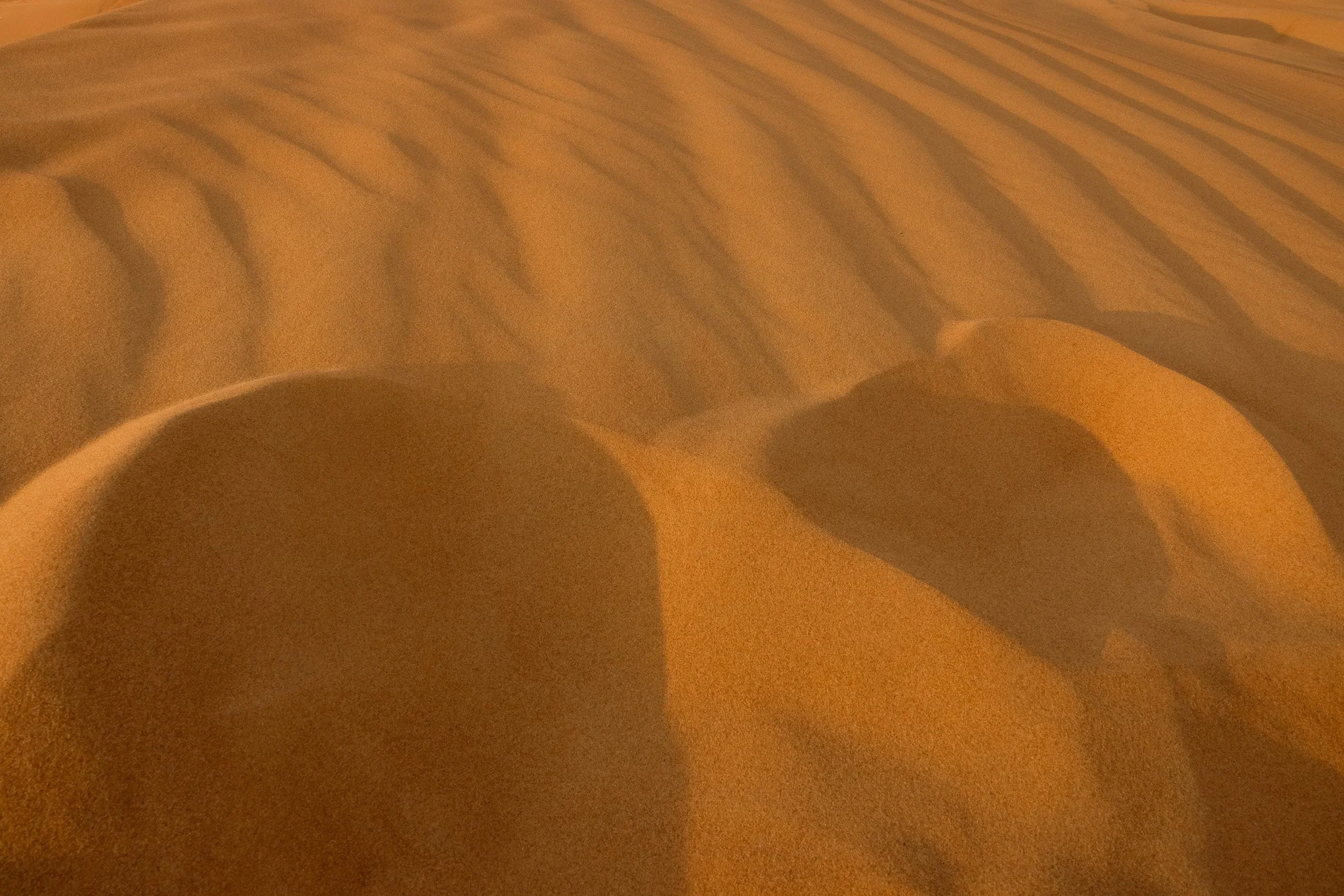
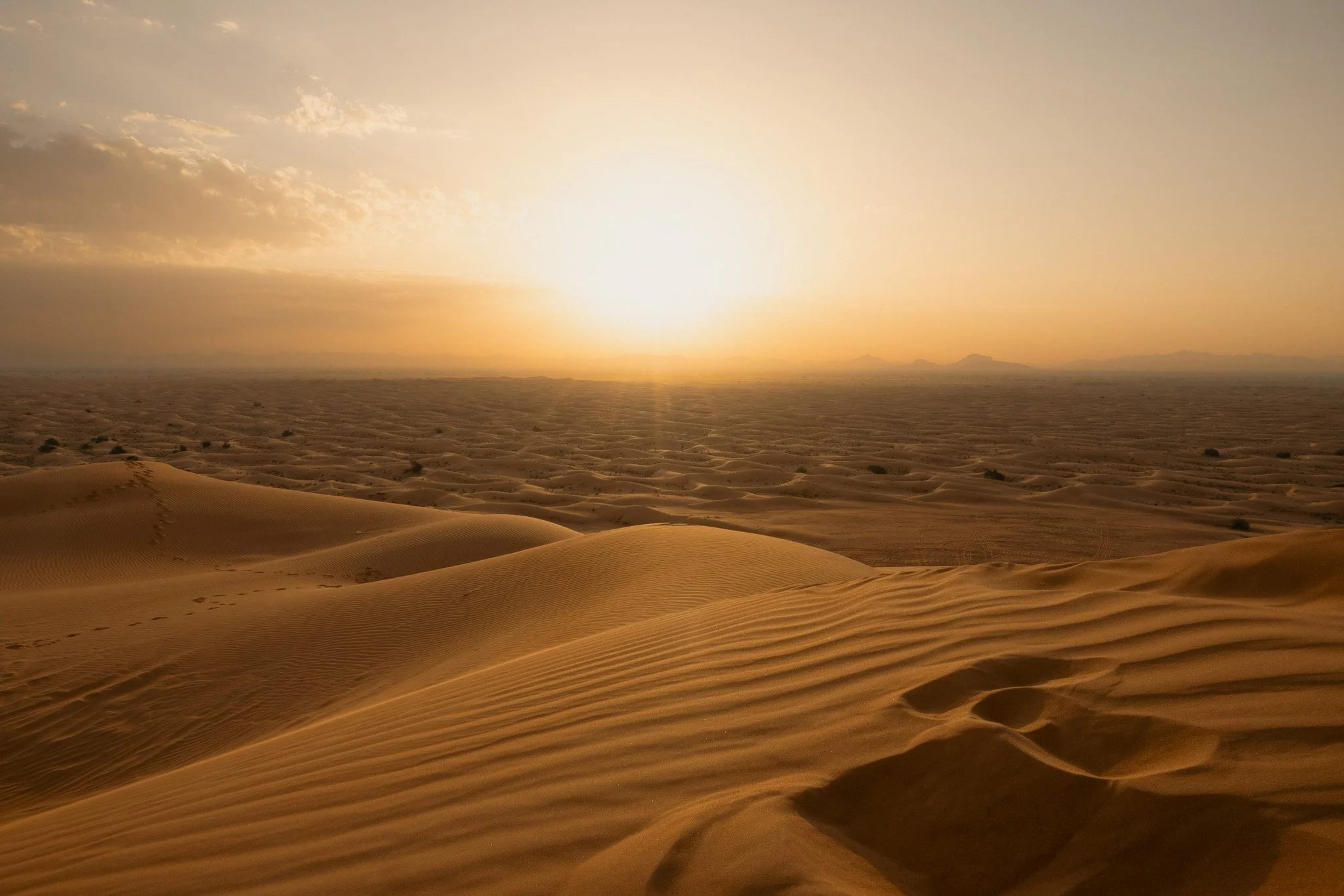
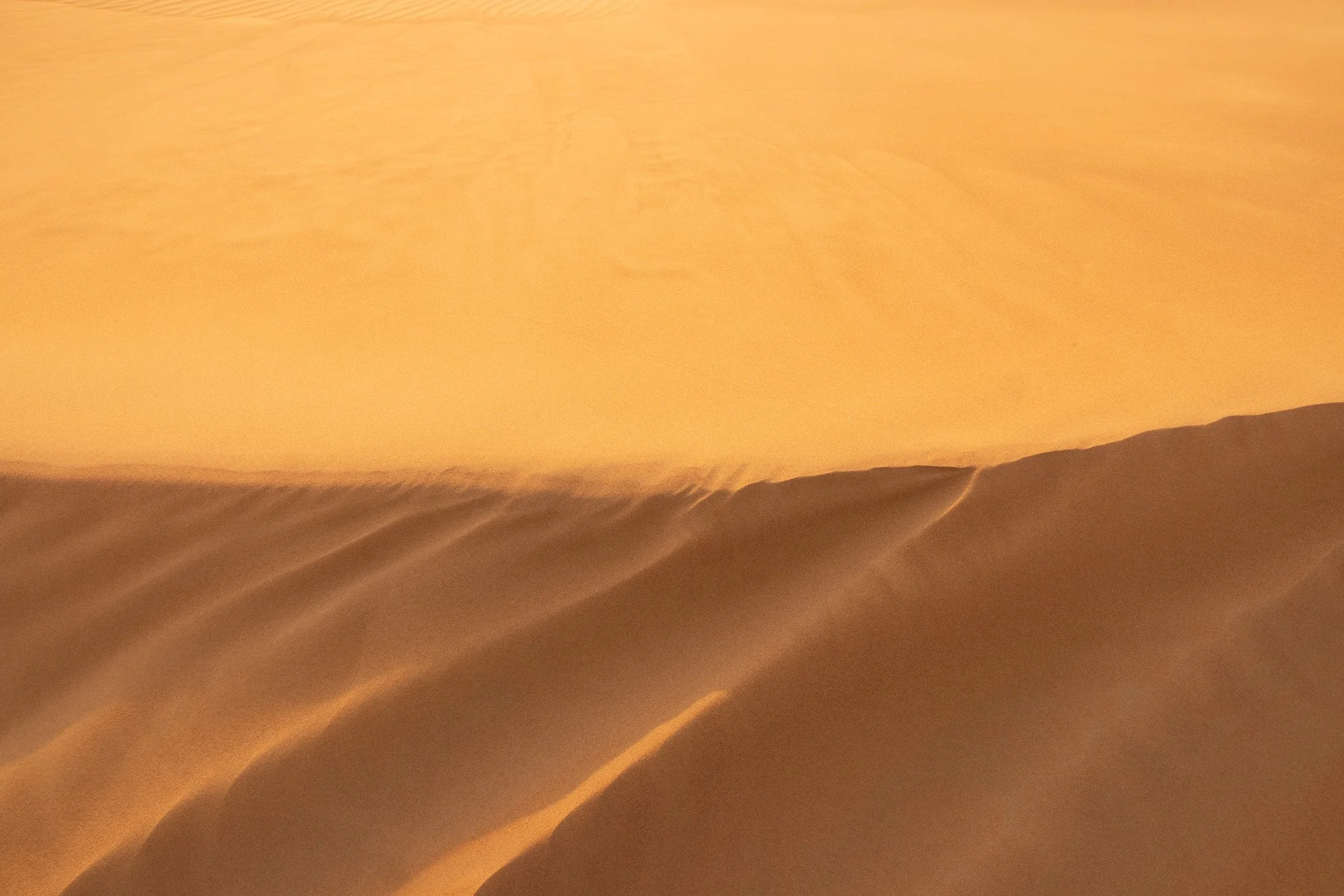
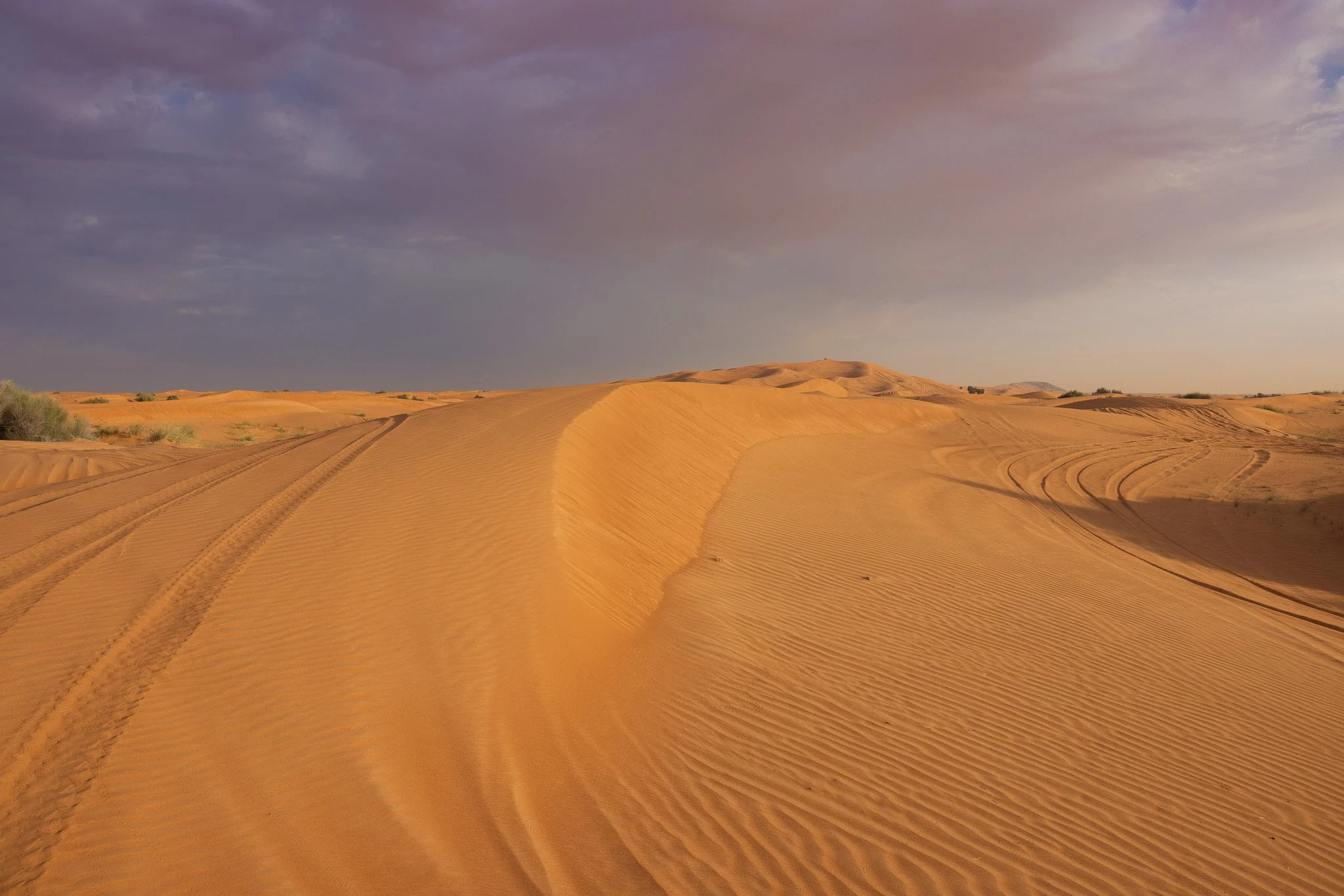
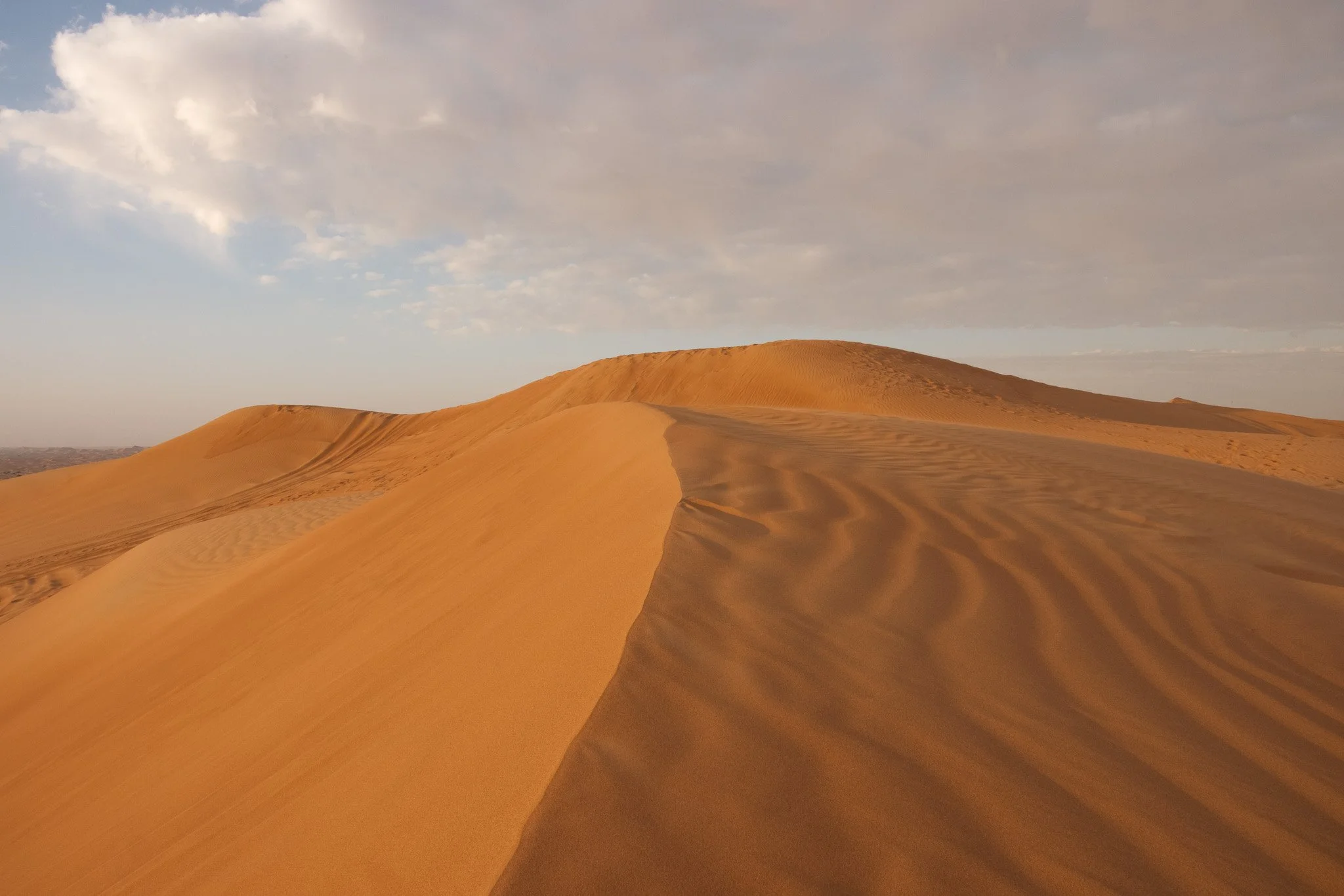
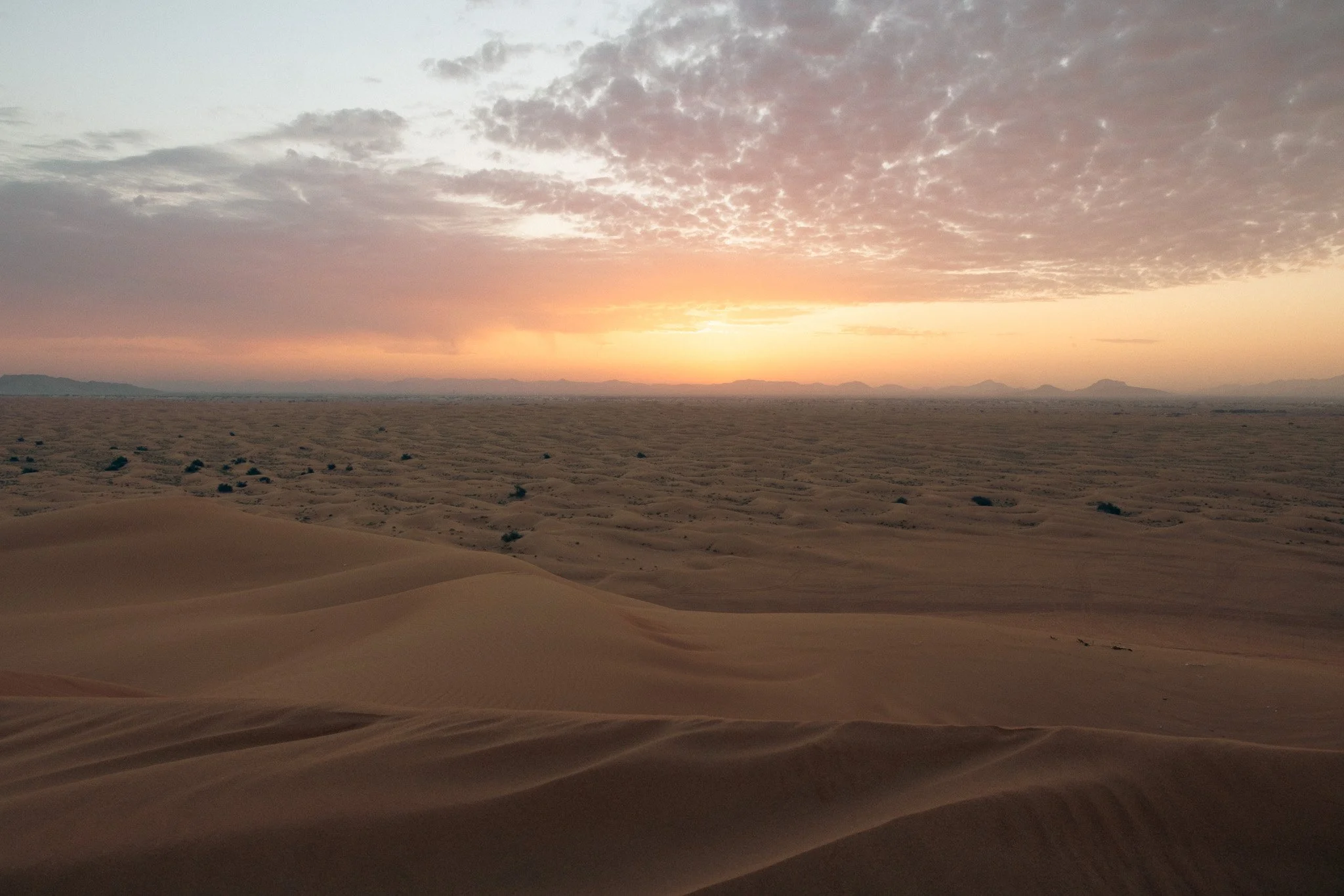
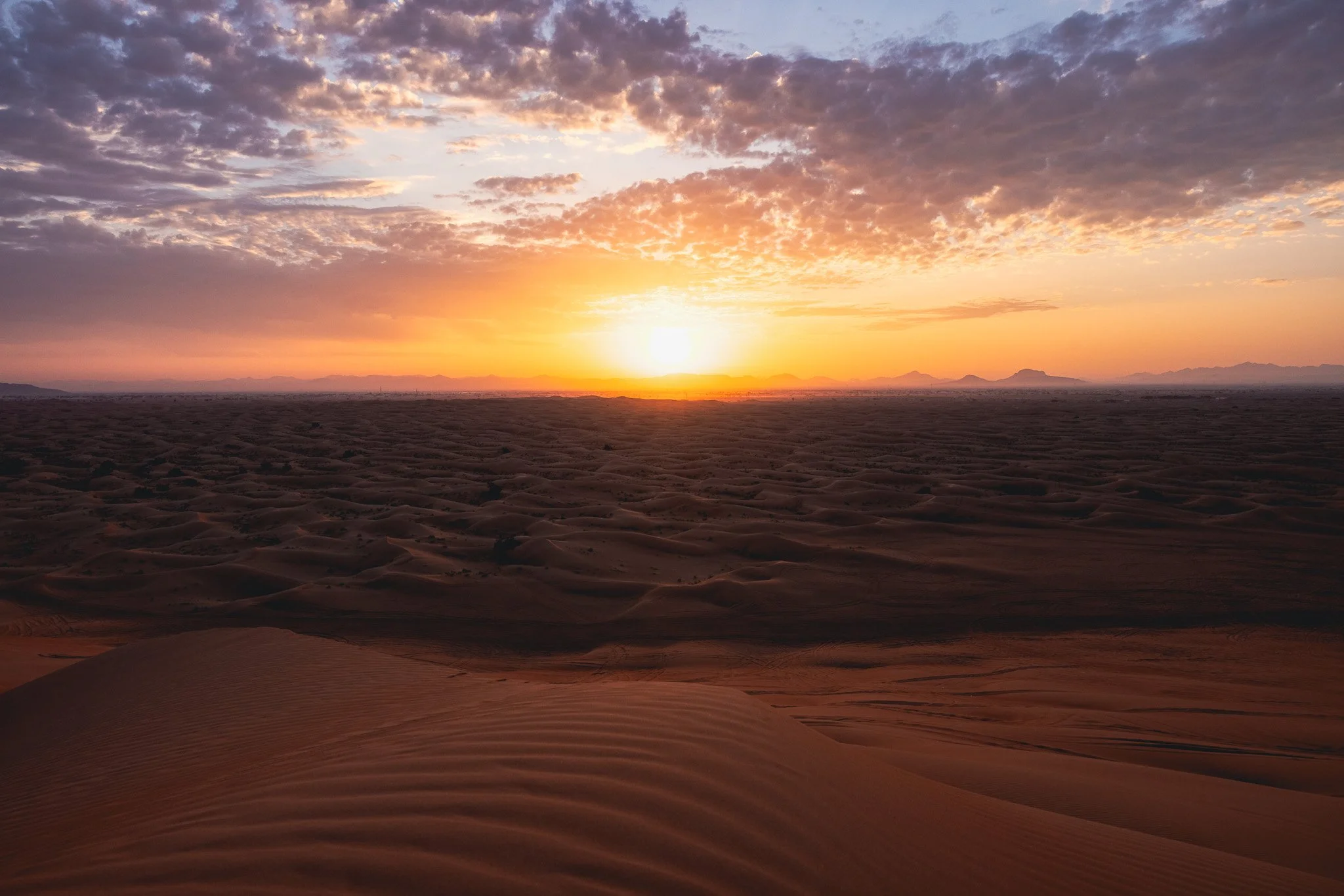
Lahbab Desert, Dubai
The wind-sculpted red dunes of the Lahbab desert stretch wide and open, a stark contrast to the dense, confined neighborhoods the migrant laborers inhabit. Their connection to this landscape may feel distant, yet both land and labor mirror resilience and endurance.


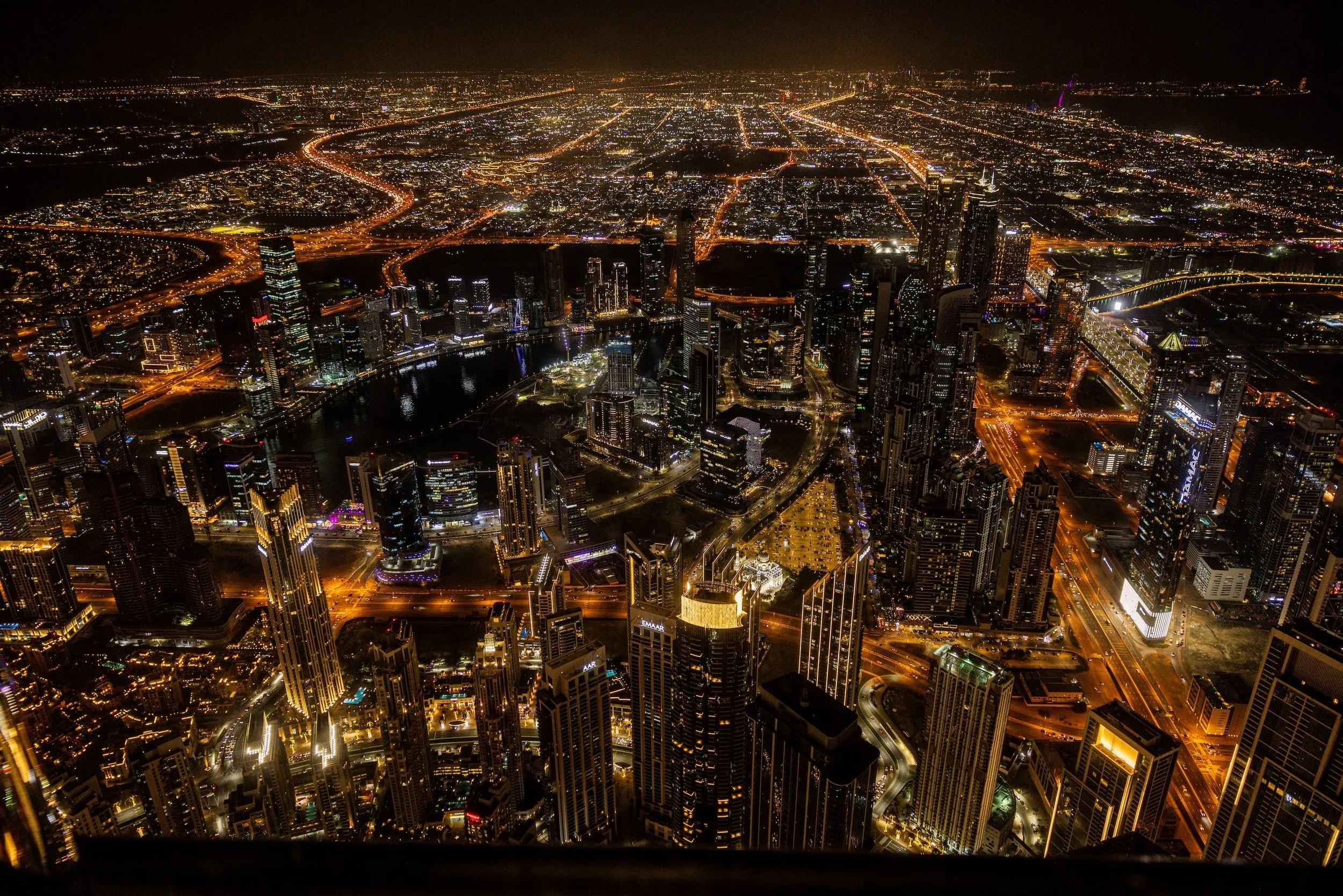
View from Burj Khalifa
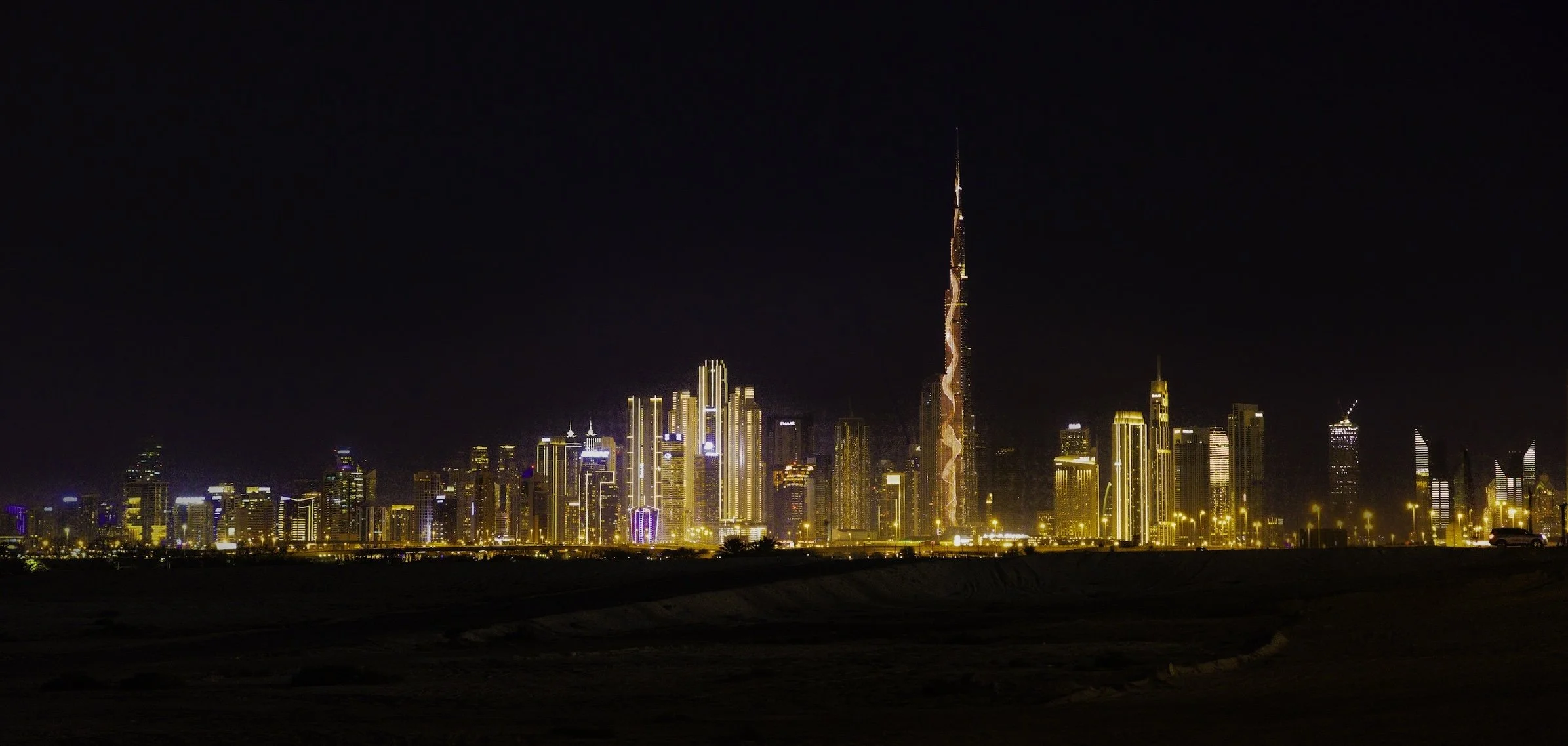
Dubia skyline
© 2023 Sarah Ahmad. All Rights Reserved.